Published: Wednesday, June 17, 2026 · 8:31 PM | Updated: Wednesday, June 17, 2026 · 8:31 PM
📊 243 views




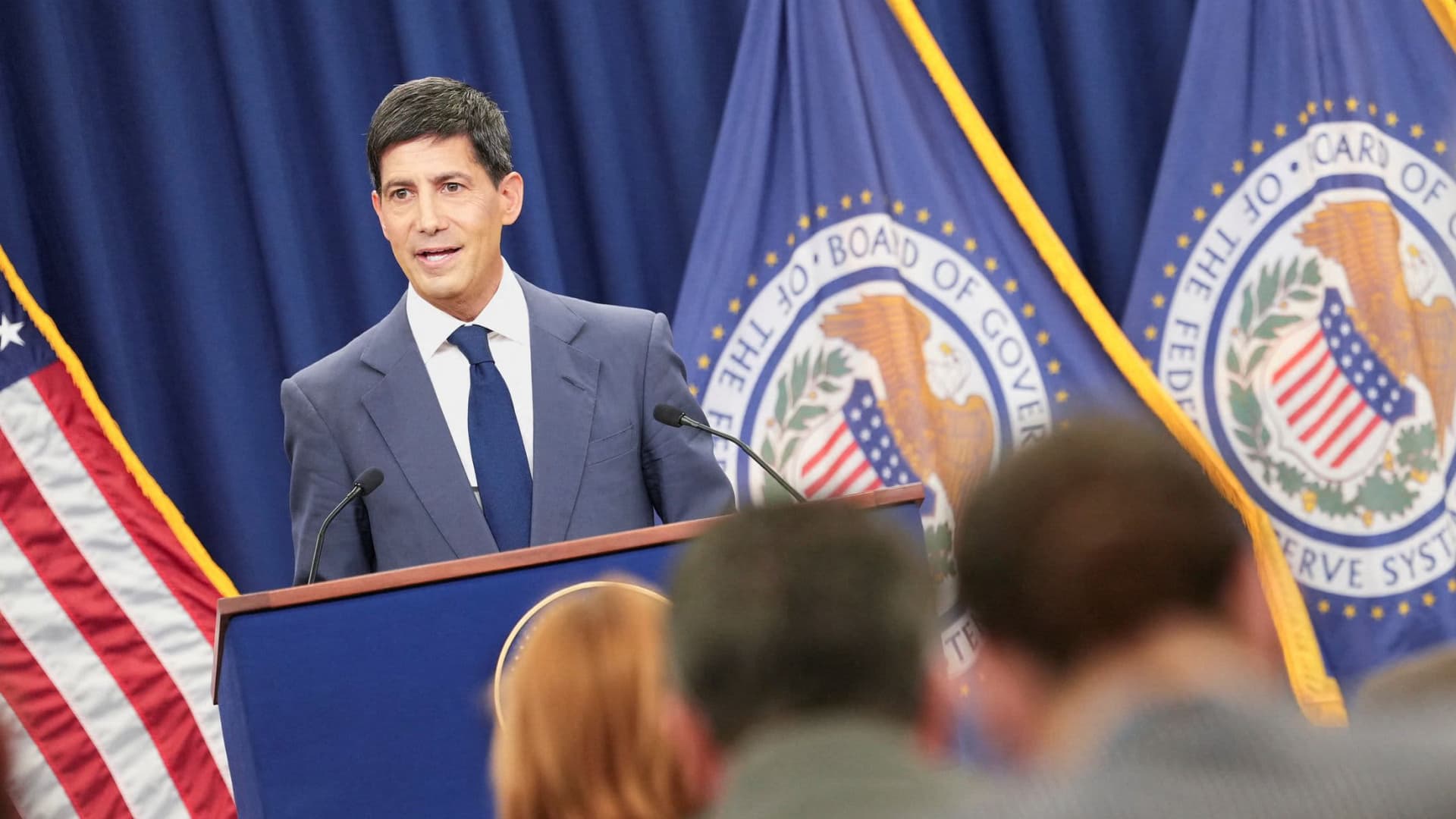
Federal Reserve Chairman Kevin Warsh has initiated a significant shift in the central bank’s communication strategy, beginning with a drastically shortened and simplified FOMC statement. This move signals a departure from the detailed forward guidance that characterized previous administrations, aiming for greater clarity and less entanglement with market expectations.
💰 Financial Strategy & Market Insights
- Concise Policy Updates. The Federal Reserve’s FOMC statement has been dramatically reduced in length and complexity, prioritizing factual reporting over intricate forward guidance.
- Emphasis on Unanimity. Gone is the detailed vote count; the new approach highlights unanimous decisions, aiming to present a more unified front from the central bank.
- Reduced Inflation Commentary. While commitment to stable prices remains, the statement offers less granular detail on current inflation trends and future projections, shifting focus to core policy outcomes.
Chairman Warsh’s recent address at his first press conference as chair underscored a deliberate effort to streamline the Fed’s public pronouncements. The new Fed rate statement, which is about a third of its previous length, eschews the lengthy explanations and specific forward-looking statements that often led to policy misinterpretations and market overreactions. This approach, according to Warsh, aims to deliver facts judged to the best of the Fed’s ability, rather than engaging in commentary that might not be well-suited for the current policy environment.
The departure from previous communication norms is evident in several key areas. Firstly, the omission of individual member vote counts, a staple under former Chairman Jerome Powell, signifies a move towards presenting policy decisions as cohesive, unanimous outcomes. This change aims to reduce the granular dissection of the Fed’s internal deliberations and focus market attention on the ultimate policy stance.
- The reduction in statement length reflects a strategic decision to streamline communication.
- Elimination of detailed forward guidance aims to prevent market over-reliance and potential policy missteps.
- The emphasis on unanimous decisions projects a unified and decisive central bank.
Furthermore, the statement’s commentary on inflation trends has been notably pared down. While the Fed reiterates its commitment to stable prices, the detailed analysis of current conditions and future trajectory, which often served as fodder for market speculation, has been minimized. This suggests a strategy to allow market forces and economic data to play a more direct role in price discovery, rather than leading the market with extensive commentary.
Analysts widely interpret these changes as the realization of Warsh’s promised ‘regime change’ at the Federal Reserve. His prior critiques centered on the Fed’s verbose communication style, arguing it fostered policy errors and created an unhealthy entanglement with financial markets. The initial response from market watchers, such as Ian Lyngen, head of U.S. rates strategy at BMO, suggests the message has been received loud and clear: a new chair is indeed in charge.
Warsh’s New Communication Framework: A Liquidity Shift?
The implications for market liquidity and capital shifts are potentially significant. By reducing the explicit forward guidance, the Federal Reserve may be fostering an environment where market participants must rely more heavily on their own analysis of economic data and the Fed’s subsequent reactions. This could lead to increased short-term volatility as markets adjust to less pre-digested information, but could also promote more robust price discovery in the long run. The shift away from explicit guidance could also influence capital allocation, as investors may seek assets less sensitive to the fine-tuning of central bank communication and more driven by fundamental economic trends. Exploring broader market trends reveals how such shifts can impact asset valuation.
Fed Rate Statement Dynamics: Yield Curve Reactions
The updated Fed rate statement, with its emphasis on brevity and fact-based reporting, is likely to have a discernible impact on the U.S. Treasury yield curve. Historically, detailed forward guidance has anchored expectations and smoothed out rate movements. The new, more opaque approach could lead to greater sensitivity of yields to incoming economic data and Fed speeches, potentially creating more pronounced movements at different points along the curve. This could introduce new dimensions to financial sector analysis as traders navigate a less predictable interest rate environment. This development offers a stark contrast to how past statements influenced asset pricing, as observed in recent financial news.
- Upside Potential: Greater market self-reliance could lead to more efficient pricing and potentially reduce the impact of speculative trading based on Fed hints.
- Downside Risks: Increased uncertainty and a lack of explicit guidance may heighten short-term market volatility, making risk management more challenging for investors.
- Capital Flow Uncertainty: Reduced clarity could lead to temporary capital flight as investors reassess risk premiums in a less predictable policy landscape.
The Federal Reserve’s communication strategy is as much a policy tool as interest rates themselves. By simplifying its statements, Chairman Warsh is attempting to recalibrate this tool, aiming for precision over predictive reassurance, which could fundamentally alter how markets interpret monetary policy signals. This is a crucial aspect of understanding central bank actions and their influence on capital markets.
| Key Change | Previous (April) | New (June) |
|---|---|---|
| Statement Length | ~300+ words | ~130 words |
| Forward Guidance | Detailed | None explicitly |
| Vote Count Disclosure | Included | Omitted (Unanimous decision noted) |
| Inflation Commentary | More descriptive | Less granular |
The Fed’s Shorter Statements: A Catalyst for Active Trading?
The deliberate brevity of the new Fed rate statement suggests a potential catalyst for more active trading strategies. With less pre-packaged interpretation, market participants may need to engage more dynamically with incoming economic data and Fed official commentary to inform their positions. This could boost trading volumes and create opportunities for sophisticated investors skilled in rapid analysis and execution, a topic often explored in financial publications providing educational financial insights.
Warsh’s Clarity Drive: What It Means for Asset Valuation
Chairman Warsh’s strategic overhaul of the Fed rate statement is a profound shift that compels a re-evaluation of how market participants assess asset valuation. The move away from explicit forward guidance implies that the market will need to become more adept at inferring future policy from a more restrained set of communications. This could lead to a greater reliance on fundamental economic analysis, potentially diminishing the influence of narrative-driven market movements that were often fueled by detailed Fed statements. Investors must now focus on the underlying economic realities rather than deciphering implicit policy cues, impacting how various assets, from equities to bonds, are priced.
The Fed’s New Messaging: A Paradigm Shift in Market Sentiment
The recent alteration to the Federal Reserve’s FOMC statement signifies a notable shift in its communication paradigm, moving towards a more concise and fact-oriented approach under Chairman Warsh. This strategy is designed to reduce ambiguity and prevent the central bank from becoming overly entangled in market expectations, thereby fostering a more independent policy-making environment. The reduction in statement length and the elimination of detailed forward guidance are key indicators of this new direction, impacting how investors and analysts interpret future monetary policy decisions.
- The FOMC statement has been significantly shortened, with a focus on factual reporting.
- Explicit forward guidance has been removed, signaling a preference for data-driven policy reactions over pre-announced trajectories.
- The emphasis has shifted towards presenting policy decisions as unanimous, projecting a unified central bank stance.
As the market adapts to this more streamlined communication from the Federal Reserve, what unforeseen consequences might emerge for international capital flows?
📊 StockXpo Analyst’s View
Market Impact: This change fundamentally alters the information landscape for market participants. Reduced guidance necessitates greater self-reliance in analysis, potentially leading to increased short-term volatility but also fostering more robust price discovery over time. The emphasis on decisiveness might also instill more confidence in the Fed’s ability to manage economic conditions without over-promising future actions.
Sector To Watch: Sectors heavily influenced by interest rate expectations, such as technology and real estate, will likely experience heightened sensitivity to economic data releases and Fed commentary. Conversely, sectors with strong intrinsic value propositions or those less sensitive to short-term rate fluctuations may prove more resilient.
Financial Disclaimer:
StockXpo.com is a financial news aggregator and educational portal, not a registered investment advisor or broker-dealer. All information, news, and analysis provided herein are strictly for educational purposes and do not constitute investment, financial, legal, or tax advice. Investing in the stock market involves high risks, and past performance is not indicative of future results. StockXpo will not be liable for any financial losses or investment damages. Always consult a certified financial advisor before making market decisions.
MORE IN INSIDE FINANCE
Brazil Election: Market Volatility Ahead Amidst Political Divide
Published: Saturday, October 3, 2026 · 11:30 AM

Bitget Hack: $388 Million Volatility Reshapes Crypto Exchange Risk
Published: Friday, October 2, 2026 · 2:49 AM