Published: Monday, September 7, 2026 · 9:39 PM | Updated: Monday, September 7, 2026 · 9:39 PM
📊 278 views




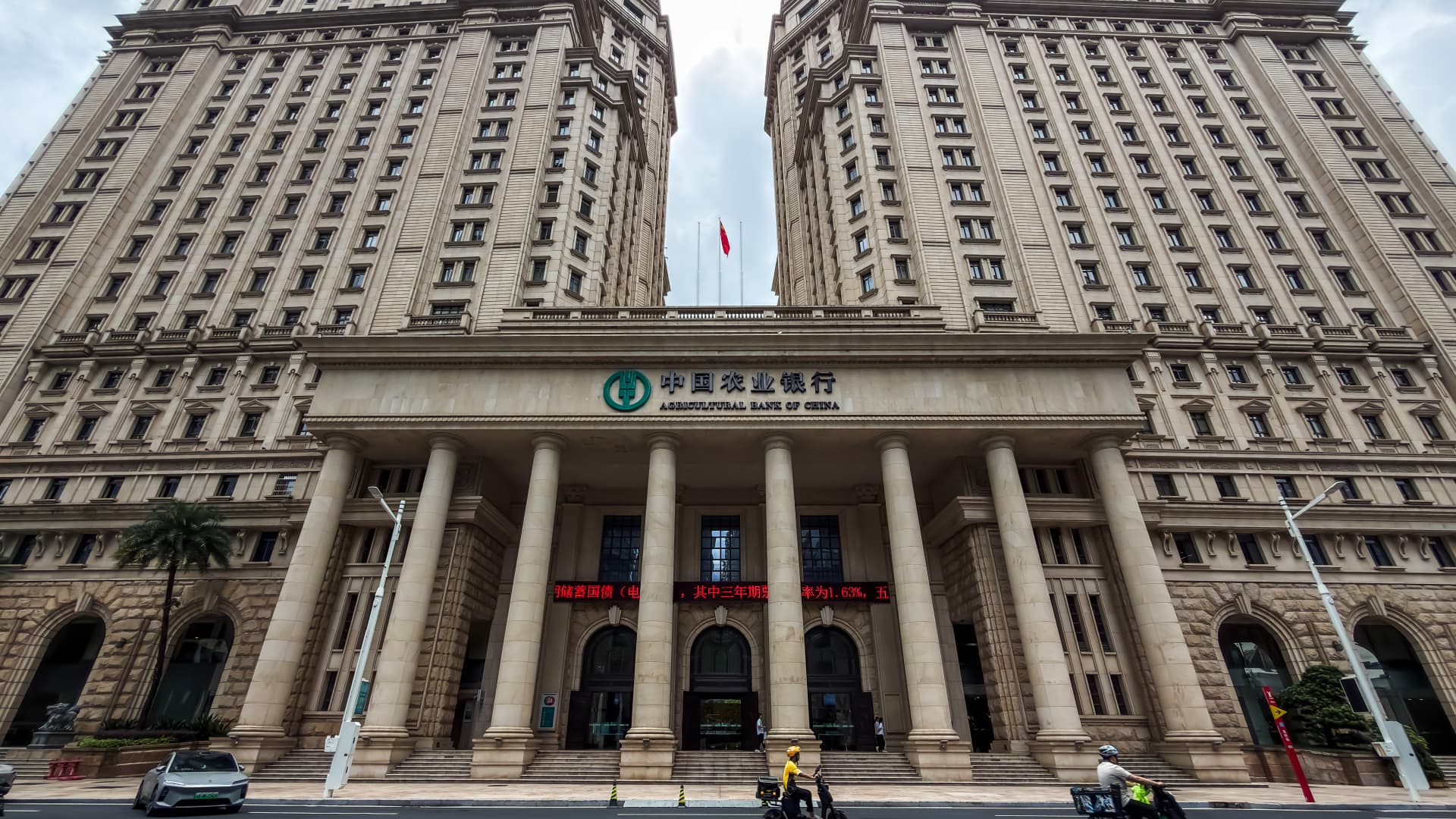
China’s finance ministry has announced a $54 billion (360 billion yuan) China Capital Injection into key state-owned banks and insurers, a move intended to stabilize the nation’s sprawling financial system and spur economic growth. Despite this substantial liquidity infusion, Hong Kong-listed shares of the beneficiaries surprisingly dipped, signaling persistent market skepticism regarding the efficacy and scale of Beijing’s targeted stimulus.
💰 Financial Strategy & Market Insights
- Targeted Support: Beijing is injecting $54 billion into 3 state banks and 5 insurers to fortify their capital bases and prepare for future strategic investments.
- Market Disappointment: Despite the significant sum, the injection was smaller than anticipated by markets, leading to a decline in beneficiary stock prices, including major lenders like Agricultural Bank of China and ICBC.
- Underlying Challenges: The financial sector faces multi-year margin compression, record-low net interest margins, and weak credit demand, which this capital infusion aims to address by enabling NPL disposal and strengthening lending capacity.
The latest China Capital Injection, led by the Ministry of Finance and the country’s tobacco giant, marks the first time recapitalization efforts have explicitly extended to insurers, reflecting widening stress within the financial system. Recipients include major players like Agricultural Bank of China (ABC), Industrial and Commercial Bank of China (ICBC), China Life Insurance, and China Taiping Insurance. However, the market reaction was muted, with ABC and ICBC shares falling 2.7% and 2.3% respectively, largely due to the package being “smaller in scale than markets had anticipated,” according to Citibank analysts.
This financial maneuver builds on previous efforts, including a 500 billion yuan capital injection into four major state banks last year and a pledge for 300 billion yuan in special treasury bonds this year. The primary objective is not just shoring up balance sheets, but also to enable financial institutions to “mobilize resources in capital markets, including bond and equity purchases,” as noted by Gary Ng, senior economist at Natixis. Furthermore, Han Shen Lin, China country director at The Asia Group, suggested this move is critical for preparing lenders to finance China’s next strategic investment cycle, particularly the “massive capital requirements of AI and advanced technology.”
The sector has been battling significant headwinds, including multi-year margin compression, forcing banks to keep credit cheap for struggling borrowers. This has pushed net interest margins (NIMs) to record lows. Insurers, too, have seen their solvency ratios decline, dropping to 180.6% at the end of the second quarter from 204.5% last year, although still above the 100% regulatory threshold. Bruce Pang, a member of the Chief Economist Forum in China, emphasized the criticality of these external injections given banks’ limited ability to rebuild capital through retained earnings amidst falling market interest rates.
Despite the government’s intentions, weak credit demand remains a significant hurdle. Larry Hu, chief China economist at Macquarie, observed that the capital injections would likely have “only a very limited short-term impact on the economy” because the binding constraint on bank lending is often demand, not capital availability. This reflects a broader slowdown, with China’s economy faltering into the third quarter, prompting Beijing to acknowledge “difficulties and challenges.” For investors seeking to understand these shifts, ongoing educational financial insights remain crucial to navigate the complex environment.
- Key Beneficiaries & Amounts:
- Agricultural Bank of China: Up to 160 billion yuan
- Industrial and Commercial Bank of China: Up to 100 billion yuan
- Export-Import Bank of China: 30 billion yuan
- China Life Insurance: 35 billion yuan
- China Taiping Insurance: 7 billion yuan
- People’s Insurance Company of China: Up to 15 billion yuan
- China Export and Credit Insurance Corp (Sinosure): 10 billion yuan
- China Reinsurance Group: 3 billion yuan
Balancing Risk and Opportunity in Chinese Financials
The implications of this China Capital Injection present both potential upsides and inherent risks for the broader global financial news and its participants.
- Upside Potential:
- Systemic Stability: Enhanced capital cushions for banks and insurers can absorb potential shocks, especially from non-performing loans (NPLs), improving overall financial system stability.
- NPL Resolution: Strengthened balance sheets provide banks with greater capacity to accelerate the disposal and write-off of problematic assets, clearing the path for healthier lending.
- Strategic Financing: The recapitalization positions state-owned financial institutions to better support Beijing’s long-term strategic investments in high-tech sectors like AI.
- Downside Risks:
- Weak Credit Demand: Despite increased capital, a fundamental lack of borrowing appetite from businesses and consumers could render the injection less effective in stimulating real economic growth.
- Market Skepticism: The smaller-than-expected package and immediate stock declines suggest that markets view the stimulus as insufficient to tackle deep-seated economic challenges.
- Margin Compression Persistence: Until underlying interest rate pressures ease, banks may continue to face pressure on net interest margins, limiting their profitability and organic capital generation.
Understanding Recapitalization: Recapitalization refers to the process of injecting new capital into a company or financial institution to strengthen its financial position, typically by increasing its equity. This often occurs when an entity faces capital shortfalls or needs to improve its solvency ratios to absorb potential losses or expand lending capacity, enhancing its resilience against economic downturns.
Unpacking China’s Financial Institution Capitalization (Billion Yuan)
| Institution Type | 2023 Major State Banks (Previous) | 2024 Special Treasury Bonds (Pledged) | 2024 Current Injection (Total) | 2024 Current Injection (Specific Examples) |
|---|---|---|---|---|
| Banks | 500 | 300 | 290 | ABC: 160, ICBC: 100, Export-Import Bank: 30 |
| Insurers | N/A (First Time) | N/A | 70 | China Life: 35, China Taiping: 7, PICC: 15, Sinosure: 10, China Reinsurance: 3 |
| Total (Yuan) | 500 | 300 | 360 (~$54 Billion USD) |
Decoding Liquidity: China’s Banking Sector Challenges
The underlying health of China’s banking sector liquidity remains a central concern, even with direct capital infusions. While a broader financial environment might suggest injections instantly improve liquidity, the reality is more nuanced. Banks are flush with deposits, but loan demand is weak. This ‘liquidity trap’ means capital sitting idle rather than being deployed into productive economic activity. Persistently low net interest margins (NIMs) further compound the issue, limiting banks’ ability to generate profits that could organically boost their capital and thus, their lending capacity. The government’s move, therefore, aims to create a stronger foundation, hoping that when credit demand eventually picks up, the banks will be robust enough to support it without immediate solvency concerns.
Navigating Investor Mood: Asia Market Sentiment Post-Injection
Investor sentiment across Asia, particularly concerning Chinese financials, is a complex mix of hope and apprehension following this latest China Capital Injection. The immediate stock market declines indicate that the injection, while significant, did not meet high expectations for a truly aggressive stimulus. This suggests that investors are looking beyond mere capital levels to broader economic indicators like consumer confidence, manufacturing output, and property market stability. The cautious approach from Beijing, opting for “restrained stimulus,” implies that policymakers are balancing growth objectives with managing debt and avoiding overheating, a stance that influences how foreign capital perceives the risk-reward profile of Chinese assets.
China Capital Injection: What It Signals for Future Growth
China’s strategic $54 billion capital injection into its state-owned financial institutions underscores Beijing’s commitment to fortifying its economic bedrock, despite immediate market lukewarmness. This move is less about instantaneous stimulus and more about long-term systemic stability and preparing for a new era of state-directed investment. It’s a calculated effort to mend vulnerabilities within banks and insurers, ensuring they can absorb potential asset quality pressures and finance future national priorities.
- The injection aims to strengthen the financial system’s shock absorbers amidst broader economic difficulties.
- It facilitates the acceleration of non-performing loan disposal, improving overall asset quality.
- The move also positions state lenders to support critical strategic investments in AI and advanced technology sectors.
Will this targeted approach provide the necessary impetus for a sustained economic rebound, or merely provide a temporary reprieve?
### 📊 StockXpo Analyst’s View
Market Impact: The market’s immediate negative reaction, despite a substantial China Capital Injection, reveals deep-seated concerns about economic growth and credit demand. This implies that investors are prioritizing fundamental economic recovery over liquidity provision alone. Expect continued volatility in the short term, as the market digests whether this is merely a defensive play or a precursor to more aggressive stimulus measures.
Sector To Watch: While the financial sector is directly impacted, keep a close watch on infrastructure and advanced technology sectors. The injection’s stated goal of financing AI and tech initiatives suggests these industries might see increased lending and investment down the line, potentially benefiting from an improved funding environment once broader credit demand stabilizes. However, real estate, a key source of bank stress, will remain a critical drag.
Financial Disclaimer:
StockXpo.com is a financial news aggregator and educational portal, not a registered investment advisor or broker-dealer. All information, news, and analysis provided herein are strictly for educational purposes and do not constitute investment, financial, legal, or tax advice. Investing in the stock market involves high risks, and past performance is not indicative of future results. StockXpo will not be liable for any financial losses or investment damages. Always consult a certified financial advisor before making market decisions.
MORE IN INSIDE FINANCE

Humanoid Robot IPOs Face Stricter Chinese Scrutiny, Impacting Asset Valuations
Published: Tuesday, September 29, 2026 · 3:19 AM

Tariff Reductions Spark Optimism for Global Trade Growth
Published: Monday, September 28, 2026 · 4:43 AM