Published: Monday, September 28, 2026 · 12:40 AM | Updated: Monday, September 28, 2026 · 12:40 AM
📊 200 views




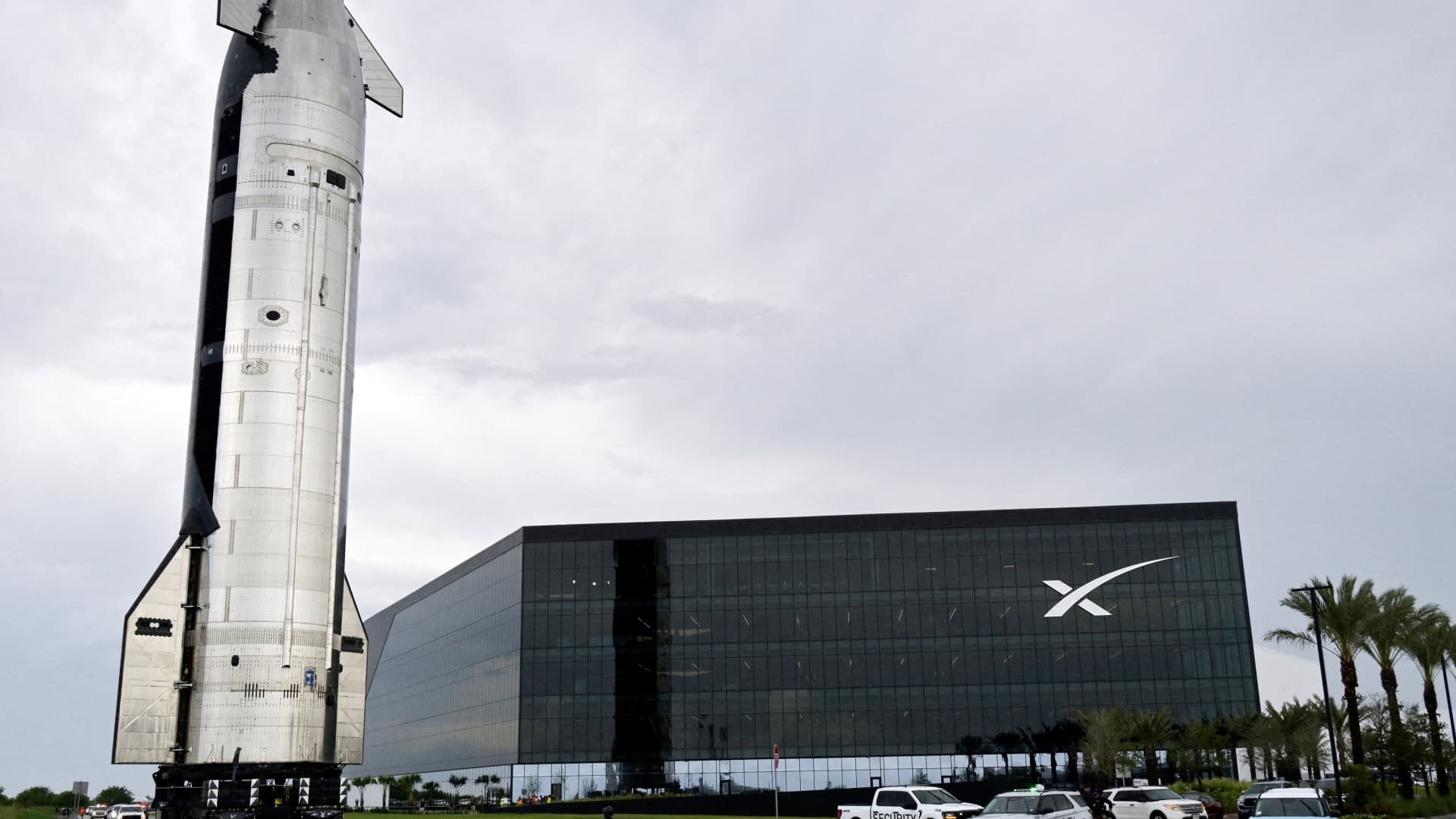
SpaceX is on the cusp of a landmark achievement, preparing its massive Starship rocket for its inaugural orbital flight, a move that could redefine the economics of space travel. This critical test is not just about reaching orbit but is foundational to the company’s ambitious plans, from expanding its Starlink internet constellation to enabling lunar missions and even deploying AI supercomputers in space.
🚀 Tech Strategy & Market Disruptions
- Starlink Connectivity Expansion. The orbital success of Starship is paramount for scaling Starlink, SpaceX’s most profitable segment, aiming to deliver global internet and outpace competitors like Eutelsat OneWeb.
- Reusable Heavy-Lift Paradigm Shift. Starship’s fully reusable design promises to drastically reduce the cost of placing heavy cargo into orbit, challenging existing aerospace logistics and opening new commercial frontiers.
- Future Space Computing Infrastructure. Plans to launch ‘AI compute satellites’ by 2027 using Starship signal a long-term vision to establish sophisticated data processing capabilities directly in space, a significant leap in digital transformation.
SpaceX, now a $2 trillion publicly traded entity, is set to launch its Starship rocket from Starbase, Texas, aiming for the first orbital success after 13 prior test flights. This 14th flight, authorized by the Federal Aviation Administration on September 26, is designed to prove the vehicle’s capability to circle the planet, a necessary precursor for its broader strategic objectives. The launch window opens at 8:15 a.m. ET, with the mission also deploying 26 of its advanced Starlink V3 satellites.
The strategic importance of the Starship rocket extends far beyond satellite deployment. Elon Musk has articulated a vision where Starlink could eventually provide a majority of the world’s internet, underscoring the vital role of Starship in achieving this global reach. Furthermore, the spacecraft is integral to NASA’s plans to return U.S. astronauts to the moon’s surface, with a major test flight scheduled for next year. The development underscores dynamic shifts in the broader technology market trends, as noted by analysts observing the rapidly evolving aerospace sector on StockXpo.com.
Beyond connectivity and lunar missions, SpaceX COO Gwynne Shotwell highlighted plans for “supercompute in space,” involving AI compute satellites slated for orbital deployment by 2027. These initiatives reflect a disruptive flow: the reusable Starship enables lower launch costs and higher payload capacity, which in turn facilitates the rapid expansion of Starlink and the deployment of advanced in-orbit infrastructure. This cost-efficiency and scalability accelerate the adoption of space-based services, disrupting traditional satellite communication and opening entirely new avenues for emerging technologies, from remote sensing to off-world data processing.
‘The Starship program exemplifies a profound shift in aerospace engineering and digital infrastructure. Its reusability and payload capacity are not merely incremental improvements; they are foundational elements for a new economic architecture in space, blurring the lines between terrestrial and extraterrestrial computing. This truly defines innovation-driven growth in the space sector.’
The new Starlink v3 satellites, produced at SpaceX’s Redmond, Washington facility, showcase significant technological advancements, generating twice the power of previous generations and offering enhanced data transmission capabilities for subscribers. This continuous innovation in satellite technology, coupled with Starship’s launch capabilities, positions SpaceX to capture an increasingly dominant share of the space services market. Insights into such technological advancements are often discussed in comprehensive reports covering emerging technologies.
| Metric | Value |
|---|---|
| Company Valuation | $2 Trillion (post-IPO) |
| Active Starlink Satellites (approx.) | 11,000 |
| Starship Orbital Flight Attempt | 1st (14th overall test flight) |
| Starlink V3 Satellites Deployed (this flight) | 26 |
| Starlink V3 Power Generation | 2x prior generations |
| AI Compute Satellites Target Launch | 2027 |
SpaceX’s Platform Architecture: Driving Scalability
SpaceX’s architectural approach is centered on vertical integration and rapid iteration, a strategy that has allowed it to develop complex systems like the Starship rocket and Starlink constellation concurrently. This involves designing, manufacturing, and launching its own rockets and satellites, providing unparalleled control over its supply chain and development cycles. The ability to deploy thousands of satellites and rapidly evolve its launch vehicle capabilities demonstrates a highly scalable platform. This integration extends to software, with advanced autonomous systems guiding missions and managing the extensive Starlink network. Such comprehensive control is a distinct advantage, enabling swift responses to technical challenges and market demands, a model that differs significantly from traditional aerospace contractors relying on external suppliers and more rigid development timelines, as reported by major technology news outlets.
Starship’s Ecosystem Expansion Potential: Beyond Earth Orbit
The long-term vision for the Starship rocket transcends merely ferrying payloads to low Earth orbit. Its design as a fully reusable, high-capacity transport system unlocks an unprecedented ecosystem expansion. This includes not only the already massive Starlink constellation and NASA’s lunar missions but also interplanetary travel to Mars, space tourism, and the potential for orbital manufacturing. The “supercompute in space” initiative for AI compute satellites signifies a groundbreaking application, positioning Starship as a critical enabler for distributed computing infrastructure beyond terrestrial constraints. This expands the market for high-performance computing to entirely new domains, creating a robust framework for future innovations in space. For more educational tech insights, readers often turn to resources like StockXpo’s blog.
SpaceX’s Starship Rocket: The Geopolitical and Commercial Horizon
The successful orbital launch of the Starship rocket will mark a profound inflection point, solidifying SpaceX’s leadership in the commercial space sector and reshaping global access to space. Its impact will ripple through telecommunications, defense, and scientific exploration, challenging existing paradigms and accelerating the pace of innovation. This milestone validates years of relentless engineering and investment, positioning SpaceX not just as a launch provider but as an architect of humanity’s future in space, influencing global technology and market dynamics.
- Market Leadership Reinforced: A successful orbital flight underscores SpaceX’s technical prowess, solidifying its dominant position in the private space industry.
- Starlink’s Accelerated Growth: The ability to rapidly deploy V3 Starlink satellites will enhance global internet coverage and service quality, expanding market penetration.
- New Space Economy Catalyzed: Starship’s capabilities will significantly lower costs for space access, fostering a burgeoning ecosystem of orbital services, manufacturing, and exploration.
What new industries will emerge as access to space becomes as routine as air travel?
📊 StockXpo Analyst’s View
Market Impact: A successful Starship orbital flight would trigger a significant positive investor sentiment towards aerospace tech, potentially influencing valuations across the entire sector. SpaceX’s $2 trillion valuation, already robust from its recent IPO, could see further appreciation as this key technological hurdle is overcome, impacting liquidity and drawing more capital into innovation-driven space ventures. Conversely, rivals relying on older, less efficient launch systems may face increased pressure.
Sector To Watch: The satellite communications sector (SatCom) and the broader space technology industry will be under intense scrutiny. Companies involved in satellite manufacturing, ground station technology, and space-based data services, including competitors to Starlink like OneWeb, will need to rapidly adapt or risk being outmaneuvered by Starship’s cost and capacity advantages. The digital transformation segment focusing on advanced analytics and AI infrastructure, particularly for edge computing in space, also becomes a prime area for disruption, as detailed by Bloomberg’s technology coverage.
Financial Disclaimer:
StockXpo.com is a financial news aggregator and educational portal, not a registered investment advisor or broker-dealer. All information, news, and analysis provided herein are strictly for educational purposes and do not constitute investment, financial, legal, or tax advice. Investing in the stock market involves high risks, and past performance is not indicative of future results. StockXpo will not be liable for any financial losses or investment damages. Always consult a certified financial advisor before making market decisions.
MORE IN INSIDE TECHNOLOGY

SK Hynix Shares Rebound: A Strategic Shift in Semiconductor Funding
Published: Friday, October 23, 2026 · 1:46 AM

AI Innovation Fuels Southeast Asia’s Digital Growth
Published: Thursday, October 22, 2026 · 12:36 AM