Published: Tuesday, September 29, 2026 · 3:19 AM | Updated: Tuesday, September 29, 2026 · 3:19 AM
📊 2,284 views




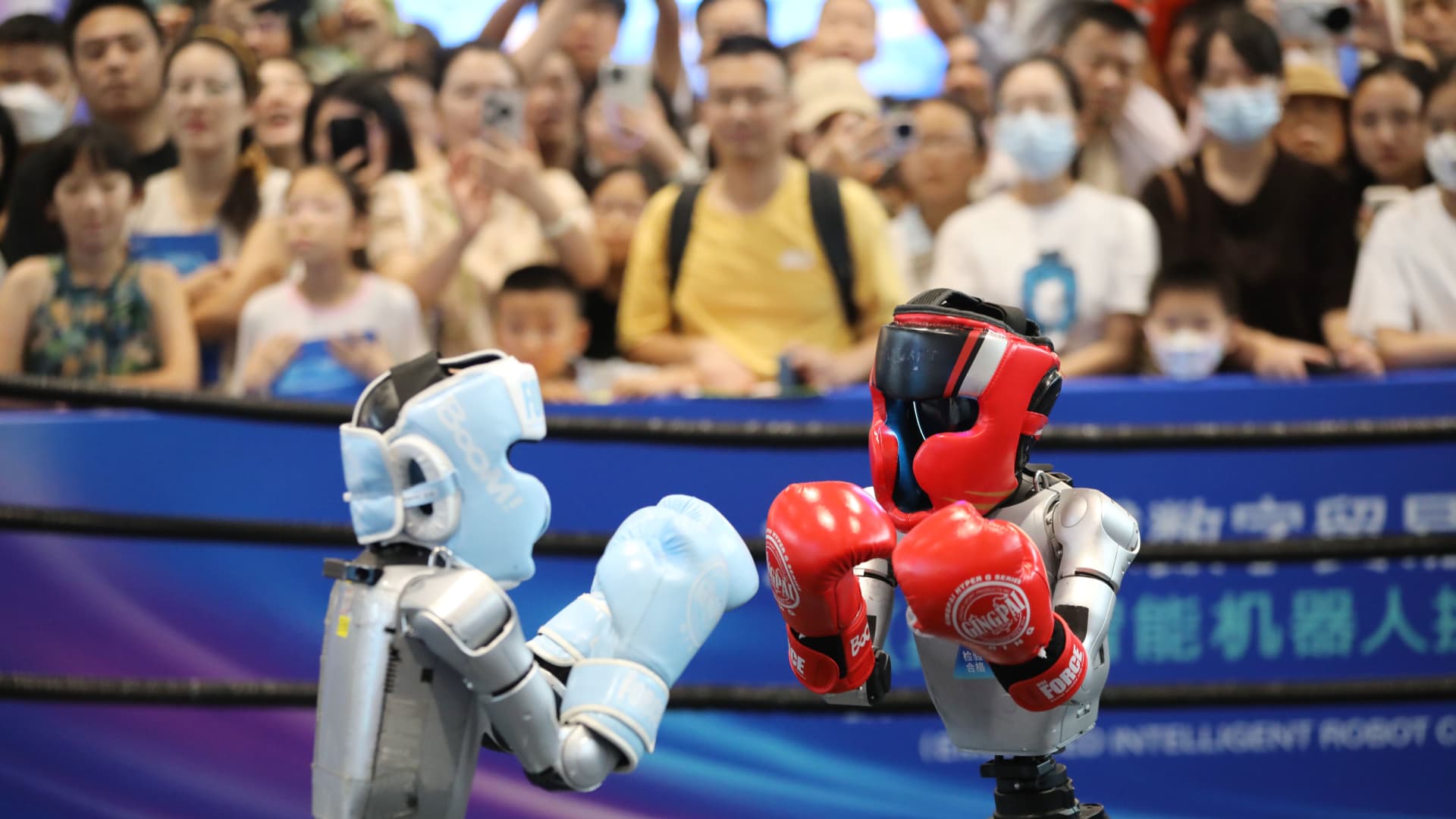
China’s securities regulator is significantly raising the bar for public listings of humanoid robot startups, signaling a notable shift towards demanding greater commercial viability and technological substance from the sector. This move by the China Securities Regulatory Commission (CSRC) reflects a cooling investor sentiment globally, prompting a reevaluation of soaring valuations in the rapidly expanding artificial intelligence market.
💰 Financial Strategy & Market Insights
- Stricter IPO Access. China’s CSRC now mandates sustainable revenue, narrowing losses, and core technology for in-depth market analysis of Humanoid Robot IPOs, drastically reducing eligible candidates.
- Market Cooling Signals. Global investor sentiment is assessing an AI bubble, leading to increased scrutiny on high valuations in the humanoid sector after rapid investment surges.
- Post-IPO Performance Concerns. Prominent listings like Unitree and Ubtech have seen significant share price declines post-debut, highlighting commercialization challenges and valuation risks.
The CSRC’s new ‘window guidance’ mandates that companies seeking Humanoid Robot IPOs must meet three specific criteria:
- Applicants must demonstrate sustainable revenue and verifiable commercial orders.
- Companies must show a clear path to narrowing losses, often requiring a three-year financial forecast.
- Possession of core proprietary technology, such as advanced robotic brains or sophisticated hands, is now a prerequisite.
These heightened requirements are anticipated to disqualify many of the roughly two dozen humanoid-related embodied AI companies that have filed to list, particularly in Hong Kong, where confidential IPO filings began in May 2025. Sources familiar with the regulator’s thinking suggest that few, if any, will meet these new benchmarks.
The regulatory tightening comes as the industry’s poster child, Unitree, experienced a turbulent market debut. After its Shanghai listing in August, where shares initially skyrocketed over 460%, the stock had nearly halved to 459.65 yuan by late September from its debut closing price of 845 yuan. Unitree’s founder, Wang Xingxing, himself cautioned that widespread commercialization beyond novelty applications like ‘dancing robots’ remained years away, fueling a broader debate on the true capabilities and revenue generation of these startups.
Similarly, Hong Kong-listed Ubtech, which went public in December 2023, has seen its stock tumble over 40% year-to-date, reporting an operating loss of 279 million yuan for the first half of the current year. This performance contrasts sharply with the flood of capital—47.09 billion yuan ($6.95 billion) in Q2 alone—that poured into the sector, more than doubling Q1’s figures and six-folding year-over-year, according to Xiniu.
Rhodium Group analysis this month highlighted that Chinese AI companies typically generate only about 10% of the revenue of their U.S. counterparts like Anthropic and OpenAI, despite often commanding significantly higher valuation-to-revenue ratios. This disparity points to potential overvaluations rooted in speculative investment rather than proven commercial success, even as the sector continues to evolve, exemplified by AMD’s $8.2 billion stock acquisition of World Labs, a startup developing AI models for 3D environments crucial for humanoid robot development.
Assessing the Balance: Upside vs. Downside Risks
The evolving landscape for Humanoid Robot IPOs presents a complex risk-reward profile for investors and the industry at large.
- Upside Potential:
- Market Maturation: Stricter criteria could weed out speculative ventures, leading to more robust, commercially viable humanoid robot companies with sustainable long-term growth.
- Technological Innovation Focus: Emphasis on core technology might incentivize deeper R&D, fostering genuine breakthroughs rather than hype-driven startups, attracting more focused capital.
- Investor Confidence Restoration: A more regulated market could restore investor trust, attracting stable capital once clearer commercial pathways emerge, particularly for advanced robotics.
- Downside Risks:
- Innovation Chill: Overly strict regulations might stifle early-stage innovation and deter venture capital from entering a nascent but potentially transformative sector.
- Valuation Corrections: Current market valuations for many pre-IPO humanoid robot companies may face significant downward pressure, leading to investor losses and funding gaps.
- Liquidity Constraints: Reduced IPO activity will limit avenues for early investors and founders to exit, impacting capital recycling within the broader financial ecosystem.
Embodied AI, central to the humanoid robot sector, refers to artificial intelligence that operates within a physical body, allowing it to interact with the real world. This goes beyond purely software-based AI, integrating robotics to perform tasks, thus necessitating significant hardware and software synchronization and robust commercial applications for viable investment.
Humanoid Robot Sector Financial Snapshot (2026)
| Metric | Value | Context/Source |
|---|---|---|
| Q2 2026 Sector Investment | 47.09 billion yuan ($6.95 billion) | Xiniu (2x Q1, 6x YoY) |
| Unitree IPO Proceeds | 6.1 billion yuan ($905 million) | Shanghai Stock Exchange |
| Unitree Stock Performance (post-debut) | -46% (845 to 459.65 yuan) | Market Data (as of Monday) |
| Ubtech H1 Operating Loss | 279 million yuan | Company Report |
| Chinese AI Revenue vs. US Leaders | 10% of US revenue | Rhodium Group Analysis |
Humanoid Robot Sector Liquidity Analysis: Navigating New Restrictions
The introduction of more stringent IPO criteria by the CSRC for humanoid robot companies profoundly impacts market liquidity. Historically, a robust IPO market provides critical exit opportunities for early-stage investors, enabling capital recycling and fueling further innovation. With fewer Humanoid Robot IPOs expected, the pool of liquid assets from this sector will shrink significantly. This could lead to a ‘chilling effect’ on venture capital flowing into embryonic embodied AI firms, as investors will face longer holding periods and reduced clarity on future exit strategies. The diminished liquidity also makes secondary market trading potentially more volatile for listed entities, as the supply of new, high-growth assets becomes constrained. Consequently, investors might pivot to more mature, revenue-generating AI segments or geographies with more predictable public market access.
AI Market Sentiment Tracker: From Hype to Reality Check
Market sentiment surrounding the broader AI sector, and specifically humanoid robotics, is undergoing a critical transition from speculative enthusiasm to a demand for tangible commercialization. Initial excitement, driven by technological breakthroughs and venture capital injections, propelled valuations to unprecedented levels. However, as evidenced by the post-IPO performance of Unitree and Ubtech, and the Rhodium Group’s findings on revenue disparities, investors are increasingly seeking clear pathways to profitability and sustainable business models. The CSRC’s new IPO guidelines align with this reality check, reflecting a regulatory desire to mitigate systemic risk from overvalued, pre-revenue companies. This shift indicates a maturing market, where due diligence on asset valuation and risk management will become paramount, influencing capital allocation decisions across the entire AI ecosystem.
Humanoid Robot IPOs: The Long Road to Commercial Maturity
China’s new, stringent IPO criteria for humanoid robot startups mark a pivotal moment, shifting the focus from speculative growth to demonstrable commercial viability and core technological strength. This regulatory intervention is a direct response to concerns about market exuberance and potentially inflated valuations within the embodied AI sector.
- The stricter rules prioritize companies with sustainable revenue, narrowing losses, and proprietary core technology.
- It reflects a broader global sentiment assessing a potential AI bubble, demanding tangible results over aspirational forecasts.
- The move aims to foster a more mature and resilient robotics industry by weeding out ventures lacking robust commercial foundations.
Will this regulatory clarity ultimately lead to more sustainable innovation or stifle the nascent industry’s growth?
📊 StockXpo Analyst’s View
Market Impact: This regulatory tightening will undoubtedly cool investor sentiment towards early-stage Chinese humanoid robot firms, shifting capital flow towards proven technologies and companies with stronger balance sheets. We anticipate increased due diligence on asset valuation and a flight to quality, potentially dampening venture capital activity in the more speculative segments of robotics for the near term.
Sector To Watch: While direct Humanoid Robot IPOs may slow, the focus on core technology will benefit component manufacturers, advanced AI software developers, and integrated robotics solutions providers. Established industrial automation and logistics robotics sectors, with their clear commercial applications, may see increased investment as investors seek more immediate returns and proven business models.
Financial Disclaimer:
StockXpo.com is a financial news aggregator and educational portal, not a registered investment advisor or broker-dealer. All information, news, and analysis provided herein are strictly for educational purposes and do not constitute investment, financial, legal, or tax advice. Investing in the stock market involves high risks, and past performance is not indicative of future results. StockXpo will not be liable for any financial losses or investment damages. Always consult a certified financial advisor before making market decisions.
MORE IN INSIDE FINANCE

AI Stock Boom Fuels $67 Billion Equities Growth for Wall Street Giants
Published: Wednesday, October 21, 2026 · 11:03 AM

New Risks Emerge: Global Finance Chiefs Highlight Debt, AI, and Geopolitical Volatility
Published: Tuesday, October 20, 2026 · 2:12 AM