Published: Saturday, July 25, 2026 · 2:25 AM | Updated: Saturday, July 25, 2026 · 2:25 AM
📊 185 views




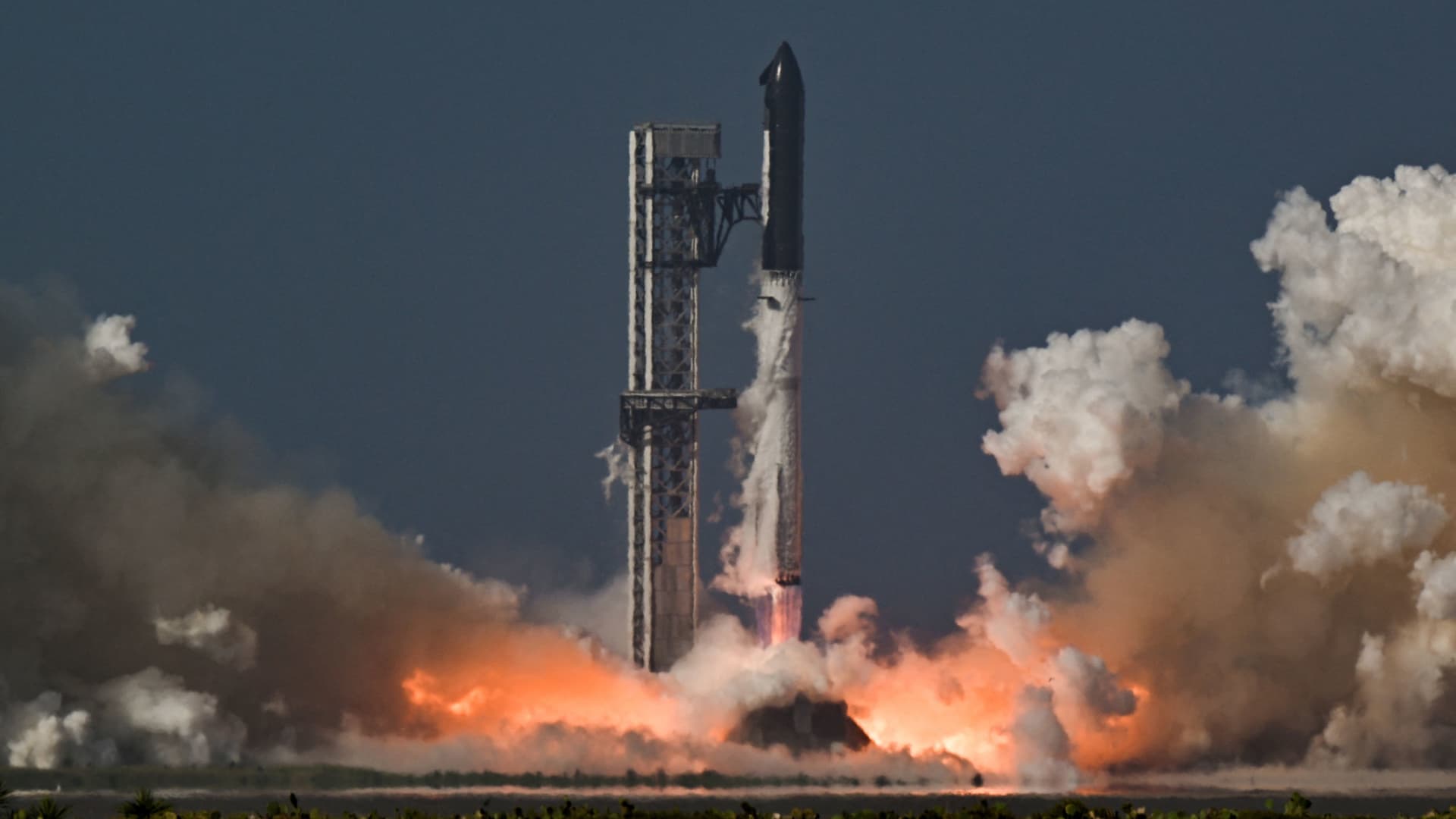
SpaceX has completed the 13th test flight of its massive Starship rocket, marking the first launch since the company’s highly anticipated IPO last month. This crucial mission aimed to validate key reusability concepts and deploy advanced Starlink V3 satellites, offering a fresh look at the firm’s innovation trajectory amidst significant market scrutiny.
🚀 Tech Strategy & Market Disruptions
- Iterative Reusability Testing. SpaceX\’s 13th test flight provided critical data on booster and upper stage performance, crucial for advancing Starship\’s fully reusable design and reducing launch costs.
- Starlink V3 Satellite Deployment. The successful orbital deployment of 20 larger, more powerful Starlink V3 satellites signals a significant upgrade in network capacity and capabilities, strengthening Starlink\’s market position.
- Post-IPO Market Volatility. Despite technical progress, SpaceX (SPCX) stock has declined 43% from its peak, reflecting investor concerns over execution risk and the long-term path to profitability for ambitious aerospace projects.
The launch of the Starship rocket from Starbase, Texas, on Friday evening represented a critical milestone for Elon Musk\’s aerospace venture. While the Super Heavy booster achieved separation, its subsequent controlled splashdown in the Gulf was deemed ‘not perfect’ by SpaceX, with only a subset of engines successfully igniting for the landing burn. This partial success highlights the ongoing technical challenges in achieving full reusability, a cornerstone of Starship\’s economic model. In contrast, the upper stage executed a ‘soft splashdown’ in the Indian Ocean, remaining intact and providing invaluable data on its heatshield performance. This duality in outcomes underscores the complex engineering hurdles still facing the Starship program.
The flight also served as a proving ground for SpaceX\’s next-generation Starlink V3 satellites. Twenty of these larger, more powerful units, equipped with solar arrays generating twice the power of previous generations, were successfully deployed into orbit. This initial deployment, while brief as the satellites were designed to burn up, offers crucial insights into their performance and paves the way for the vast expansion of the Starlink network. Beyond communications, SpaceX is actively developing Starmind satellites, intended as orbital data centers, signaling an ambitious push into new data infrastructure frontiers. The ability to launch these larger payloads efficiently is central to SpaceX\’s broader strategy and market positioning in emerging technologies.
Despite the technical progress, market sentiment for SPCX has been volatile, with the stock slumping 43% from its peak close on June 16, following its IPO. This downturn, reflecting broader technology market trends, coincides with previous launch delays due to weather and technical holds, as noted by industry publications like Reuters. Tim Farrar, a satellite services industry expert from TMF Associates, observed that while progress is evident, SpaceX ‘remains a long way from achieving rapid reusability of the entire ship,’ citing the engine relight issues as a significant concern for potential launchpad damage.
- Booster Relight Challenges: The Super Heavy booster\’s ‘hard splashdown’ due to incomplete engine relight signals persistent engineering challenges for full reusability, crucial for cost-efficiency.
- Starlink V3 Validation: Successful orbital deployment of 20 new, more powerful Starlink V3 satellites demonstrates progress in expanding the Starlink network\’s capacity and technological prowess.
- Post-IPO Investor Caution: SpaceX (SPCX) stock has seen a 43% drop from its June 16 peak, indicating investor sensitivity to execution risks despite technical advancements and broader market dynamics.
Disruption Flow:
The deployment of larger, more powerful Starlink V3 satellites via the Starship rocket directly translates to enhanced bandwidth and reduced latency for the Starlink constellation. This technological leap enables more robust internet services, accelerating global digital inclusion and intensifying competition within the satellite internet sector. Subsequently, it pressures traditional telecommunications providers to innovate their infrastructure, causing a significant market disruption in broadband connectivity and expanding the addressable market for high-speed internet.
‘The iterative nature of Starship\’s test flights, while often yielding mixed results, is fundamental to rapidly maturing highly complex aerospace systems. Each flight provides invaluable telemetry, pushing the boundaries of reusability and payload capacity, which is a critical differentiator in space logistics.’
Key Performance Indicators from Flight 13:
- Booster Separation: Achieved approximately 2 minutes after liftoff.
- Starlink V3 Satellites Deployed: 20 units successfully placed into orbit.
- Upper Stage Landing: Soft splashdown, intact heatshield observed for first time.
- Stock Performance (SPCX): Down 43% from June 16 peak following IPO.
SpaceX Platform Architecture: Engineering for Reusability
The engineering philosophy behind the Starship rocket is centered on complete reusability, a radical departure from traditional single-use or partially reusable launch systems. This platform architecture demands unprecedented levels of reliability in engine relights, structural integrity under extreme conditions, and rapid turnaround capabilities. While the latest test flight showcased progress, particularly with the upper stage\’s intact soft splashdown, the booster\’s hard landing points to the immense complexity of perfecting engine restart sequences in dynamic environments. SpaceX\’s strategy to iterate rapidly through test flights is designed to gather critical data on these intricate systems, aiming to refine the Raptor engines and structural components for routine, high-cadence flights—essential for realizing ambitious missions to the Moon and Mars, as well as significantly scaling the Starlink network.
Starship Market Adoption Challenges: Beyond Technical Hurdles
While the technical achievements of the Starship rocket are undeniable, its path to widespread market adoption faces several significant challenges beyond engineering. The perceived reliability and safety of a system still undergoing extensive testing can impact both commercial and governmental contracts. Furthermore, regulatory frameworks for frequent, high-payload orbital launches are still evolving globally, creating potential bottlenecks. The economic viability, even with full reusability, hinges on achieving a cadence of flights that can significantly drive down per-kilogram launch costs, a benchmark yet to be consistently met. Competing with established players and new entrants in the space launch market requires not only technical superiority but also consistent operational performance and a robust, scalable launch infrastructure. The recent volatility in SpaceX\’s stock post-IPO, as investors evaluate these long-term risks and potentials, underscores the delicate balance between groundbreaking innovation and market confidence. These emerging technologies require careful consideration of both technical and commercial readiness.
SpaceX\’s Starship Trajectory: Innovation Amidst Market Volatility
The latest Starship rocket test flight underscores SpaceX\’s dual narrative of profound innovation and inherent operational challenges. While the deployment of Starlink V3 satellites marks a clear step forward for its core internet service, the ongoing difficulties with booster reusability highlight the significant engineering feats still required. For long-term investors tracking educational tech insights, this mission illustrates the high-stakes, iterative development cycle common in cutting-edge aerospace.
- Engineering Resilience: SpaceX demonstrates a commitment to iterative testing, leveraging each flight for critical data despite setbacks.
- Starlink Expansion: The successful deployment of V3 satellites strengthens Starlink\’s competitive edge and future revenue streams.
- Market Confidence Test: Post-IPO stock performance reflects investor sensitivity to execution risks and the long road to full operational capability.
Will SpaceX\’s relentless pursuit of reusability ultimately translate into sustained market leadership and profitability?
📊 StockXpo Analyst\’s View
Market Impact: The mixed results of the Starship test flight, coupled with SpaceX\’s post-IPO stock drop, reflect a market adjusting to the realities of high-risk, high-reward aerospace innovation. Investor sentiment may remain cautious until more consistent, fully reusable flight profiles are demonstrated, impacting short-term liquidity for growth-stage tech companies.
Sector To Watch: The space economy, particularly satellite communications and in-orbit services, remains a dynamic sector. Companies developing next-gen propulsion, advanced materials, and AI-driven mission control systems, as observed by market analysts at Bloomberg, could see increased investment as the industry pushes towards greater efficiency and reliability.
Financial Disclaimer:
StockXpo.com is a financial news aggregator and educational portal, not a registered investment advisor or broker-dealer. All information, news, and analysis provided herein are strictly for educational purposes and do not constitute investment, financial, legal, or tax advice. Investing in the stock market involves high risks, and past performance is not indicative of future results. StockXpo will not be liable for any financial losses or investment damages. Always consult a certified financial advisor before making market decisions.
MORE IN INSIDE TECHNOLOGY
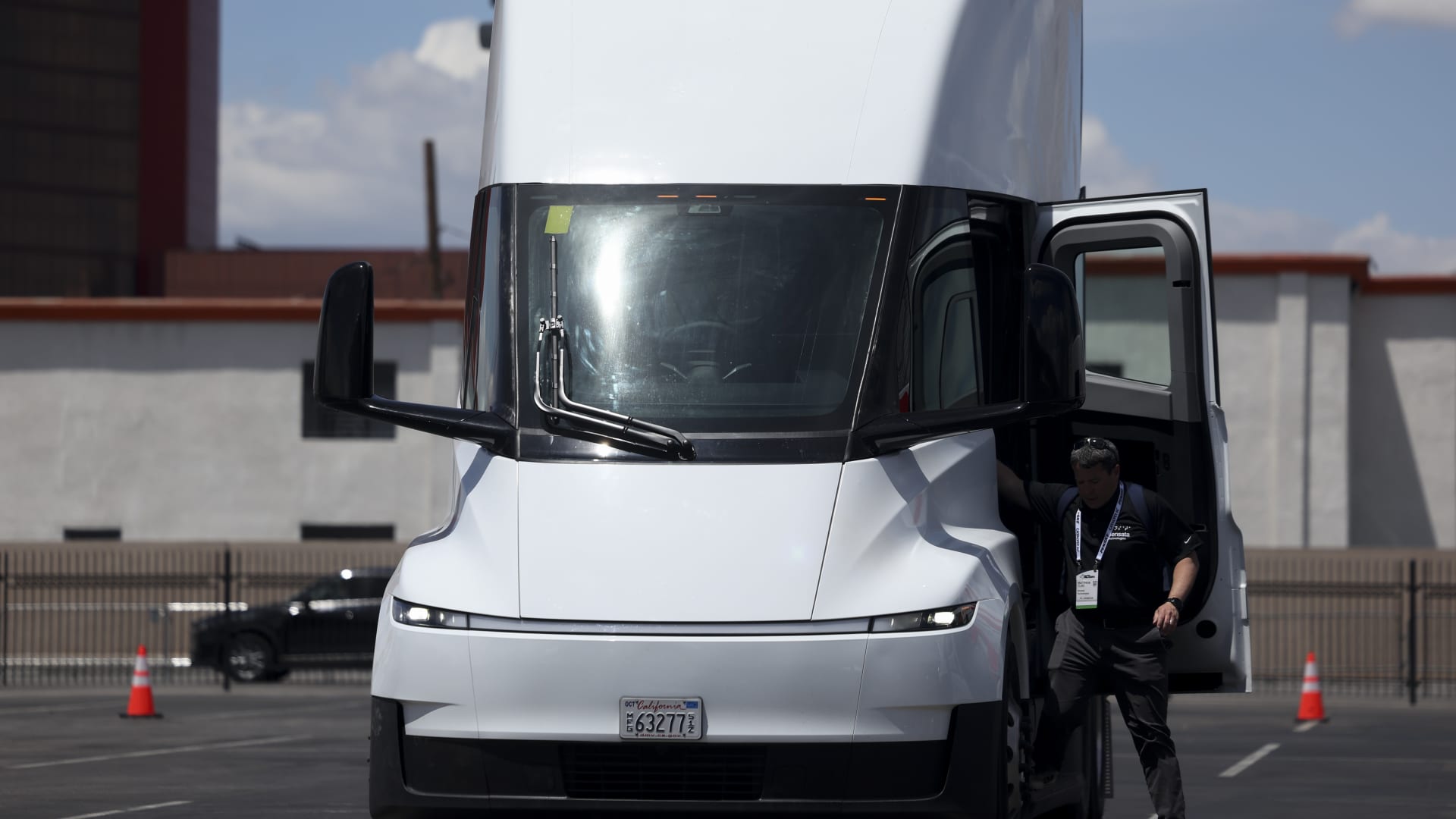
Tesla Semi Production Breakthrough: Nevada Factory Signals Scalability for Electric Trucks
Published: Thursday, September 24, 2026 · 8:24 PM

Meta’s Consumer AI Device Push: Innovation or Unproven Strategy?
Published: Thursday, September 24, 2026 · 5:53 PM