Published: Saturday, July 25, 2026 · 7:27 AM | Updated: Saturday, July 25, 2026 · 7:27 AM
📊 239 views




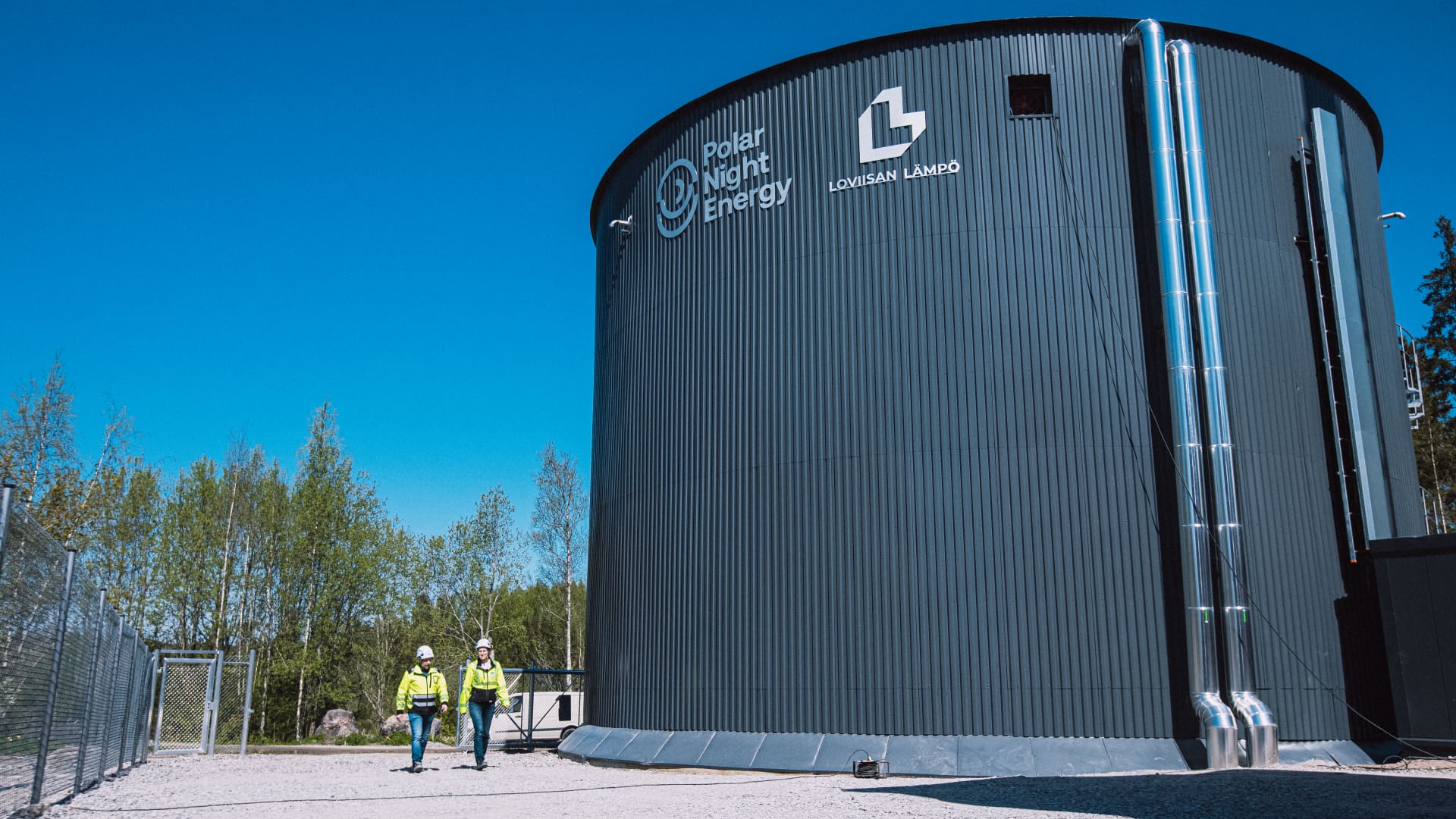
Finland has introduced what is now the world’s largest commercial sand battery, an industrial-scale thermal energy storage system designed to solve the critical intermittency challenge facing renewable energy. This innovative solution, deployed in Pornainen, signifies a significant leap in decoupling clean energy generation from consumption, offering a blueprint for sustainable district heating.
🚀 Tech Strategy & Market Disruptions
- Long-Duration Storage Advancement. The Finnish sand battery offers weeks of thermal storage, significantly outperforming traditional lithium-ion batteries in duration and providing a critical solution for renewable grid stability.
- Decoupling Energy Production. By storing heat from cheap, abundant wind and solar, this technology allows district heating networks to operate independently of real-time electricity prices, optimizing operational costs and reducing reliance on fossil fuels.
- Resource Independence. Unlike chemical batteries that depend on rare earth materials, the sand battery utilizes readily available and inexpensive crushed soapstone, mitigating supply chain risks and environmental concerns associated with critical mineral extraction.
The industrial-scale sand battery, commissioned by Loviisan Lämpö and developed by Polar Night Energy, stands 13 meters tall and 15 meters wide in Finland’s Pornainen. Utilizing 2,000 metric tons of crushed soapstone, it stores 100 megawatt-hours of thermal energy, capable of providing heating for the town’s 5,000 residents for nearly a month in summer and about a week in winter. This substantial capacity marks a tenfold increase from an earlier 2022 project, demonstrating rapid scalability and practical application.
Prior to this innovation, Pornainen’s heating needs were met by burning oil and wood chips. The new system has drastically altered this energy mix, with Polar Night Energy estimating a nearly 70% reduction in greenhouse gas emissions from the heating network and a 60% decrease in wood chip consumption. Tommi Eronen, CEO of Polar Night Energy, emphasized the shift from large, centralized power plants to a decentralized model reliant on robust storage solutions. “Hopefully a big portion of those storages could be sand battery-type of storages where we don’t need rare earth materials, like in many chemical batteries, such as lithium-ion batteries,” Eronen stated.
The technology functions as a giant, insulated thermos. Electricity, typically sourced from surplus wind or solar power when prices are low, heats the sand to high temperatures. This heat is then efficiently trapped for days or weeks before being discharged via heat exchangers to warm water for the local district heating network. Annette Höglund-Dönnes, Polar Night Energy’s Chief Commercial Officer, highlighted the economic advantage: “That delay is your business advantage because you can heat up the sand when the electricity is cheap, and you use the steam when normally it would be very expensive to produce steam off the grid.” This operational flexibility allows Loviisan Lämpö to capitalize on low spot prices, further enhancing the economic viability of the system.
The successful deployment of this large-scale thermal storage system provides a critical model for global energy transitions. By addressing the fundamental challenge of renewable energy intermittency—where solar and wind generate power only under specific conditions—the sand battery enables a more stable and reliable supply of clean heat. This mechanism smooths generation peaks and troughs, allowing communities to leverage renewable resources more effectively and reduce dependence on fossil fuels for baseload heating. The direct impact is a tangible reduction in carbon footprint and operational costs for district heating providers, setting a precedent for similar infrastructure developments worldwide. This innovation in storage technology fundamentally alters the economics and reliability profile of renewable energy projects, facilitating broader adoption and investment in sustainable infrastructure.
“Electrothermal storage technologies, such as sand batteries, are poised for global replication,” observed Jan Rosenow, professor of energy and climate policy at the U.K.’s University of Oxford. “You don’t need rare earths, critical raw materials, and the beauty is you can also charge up the battery when the electricity is cheap and discharge whenever you need the heat. And you can store it for long periods, not just two hours or four hours like lithium-ion batteries, but potentially for days and maybe even weeks.”
This initiative directly supports Finland’s broader climate goals and aligns with a global push for net-negative emissions, as highlighted in recent reports. The project in Pornainen is expected to contribute between 55% to 60% of the municipality’s district heating production from the sand battery through early this year, a significant increase from roughly 30% in 2025, according to Mikko Paajanen, CEO of Loviisan Lämpö. Finland’s Climate Minister Sari Multala described the project as “very inspiring” and innovative, particularly noting its potential for future electricity generation capabilities.
The global interest in the Finnish sand battery project underscores its potential as a disruptor in the energy storage market. Teams from “every single continent” have contacted Polar Night Energy, especially communities heavily reliant on fossil fuels like coal and oil. This widespread interest suggests a strong market demand for robust, non-lithium-based energy storage solutions that can integrate seamlessly with existing district heating infrastructure.
Evaluating Sand Battery Performance Metrics
| Metric | Value | Description |
|---|---|---|
| Height | 13 meters | Physical dimension of the sand battery silo. |
| Width | 15 meters | Physical dimension of the sand battery silo. |
| Storage Material | 2,000 metric tons of crushed soapstone | Primary medium for heat storage. |
| Thermal Energy Capacity | 100 megawatt-hours (MWh) | Total thermal energy the battery can store. |
| Summer Heating Autonomy | ~1 month | Duration the battery can cover town’s heating needs in summer. |
| Winter Heating Autonomy | ~1 week | Duration the battery can cover town’s heating needs in winter. |
| GHG Emission Reduction | Almost 70% | Estimated decrease in greenhouse gas emissions from heating network. |
| Wood Chip Use Reduction | About 60% | Estimated decrease in wood chip consumption. |
| Heating Contribution (early 2026) | 55-60% | Targeted percentage of district heating from sand battery. |
Sand Battery Market Adoption Challenges
While the Finland project showcases significant promise, the broader market adoption of large-scale sand battery technology faces several hurdles. One primary challenge lies in the efficient conversion of stored thermal energy back into electricity, a process that is currently less efficient than direct electrical storage in traditional batteries. This limitation largely confines current applications to district heating networks or industrial processes requiring direct heat. Scaling the technology beyond these localized thermal grids to wider utility-scale electricity storage presents complex engineering and economic considerations.
Furthermore, competition from other established and emerging long-duration storage technologies, such as pumped hydro, compressed air energy storage (CAES), and advanced flow batteries, means sand batteries must prove their cost-effectiveness and reliability across diverse geographical and climatic conditions. The availability of suitable land and the integration with existing energy infrastructure also represent significant implementation challenges. These factors will likely influence the pace and scope of global deployments, requiring careful planning and regulatory support to overcome.
Sand Battery Ecosystem Expansion Potential
Despite current limitations, the potential for sand battery technology to expand its ecosystem is substantial, particularly in regions with high renewable energy penetration and existing district heating infrastructure. The technology’s reliance on abundant, inexpensive materials like sand or crushed soapstone positions it as a cost-effective alternative to rare-earth-dependent solutions, reducing geopolitical supply chain risks and environmental impact. This characteristic could drive research and development into new material composites and designs that further enhance energy density and heat-to-electricity conversion efficiency.
Beyond district heating, sand batteries could find applications in industrial sectors requiring process heat, such as cement, steel, or food processing, where decarbonization of thermal loads is a critical challenge. Their ability to store energy for extended periods also makes them valuable for seasonal energy balancing, smoothing out fluctuations in renewable output over months, not just hours. As global interest in sustainable and resilient energy systems grows, these thermal storage solutions could become integral components of future smart grids and contribute valuable tech insights, diversifying the portfolio of advances in emerging technologies.
Finland’s Thermal Storage Revolution: A Global Blueprint?
Finland’s deployment of the world’s largest commercial sand battery in Pornainen marks a pivotal moment for renewable energy and thermal storage solutions. This project not only dramatically reduces the town’s reliance on fossil fuels for heating but also demonstrates a viable, scalable path to addressing the notorious intermittency of wind and solar power without recourse to critical rare earth materials.
- The Pornainen sand battery significantly cuts greenhouse gas emissions and wood chip consumption for district heating.
- It offers long-duration thermal energy storage, allowing efficient utilization of cheap, off-peak renewable electricity.
- Global interest in this technology highlights its potential for replication in communities seeking robust, sustainable heating solutions.
Will this Finnish innovation inspire a new wave of localized, sustainable thermal energy systems that reshape our approach to grid stability and energy independence?
📊 StockXpo Analyst’s View
Market Impact: The success of Finland’s large-scale sand battery could significantly shift investment paradigms in the utility and district heating sectors. Demonstrating reliable, long-duration thermal storage without rare earth materials could de-risk renewable energy projects, potentially attracting substantial capital from ESG-focused investors. This innovation provides a strong counter-narrative to concerns about renewable intermittency, which may positively impact investor sentiment towards broader technology market trends in green energy.
Sector To Watch: The industrial heating and utility-scale energy storage sectors are poised for disruption. Companies involved in sustainable infrastructure, advanced materials (particularly for thermal storage mediums), and smart grid integration stand to gain. Conversely, traditional fossil fuel providers for baseload heat generation may face increasing pressure as cost-effective, clean alternatives become more prevalent.
Financial Disclaimer:
StockXpo.com is a financial news aggregator and educational portal, not a registered investment advisor or broker-dealer. All information, news, and analysis provided herein are strictly for educational purposes and do not constitute investment, financial, legal, or tax advice. Investing in the stock market involves high risks, and past performance is not indicative of future results. StockXpo will not be liable for any financial losses or investment damages. Always consult a certified financial advisor before making market decisions.
MORE IN INSIDE TECHNOLOGY
AI Buildout Hits Credit Headwinds: Neoclouds Under Pressure
Published: Saturday, October 24, 2026 · 12:23 AM

SK Hynix Shares Rebound: A Strategic Shift in Semiconductor Funding
Published: Friday, October 23, 2026 · 1:46 AM