
Published: Saturday, November 14, 2026 · 3:45 AM | Updated: Saturday, November 14, 2026 · 3:45 AM
📊 3 views




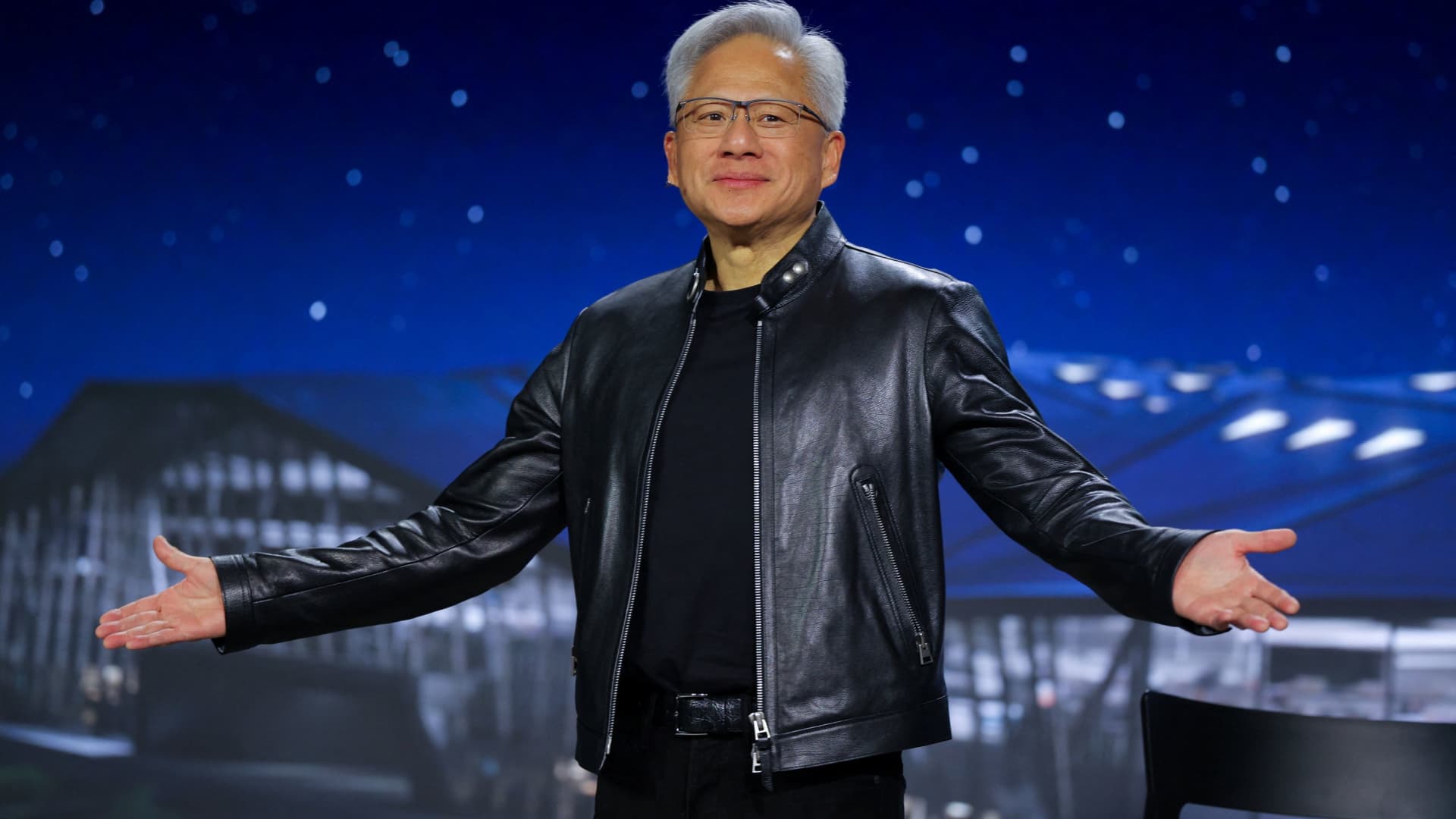
The recent leadership transition at Nvidia, following Jensen Huang’s departure, has cast a spotlight on the inherent vulnerabilities of organizations built heavily around a ‘rockstar’ CEO. While charismatic leaders undoubtedly propel innovation and market visibility, their outsized influence can paradoxically create significant governance and operational risks upon their exit. This analysis delves into the delicate balance between visionary leadership and robust corporate resilience.
🚀 Tech Strategy & Market Disruptions
- Visionary vs. Operational Dependence. The article highlights that while a rockstar CEO can define market direction, investors often struggle to distinguish between the leader’s personal influence and the company’s intrinsic capabilities.
- Supply Chain Leverage at Risk. Jensen Huang’s personal relationships were instrumental in securing critical component capacity for Nvidia, suggesting that this advantage might diminish without his direct involvement, opening opportunities for competitors.
- Governance Imperative for Succession. The incident underscores a critical governance gap where boards might fail to adequately prepare for the departure of highly successful, charismatic leaders, risking operational continuity and market confidence.
The recent shift in leadership at Nvidia, prompted by the departure of its long-standing figurehead Jensen Huang, has ignited a crucial discussion within the technology sector regarding the perils of over-reliance on a singular visionary. This event, which saw the conversation rapidly pivot from Huang’s exit to Nvidia’s operational resilience without him, exposed a deep-seated investor concern: was confidence rooted in the company’s technological prowess and talent, or predominantly in its enigmatic leader? Leading financial news outlets extensively reported on the immediate market reaction, with analysts expressing apprehension about the future trajectory of the AI chip giant.
Key concerns surfacing post-departure include:
- Supply Chain Control: Huang’s personal influence in securing critical component allocation, as highlighted by SemiAnalysis, creates a potential vulnerability.
- Visionary Leadership Gap: While strong operationally, replacing Huang’s unique strategic vision and ability to shape industry dialogue is a significant challenge.
- External Relationships: His role as a bridge between Silicon Valley, Asia, and Washington is complex and difficult to replicate by a single successor.
Despite Nvidia’s robust internal capabilities, including interim CEO Colette Kress’s decade-long tenure, a strong engineering team, and a dominant position in the artificial intelligence chip market, the focus remained squarely on Huang’s external influence. Dylan Patel of SemiAnalysis, speaking on CNBC’s ‘Squawk Box Asia’, articulated how Huang personally swayed smaller component manufacturers to dedicate capacity to Nvidia, thereby securing a significant portion of the global supply chain. This personal leverage, rather than purely contractual agreements or technological superiority, formed a critical pillar of Nvidia’s market advantage. The fundamental question now facing the company and its investors is the extent to which this advantage was proprietary technology versus Huang’s intricate network of relationships, a dynamic that rivals will undoubtedly seek to exploit. Bloomberg’s recent analysis highlights the growing importance of succession planning in dynamic tech markets.
The phenomenon of elevating CEOs to ‘rockstar’ status carries undeniable benefits, attracting capital, opening strategic doors, and forging a distinct corporate identity. Huang exemplified this, not only shaping the narrative around AI’s future but positioning Nvidia at its core. His global engagements and distinctive persona created a powerful brand synergy. However, as Eric Ross noted prior to Huang’s resignation, ‘He is the company,’ a sentiment that now highlights the inherent fragility of such a model. While executives like Bernstein’s Stacy Rasgon acknowledge Nvidia’s strong operational team, they emphasize the irreplaceable nature of Huang’s visionary leadership, particularly for a company whose valuation is tied to future AI potential.
Duncan Clark further elaborated on Huang’s unique role as a critical bridge between Silicon Valley, Asia, and Washington, cementing his status as a prominent voice for the broader AI industry. This multifaceted role, encompassing diplomatic, strategic, and technological dimensions, is exceedingly difficult to replace with a single individual. Nvidia’s board faces the complex challenge of distributing these responsibilities across its leadership team, emphasizing continuity while initiating a search for a permanent successor. The board, led by new chair Harvey Jones, stresses that existing operations, customer commitments, and product roadmaps are expected to continue uninterrupted.
Beyond immediate operational concerns, the Nvidia situation presents a critical governance lesson for other corporations. Linda Ford, CEO of The Chartered Governance Institute in the U.K., pointed out that this scenario illustrates what unfolds ‘when a company’s leadership is built around one person.’ The absence of a prior board chair at Nvidia further underscores this governance vulnerability. As Steve Sedgwick, anchor for CNBC’s ‘Squawk Box Europe’, argued, strong governance, not less, is essential with a powerful leader to prevent the perception that normal rules do not apply and to adequately prepare for inevitable transitions. The core challenge for boards remains: how to effectively challenge and plan for the succession of a highly successful, seemingly indispensable leader, ensuring the enterprise can thrive independently of any single individual.
The departure of a pivotal `rockstar CEO` like Jensen Huang triggers a ripple effect across the technology market and corporate governance landscapes:
Visionary Exodus → Investor Uncertainty → Share Price Volatility:
* Huang’s unique vision and influence in critical supply chain negotiations provided Nvidia with significant competitive advantages. His exit immediately translated into investor uncertainty regarding the sustained competitive differentiation and future innovation trajectory.
* This uncertainty typically manifests as short-to-medium term share price volatility, reflecting market re-evaluation of the company’s intrinsic value versus its ‘leadership premium.’
* Shift in Supply Chain Dynamics → Increased Competition for Capacity:
* Huang’s personal relationships with component suppliers were critical in securing production capacity for Nvidia. Without this direct leverage, competitors may find it easier to negotiate for increased capacity, potentially diluting Nvidia’s market share advantage.
* This dynamic could lead to a more fragmented and competitive supply chain environment for high-demand components, impacting lead times and costs across the industry, particularly in emerging technologies like AI.
As a CTO, the ‘cult of personality’ around a leader, while beneficial for branding, becomes a systemic architectural flaw if not mitigated by robust, distributed leadership structures and transparent succession planning. True innovation-driven growth requires institutional resilience, not just individual brilliance, ensuring that strategic foresight is embedded across the executive layer and not held hostage by a single point of failure.
Key Leadership Transition Considerations
While specific technical metrics related to Huang’s departure are not directly quantifiable at this stage, the market implications highlight several critical considerations for corporate resilience:
- Leadership Continuity: Nvidia’s immediate transition to Interim CEO Colette Kress, a long-serving CFO, provides operational stability but does not fully address the ‘visionary gap’ identified by analysts like Bernstein’s Stacy Rasgon.
- Market Perception vs. Core Strength: The market’s immediate concern suggests a perceived over-reliance on Huang’s personal brand, potentially overshadowing Nvidia’s established technology leadership in AI chips and its extensive patent portfolio.
- Ecosystem Relationships: Huang’s role as a bridge between Silicon Valley, Asia, and Washington, as noted by Duncan Clark, signifies a complex web of relationships vital for global market access and policy advocacy that must now be systematically re-established by the new leadership.
Nvidia Market Adoption Challenges
Nvidia’s dominant position in AI chip markets, while formidable, faces ongoing challenges regardless of leadership. The rapid evolution of AI demands continuous innovation, and competitors are aggressively pursuing alternatives. Customers seek diversification, particularly with the increasing geopolitical risks associated with semiconductor supply chains. The transition away from a single, charismatic leader may initially complicate customer relationships that were heavily influenced by Huang’s personal touch. New leadership will need to reinforce Nvidia’s technological value proposition and service commitment, proving that the innovation engine is self-sustaining. This is critical for maintaining market share against rising domestic and international competition, as well as evolving demands from hyperscalers developing in-house AI solutions.
Nvidia Ecosystem Expansion Potential
Despite the leadership transition, Nvidia possesses substantial potential for ecosystem expansion. Its CUDA platform remains a critical differentiator, fostering a robust developer community and enabling broad applications from data centers to autonomous vehicles. The opportunity lies in deepening these software-defined advantages and extending reach into new verticals. The company can leverage its established partnerships in cloud computing and automotive, while also exploring emerging markets such as robotics, advanced simulation, and edge AI. A diversified leadership team, freed from the singular dependence on a `rockstar CEO`, could strategically delegate responsibilities to explore these avenues more systematically, potentially accelerating growth in less saturated segments and strengthening the overall technology market trends for future generations of semiconductors. Ensuring the architectural integrity and scalability of its platforms will be paramount to capitalize on these opportunities, even as the company navigates significant changes at the top.
Nvidia’s Post-Huang Era: Balancing Vision and Governance
Nvidia’s experience underscores a fundamental tension in modern corporate leadership: the immense value of a visionary leader versus the imperative for resilient, institutionally driven governance. While Jensen Huang undeniably sculpted Nvidia into an AI powerhouse, his departure reveals the vulnerabilities inherent in a leadership model overly dependent on one individual’s charisma and connections. The challenge for Nvidia’s board and interim leadership is to articulate a compelling vision for growth that is demonstrably divorced from any single personality.
- The immediate focus must be on reinforcing customer and supplier confidence by showcasing the depth of Nvidia’s leadership team and its intrinsic technological strength.
- Implementing robust succession planning and a more distributed leadership model is critical to mitigate future ‘key person’ risks.
- Investors will scrutinize how quickly Nvidia can demonstrate continued innovation and supply chain control without Huang’s direct involvement.
Can Nvidia successfully transition from a leader-centric narrative to one that champions its collective institutional genius and technological pipeline?
📊 StockXpo Analyst’s View
Market Impact: The market’s initial reaction to Huang’s departure highlights how deeply investor sentiment can be tied to individual leaders, creating an ‘intangible premium’ that vanishes with their exit. This scenario typically leads to short-term volatility and a re-rating of the company’s systemic risks. For broader technology market trends, it signals a potential shift towards greater scrutiny of governance structures and succession plans, particularly for companies with highly visible founders.
Sector To Watch: The semiconductor and AI hardware sectors will be particularly impacted. Competitors will likely intensify efforts to secure supply chain capacity and attract top talent, potentially leading to increased M&A activity or strategic alliances. Additionally, companies specializing in corporate governance solutions and distributed leadership models may see increased demand for more educational tech insights as boards seek to de-risk their leadership frameworks.
Financial Disclaimer:
StockXpo.com is a financial news aggregator and educational portal, not a registered investment advisor or broker-dealer. All information, news, and analysis provided herein are strictly for educational purposes and do not constitute investment, financial, legal, or tax advice. Investing in the stock market involves high risks, and past performance is not indicative of future results. StockXpo will not be liable for any financial losses or investment damages. Always consult a certified financial advisor before making market decisions.
MORE IN INSIDE TECHNOLOGY
Nvidia Leadership Crisis: A New Era for AI Chip Competition
Published: Friday, November 13, 2026 · 12:05 AM
Jensen Huang’s Future: Leadership Uncertainty Rocks Nvidia’s AI Dominance
Published: Thursday, November 12, 2026 · 12:04 AM

