Published: Monday, May 18, 2026 · 6:02 AM | Updated: Monday, May 18, 2026 · 6:02 AM
📊 323 views




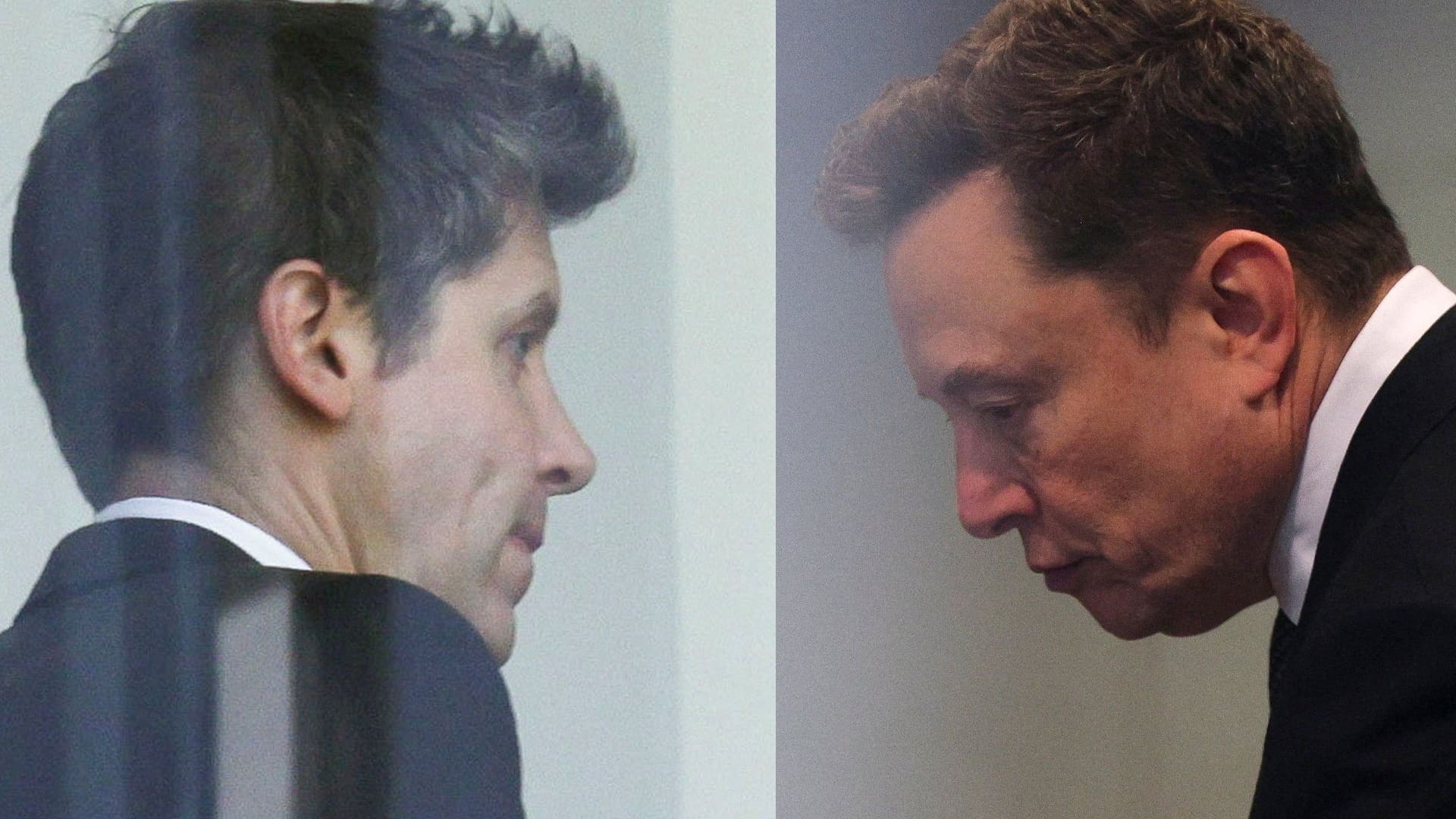
Why do the personal conflicts of tech titans matter profoundly for the future of artificial intelligence? The escalating Elon Musk Sam Altman Rivalry over OpenAI’s very foundation unveils the intricate power struggles shaping an industry at the cusp of unprecedented innovation.
This saga reveals more than just a legal dispute; it highlights a fundamental clash over AI’s governance, commercialization, and ethical trajectory, influencing global technology market trends and impacting every facet of digital transformation.
🚀 Tech Strategy & Market Disruptions
- Visionary Governance Dilemma. The core dispute over OpenAI’s non-profit origins versus its current for-profit model signals a critical debate on AI’s ethical development and control.
- Accelerated AI Commercialization. The rapid shift to a for-profit structure, fueled by massive investments like Microsoft’s $10 billion, highlights the intense race for market dominance in generative AI platforms.
- Competitive Ecosystem Formation. With xAI and SpaceX’s merger creating a formidable rival, the competition between these AI powerhouses is poised to drive unprecedented innovation and potentially fragment the emerging technologies landscape.
The partnership between Elon Musk and Sam Altman began in December 2015, fueled by a shared vision to create OpenAI as a non-profit research lab. Their goal was to prevent Google from monopolizing advanced artificial intelligence, a commitment that underpinned its initial funding and mission.
Musk, a multibillionaire from Tesla, initially pledged up to $1 billion to the charity, believing in an open-source approach to AI development. However, cracks began forming by 2017 as OpenAI faced significant cash burn for computing resources, necessitating discussions about converting to a for-profit entity.
A key point of contention was Musk’s demand for overwhelming control, including up to 90% ownership in a for-profit structure. Altman and other co-founders, including Greg Brockman and Ilya Sutskever, resisted this, arguing against any single entity having unilateral control over artificial general intelligence (AGI)—a potentially human-level or superhuman AI.
The situation escalated when Tesla poached Andrej Karpathy, a key AI researcher, from OpenAI, further eroding trust. Despite Musk’s subsequent apology, his demands for control and the eventual proposal to fold OpenAI into Tesla were ultimately rejected, as Altman believed it would compromise the non-profit’s mission.
Musk ceased his monthly contributions, with his total donations reaching only $38 million, far short of his initial pledge. He departed OpenAI’s board in 2018, believing the organization had strayed from its core principles. This signals a major pivot in the industry’s digital infrastructure as the lines blurred between charitable missions and commercial imperatives.
The quiet period ended dramatically with ChatGPT’s public release in late 2022, igniting the generative AI boom. This led to Microsoft’s significant $10 billion investment in January 2023, solidifying OpenAI’s pivot to a for-profit subsidiary and triggering Musk’s renewed public criticism, including his lawsuit in 2024. For developers, this means navigating a rapidly evolving, highly commercialized AI ecosystem.
The trial, which has captivated the tech world, centers on Musk’s accusation that Altman and OpenAI violated their foundational commitment to non-profit status. Meanwhile, OpenAI is now valued at over $850 billion, while Musk’s competing venture, xAI, recently merged with SpaceX, reaching a staggering $1.25 trillion valuation as they both race towards public offerings.
- Non-profit vs. For-profit Conversion: The fundamental disagreement over OpenAI’s corporate structure and mission.
- Control and Governance: Musk’s insistence on significant control versus Altman’s vision for decentralized AGI development.
- Competitive Divergence: The emergence of xAI as a direct competitor, challenging OpenAI’s market position.
The ripple effect of this legal and personal drama extends deep into the AI sector, illustrating how such high-stakes conflicts can reshape market dynamics. The outcome of the trial could set precedents for AI governance models, influencing future investment in both open-source and proprietary AI initiatives. This could change how AI platforms scale.
From a technology adoption perspective, the intense competition between OpenAI (backed by Microsoft) and xAI (backed by SpaceX) will accelerate innovation. This rivalry pushes boundaries in large language models (LLMs) and advanced neural networks, driving rapid advancements in scalable architecture and tech stack optimization.
“The Elon Musk Sam Altman Rivalry is more than a personal feud; it’s a foundational struggle over the soul of AI. As CTO, I see this accelerating the imperative for robust, transparent governance frameworks in AI development, while simultaneously fueling an unprecedented pace of innovation in competing tech stacks. Understanding these underlying tensions is crucial for any enterprise investing in emerging technologies.”
The financial stakes are immense, with OpenAI valued at $850 billion and SpaceX (post-xAI merger) at $1.25 trillion. These valuations underscore the disruptive innovation potential within the AI space, making both entities key players in the next wave of digital transformation. The race to the public market is intensifying.
OpenAI’s Ecosystem Expansion Potential
OpenAI’s strategic partnership with Microsoft provides it with unparalleled cloud infrastructure and distribution channels. This collaboration allows OpenAI to integrate its cutting-edge models, like GPT and DALL-E, deeply into enterprise software and consumer applications, expanding its ecosystem significantly beyond core AI research.
The ability to leverage Microsoft Azure’s global reach and developer tools means OpenAI can offer highly scalable solutions for various industries. For enterprise platforms, this partnership lowers adoption barriers and accelerates the integration of generative AI capabilities, driving widespread ecosystem expansion.
xAI’s Platform Architecture Vision
xAI, under Elon Musk’s leadership, is poised to develop an AI platform deeply integrated with the vast data streams from his other ventures, including X (formerly Twitter) and Tesla. This unique data access provides xAI with a proprietary advantage for training its models, focusing on real-world, dynamic information flows crucial for building sophisticated AI systems.
The vision for xAI’s architecture emphasizes a foundation that prioritizes robust, real-time data processing and a highly iterative development cycle. This approach aims to create highly accurate and contextually aware AI, potentially offering a differentiated tech stack optimization path compared to its competitors, particularly in areas requiring current event analysis or real-time decision-making.
The Future of AI: Beyond the Musk-Altman Courtroom Drama
The legal battle between Elon Musk and Sam Altman, while intensely personal, carries profound implications for the global AI landscape. Its resolution, irrespective of the winner, will shape the future of AI governance, commercialization strategies, and how ethical considerations are balanced against rapid innovation and profit motives.
This saga serves as a crucial case study in the complexities of managing disruptive innovation and the challenges of maintaining foundational principles amidst explosive growth. The ultimate outcome will influence how investors, regulators, and technologists approach the development of artificial general intelligence.
- The trial’s verdict could redefine legal precedents for AI non-profit commitments.
- Intensified competition between OpenAI/Microsoft and xAI/SpaceX will drive rapid advancements in AI capabilities.
- The debate on centralized control versus distributed governance for advanced AI will continue to dominate industry discussions.
As the dust settles, will this Elon Musk Sam Altman Rivalry ultimately accelerate or hinder humanity’s quest for responsible and scalable AI?
### 📊 StockXpo Analyst’s View
Market Impact: This high-profile legal battle, irrespective of its outcome, introduces a layer of uncertainty into the AI sector. It highlights governance risks that investors must consider, potentially leading to increased scrutiny of AI startup charters and funding models. However, the sheer competitive intensity is expected to boost investor interest in AI infrastructure and applications, given the multi-trillion-dollar valuations at stake.
Sector To Watch: The immediate beneficiaries of this rivalry are likely to be companies providing advanced computing infrastructure, such as semiconductor manufacturers and cloud service providers. Additionally, enterprises developing specialized AI applications, particularly those focused on ethical AI frameworks or niche industry solutions, could see increased investment as the broader market seeks diversified AI exposures beyond the primary contenders.
Financial Disclaimer:
StockXpo.com is a financial news aggregator and educational portal, not a registered investment advisor or broker-dealer. All information, news, and analysis provided herein are strictly for educational purposes and do not constitute investment, financial, legal, or tax advice. Investing in the stock market involves high risks, and past performance is not indicative of future results. StockXpo will not be liable for any financial losses or investment damages. Always consult a certified financial advisor before making market decisions.
MORE IN INSIDE TECHNOLOGY
Bond Yields Under Pressure: IMF Warns of ‘Disorderly’ Spike Driven by AI Debt and Inflation
Published: Tuesday, October 13, 2026 · 1:21 AM
AI Breakthroughs: TikTok CEO Predicts Major Scientific Leap Within Three Years
Published: Monday, October 12, 2026 · 2:40 AM