Published: Friday, July 17, 2026 · 5:26 PM | Updated: Friday, July 17, 2026 · 5:26 PM
📊 241 views




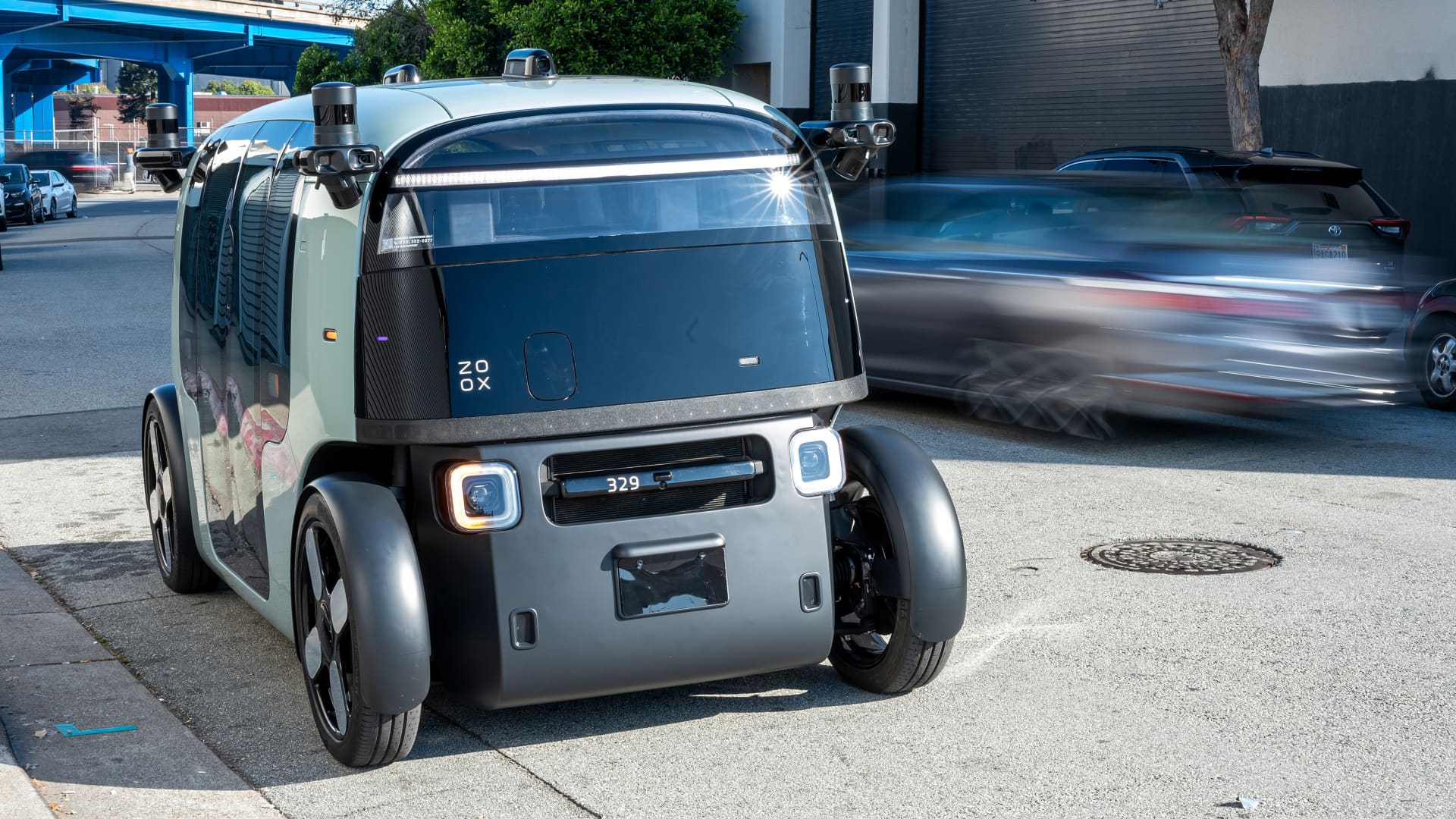
Amazon’s autonomous vehicle subsidiary, Zoox, has initiated a Zoox software recall for 105 robotaxis following an incident where a vehicle drove into heavy smoke without proper detection. This voluntary recall highlights the persistent challenges in achieving full autonomous reliability and has drawn renewed scrutiny from safety regulators.
🚀 Tech Strategy & Market Disruptions
- Sensor Gaps Highlighted. The incident reveals critical limitations in current autonomous sensor fusion and AI perception models when encountering unpredictable environmental obscurities like heavy smoke.
- Regulatory Pressure Mounts. NHTSA’s recent directive underscores increasing regulatory oversight, forcing AV developers to prioritize seamless interaction with emergency services and dynamic incident zones, potentially impacting deployment timelines.
- Competitive Landscape Shift. This recall, alongside Waymo’s recent issues, indicates that even market leaders face significant hurdles, suggesting that the race for scalable, safe robotaxi services is far from settled.
Amazon-owned Zoox recently announced a Zoox software recall affecting 105 robotaxis, citing concerns over the vehicles’ inability to reliably detect and respond to heavy smoke. The recall, reported to the National Highway Traffic Safety Administration (NHTSA) on July 8, stems from a June 20 incident in Las Vegas. An unoccupied Zoox robotaxi entered an active, uncordoned fire scene obscured by heavy smoke, braking abruptly and attempting to steer away before stopping. A human teleguidance operator subsequently instructed the vehicle to reverse.
This event comes amidst growing regulatory scrutiny concerning autonomous vehicles (AVs) and their interaction with emergency situations. NHTSA Administrator Jonathan Morrison issued a directive last week specifically urging AV developers to address interference with first responders, citing a pattern of AVs entering emergency zones, blocking paths, or failing to recognize emergency signals such as flashing lights, flares, and smoke. While Zoox described the June incident as an isolated event, it echoes broader industry-wide challenges that are increasingly drawing the attention of federal safety watchdogs.
- Zoox vehicles are designed without steering wheels or pedals, featuring a unique shuttle-like interior with inward-facing seats. The company offers free rides in limited zones of Las Vegas and San Francisco, with selective user access in Miami and Austin, and testing in six other U.S. cities. This latest recall is not Zoox’s first; the company issued multiple software recalls last year concerning issues with lane crossings, predicting other vehicles’ movements, and pedestrian detection.
The core issue—software failing to interpret ambiguous environmental data like heavy smoke—creates a direct operational risk. This sensor interpretation failure leads to unpredictable vehicle behavior in critical scenarios, which in turn necessitates software recalls and operational pauses. For companies like Zoox, this translates to increased development costs and delayed commercial scaling, ultimately disrupting the projected timeline for widespread robotaxi adoption and impacting investor confidence in the sector’s near-term viability.
“The Achilles’ heel of autonomous systems remains edge-case scenario perception. While AI excels in structured environments, real-world unpredictability, like smoke obscuring a scene, demands a level of contextual understanding and predictive reasoning that current models often lack. Bridging this perception gap with robust, redundant sensing and rapid machine learning adaptation is paramount for safe, scalable deployment.”
- Vehicles Recalled: 105 Zoox robotaxis
- Incident Location: Las Vegas
- Incident Date: June 20
- NHTSA Notification Date: July 8
- Previous Zoox Recalls (2025): Lane crossings, predicting vehicle movement, pedestrian detection
Zoox Market Adoption Challenges
The path to widespread market adoption for Zoox, and indeed the broader robotaxi industry, is fraught with significant technical and public trust challenges. Beyond individual software vulnerabilities like smoke detection, fundamental hurdles include navigating diverse urban infrastructures, adapting to varied weather conditions, and establishing clear regulatory frameworks across multiple jurisdictions. Each software recall, though a necessary safety measure, erodes public confidence and reinforces skepticism about the readiness of fully autonomous vehicles for mass deployment. Competitors like Alphabet’s Waymo, while ahead in scale with approximately 4,000 automated vehicles, have also faced their share of recalls, including recent issues with vehicles entering freeway construction zones, as reported by Bloomberg Technology. This indicates that even the most advanced players in emerging technology markets are still in a nascent stage of perfecting their systems.
Zoox Ecosystem Expansion Potential
Despite the current setbacks, Zoox’s long-term ecosystem expansion potential remains considerable, largely due to its backing by Amazon. The strategic acquisition for $1.3 billion in 2020 positioned Zoox to potentially integrate with Amazon’s vast logistics and service ecosystem. Imagine Zoox vehicles not just as robotaxis, but as autonomous last-mile delivery platforms, mobile retail units, or even a component of Amazon’s broader smart city initiatives. Such integration would require not only perfected autonomous driving capabilities but also a seamless fusion of vehicle operation with complex inventory management, scheduling, and customer interaction platforms. The scalability of such an ecosystem hinges on overcoming current perception and safety challenges, unlocking synergies that could redefine technology market trends and significantly differentiate Zoox from pure-play robotaxi competitors. For those seeking educational tech insights, understanding these integration possibilities is crucial.
Amazon’s Robotaxi Future: Navigating Perceptual Frontiers
The latest Zoox software recall underscores a critical truth: the journey to fully autonomous vehicles is less a sprint and more a complex, iterative marathon. While Amazon’s financial muscle and technological prowess provide a strong foundation, the core challenge lies in perfecting AI perception to handle the chaotic unpredictability of real-world environments. This incident serves as a stark reminder that even seemingly minor environmental anomalies can trigger significant safety implications, demanding continuous innovation in sensor technology and AI algorithms.
- Autonomous vehicle development requires rigorous, continuous testing across diverse, unpredictable environments.
- Regulatory bodies are increasing pressure on AV developers to prioritize public safety and seamless integration with emergency services.
- The long-term success of robotaxi services hinges on building unwavering public trust through transparent safety practices and demonstrable reliability.
How quickly can Zoox and its peers adapt their perception stacks to truly “see” and interpret the world with human-like intuition, even under extreme conditions?
📊 StockXpo Analyst’s View
Market Impact: This latest Zoox software recall introduces a layer of caution for investors tracking the autonomous vehicle sector. While not a catastrophic event, it reinforces the perception of significant development timelines and ongoing regulatory risks. For Amazon (AMZN), the direct financial impact is minimal, but it adds to the narrative of high R&D costs and delayed monetization for its moonshot projects. Expect continued volatility in AV-adjacent stocks as safety incidents and recalls become more frequent.
Sector To Watch: The Lidar and advanced sensor technology sectors are poised for continued growth. As AV companies are forced to enhance their perception capabilities, demand for more robust, multi-modal sensing solutions will intensify. Additionally, specialized AI ethics and safety auditing firms may see increased demand as regulators mandate stricter compliance. Industry experts widely agree on this.
Financial Disclaimer:
StockXpo.com is a financial news aggregator and educational portal, not a registered investment advisor or broker-dealer. All information, news, and analysis provided herein are strictly for educational purposes and do not constitute investment, financial, legal, or tax advice. Investing in the stock market involves high risks, and past performance is not indicative of future results. StockXpo will not be liable for any financial losses or investment damages. Always consult a certified financial advisor before making market decisions.
MORE IN INSIDE TECHNOLOGY
Starlink India: Regulatory Hurdles and Innovation-Driven Growth Risks
Published: Friday, October 9, 2026 · 12:48 AM
Starlink Launch: India’s Digital Transformation Faces Regulatory Risk
Published: Thursday, October 8, 2026 · 1:51 AM