Published: Wednesday, July 8, 2026 · 8:13 PM | Updated: Wednesday, July 8, 2026 · 8:13 PM
📊 207 views




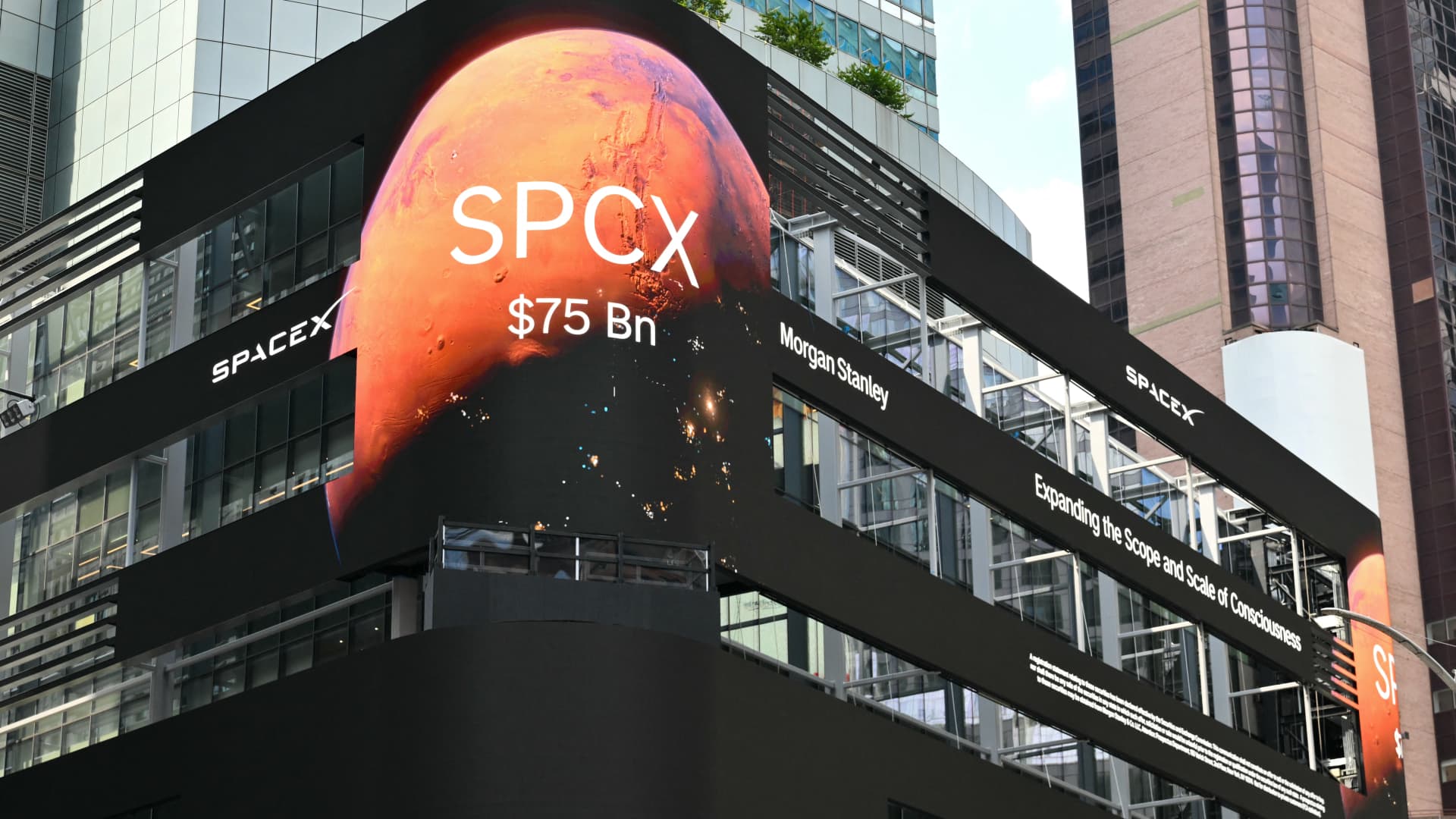
Despite a rapid inclusion into the Nasdaq 100 index, SpaceX stock has experienced a two-day slide, closing below its initial debut price. This unexpected market reaction prompts a deeper look into the factors influencing investor sentiment against the backdrop of the company’s ambitious technological roadmap and future growth vectors.
🚀 Tech Strategy & Market Disruptions
- Initial Market Dip. SpaceX stock closed at $148, below its $150 debut price, despite a swift inclusion into the Nasdaq 100 index just weeks after its June 12 market debut.
- Overwhelming Bullish Sentiment. Most analysts maintain ‘buy’ or ‘outperform’ ratings, citing the company’s leading reusable rocket technology, extensive Starlink satellite internet service, and burgeoning AI capabilities.
- Future Growth Catalysts. Analysts anticipate significant growth from SpaceX’s potential in artificial intelligence, including agentic coding tools and the development of orbital data centers, positioning it beyond traditional aerospace.
Following its initial public offering, which successfully raised $85.7 billion after underwriters exercised the ‘greenshoe’ overallotment on shares originally offered at $135 each, SpaceX saw its stock price climb, reaching a high of $201.80 on June 16. However, market sentiment shifted, with the shares trading down to $148, a notable dip below its initial trading price of $150. The company’s rapid inclusion in the Nasdaq 100 index on July 6, less than a month post-debut, was facilitated by revised exchange rules for new public entrants, compelling index funds to acquire shares to align with the benchmark’s new composition.
This immediate post-inclusion dip has presented a mixed picture for the company’s valuation. While a skeptical minority, including MoffettNathanson (neutral) and CFRA (sell), expresses caution, the broader analyst community remains overwhelmingly optimistic. Firms like Morgan Stanley, Bernstein, RBC, and UBS initiated coverage with bullish ‘overweight’ or ‘outperform’ ratings, setting price targets ranging from $210 to $300. The consensus points to several core strengths:
- SpaceX’s unparalleled lead in reusable rocket technology, which fundamentally alters the economics of space access.
- The expansive and growing Starlink satellite internet service, addressing global connectivity gaps and establishing a recurring revenue stream.
- The significant potential to improve profit margins across both its launch and internet service divisions.
Moreover, the long-term growth narrative extends into advanced technological frontiers. Analysts highlight SpaceX’s strategic positioning to develop innovative artificial intelligence products and services, including agentic coding tools that could compete with established players like Anthropic and OpenAI, alongside ambitious plans for orbital data centers. This diversified technological strategy aims to unlock new revenue streams and redefine its market scope.
SpaceX’s pioneering reusable rocket technology has fundamentally disrupted the aerospace industry by drastically reducing launch costs, enabling more frequent and accessible space missions. This cost efficiency, coupled with the rapid deployment of the Starlink constellation, is rapidly transforming global internet access, challenging traditional telecommunication models. The strategic pivot towards AI and orbital data centers represents the next wave of disruption, promising to extend SpaceX’s influence into data processing and intelligent automation, creating a cause-and-effect chain from infrastructure to advanced digital services.
As a CTO, the underlying value of SpaceX stock is not merely in its current launch cadence or Starlink subscriber numbers, but in its vertically integrated architecture and the audacious long-term vision. The ability to control the full stack—from propulsion systems to orbital data infrastructure—provides an unparalleled platform for future innovation and market leadership, particularly in nascent areas like space-based AI computation.
SpaceX Market Adoption Challenges: Navigating Public Perception and Competition
Despite its technological prowess, SpaceX faces significant market adoption challenges. The commercial space sector operates under unique dynamics, where long development cycles, high capital expenditure, and intense regulatory scrutiny are standard. Public market investors, accustomed to faster returns, may find the patience required for space ventures taxing. Furthermore, while SpaceX holds a dominant position, it operates in a competitive landscape with established players and emerging startups in both launch services and satellite internet. Sustaining its innovation lead while balancing profitability and shareholder expectations requires a delicate strategic hand. Integrating its diverse offerings, from launch to Starlink to potential AI services, into a cohesive and appealing market proposition is critical for sustained growth and investor confidence, which are key broader technology market trends.
SpaceX Ecosystem Expansion Potential: Beyond Low Earth Orbit
SpaceX’s vision transcends merely facilitating access to low Earth orbit (LEO). The company’s long-term strategy includes ambitions for Mars colonization, deep space exploration, and the establishment of a robust, multi-planetary infrastructure. This expansive vision suggests an ecosystem that could eventually encompass space tourism, asteroid mining, and advanced orbital manufacturing. The ongoing development of Starship is central to this ambition, promising to unlock capabilities far beyond current launch systems. As SpaceX continues to explore emerging technologies, its potential for ecosystem expansion will depend on its ability to execute these complex, capital-intensive projects while maintaining financial stability and market trust. Insights from Reuters Technology often highlight the significant capital requirements and long-term investment horizons characteristic of such ventures.
The Trajectory of SpaceX Stock: Innovation Versus Volatility
The recent dip in SpaceX stock following its Nasdaq 100 inclusion underscores the inherent volatility that can accompany high-growth, innovation-driven companies. While analyst sentiment remains largely bullish, pointing to the company’s foundational strengths in reusable launch, Starlink, and AI potential, the market is clearly processing new inputs beyond just index inclusion mechanics.
- The stock’s performance reflects a crucial test of investor confidence in long-term technological vision against short-term market fluctuations.
- SpaceX’s strategic focus on AI and orbital data centers could redefine its valuation model, moving beyond a pure-play aerospace and internet provider.
- The ability to consistently execute on ambitious projects like Starship and integrate diverse technological offerings will be paramount for future market leadership.
Will SpaceX’s deep technological moat and disruptive innovation ultimately outweigh near-term market sentiment to drive sustained, long-term value?
📊 StockXpo Analyst’s View
Market Impact: The initial decline in SpaceX stock price post-Nasdaq inclusion suggests that even significant structural catalysts like index inclusion may not override immediate profit-taking or broader market sentiment. This can impact liquidity and create buying opportunities for long-term growth investors, provided the core thesis of innovation holds.
Sector To Watch: The aerospace and defense sector will remain critical, but the convergence of space technology with artificial intelligence and data infrastructure is the true frontier. Investors should closely monitor companies innovating in orbital computing, satellite-based data services, and advanced robotics for space applications, as reported by Bloomberg Technology and through educational tech insights.
Financial Disclaimer:
StockXpo.com is a financial news aggregator and educational portal, not a registered investment advisor or broker-dealer. All information, news, and analysis provided herein are strictly for educational purposes and do not constitute investment, financial, legal, or tax advice. Investing in the stock market involves high risks, and past performance is not indicative of future results. StockXpo will not be liable for any financial losses or investment damages. Always consult a certified financial advisor before making market decisions.
MORE IN INSIDE TECHNOLOGY

AI’s Dual Edge: Innovation-Driven Growth Meets Global Economic Hazard
Published: Wednesday, October 7, 2026 · 3:12 AM

Anduril Navy Contract: A $2.9 Billion Breakthrough in Submarine Production
Published: Tuesday, October 6, 2026 · 9:36 AM