
Published: Wednesday, July 8, 2026 · 7:12 PM | Updated: Wednesday, July 8, 2026 · 7:12 PM
📊 231 views




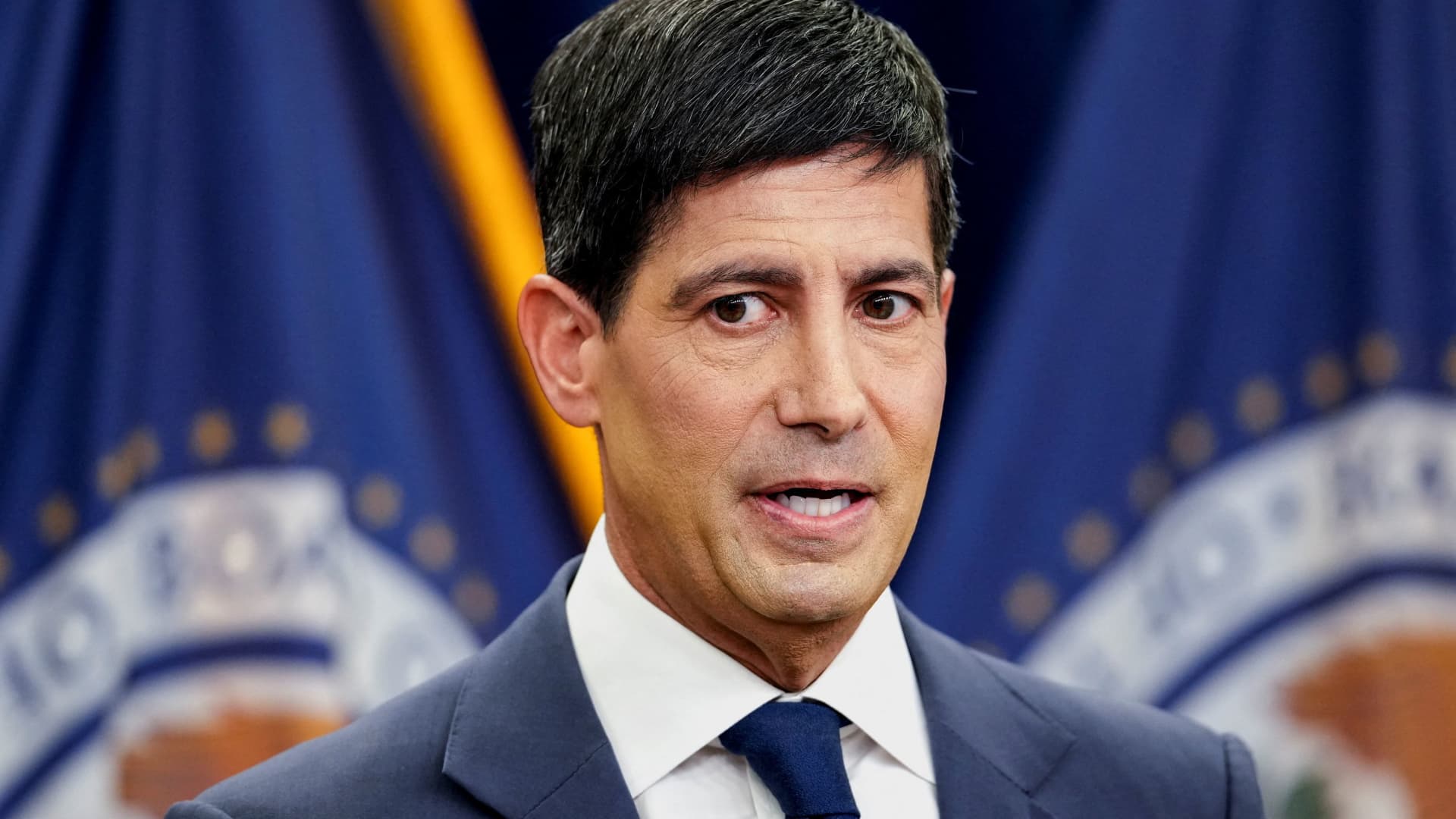
Federal Reserve officials recently revealed significant divisions regarding the future trajectory of interest rates, with policymakers at loggerheads over whether inflation trends warrant cuts or hikes. The minutes from the latest FOMC meeting underscore a challenging environment for monetary policy, reflecting deep internal debate on economic indicators and their implications for asset valuation.
💰 Financial Strategy & Market Insights
- Policy Split Confirmed. FOMC minutes show officials were deeply divided on future interest rates, with scenarios ranging from cuts due to easing inflation to hikes if price pressures persist.
- Inflation Outlook Risky. Despite recent energy price drops, the committee sees upside risks to inflation, driven by factors like tariffs, the Iran war’s lingering effects, and strong demand for AI infrastructure.
- Communication Shift. Under Chairman Warsh, the Fed is moving towards a shorter, less explicit communication style, reducing forward guidance to enhance flexibility and avoid market overreaction.
The Federal Reserve’s latest meeting minutes exposed a clear divergence among policymakers regarding the path of interest rates, casting a shadow of uncertainty over future monetary policy. Despite a unanimous vote to maintain the benchmark federal funds rate between 3.5%-3.75%, the underlying debate, characterized by Chairman Kevin Warsh as a ‘family fight,’ revealed strong opinions on both sides of the spectrum. Some participants foresee easing inflation allowing for eventual rate cuts, while others anticipate persistent price increases necessitating further hikes. This internal struggle highlights the complex economic landscape the Fed navigates.
Inflation has remained a primary concern, fueled by a combination of factors including President Donald Trump’s tariffs and the geopolitical impact of the Iran war. While economists are split on the durability of these inflationary pressures, especially given recent declines in energy prices, FOMC officials collectively expressed that ‘inflation would remain elevated in the near term and then begin to decline as the effects of tariffs and energy price increases wane and other supply disruptions related to the closure of the Strait of Hormuz diminish.’ Crucially, they judged ‘that the risks to the inflation outlook were still tilted to the upside.’ Furthermore, the nascent but significant impact of artificial intelligence was noted, with ‘ongoing strong demand for AI infrastructure’ likely sustaining upward pressure on prices for technology products and electricity, even as Warsh himself believes AI will eventually prove disinflationary due to productivity gains.
The committee’s ‘dot-plot’ — a visual representation of individual members’ interest rate expectations — showed a narrow leaning towards one rate hike this year, followed by cuts in the subsequent two years, though Warsh did not participate in this specific forecast. Many participants indicated the appropriate level of the federal funds rate could be slightly below or within the current target range by year-end, while ‘many other participants, however, assessed that the appropriate level of the federal funds rate would be above the current target range at the end of this year.’ This demonstrates the wide range of scenarios being actively considered. As Jeffrey Roach, chief economist at LPL Financial, noted, the market’s subdued reaction suggests that investors are less concerned about the Fed’s internal discussions at this juncture, signaling a possible disconnect in how policy signals are perceived versus their actual impact. For investors seeking deeper context on global economic shifts, a broader understanding of market analysis is crucial.
Chairman Warsh’s tenure has also brought a notable shift in the Fed’s communication strategy. The latest post-meeting statement was significantly shorter, about one-third the typical size, removing boilerplate language and an explicit easing bias. This move aligns with Warsh’s stated preference for less forward guidance on monetary policy intentions, aiming for greater flexibility and reducing the potential for markets to front-run future actions. A majority of participants ‘saw advantages in shortening the statement,’ signaling a committee-wide embrace of this more concise approach. This development underscores a conscious effort to rebuild investor confidence and ensure that the Fed’s actions are judged on actual economic data rather than predictive statements, a sentiment mirrored in detailed reports available on the financial sector.
- The Fed’s ‘family fight’ over interest rates implies significant uncertainty for future policy, requiring investors to closely monitor incoming economic data rather than relying on explicit forward guidance. This reflects a more data-dependent approach under Chairman Warsh, a key development for capital shifts.
Risk vs Reward: Navigating the Fed’s Ambiguity
The Fed’s split on interest rates presents both opportunities and hazards for investors:
- Upside Potential:
- If inflation eases more rapidly than expected and the Fed opts for earlier rate cuts, growth stocks and technology sectors could see a boost.
- A prolonged period of stable rates, if sustained, could allow companies to plan investments with greater certainty, supporting corporate earnings.
- Reduced forward guidance could lead to less market volatility driven by Fed commentary, allowing fundamentals to drive asset performance.
- Downside Risks:
- If inflation remains stubbornly high, prompting unexpected rate hikes, equity markets could face significant headwinds, especially for highly leveraged companies.
- The divergent views create policy uncertainty, potentially leading to increased market choppiness and difficulty in forecasting future economic conditions.
- Elevated interest rates could tighten liquidity, increasing borrowing costs for businesses and consumers, thereby dampening economic growth and corporate investment.
The ‘dot-plot’ is a graphical representation published by the Federal Reserve, showing each Federal Open Market Committee (FOMC) participant’s projection for the federal funds rate at the end of the current year and the next several years. While not a commitment, it provides insight into individual policymakers’ expectations and the committee’s collective outlook, although Chairman Warsh notably abstained from participating in the latest iteration, suggesting a deliberate distancing from direct rate forecasting.
Key Economic Metrics from the Minutes
- Current Federal Funds Rate: Anchored in a range between 3.5%-3.75%.
- Inflation Outlook: Risks still tilted to the upside in the near term, influenced by tariffs, the Iran war, and strong AI infrastructure demand.
- Dot-Plot Consensus: Narrowly tilted toward one rate hike this year, followed by cuts in the subsequent two years.
- Market Reaction: Little initial reaction, with stock futures holding negative and Treasury yields rising.
Market Sentiment Tracker: Gauging Investor Reactions
The immediate market reaction to the FOMC minutes was notably muted, reflecting either an anticipation of the internal debate or a broader sentiment that the Fed’s stance remains data-dependent. Stock market futures held negative, suggesting lingering concerns about potential headwinds, while Treasury yields saw a modest increase. This rise in yields indicates that some bond market participants might be pricing in a higher probability of future rate hikes or at least a sustained period of elevated interest rates, contrary to those expecting cuts. The ambiguity noted by analysts like Jeffrey Roach from LPL Financial – that the committee is ‘working through a wide range of scenarios’ – likely contributes to this wait-and-see approach. Such dynamics highlight how market participants continuously adjust their strategies based on granular details from central bank communications, as discussed in various educational financial insights.
Fixed Income Yield Curve Dynamics: Navigating Rate Uncertainty
The mixed signals from the Fed minutes, particularly the split on the future direction of interest rates, are critical for understanding fixed income yield curve dynamics. When some officials lean towards higher rates and others towards lower, it creates a flattening or even inversion risk in parts of the curve, depending on which view gains dominance over short-term versus long-term expectations. A rise in Treasury yields post-minutes suggests the market might be factoring in the ‘upside risks’ to inflation identified by the FOMC, pushing short-to-medium term yields higher. If the market believes the Fed will be forced to hike more than currently priced, the short end of the curve could rise faster, potentially compressing spreads. Conversely, if long-term growth prospects diminish due to higher sustained rates, the long end might not rise proportionally, impacting the overall shape of the curve. These intricate movements directly affect bond valuations and investor appetite for duration risk, a topic frequently covered by Bloomberg Markets.
Interest Rates Outlook: Navigating the Fed’s Policy Crossroads
The Federal Reserve’s internal debate on interest rates signifies a crucial crossroads for monetary policy, where conflicting economic signals demand a highly agile and data-driven approach. Investors must prepare for continued volatility as the committee grapples with persistent inflation risks and the economic implications of AI, alongside a new, more circumspect communication style from Chairman Warsh.
- Monetary policy is entering a phase of heightened uncertainty, moving away from explicit forward guidance towards a more reactive, data-dependent stance.
- Inflation risks, particularly from geopolitical events and AI infrastructure demand, remain a significant factor despite some easing in energy prices.
- Asset valuations will be sensitive to shifts in the perceived likelihood of rate hikes versus cuts, making careful risk management paramount.
How will the market truly interpret this new era of Fed ambiguity and what does it mean for long-term capital allocation strategies?
📊 StockXpo Analyst’s View
Market Impact: The explicit division within the Fed signals increased uncertainty, which typically translates to higher volatility in equity and bond markets. Investors should brace for more responsive asset price movements to incoming economic data, as the cushion of predictable forward guidance diminishes. Liquidity may become more discerning, favoring assets with strong fundamentals or those perceived as inflation hedges.
Sector To Watch: Given the dual concerns of persistent inflation and the impact of AI, the technology and industrial sectors warrant close observation. While AI demand could inflate tech product prices, potential productivity gains may eventually be disinflationary. Meanwhile, industrials sensitive to commodity prices and supply chain disruptions will remain vulnerable to geopolitical risks and tariff impacts, warranting careful risk management for financial sector participants, as often highlighted by Reuters reports.
Financial Disclaimer:
StockXpo.com is a financial news aggregator and educational portal, not a registered investment advisor or broker-dealer. All information, news, and analysis provided herein are strictly for educational purposes and do not constitute investment, financial, legal, or tax advice. Investing in the stock market involves high risks, and past performance is not indicative of future results. StockXpo will not be liable for any financial losses or investment damages. Always consult a certified financial advisor before making market decisions.
MORE IN INSIDE FINANCE

China’s Real Estate Market: A Potential Turnaround Amid Policy Shifts
Published: Thursday, October 8, 2026 · 6:10 AM

Fed Rate Hike Looms: What Fed Minutes Signal for Asset Valuation Shifts
Published: Wednesday, October 7, 2026 · 2:47 PM


