Published: Wednesday, July 8, 2026 · 5:40 PM | Updated: Wednesday, July 8, 2026 · 5:40 PM
📊 218 views




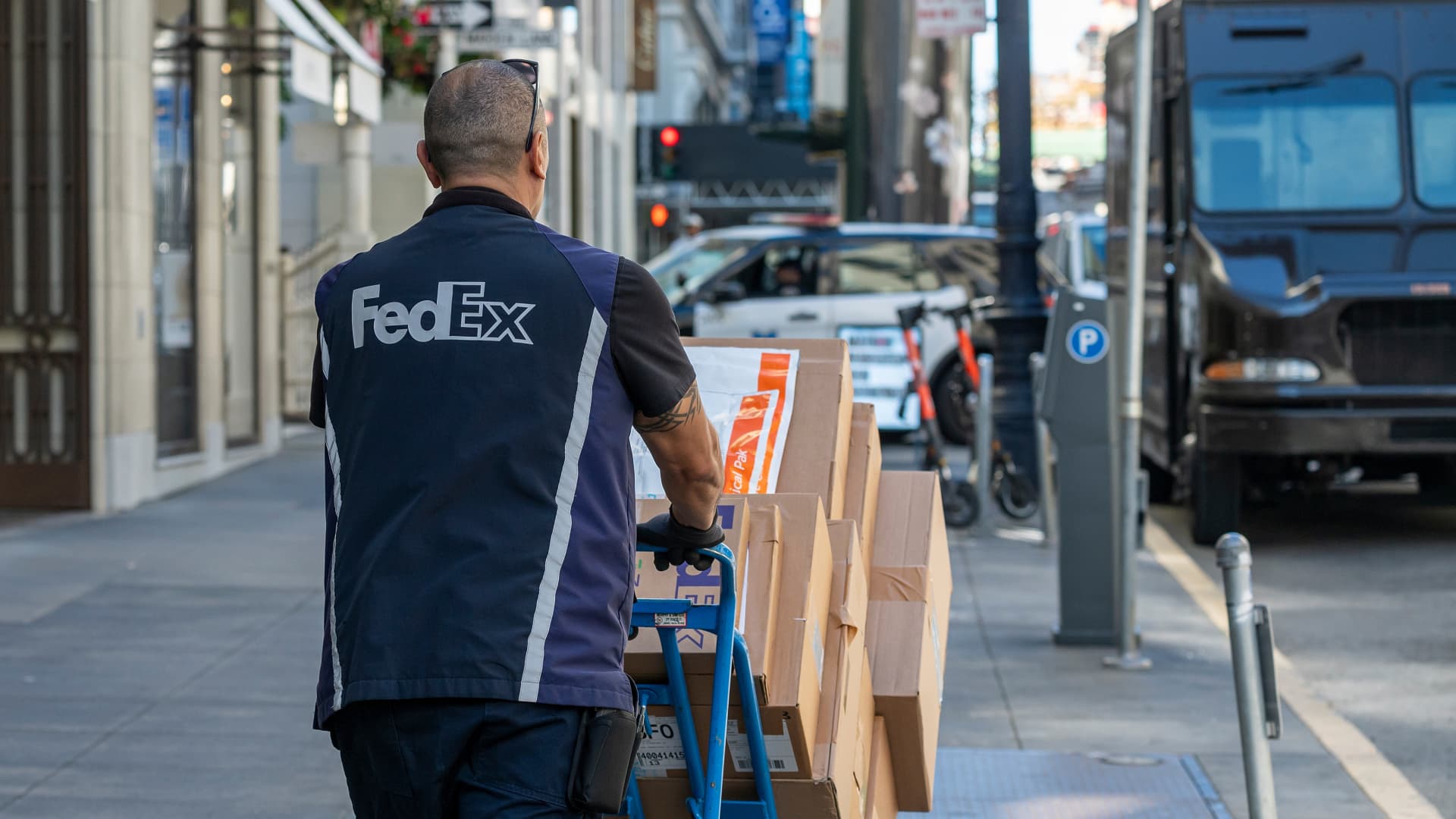
Amidst a volatile trading day marked by geopolitical tensions and specific corporate breakthroughs, a distinct long-term buy narrative is solidifying around FedEx Freight (FDXF). Despite broader market dips influenced by rising oil prices, analysts are spotlighting specific opportunities where innovation and structural shifts could drive future value, positioning FDXF as a prime example of a ‘self-help story’ emerging from a significant pullback.
The market’s mixed signals — from geopolitical worries driving oil spikes to strategic tech partnerships — underscore the need for disciplined investment. While certain sectors faced headwinds, targeted opportunities in technologically advanced supply chains and independent operational models are drawing attention for their potential to deliver sustained growth, challenging investors to differentiate between headline-driven volatility and fundamental value.
🚀 Tech Strategy & Market Disruptions
- Geopolitical Headwinds Impact. Renewed tensions in the Middle East drove a 7% surge in West Texas Intermediate crude to over $75 per barrel, leading to declines in airline, consumer, and banking stocks due to increased operational costs and reduced consumer spending outlooks.
- Broadcom-Apple Partnership Validation. Apple’s detailed disclosure of its multiyear, $30 billion chip agreement with Broadcom (AVGO) affirmed the chipmaker’s strategic importance. This partnership, involving over 15 billion U.S.-made chips, underpins both companies’ supply chain resilience and technological integration.
- FedEx Freight’s ‘Self-Help’ Transformation. Post-spin-off from FedEx (FDX), FedEx Freight (FDXF) is being re-evaluated by analysts, with Wells Fargo upgrading Old Dominion Freight Line, signaling broader optimism for the less-than-truckload (LTL) shipping sector and highlighting FDXF’s potential for independent operational improvements and market revaluation after a 25% share pullback.
Wednesday’s market activity was a testament to the diverse forces at play, ranging from international relations to corporate strategy. President Donald Trump’s declaration on the Iran ceasefire immediately sent crude prices soaring, creating a ripple effect across sectors dependent on stable energy costs. Airlines and consumer-facing businesses, already navigating inflationary pressures, saw declines, with Boeing down 3.5%, Home Depot 3%, and Goldman Sachs roughly 2.5%. CNBC’s Jim Cramer emphasized the importance of investor discipline in such a headline-driven environment, advocating against impulsive profit-taking in fundamentally sound positions, a sentiment crucial for understanding current technology market trends.
In contrast to the broader market anxieties, the technology sector presented a distinct narrative. Broadcom shares climbed 3.5% following Apple’s detailed announcement of an expanded multiyear partnership, expected to exceed $30 billion. This deal, set to produce over 15 billion U.S.-made chips, reaffirms Broadcom’s integral role in Apple’s supply chain and strengthens domestic manufacturing. While the news wasn’t entirely fresh, having been partially disclosed earlier, it provided a strong validation for Broadcom’s strategy, prompting Cramer to advise against complacency given the stock’s significant run, even leading to exiting a position in Arm to secure gains.
The trucking and logistics industry also captured attention, with Wells Fargo upgrading Old Dominion Freight Line, citing an attractive entry point after recent pullbacks in less-than-truckload (LTL) shipping stocks. This positive outlook extends to FedEx Freight, a core Club holding, which Cramer identifies as a compelling long-term buy. Despite falling 25% from its June 9 high, just eight days after its spin-off from FedEx, Cramer sees FDXF as a potent ‘self-help story.’ He argues that misinformation surrounding its new independent structure has created an undervalued opportunity, suggesting it was previously constrained within the larger FedEx ecosystem.
The spin-off of FedEx Freight from its parent company marks a significant operational shift. This move allows FDXF to establish its own strategic direction, free from the potentially conflicting priorities of a larger conglomerate. The enhanced autonomy can lead to more agile decision-making, direct investment into its LTL infrastructure, and a focused approach to market expansion. This strategic decoupling initiates a disruption flow: Organizational Independence → Optimized Operational Focus → Accelerated Technological Investment → Enhanced Market Competitiveness & Revaluation. This allows FDXF to better leverage emerging technologies in logistics.
‘The strategic separation of a core business unit like FedEx Freight empowers it to optimize its technology stack and operational protocols independently. This can accelerate innovation cycles in areas like route optimization, fleet management, and last-mile delivery analytics, unlocking efficiencies that were previously challenging to implement within a larger, more diversified corporate structure.’
While specific technical metrics directly from FDXF’s recent performance are still emerging post-spin-off, key operational indicators for the LTL sector, as highlighted by Wells Fargo’s upgrade, often include:
- Yield Growth: Reflecting pricing power per hundredweight or per mile.
- Operating Ratio: A key efficiency metric (operating expenses as a percentage of revenue), with lower being better.
- Network Capacity Utilization: Indicating how effectively the company is using its fleet and terminals.
These metrics, coupled with investments in digital platforms for tracking, freight management, and predictive analytics, will be critical in FDXF’s independent journey.
FedEx Freight’s Ecosystem Expansion Potential
As an independent entity, FedEx Freight gains significant agility in forging new partnerships and integrating with a broader logistics technology ecosystem. Previously, strategic alliances might have been filtered through the parent company’s overarching vision. Now, FDXF can directly engage with startups specializing in areas like AI-driven demand forecasting, autonomous driving technologies for long-haul routes, or advanced warehouse automation. This newfound freedom not only accelerates its digital transformation but also allows it to tailor solutions for specific customer segments, potentially expanding its market share beyond traditional LTL freight services by offering more specialized, tech-enabled solutions.
FedEx Freight’s Market Adoption Challenges
Despite the inherent advantages of independence, FedEx Freight faces its own set of market adoption challenges. The initial pullback in its stock price suggests investor skepticism or a lack of full understanding regarding its post-spin-off value proposition. Furthermore, the highly competitive LTL market is dominated by established players, requiring FDXF to clearly articulate its differentiated value, service levels, and technological advancements to new and existing customers. Overcoming the ‘misinformation’ Jim Cramer cited will require sustained operational excellence and effective communication of its strategic roadmap and digital transformation initiatives, which will likely be covered in future educational tech insights.
FedEx Freight’s Path to Revaluation: A long-term buy Opportunity
FedEx Freight’s current valuation, post-spin-off and subsequent 25% decline, positions it as a compelling long-term buy for investors willing to look beyond immediate market noise. The company is now free to pursue its own growth strategies, unburdened by the complexities of its former parent, aligning its operational focus with its independent market aspirations.
- The spin-off grants FDXF the strategic autonomy to aggressively invest in operational efficiencies and digital logistics solutions.
- Market re-evaluation post-pullback provides a potential entry point for patient investors.
- Focused management and dedicated capital allocation are expected to drive improved profitability and service innovation.
Will this newfound independence translate into sustainable competitive advantages and robust shareholder value in the evolving logistics landscape?
📊 StockXpo Analyst’s View
Market Impact: The market’s reaction to FedEx Freight’s spin-off, exacerbated by broader geopolitical concerns, created a value dislocation that savvy investors are noting. Jim Cramer’s endorsement underlines a contrarian ‘self-help’ thesis that could see significant re-rating as FDXF demonstrates its operational autonomy and strategic clarity. This shift could re-ignite interest in fundamentally strong companies undergoing similar transformational changes.
Sector To Watch: The LTL logistics sector is primed for innovation, particularly in route optimization, predictive maintenance, and last-mile delivery. Companies that can effectively leverage AI and data analytics to enhance efficiency and customer experience, like a liberated FDXF, will likely outperform. The broader transportation and supply chain technology space, including those developing advanced telematics and autonomous solutions, merits close observation.
Financial Disclaimer:
StockXpo.com is a financial news aggregator and educational portal, not a registered investment advisor or broker-dealer. All information, news, and analysis provided herein are strictly for educational purposes and do not constitute investment, financial, legal, or tax advice. Investing in the stock market involves high risks, and past performance is not indicative of future results. StockXpo will not be liable for any financial losses or investment damages. Always consult a certified financial advisor before making market decisions.
MORE IN INSIDE TECHNOLOGY

Starlink India: Regulatory Hurdles and Innovation-Driven Growth Risks
Published: Friday, October 9, 2026 · 12:48 AM

Starlink Launch: India’s Digital Transformation Faces Regulatory Risk
Published: Thursday, October 8, 2026 · 1:51 AM