
Published: Thursday, October 29, 2026 · 4:03 AM | Updated: Thursday, October 29, 2026 · 4:03 AM
📊 17 views




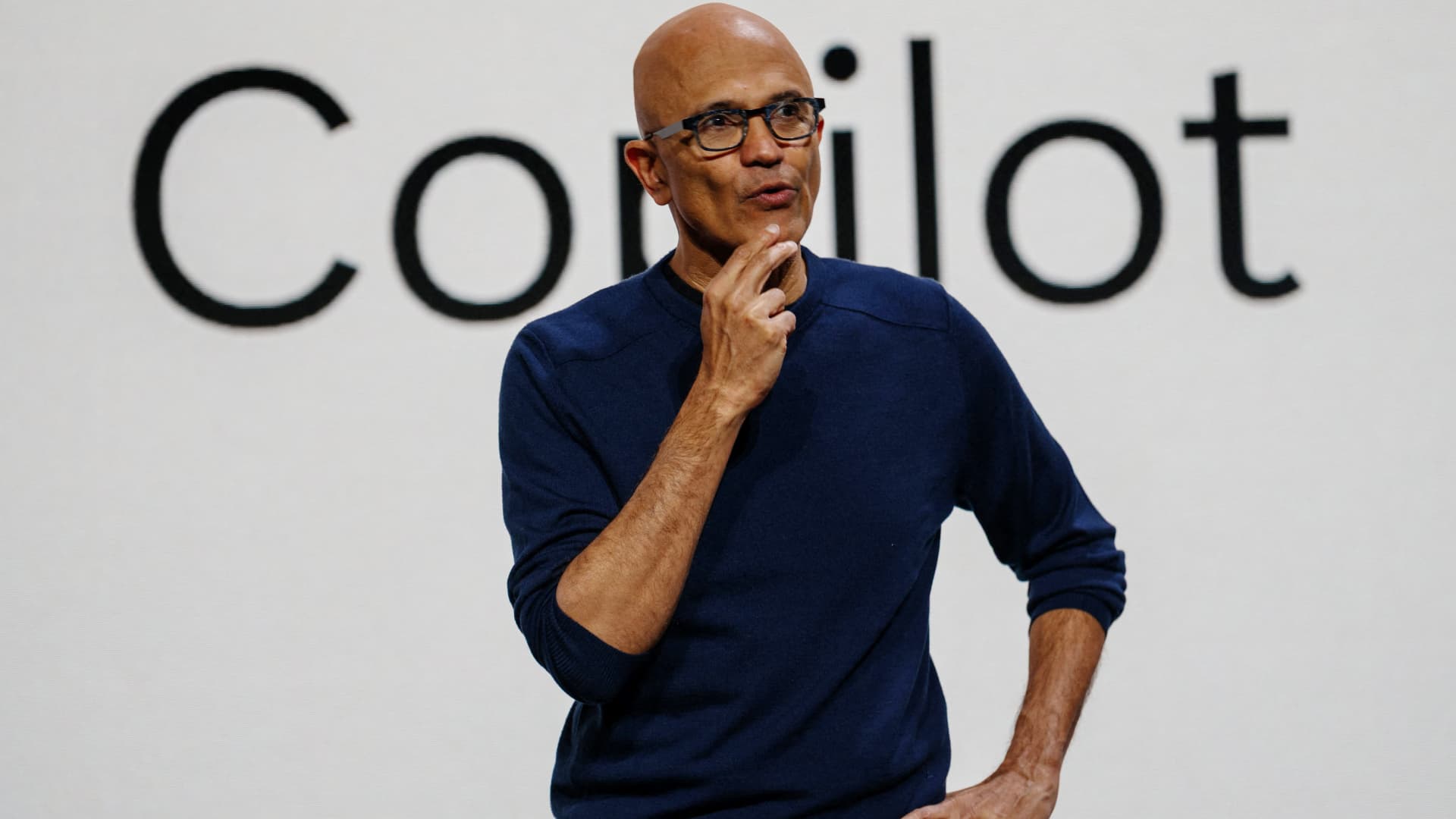
Redmond, WA – Microsoft Corporation (MSFT) delivered a compelling fiscal first-quarter performance, with its Microsoft stock jumping 4% in extended trading following significant beats on both earnings per share and revenue. The robust results were predominantly fueled by the accelerating growth of its Azure cloud platform, underscoring its pivotal role in the company’s financial trajectory and affirming its standing as a core driver for portfolio alpha.
💎 Strategic Investment & Portfolio Insights
- Azure Dominance Confirmed. Microsoft’s cloud segment, particularly Azure, is now its largest business, demonstrating sustained high-growth despite significant capital expenditures for AI infrastructure, signaling strong future revenue streams.
- Capital Efficiency Amidst AI Spend. Unlike some competitors, Microsoft maintains positive free cash flow despite a 30% surge in capex, showcasing prudent financial management while aggressively pursuing AI leadership.
- Strategic Portfolio Allocation. The consistent performance and strong guidance suggest Microsoft stock remains a foundational holding for diversified portfolios targeting long-term capital appreciation, particularly for exposure to the enterprise cloud and AI sectors.
The technology giant reported adjusted earnings per share of $4.89 against an LSEG consensus of $4.73, alongside revenue of $92.28 billion, comfortably exceeding the $90.69 billion expectation. This remarkable performance was anchored by Azure, which saw its revenue expand by 48% year-over-year in the quarter ending September 30. This growth not only surpasses analyst projections but also positions Azure as Microsoft’s single largest business unit, a significant strategic milestone.
The company’s aggressive investment in artificial intelligence infrastructure was evident, with capital expenditures and finance leases reaching $45.2 billion, a substantial 30% increase from the prior year. Notably, this figure came in below StreetAccount’s analyst projection of $50.67 billion, potentially indicating more efficient deployment or minor delays in capacity deliveries, as mentioned by CFO Amy Hood. Approximately 75% of these capital outlays are now directed towards short-lived assets like Intel chips and Nvidia GPUs, up from 66% in recent quarters, highlighting a deliberate acceleration in building revenue-generating AI capacity.
Looking ahead, Microsoft’s guidance remains robust. The company projects fiscal second-quarter revenue between $96 billion and $97.1 billion, representing an 18.8% growth at the midpoint, ahead of the LSEG consensus of $95.60 billion. Azure’s constant currency growth is anticipated to be between 49% and 50% for Q2, comfortably above the StreetAccount consensus of 45.1%. Hood affirmed strong demand continues to outstrip supply, suggesting sustained momentum.
While global market trends indicate some macroeconomic headwinds, Microsoft’s net income soared to $36.63 billion, or $4.92 per share, up significantly from $27.75 billion, or $3.72 per share, a year prior. This excludes a minor $200 million loss from its OpenAI investment. Free cash flow, however, saw a 27% decline to $18.63 billion, primarily due to the accelerated infrastructure investments. Despite this, Microsoft differentiates itself by maintaining positive free cash flow, a stark contrast to cloud rivals like Alphabet and Meta, which reported negative free cash flow in the same period.
Microsoft also unveiled new operating segments: Agents and Infra, and Devices and Consumer. The Agents and Infra segment, encompassing Azure, Microsoft 365 cloud products, and productivity software, saw revenue climb nearly 25% to $76.8 billion, exceeding analyst expectations. This segment particularly benefits from the adoption of Microsoft 365 Copilot AI assistant, with CEO Satya Nadella noting a 50% increase in users quarter-over-quarter. Conversely, the Devices and Consumer business experienced a 3% revenue slip to $15.48 billion, though still beating consensus. This was impacted by declining Windows licenses and higher memory/storage costs, alongside a weak PC market and the end-of-life for Windows 10 support.
The company’s strategic decision to cut 4,800 jobs and offer buyouts to 60,000 employees highlights a concerted effort to balance its costly AI build-out with capital efficiency. This operational streamlining, coupled with the establishment of an AI implementation unit and a Copilot AI ‘super app,’ underscores Microsoft’s commitment to monetizing its AI investments. For detailed market insights, investors frequently turn to expert analyses.
The strong cloud performance and aggressive AI investments trigger a significant reassessment of Microsoft’s long-term growth prospects. Robust Earnings Beat → Enhanced Investor Confidence → Potential for Higher Valuation Multiples. Sustained Azure Growth → Increased Market Share in Cloud/AI → Strategic Allocation for long-term investment strategies. Disciplined Capital Management → Reduced Financial Risk Perception → Strengthened Portfolio Foundation.
‘Microsoft’s ability to drive significant cloud expansion while navigating massive AI infrastructure investments with positive free cash flow is a testament to its operational excellence. For astute investors, this isn’t just a quarter; it’s a reaffirmation of a long-term alpha generator. We see Microsoft stock as a cornerstone asset in technology-centric portfolios.’
The fiscal first-quarter results highlight Microsoft’s financial strength and strategic execution:
| Metric | Actual Q1 FY27 | LSEG/StreetAccount Consensus | Significance |
|---|---|---|---|
| Adjusted EPS | $4.89 | $4.73 | Exceeded expectations, indicating strong profitability. |
| Total Revenue | $92.28 Billion | $90.69 Billion | Broad-based revenue beat, driven by cloud. |
| Azure Revenue Growth | 48% YOY | N/A (analysts expected lower) | Core driver of growth, now largest business. |
| Q1 Capital Expenditures | $45.2 Billion | $50.67 Billion | Aggressive AI build-out, yet came in lower than projected, implying efficiency or minor delays. |
| Free Cash Flow | $18.63 Billion | N/A | Positive FCF despite capex surge, a competitive advantage. |
Dissecting Microsoft Stock: Risk-Reward Matrix
Investing in Microsoft stock presents a dynamic interplay of opportunities and challenges for portfolio managers. On the reward side, the secular growth trends in cloud computing, driven by digital transformation and AI adoption, position Microsoft for sustained revenue expansion. Azure’s accelerating growth, coupled with the monetization of AI through Copilot and enterprise solutions, represents significant upside potential. The company’s strong balance sheet and consistent free cash flow generation (even with increased capex) provide financial resilience.
However, risks are inherent. The massive capital expenditures required for AI infrastructure, though managed well, could compress margins if demand slows or competitive intensity escalates. Delays in third-party capacity, as noted by CFO Amy Hood, underscore supply chain vulnerabilities. Furthermore, intense competition from Amazon Web Services (AWS) and Google Cloud Platform (GCP) means continuous innovation and pricing pressure. The Devices and Consumer segment’s decline highlights vulnerability to broader economic slowdowns and shifts in PC demand. Regulatory scrutiny over market dominance and AI ethics could also present headwinds. Investors must weigh these factors, recognizing that the AI arms race demands both aggressive investment and meticulous execution.
Microsoft’s Cloud & AI Competitive Benchmarking
In the fiercely competitive cloud and AI landscape, Microsoft’s performance offers crucial insights when benchmarked against its peers. While Amazon’s AWS remains a formidable leader, Azure’s consistent acceleration, now its largest business, demonstrates its robust traction. Compared to Alphabet’s Q3 results, which saw Google Cloud growing slower and a significant negative free cash flow amidst AI investments, Microsoft’s ability to maintain positive free cash flow stands out as a key differentiator. Meta also reported negative free cash flow, underscoring Microsoft’s financial discipline.
The strategic focus on high-value AI components, such as Intel chips and Nvidia GPUs, contrasts with competitors’ varying strategies. Microsoft’s rapid build-out of data center infrastructure, despite some delays, signals a proactive stance to meet AI demand, ensuring it remains at the forefront of the technological race. The restructuring of reporting segments, emphasizing ‘Agents and Infra,’ further clarifies the company’s strategic pivot towards its core growth engines. This strategic clarity and execution differentiate Microsoft from those still grappling with the full cost implications of the AI revolution, making corporate reporting a critical point of comparison.
Microsoft’s AI Trajectory: Navigating Future Growth
Microsoft’s latest earnings report vividly illustrates its successful navigation of a dynamic technological landscape, driven by its powerhouse Azure cloud business and aggressive, yet disciplined, AI investments. The company is strategically repositioning itself for long-term dominance in enterprise AI and cloud services.
- The acceleration of Azure growth and strong forward guidance solidify Microsoft’s position as a top-tier cloud provider, fueling future revenue streams.
- Prudent capital management, evidenced by positive free cash flow despite soaring capex, provides a significant competitive advantage over industry peers.
- The successful integration and monetization of AI, particularly through Copilot and new segment reporting, indicate a clear path for sustained innovation and market leadership.
Can Microsoft sustain this delicate balance of aggressive innovation and financial prudence as the AI frontier continues to expand?
📊 StockXpo Analyst’s View
Market Impact: Microsoft’s impressive results and optimistic guidance are likely to bolster investor confidence across the technology sector, particularly in cloud computing and AI infrastructure plays. This performance could encourage a re-evaluation of valuation multiples for companies demonstrating strong AI monetization potential and capital efficiency, potentially leading to increased liquidity in growth-oriented tech stocks.
Sector To Watch: The enterprise software and cloud infrastructure sectors remain paramount. Companies providing AI-enabling hardware (GPUs, specialized processors) and software tools will likely benefit from Microsoft’s ongoing investment spree. Furthermore, the ability to generate free cash flow while investing heavily in AI will become a critical differentiator, favoring established players with robust balance sheets.
Financial Disclaimer:
StockXpo.com is a financial news aggregator and educational portal, not a registered investment advisor or broker-dealer. All information, news, and analysis provided herein are strictly for educational purposes and do not constitute investment, financial, legal, or tax advice. Investing in the stock market involves high risks, and past performance is not indicative of future results. StockXpo will not be liable for any financial losses or investment damages. Always consult a certified financial advisor before making market decisions.
MORE IN INSIDE INVESTMENT NEWS

UBS Profits Surge 27%: A Bullish Outlook Amid Integration Progress
Published: Wednesday, October 28, 2026 · 4:39 AM

HSBC Share Buyback: Bullish Capital Move Amid Strong Q3 Performance
Published: Tuesday, October 27, 2026 · 12:59 AM


