Published: Friday, August 28, 2026 · 8:46 AM | Updated: Friday, August 28, 2026 · 8:46 AM
📊 119 views




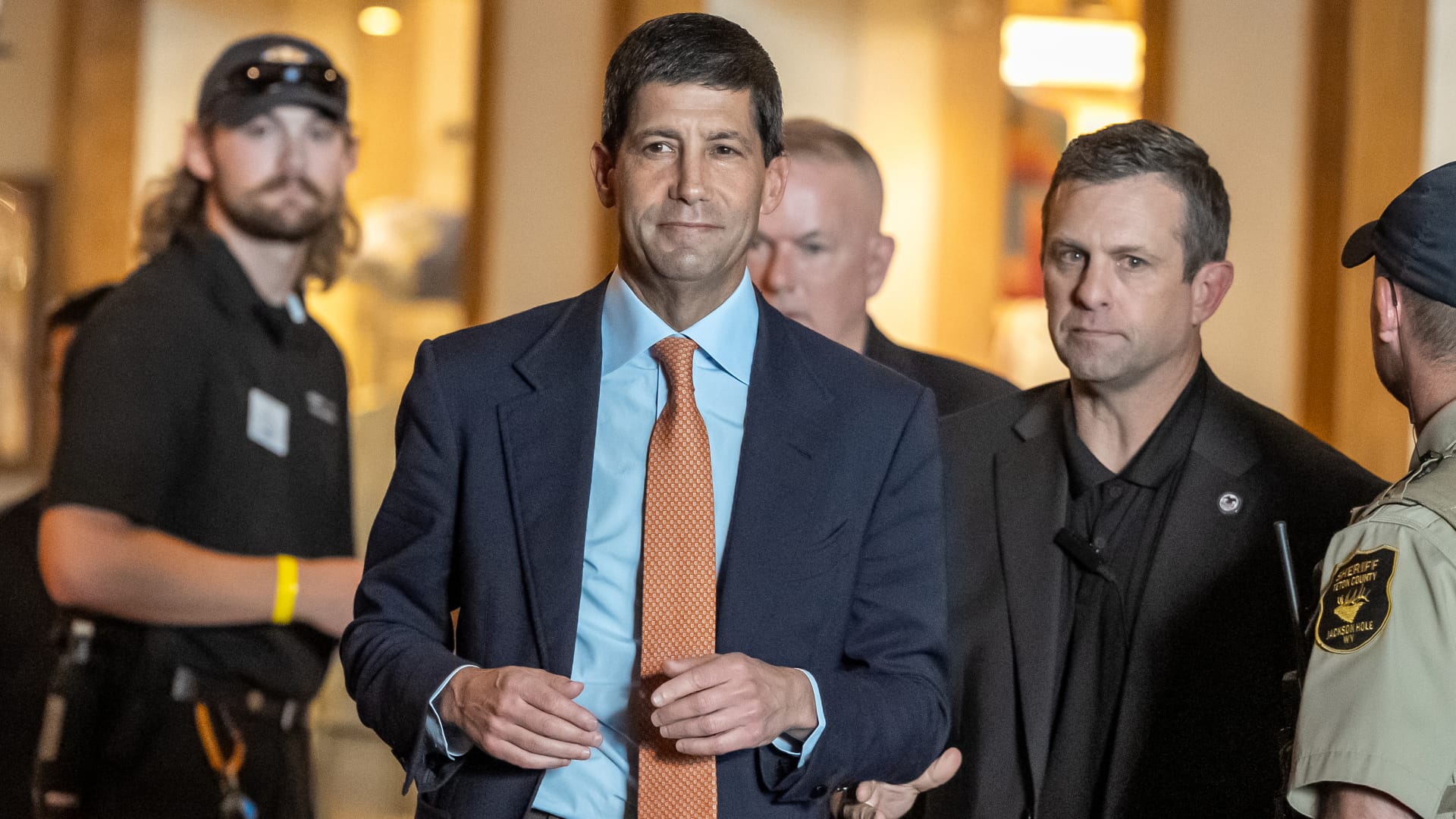
The financial world is keenly focused on Friday’s highly anticipated Jackson Hole speech by Federal Reserve Chairman Kevin Warsh. Investors and analysts are grappling with significant uncertainty, given Warsh’s unconventional, market-centric approach to monetary policy since assuming leadership in May.
💰 Financial Strategy & Market Insights
- Uncertainty Dominates Ahead of Jackson Hole Speech. Markets are bracing for Fed Chair Kevin Warsh’s keynote, with limited clarity on his stance on key economic matters and monetary policy, diverging from past Fed chairs who offered explicit forward guidance.
- Warsh’s Market-Driven Philosophy Under Scrutiny. His preference for letting markets interpret data rather than providing explicit signals has drawn mixed reviews, raising questions about potential adverse reactions and policy coherence amid rising Treasury yields.
- Fiscal and Monetary Divergence Creates Policy Crossroads. The Treasury’s recent debt buyback initiative complicates Warsh’s hands-off strategy, potentially creating a challenging environment for the Fed chair to navigate effectively.
Fed Chairman Kevin Warsh’s tenure has been marked by a distinct shift from traditional central bank communication. Unlike his predecessors who often used platforms like the annual Jackson Hole symposium to signal policy intentions and interest rate trajectories, Warsh has prioritized allowing market dynamics to guide policy interpretation, rather than the Fed providing explicit cues. This strategy has created a palpable sense of anticipation and, for some, apprehension, as markets try to decipher the potential implications for capital shifts and asset valuation.
Since May, Warsh has initiated five distinct task forces aimed at re-evaluating core Fed functions, spanning inflation assessment, balance sheet management, data interpretation, technology integration, and crucially, communications strategy. This ‘first principles’ approach aims to reshape how the Fed operates, yet the lack of explicit forward guidance has left many financial participants seeking greater clarity on the Fed’s ‘reaction function’—the specific conditions that would trigger policy adjustments.
Economists and strategists are divided on what to expect from this pivotal Jackson Hole speech. Luke Tilley, chief economist at M&T Bank and Wilmington Trust Investment Advisors, anticipates a broad, high-level overview of the task forces’ work and Warsh’s vision for Fed operations, rather than concrete economic assessments or policy projections. This contrasts sharply with market expectations, particularly in an environment of rising Treasury yields, where clear communication is paramount for mitigating market volatility.
Joseph Brusuelas, chief economist at RSM, characterized the upcoming symposium as the ‘most unusual Jackson Hole monetary symposium in recent memory,’ attributing it to Warsh’s ‘unforced errors’ early in his leadership. The current climate is further complicated by Treasury Secretary Scott Bessent’s recent initiative to double the size of its off-the-run debt buybacks, increasing the weekly operation from $2 billion to ‘at least’ $4 billion starting September 9. This fiscal intervention, occurring concurrently with rising yields, seems to contradict Warsh’s stated hands-off market approach, placing the Fed chair ‘between a rock and a hard place,’ as Brusuelas observed.
- Warsh’s communication style, favoring market signals over direct guidance, has generated significant market uncertainty, pushing investors to seek clarity on the Fed’s stance on inflation and monetary policy mechanisms.
The Hidden Message in These Yields
The bond market’s reaction to the upcoming Jackson Hole speech could be substantial. Mark Cabana, head of U.S. rates strategy at Bank of America, warns that a failure by Warsh to signal a readiness to raise rates if inflation persists could be interpreted as a dovish stance, potentially triggering a sell-off in long-dated Treasurys. Such a scenario could push the 30-year yield to 5.5% or higher, a level not seen in decades, signifying increased borrowing costs and potential pressure on other asset classes.
* **Upside Potential:**
* Clearer communication on the Fed’s ‘reaction function’ could reduce market ambiguity, leading to stabilized asset valuations and more predictable capital flows. This would allow investors to make informed decisions about long-term investment strategies.
* A firm stance against inflation could reassure markets, potentially moderating long-term yield increases and supporting equity stability.
* **Downside Risks:**
* Continued cryptic discourse could exacerbate bond market volatility, potentially pushing the 30-year Treasury yield above 5.5%, impacting the cost of capital across the economy.
* Perceived policy divergence between the Fed and Treasury, especially regarding market interventions, could undermine confidence in coordinated economic management, leading to heightened market analysis and uncertainty.
* A lack of specific guidance on inflation or the balance sheet could be interpreted as dovish, prompting a ‘risk-on’ sentiment that might ultimately lead to unanchored inflation expectations.
What is a ‘Reaction Function’? In monetary policy, the ‘reaction function’ describes the rules or economic conditions that prompt a central bank to adjust its policy tools, such as interest rates or quantitative easing. A clearly defined reaction function helps markets anticipate central bank actions and reduces policy uncertainty, which is crucial for managing asset valuation and risk.
Market participants are looking for concrete signals, not just broad frameworks. The current environment, marked by significant global market movements and rising rates, demands transparency. The consequences of further ambiguity could include:
- **30-Year Treasury Yield Projection:** A dovish interpretation of Warsh’s speech could see the 30-year Treasury yield surge to 5.5% or higher, a significant increase of over 0.3 percentage points from current levels, reflecting investor concern over future inflation and Fed inaction.
- **Treasury Debt Buyback Impact:** The Treasury’s decision to double its off-the-run debt buyback operations from $2 billion to at least $4 billion weekly, while relatively small against the national debt, introduces a complex dynamic. This intervention, meant to enhance market liquidity, simultaneously complicates the Fed’s stated intention of a less interventionist, market-driven policy framework.
Treasury Yield Curve Dynamics
The shape of the Treasury yield curve is a critical indicator for future economic activity and investor sentiment. Warsh’s Jackson Hole speech holds significant sway over this dynamic. If he signals a hawkish stance or a readiness to raise rates if inflation doesn’t moderate, the short end of the curve could rise, potentially leading to a flattening if long-term inflation expectations remain anchored. Conversely, a dovish or ambiguous speech might cause the long end of the curve to steepen sharply, as investors demand higher compensation for perceived inflation risk and policy uncertainty. Such a steepening, particularly if driven by a sell-off in long-dated bonds, would increase borrowing costs for businesses and consumers, impacting the broader financial sector and economic growth projections.
Market Sentiment Tracker
Monitoring market sentiment following Warsh’s Jackson Hole address will be crucial for investors. Key indicators to watch include implied volatility indices (like the VIX), credit spreads, and the performance of rate-sensitive sectors such as real estate and utilities. A clear, definitive message from Warsh, especially regarding inflation and the Fed’s reaction function, could lead to a reduction in market uncertainty and a corresponding drop in volatility. Conversely, a continuation of his cryptic communication style could trigger increased risk aversion, reflected in wider credit spreads and a flight to safety. Examining the immediate reaction in currency markets, particularly the U.S. Dollar Index (DXY), will also provide insights into global perceptions of the Fed’s future trajectory and its implications for capital flows and investment trends, offering valuable educational financial insights for navigating market shifts as reported by sources like financial news updates.
Kevin Warsh’s Jackson Hole Address: Navigating the Policy Crossroads
Fed Chair Kevin Warsh’s Jackson Hole speech stands as a pivotal moment for market direction, requiring him to balance his reformist agenda with investor demands for clarity. His address will either provide much-needed guidance or deepen the existing uncertainty around monetary policy, directly influencing asset valuation and capital flows globally.
- The speech must address market expectations for explicit policy signals, moving beyond broad frameworks to mitigate volatility.
- Warsh’s communication style will be scrutinized for how it reconciles with the Treasury’s recent market interventions.
- The outcome will significantly impact the bond market, potentially dictating the trajectory of long-term Treasury yields and broader borrowing costs.
How will Warsh’s Jackson Hole address redefine the Fed’s role in guiding market expectations amidst conflicting fiscal and monetary signals?
📊 StockXpo Analyst’s View
Market Impact: Warsh’s speech is poised to either inject stability or amplify volatility across fixed income and equity markets. A clear articulation of the Fed’s inflation stance and reaction function could calm nerves, while continued ambiguity risks a sharp correction in long-dated Treasurys and increased risk premiums in equities.
Sector To Watch: The financial sector, particularly banks, will be sensitive to any shifts in the yield curve dynamics and interest rate expectations. Additionally, sectors heavily reliant on borrowing or sensitive to consumer interest rates, like real estate and automotive, will face direct impacts from changes in the cost of capital.
Financial Disclaimer:
StockXpo.com is a financial news aggregator and educational portal, not a registered investment advisor or broker-dealer. All information, news, and analysis provided herein are strictly for educational purposes and do not constitute investment, financial, legal, or tax advice. Investing in the stock market involves high risks, and past performance is not indicative of future results. StockXpo will not be liable for any financial losses or investment damages. Always consult a certified financial advisor before making market decisions.
MORE IN INSIDE FINANCE

Crypto Derivatives Trading: Blockchain.com’s Bold Move into U.S. Markets
Published: Friday, October 9, 2026 · 8:23 AM

China’s Real Estate Market: A Potential Turnaround Amid Policy Shifts
Published: Thursday, October 8, 2026 · 6:10 AM