Published: Friday, August 28, 2026 · 10:47 AM | Updated: Friday, August 28, 2026 · 10:47 AM
📊 93 views




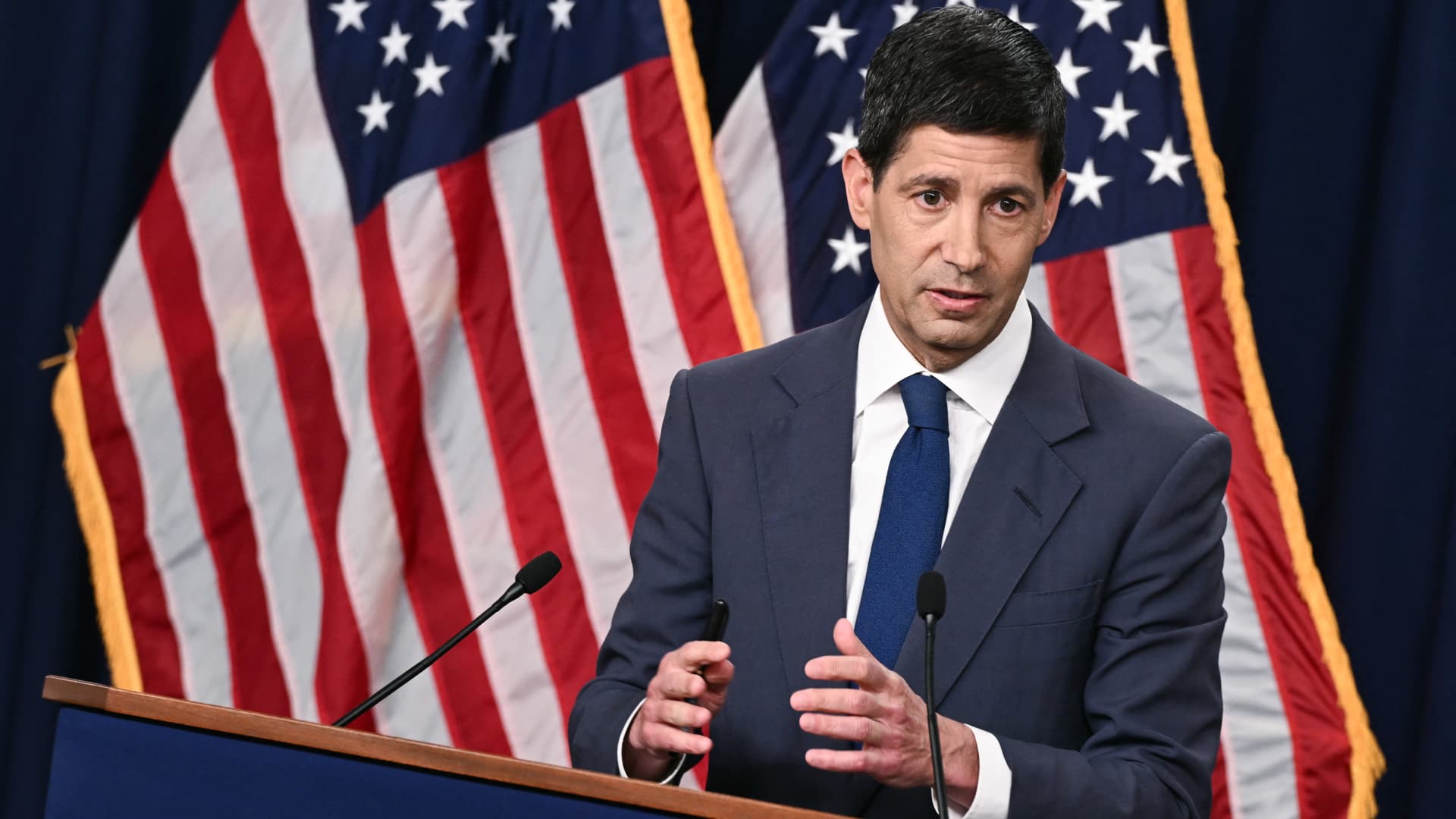
Federal Reserve Chairman Kevin Warsh has issued a clear warning on persistent inflation, signaling that interest rates may need to move higher if price pressures do not meaningfully ease. His remarks, delivered at the annual Jackson Hole symposium, underscore a central bank committed to its mandate, even as it seeks a ‘quieter’ approach to market communication. This stance could significantly impact global stock markets and broader macroeconomic trends.
📊 Macro-Economic Strategic Insights
- Inflation as Primary Focus. Warsh stressed that the Fed’s chief mandate is controlling inflation, explicitly stating, ‘We have work to do’ if underlying trends do not improve.
- Shift to a ‘Quieter Fed’. The Chairman advocated for reduced market reliance on Fed rhetoric, opposing ‘forward guidance’ and signaling a move towards data-driven policy without explicit cues.
- Rate Hike Possibility Elevated. Following his remarks, traders significantly increased the probability of a September rate hike to 45.7%, up 10 percentage points, reflecting heightened market expectations for tighter monetary policy.
Speaking at the closely watched Jackson Hole symposium, Chairman Kevin Warsh conveyed deep concern over elevated economic forecasts for price pressures, despite acknowledging better-than-expected summer readings. He made it clear that “underlying trends have not meaningfully improved,” implying the need for further monetary action if inflation does not quickly align with the Fed’s 2% target. Warsh’s discourse avoided explicit forward guidance or delineating a clear reaction function, a departure from his predecessors. Instead, he emphasized commitment to a ‘discipline, not a decision,’ seeking to move markets away from anticipating every central bank utterance.
Warsh’s 100 days in office have been marked by efforts to remake the Fed’s communication strategy, advocating for a ‘quieter Fed’ that is ‘more purposeful in its communications.’ This philosophy aims to reduce market participants’ dependence on central bank signaling for their next trade, instead encouraging a focus on economic fundamentals and independent data interpretation. Despite the strong focus on inflation, Warsh also expressed confidence in the broader economy, citing benefits from artificial intelligence and resilient business and consumer spending. He attributed a slowdown in hiring to a flattening labor supply rather than a weakening demand, suggesting underlying economic strength remains robust.
- Policy Evolution: Warsh’s tenure signifies a shift towards less prescriptive central bank communication, contrasting sharply with previous eras where Jackson Hole was often used for clear policy signals.
- Market Interpretation: The absence of explicit guidance forces market participants to rely more heavily on raw economic data, potentially increasing volatility as interpretations diverge.
- Dual Mandate Focus: While prioritizing inflation control, Warsh acknowledged the Fed’s dual mandate, but his rhetoric unequivocally places price stability at the forefront of immediate concerns.
The Ripple Effect: Understanding Macro-Economic Linkages
Chairman Warsh’s stance on inflation and the future of monetary policy creates discernible ripple effects across the economy:
- Persistent Inflation → Heightened Fed Vigilance → Potential Rate Hikes → Higher Borrowing Costs for Businesses and Consumers → Moderated Economic Activity. This sequence illustrates the classic monetary tightening cycle designed to cool an overheating economy.
- ‘Quieter Fed’ Communication → Increased Market Uncertainty → Greater Volatility in Fixed Income & Equity Markets → Enhanced Importance of Independent Economic Analysis for Investors. Markets will need to digest data without a central bank ‘hand-holding,’ leading to more organic, and potentially more volatile, price discovery.
- Emphasis on Price Stability → Stronger Dollar Potential → Competitive Headwinds for Export-Oriented Industries → Shift in Global Trade Dynamics. A resolute fight against inflation could strengthen the U.S. dollar, impacting international trade balances.
Understanding ‘Reaction Function’: In monetary policy, a ‘reaction function’ refers to the set of explicit economic conditions or indicators (e.g., specific inflation rates, unemployment levels) that would trigger a predefined policy response, such as an interest rate adjustment. Warsh’s reluctance to commit to one signifies a belief that monetary policy needs flexibility, acknowledging that ‘our knowledge just doesn’t extend that far—at least not yet—and the factors most relevant to the proper conduct of monetary policy change over time.’ This implies a more discretionary, less rule-bound approach to policy setting.
Key Economic Metrics & Market Response
Recent market data highlights the immediate impact of the Fed’s hawkish stance and ongoing inflationary pressures:
- September Rate Hike Probability: The CME Group’s FedWatch Tool indicates a 45.7% probability for a rate hike at the upcoming September policy meeting, a significant jump of approximately 10 percentage points from the previous day. This reflects market participants pricing in Warsh’s hawkish tone.
- July Core PCE Inflation: The Fed’s preferred inflation gauge showed core prices rose 3.3% annually in July, well above the central bank’s 2% target. This persistent elevation underscores the underlying inflation challenges Warsh referenced.
These metrics signal the market’s heightened sensitivity to inflation data and Fed communication, particularly as expectations shift towards potential policy tightening.
Global Inflationary Risks: Beyond Domestic Pressures
While the Federal Reserve focuses on domestic price stability, global factors continue to pose significant inflationary risks. Geopolitical tensions, disruptions in global supply chains, and evolving technological landscapes are creating an environment where inflation is not solely a function of domestic demand. Warsh implicitly acknowledged these complexities, noting ‘With so much changing so fast in geopolitics, global supply chains, and technology, it’s wise to be modest about what we can and cannot know’ regarding economic forecasting. This broader context suggests that even with aggressive domestic policy, external shocks could continue to fuel price pressures, complicating the Fed’s efforts and requiring a nuanced, adaptable approach to monetary management.
Monetary Policy Evolution: A New Era for Central Banking
Warsh’s vision for a ‘quieter Fed’ marks a significant evolution in central banking philosophy, moving away from the highly communicative and often prescriptive approaches of the past two decades. This strategic shift could reset market expectations and behaviors, forcing participants to develop a deeper understanding of fundamental economic drivers rather than relying on central bank cues. It implies a return to an era where the Fed’s actions, rather than its words, speak louder. For those seeking educational insights into this new paradigm, understanding how policy is implemented and interpreted without constant central bank commentary will be paramount. This new approach might lead to more robust, self-reliant markets in the long run, but could also usher in periods of increased volatility during the transition.
Inflation’s Grip: Warsh’s Stance Shapes Market Expectations
Federal Reserve Chairman Warsh’s unwavering focus on inflation, coupled with his commitment to a less communicative central bank, signals a critical juncture for monetary policy and market dynamics. His remarks at Jackson Hole have firmly anchored inflation control as the Fed’s paramount concern, indicating a readiness for further rate adjustments if underlying price trends do not visibly improve. This shift mandates a re-evaluation of investment strategies.
- The Fed’s primary focus remains combating inflation, overshadowing other economic considerations for now.
- Markets must adapt to a less explicit Fed, interpreting data and economic signals independently.
- The prospect of higher interest rates is now more firmly on the table, impacting borrowing costs and asset valuations.
How will global markets reprice risk in an environment of explicit inflation fighting and implicit policy guidance?
### 📊 StockXpo Analyst’s View
Market Impact: Chairman Warsh’s hawkish tone on inflation, combined with his preference for a less vocal Fed, will likely introduce more uncertainty and volatility into global stock markets. Investors will need to become more adept at interpreting raw economic data and less reliant on central bank signaling. This could lead to a repricing of risk assets, with sectors sensitive to interest rates facing particular headwinds as the cost of capital potentially rises. The bond market has already reacted with higher Treasury yields, signaling tighter financial conditions.
Sector To Watch: Given the explicit focus on curbing inflation and the potential for higher rates, the technology and growth sectors, which are typically sensitive to borrowing costs and future earnings discounts, warrant close attention for potential corrections. Conversely, defensive sectors and value stocks, particularly those with strong cash flows and less reliance on leverage, may prove more resilient. Furthermore, commodities, as an inflation hedge, could see renewed interest, while financials may benefit from a steeper yield curve and improved net interest margins as reported by global economic shifts.
Financial Disclaimer:
StockXpo.com is a financial news aggregator and educational portal, not a registered investment advisor or broker-dealer. All information, news, and analysis provided herein are strictly for educational purposes and do not constitute investment, financial, legal, or tax advice. Investing in the stock market involves high risks, and past performance is not indicative of future results. StockXpo will not be liable for any financial losses or investment damages. Always consult a certified financial advisor before making market decisions.
MORE IN INSIDE ECONOMY

Judy Shelton’s Treasury Role: A Controversial Shift in Economic Guidance
Published: Friday, October 9, 2026 · 7:52 AM
Tariffs Fueled U.S. Inflation: NY Fed’s Clear Economic Signal
Published: Thursday, October 8, 2026 · 8:12 AM