Published: Wednesday, July 22, 2026 · 4:04 AM | Updated: Wednesday, July 22, 2026 · 4:04 AM
📊 258 views




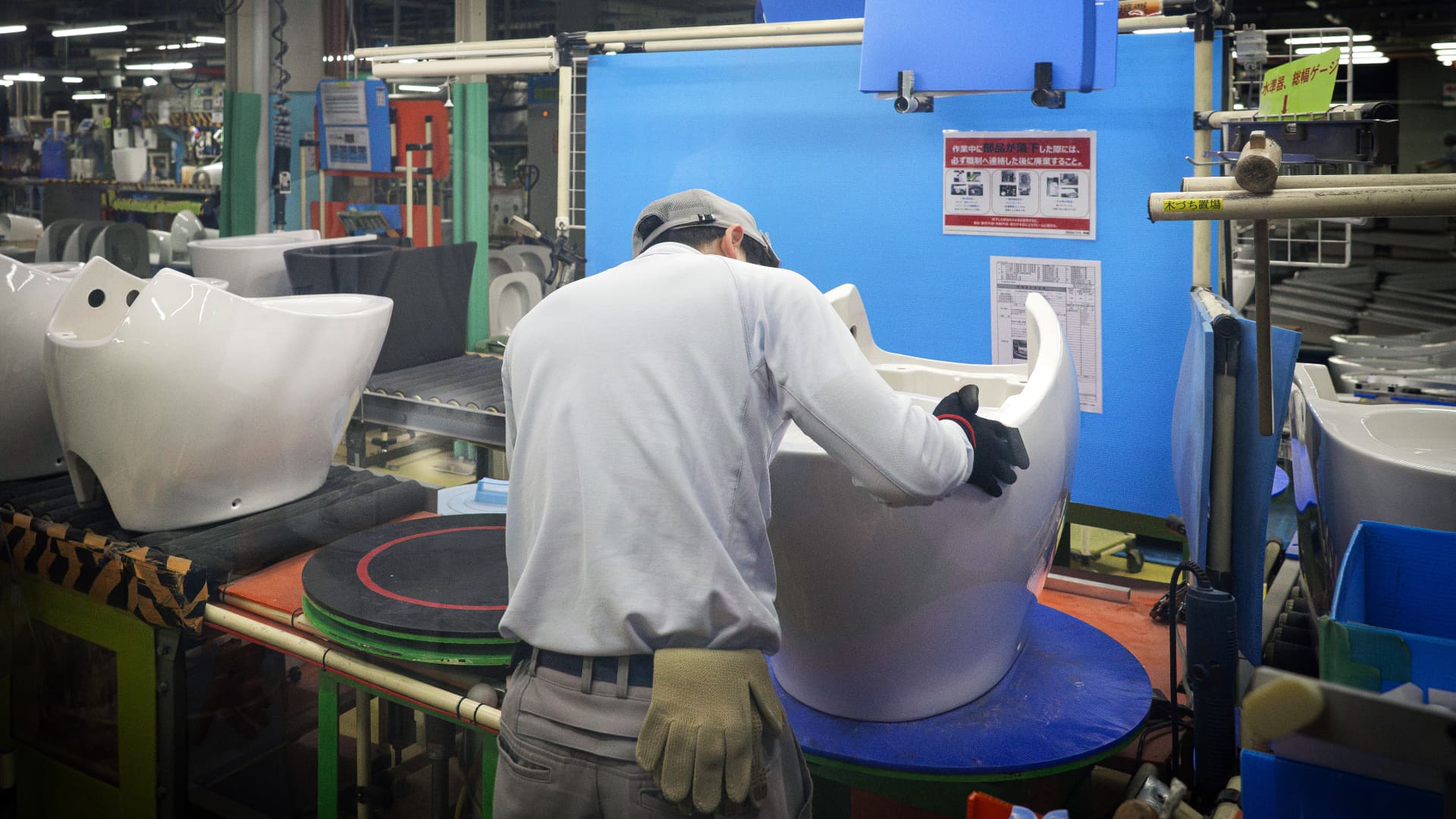
The global AI boom is creating unexpected market leaders, far beyond the familiar semiconductor giants. In a surprising turn, traditional Japanese manufacturers—known for everything from toilets to food seasoning—are emerging as significant beneficiaries, quietly powering the AI supply chain with their advanced material science expertise.
🚀 Tech Strategy & Market Disruptions
- Unsung Heroes. Traditional Japanese firms like Toto, Nittobo, and Ajinomoto are leveraging decades of material science expertise to become critical upstream suppliers in the advanced semiconductor ecosystem.
- Material Innovation. Their core technologies, ranging from advanced ceramics and glass fiber to insulating films, are indispensable for manufacturing high-performance chips required by AI and data centers.
- Diversified Growth Engines. These AI-driven segments are experiencing sharp growth, offsetting stagnation or declines in their legacy businesses and providing robust new avenues for corporate expansion.
While investor attention remains laser-focused on chipmakers, a cohort of Japanese AI winners has seen substantial share price gains by providing niche but vital components. Toto, globally recognized for its high-end toilets, has seen its shares jump 78% this year. Nittobo, a textile and glass fiber producer, climbed 63%, and Ajinomoto, the MSG seasoning giant, recorded a 61% gain. These companies are not manufacturing processors, but rather supplying the specialized materials indispensable for next-generation semiconductor fabrication and packaging.
Toto’s advanced ceramics business, for instance, manufactures electrostatic chucks crucial for holding silicon wafers during the precise etching processes in semiconductor production equipment. The company’s expertise in ceramics, honed since 1988 for electronics, is now directly contributing to improving the manufacturing yield of advanced chips. Despite a decrease in its core housing equipment sales, Toto’s advanced ceramics segment reported a remarkable 34% increase in annual revenue and a 42% jump in operating profit for the fiscal year ending March 31, according to its full year results. This segment almost single-handedly propelled the company into overall growth.
Similarly, Nittobo, with its long history in glass fiber, supplies advanced glass fiber used in semiconductor package substrates. Its T-glass product, launched in 1984, forms the backbone of printed circuit boards and electronic components. The company highlights its electronic materials, especially T-glass, as the ‘pillar’ of its growth for the next decade, stating that AI semiconductor demand is actively reshaping its capital expenditure, R&D, and human resource allocation, as reported by CNBC. Nittobo’s electronic materials business saw net sales climb 20.4% year-on-year and operating profit surge by 39.7%, contributing approximately 91% to the company’s net sales increase in the last financial year.
Ajinomoto, leveraging a byproduct from its MSG manufacturing process, developed Ajinomoto Build-up Film (ABF). This crucial insulating material is used in semiconductor packaging for high-performance computers and data-center servers, including CPUs. ABF’s role has escalated as semiconductor packaging becomes more complex, driven by AI, 5G, and other advanced technologies. While not broken out separately, Ajinomoto’s ‘Healthcare and Others’ segment, which includes ABF, saw a 4% revenue increase and a 45.1% rise in business profit, partly due to electronic materials, according to its full year results. This segment now accounts for over a third of the company’s profit, surpassing even its frozen food unit.
The global surge in AI compute demand directly translates into an insatiable need for more powerful, denser, and efficient semiconductors. This creates a ripple effect: increased semiconductor production demands specialized, high-performance materials. The disruption flow is clear: a new wave of generative AI and large language models drives unprecedented demand for high-end chips, which in turn elevates the criticality and value of the foundational material science provided by these often-overlooked companies. Their advanced materials are essential bottlenecks, making them indispensable upstream partners in the AI revolution, a trend further elaborated upon in broader technology market trends.
“The quiet transformation of traditional manufacturing firms into essential components of the high-tech supply chain underscores a critical CTO insight: innovation is often found at the intersection of established expertise and emerging demand. These firms aren’t just adapting; they’re demonstrating how deep material science know-how is as vital to AI’s future as advanced chip design, fundamentally changing how we define value in the tech ecosystem.”
While specific technical metrics beyond performance contributions are not detailed, the financial impact is undeniable:
- Toto: Advanced Ceramics business revenue up 34%, operating profit up 42%.
- Nittobo: Electronic Materials business sales up 20.4%, operating profit up 39.7%.
- Ajinomoto: ‘Healthcare and Others’ (including ABF) business profit up 45.1%.
Toto’s Advanced Ceramics: Platform Architecture for Precision
Toto’s journey into advanced ceramics, initially for non-housing applications, has culminated in a critical role in semiconductor manufacturing. Their ceramic electrostatic chucks exemplify how a mature material science, when engineered for extreme precision and purity, becomes a platform for high-yield chip fabrication. This isn’t merely a product; it’s an enabling technology. The robust physical properties and thermal stability of Toto’s ceramics provide the foundational precision required to secure silicon wafers during the etching process, where even microscopic imperfections can lead to significant chip defects. This deep dive into materials engineering forms a hidden layer of the semiconductor architecture, ensuring the integrity and efficiency of the overall production workflow, a subject often explored in emerging technologies reports.
Ecosystem Expansion Potential for Japan’s Material Science Firms
The success of these Japanese companies highlights a broader trend in the tech industry: the increasing value of specialized material science. As AI demands push the boundaries of physics in chip design and packaging, firms with deep expertise in advanced materials, even those from traditionally low-tech sectors, find new avenues for growth. This creates a rich ecosystem expansion potential. These companies, by dedicating R&D and capital expenditure to their high-growth segments, are not just riding a wave but actively shaping it. Their long-term commitment to innovation, as highlighted by Bloomberg reported, positions them to capture further market share as the AI revolution intensifies and new material requirements emerge, fostering more collaborative models across the entire tech supply chain.
The Unseen Momentum of Japanese AI Winners in the Tech Landscape
The unexpected emergence of these Japanese AI winners underscores a profound recalibration of value within the technology sector. It reveals that the true architects of innovation are not solely found in silicon valley, but often in the specialized, foundational material sciences perfected over decades. This shift emphasizes resilience and adaptability within traditional industries.
- These companies demonstrate how leveraging established core competencies for new high-tech applications creates substantial shareholder value.
- The demand for advanced materials in semiconductor manufacturing is set to remain strong, driven by persistent AI and data center expansion.
- Their success highlights Japan’s enduring strength in precision manufacturing and material science, offering a blueprint for other mature industries to pivot effectively.
Will this shift compel more investment into the foundational material sciences globally, or will these educational tech insights remain underappreciated by the broader market?
📊 StockXpo Analyst’s View
Market Impact: This trend suggests a diversification of investment opportunities beyond mainstream tech giants. Investors should look for companies with deep, specialized manufacturing or material science expertise, especially those with existing IP that can be reapplied to high-growth tech sectors. The strong performance of these traditional firms injects a new layer of stability into the otherwise volatile AI supply chain, potentially influencing investor sentiment positively towards upstream component providers.
Sector To Watch: The advanced materials and specialty chemicals sectors are becoming critical. Companies focused on ceramic composites, specialized glass fibers, and polymer films that enhance semiconductor performance will likely see sustained demand and increased valuations. This extends beyond Japan, offering a global benchmark for how mature industries can find new relevance in the digital transformation era, a sentiment echoed by industry research.
Financial Disclaimer:
StockXpo.com is a financial news aggregator and educational portal, not a registered investment advisor or broker-dealer. All information, news, and analysis provided herein are strictly for educational purposes and do not constitute investment, financial, legal, or tax advice. Investing in the stock market involves high risks, and past performance is not indicative of future results. StockXpo will not be liable for any financial losses or investment damages. Always consult a certified financial advisor before making market decisions.
MORE IN INSIDE TECHNOLOGY

SK Hynix Shares Rebound: A Strategic Shift in Semiconductor Funding
Published: Friday, October 23, 2026 · 1:46 AM

AI Innovation Fuels Southeast Asia’s Digital Growth
Published: Thursday, October 22, 2026 · 12:36 AM