
Published: Thursday, November 12, 2026 · 6:55 AM | Updated: Thursday, November 12, 2026 · 6:55 AM
📊 6 views




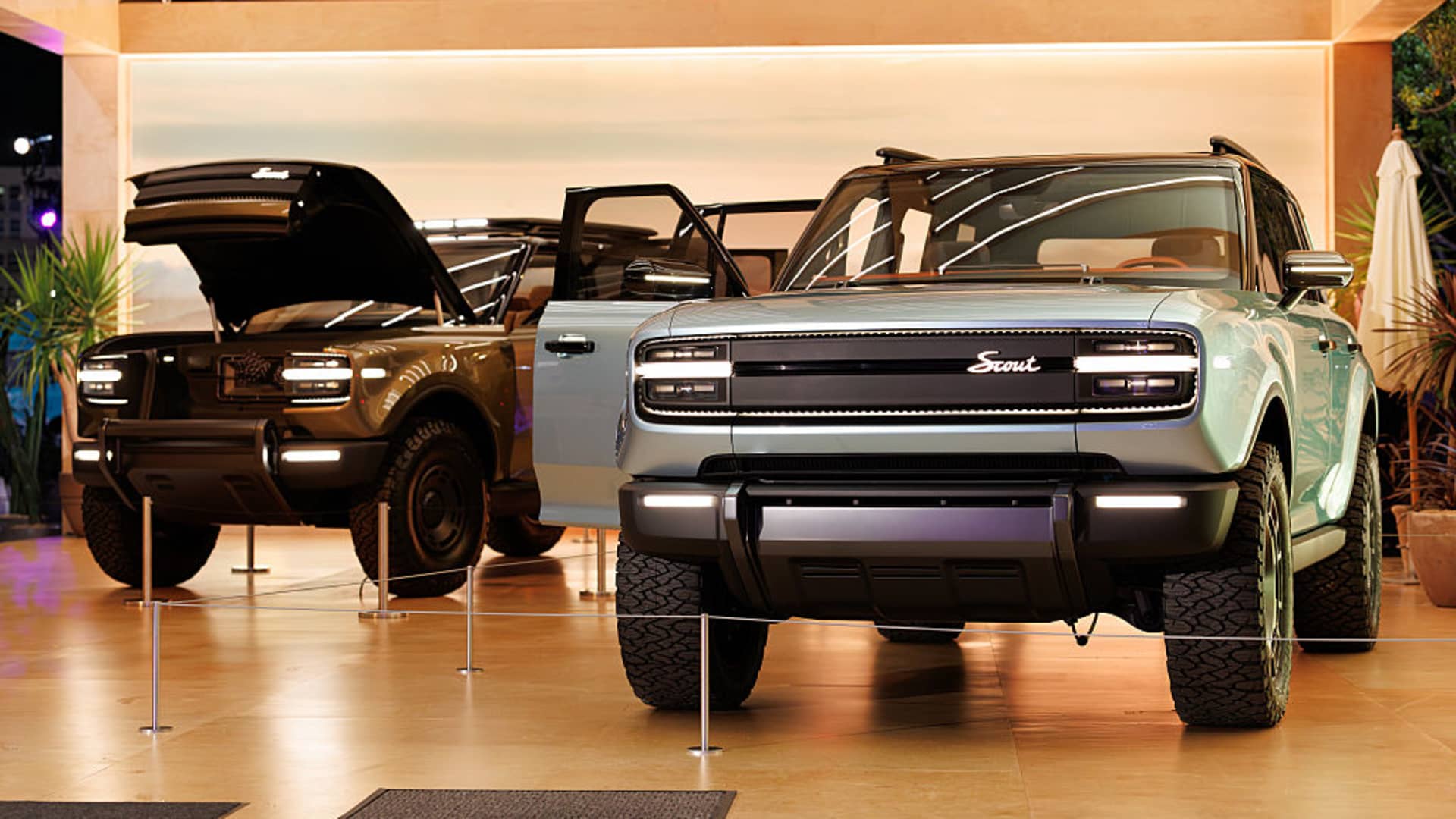
Scout Motors, the Volkswagen-backed electric vehicle startup, is demonstrating significant market traction with over 212,000 reservations for its Terra pickup and Traveler SUV as its $2 billion South Carolina manufacturing facility approaches completion. This substantial early interest, particularly in extended-range electric vehicles (EREVs), underscores a pragmatic strategic shift in a fluctuating EV market and offers critical insights into consumer demand.
🗝️ Corporate Strategy Insights
- Hybrid Strategy Validation. Scout’s decision to offer EREVs alongside pure EVs, validated by 87% of reservations, directly addresses evolving consumer preferences and mitigates pure EV market risks.
- Operational Scale Ambition. The goal to quickly reach 100,000 units and begin with mid-level models reflects a volume-centric approach aimed at achieving economies of scale faster than niche high-end launches.
- Market Leadership Positioning. Leveraging parent company Volkswagen’s resources and a historic brand name, Scout aims to carve out a significant share in the rugged SUV and truck segments, directly challenging incumbents.
The impressive figure of 212,000 Scout Motors reservations signals robust initial market interest, especially as the company’s $2 billion manufacturing facility in Blythewood, South Carolina, moves into its final construction phases. CEO Scott Keogh confirmed these figures to CNBC, emphasizing that while reservations don’t guarantee sales, they provide a strong indicator of demand, particularly given the historical challenges faced by highly anticipated EV trucks like the Ford F-150 Lightning and Tesla Cybertruck.
A key strategic adjustment for Scout Motors has been the pivot from an exclusive all-electric lineup to include extended-range electric vehicles (EREVs). This decision, driven by slower-than-expected EV adoption and higher costs, appears to be resonating with consumers: roughly 87% of current reservations are for EREV models, with SUVs accounting for 75% of the total. This pragmatism allows Scout to tap into a broader market segment, offering powertrain flexibility that pure EV players cannot match.
Keogh’s operational strategy prioritizes volume over initial premium pricing. Unlike many new entrants, including Rivian’s approach with its R2 SUV, Scout plans to launch with mid-level models to achieve scale rapidly. The target is to reach 100,000 units quickly, which Keogh believes is the threshold for significant market penetration and sustainable growth. This focus on high-volume segments and market entry strategy is detailed further in analyses of corporate growth initiatives.
- Market Adaptability: The shift to EREVs demonstrates Scout Motors’ agility in responding to dynamic market conditions and consumer preferences, avoiding the pitfalls of a rigid, EV-only mandate.
- Volume-First Strategy: Launching with mid-level models aims to accelerate market penetration and achieve critical production scale more efficiently.
- Targeted Segment Appeal: Strong interest in SUVs and pickup trucks positions Scout to compete directly in high-demand, rugged vehicle segments.
How Scout Motors’ Strategy Reshapes the EV Landscape
Scout Motors’ strategic pivot from an exclusive all-electric lineup to include extended-range electric vehicles (EREVs) represents a direct response to prevailing market headwinds impacting EV adoption rates. This adaptability, bolstered by robust initial demand for EREVs and SUVs (87% and 75% of reservations respectively), positions the company to potentially capture a broader customer base than pure EV players like Rivian or even traditional automakers betting solely on electrification. The move also exerts competitive pressure on rivals, forcing them to re-evaluate their own electrification timelines and product mix.
Competitors like Rivian, which initially focused on premium EV trucks and SUVs, might face challenges in capturing mid-market volume if Scout successfully executes its strategy of launching with mid-level, high-volume models. This flexible approach could allow Scout to navigate evolving consumer sentiment more effectively, potentially securing a stronger foothold in the vital American truck and SUV markets. Furthermore, by building an order book of 12-to-18 months of production before deliveries begin, as CEO Keogh envisions, Scout would establish a significant demand moat from the outset.
The ability of Scout Motors to pivot its powertrain strategy demonstrates a critical agility that is often lacking in new automotive ventures. This responsiveness to market signals, especially the strong preference for EREVs, is a powerful indicator of its potential to achieve sustainable market entry and scale in a highly competitive landscape.
Key operational and demand indicators for Scout Motors:
| Metric | Value | Significance |
|---|---|---|
| Total Reservations | ~212,000 | Indicates strong initial market interest for upcoming models. |
| EREV Model Preference | ~87% | Validates the strategic pivot to hybrid offerings amid slower EV adoption. |
| SUV Model Preference | ~75% | Highlights strong demand in a highly competitive and lucrative segment. |
| Plant Investment | $2 Billion | Substantial capital allocation signaling serious long-term commitment. |
| Volume Target | 100,000 units | Key operational goal for achieving economies of scale and market presence. |
Scout Motors Strategic Analysis: The VW Backing Advantage
The backing of Volkswagen is a cornerstone of Scout Motors’ strategy, providing not just the hefty $2 billion capital for its South Carolina plant but also invaluable engineering expertise, supply chain access, and brand heritage. This institutional support significantly de-risks the venture compared to independent startups, offering a deeper well of resources to navigate the complexities of automotive manufacturing and market entry. The decision to resurrect the historic Scout brand also taps into a nostalgic appeal, particularly in the rugged outdoor vehicle segment, which could be a powerful differentiator.
Furthermore, VW’s global footprint and financial stability enable Scout to pursue ambitious production targets and invest in cutting-edge manufacturing processes. This includes the substantial $300 million supplier park being developed alongside the main plant, a move designed to optimize the supply chain and enhance operational efficiency. This integrated approach, supported by a parent company with deep pockets, allows Scout Motors to build a robust foundation for scaling production and ensuring quality, key factors that determine long-term success in the automotive industry. For broader market insights and educational insights, investors often review business news from major financial outlets.
Scout Motors Competitive Edge: Agility in a Volatile Market
Scout Motors distinguishes itself through a critical blend of brand heritage, robust financial backing, and remarkable strategic agility. While many new automotive players are locked into pure-electric mandates, Scout’s decision to offer EREVs provides a crucial competitive advantage in a volatile market where EV adoption rates are not uniform. This flexibility directly addresses consumer range anxiety and charging infrastructure concerns, making their vehicles appealing to a wider demographic, particularly those in rural or less EV-dense areas. Insights on market shifts are often discussed in stock markets and investment analysis.
Moreover, the focus on the rugged SUV and pickup truck segments, echoing the original Scout’s legacy, allows the company to target a distinct niche with strong consumer loyalty. By prioritizing a volume-first approach and initiating sales with mid-level models, CEO Scott Keogh aims to build market share quickly and achieve economies of scale necessary for sustained profitability. This contrasts sharply with strategies that begin with high-priced, low-volume models, positioning Scout to become a significant challenger to both established truck manufacturers and nascent EV players seeking to dominate these segments.
Scout Motors’ Path to Scale: Balancing Demand and Delivery
Scout Motors is charting a pragmatic course for its market entry, balancing robust early demand with a measured production ramp-up. The significant volume of Scout Motors reservations — 212,000 and growing — provides a clear signal of consumer interest, particularly in its EREV SUV and truck offerings. The company’s strategic shift to include hybrids and focus on mid-level models for swift volume accumulation underscores a clear understanding of current market realities.
- Initial reservations significantly exceed typical startup benchmarks, providing a strong pre-sales pipeline.
- The EREV focus demonstrates a shrewd adaptation to evolving market demands and infrastructure limitations.
- Launching with mid-tier models supports a more rapid path to economies of scale and broader market acceptance.
Will Scout Motors successfully convert its impressive reservation tally into sustained sales and achieve its ambitious 100,000-unit annual production goal?
📊 StockXpo Analyst’s View
Market Impact: Scout Motors’ hybrid strategy is a potent signal to the broader automotive sector, suggesting that a flexible powertrain approach may be key to navigating the current EV transition. This move could soften investor sentiment towards pure-play EV startups, highlighting the execution risks associated with a singular focus on electrification.
Sector To Watch: The pickup truck and rugged SUV segments will be keenly watched. Scout’s entry, particularly with EREVs, could intensify competition for traditional OEMs like Ford and Stellantis, as well as EV specialists like Rivian, influencing product development and pricing strategies across the board.
Financial Disclaimer:
StockXpo.com is a financial news aggregator and educational portal, not a registered investment advisor or broker-dealer. All information, news, and analysis provided herein are strictly for educational purposes and do not constitute investment, financial, legal, or tax advice. Investing in the stock market involves high risks, and past performance is not indicative of future results. StockXpo will not be liable for any financial losses or investment damages. Always consult a certified financial advisor before making market decisions.
MORE IN INSIDE BUSINESS

Measles Outbreaks: The $83 Million Warning for U.S. Health Spending
Published: Wednesday, November 11, 2026 · 9:28 AM
GM’s Used Car Strategy: A Bold Play for Market Leadership
Published: Tuesday, November 10, 2026 · 8:18 AM


