
Published: Thursday, November 12, 2026 · 4:54 AM | Updated: Thursday, November 12, 2026 · 4:54 AM
📊 11 views




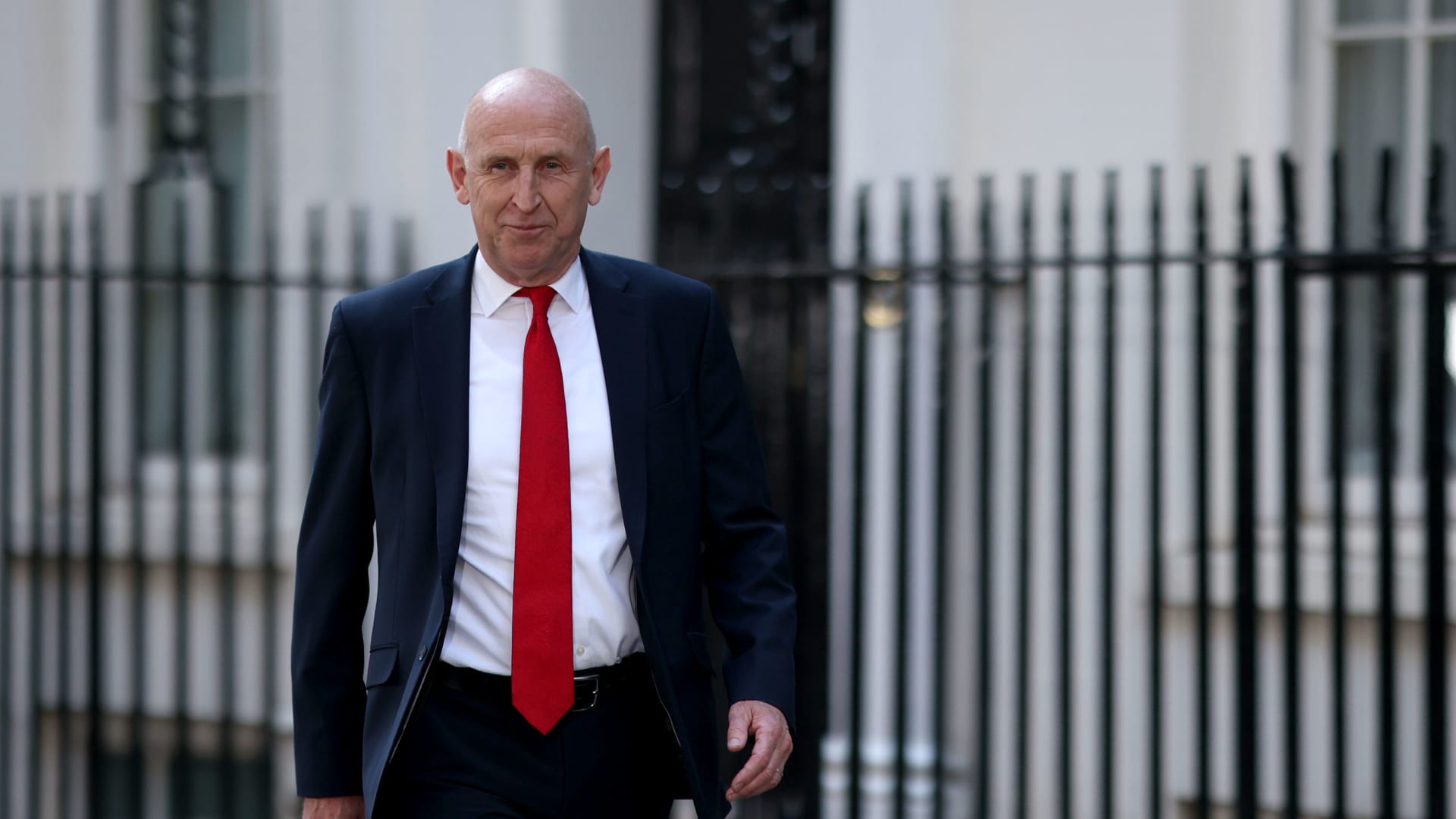
The UK economy demonstrated a notable 0.7% expansion in the third quarter, surpassing expectations and showcasing remarkable resilience amidst a turbulent global landscape. This growth, largely propelled by a robust services sector and emerging AI-driven innovation, signals underlying strengths that challenge prevailing concerns about economic slowdowns. For global investors and policymakers, this performance offers a critical barometer of how advanced economies navigate inflation, geopolitical tensions, and technological transformation, often influencing broader global economic trends.
📊 Macro-Economic Strategic Insights
- Resilient Q3 Growth. The UK economy grew 0.7% quarter-on-quarter, exceeding forecasts and marking an acceleration from previous quarters, primarily fueled by the services sector.
- AI as a New Growth Engine. Information and communication services, specifically linked to AI and cloud computing, emerged as a significant contributor to GDP expansion, highlighting technology’s increasing role in economic dynamism.
- Inflationary Pressures Persist. Despite strong growth, the Bank of England’s recent interest rate hike and warnings of further increases underscore persistent inflationary risks, with consumer price index (CPI) potentially hitting 5% by mid-2027.
The UK economy’s 0.7% expansion in the third quarter of 2026 demonstrates an unexpected robustness, a figure that aligned precisely with Reuters’ economist estimates. This performance, which also saw a 1.9% year-on-year growth, marks an improvement from the 0.5% and 0.6% growth observed in the second and first quarters, respectively. At the heart of this upturn was a strong showing from the services sector, which expanded by 0.9%. This largely offset a modest 0.1% increase in production and a 0.7% contraction in construction, according to data released by the UK’s Office for National Statistics (ONS).
Notably, the information and communication segment within services proved to be a pivotal driver, posting a 2.1% growth. The ONS specifically highlighted evidence suggesting that businesses reporting substantial turnover increases were engaged in activities related to artificial intelligence (AI) and cloud computing. This suggests that technological innovation is beginning to act as a tangible ‘extra engine of growth’ for the UK economy, though the precise quantification of AI’s impact remains challenging for official statistics.
Amidst these positive indicators, Chancellor of the Exchequer John Healey acknowledged the country’s ‘stand-out resilience’ in the face of global challenges like the US-Iran war, noting that the UK economy is experiencing its fastest growth in nearly a decade, excluding pandemic effects. Prime Minister Andy Burnham echoed this sentiment, expressing ‘hope for the future.’ However, market reactions were subdued, with stock markets showing the British pound slightly down against the US dollar and flat against the euro, while UK government bond yields remained largely unchanged.
Analysts like Scott Gardner, investment strategist at J.P. Morgan Personal Investing, characterized the results as ‘decent’ but cautioned that the true test of economic strength lies ahead. The looming Autumn Budget and continued geopolitical uncertainty from the Middle East are expected to weigh on confidence and activity in upcoming quarters. Many forecasters have already started trimming their growth projections for the next year, indicating significant headwinds persist.
Suren Thiru, chief economist at the Institute of Chartered Accountants in England and Wales, described it as a ‘strikingly strong third quarter.’ He emphasized that AI-driven investment in infrastructure, tech hardware, and computer programming is enhancing business resilience. These robust figures reinforce the Bank of England’s (BoE) perspective that the economy can withstand further borrowing cost increases, keeping a December interest rate hike ‘firmly on the table.’ The BoE recently raised rates for the first time in three years, warning of more hikes if the US-Iran war’s economic fallout continues. With UK annual inflation reaching 3.5% in September and projected to climb to around 5% by mid-2027, the central bank’s vigilance remains high. Markets are currently pricing in a 73% chance of another BoE rate hike by year-end.
Understanding the Economic Ripple Effect
The recent economic data from the UK creates a series of ripple effects across the financial landscape:
- Stronger GDP Growth → Increased Business Confidence → Potential for Higher Investment → Job Creation.
- AI-driven Sector Expansion → Enhanced Productivity → Long-term Economic Competitiveness → Innovation Acceleration.
- Persistent Inflationary Pressures → Higher Interest Rate Expectations → Increased Borrowing Costs → Slower Consumer Spending & Business Expansion (future risk).
- Geopolitical Tensions → Supply Chain Disruptions & Energy Price Volatility → Elevated Inflationary Risk & Economic Uncertainty.
Macro-stability refers to an economic state characterized by low and stable inflation, sustainable employment levels, and balanced government finances, minimizing economic shocks and fostering long-term growth. The UK’s current performance, while showing strong growth, presents a complex picture where robust expansion is juxtaposed with inflationary pressures, necessitating delicate monetary policy adjustments to maintain this crucial balance.
Key UK Economic Indicators: A Snapshot
Understanding these metrics provides a foundational insight into the health and direction of the UK economy, influencing everything from monetary policy to investment decisions.
| Metric | Value (Q3 2026/Sept 2026) | Significance |
|---|---|---|
| Quarter-on-Quarter GDP Growth | 0.7% | Indicates short-term economic momentum and beats analyst consensus. |
| Year-on-Year GDP Growth | 1.9% | Reflects broader economic expansion over the past year. |
| Services Sector Growth | 0.9% | Primary driver of overall GDP, showing strength in dominant economic segment. |
| Information & Communication Growth | 2.1% | Highlights impact of technology (AI/Cloud) as a key growth catalyst. |
| Annual Inflation Rate (September) | 3.5% | Benchmark for purchasing power and a key determinant for monetary policy. |
| BoE Projected Inflation (Mid-2027) | ~5.0% | Forward-looking risk that necessitates proactive central bank intervention. |
Navigating UK Monetary Policy Outlook
The Bank of England finds itself in a precarious position, balancing robust economic growth against persistent inflationary pressures. While the resilience of the UK economy might provide some comfort, the specter of inflation, projected to potentially hit 5% by mid-2027, demands a hawkish stance. The recent rate hike and the strong market expectation of another move in December illustrate the BoE’s commitment to price stability. This approach, while necessary to curb inflation, carries the risk of dampening future growth, especially as borrowing costs rise for consumers and businesses. The decision-making process will heavily weigh incoming data, particularly wage growth and core inflation metrics, alongside global economic trends as reported by leading financial news outlets like Bloomberg’s economic analysis.
Global Headwinds and Domestic Price Pressures
Despite domestic strength, the UK’s economic narrative remains intertwined with global dynamics, particularly the ongoing US-Iran war and its impact on energy and commodity markets. These external shocks invariably feed into domestic inflation, complicating the BoE’s task. Unlike demand-driven inflation that can be effectively managed with rate hikes, supply-side inflation stemming from geopolitical conflicts poses a more structural challenge. Policymakers must also contend with the Autumn Budget, which could introduce fiscal measures that either support or counteract the BoE’s monetary tightening efforts. The interplay between these factors determines the trajectory of prices and the overall economic stability, a subject frequently explored in economic policy discussions.
The UK Economy’s Path Ahead: Sustaining Growth Amidst Rising Costs
The UK’s stronger-than-expected third-quarter growth offers a significant boost of confidence, demonstrating an economy with considerable underlying resilience. While innovation, particularly in AI, provides a new dynamic, the path forward is not without considerable challenges, especially from persistent inflation and geopolitical instability.
- Despite positive Q3 figures, vigilance against escalating inflation and global uncertainties is paramount.
- The services sector, amplified by technology, is a key strength that could drive future productivity gains.
- Further interest rate hikes remain a strong possibility, impacting consumer spending and business investment in the near term.
Can the UK economy sustain this growth momentum while effectively taming inflationary pressures and navigating external shocks?
📊 StockXpo Analyst’s View
Market Impact: The robust Q3 GDP figures offer a positive albeit cautious signal to investors, suggesting greater stability than previously feared. While the immediate market reaction was muted, sustained economic resilience could bolster long-term confidence in UK assets. However, the high probability of further Bank of England rate hikes to combat persistent inflation poses a potential headwind for equity valuations, especially for growth-sensitive sectors, impacting the broader investment analysis landscape. Investors should remain attuned to the delicate balance between growth and monetary tightening.
Sector To Watch: The ‘information and communication’ sector, driven by AI and cloud computing, is clearly emerging as a key engine. This indicates strong potential for tech-focused companies within the UK, suggesting continued investment and innovation. Conversely, sectors sensitive to interest rates, such as real estate and highly leveraged businesses, may face increased pressure. Furthermore, businesses capable of integrating AI for efficiency gains could outperform.
Financial Disclaimer:
StockXpo.com is a financial news aggregator and educational portal, not a registered investment advisor or broker-dealer. All information, news, and analysis provided herein are strictly for educational purposes and do not constitute investment, financial, legal, or tax advice. Investing in the stock market involves high risks, and past performance is not indicative of future results. StockXpo will not be liable for any financial losses or investment damages. Always consult a certified financial advisor before making market decisions.
MORE IN INSIDE ECONOMY

Consumer Strain Deepens: Retail Sales Slow to Multi-Month Low
Published: Wednesday, November 11, 2026 · 9:59 AM

China Trade Surplus Hits Record $1 Trillion Again Amid Global Rebalancing Calls
Published: Tuesday, November 10, 2026 · 6:17 AM


