
Published: Wednesday, November 11, 2026 · 5:56 AM | Updated: Wednesday, November 11, 2026 · 5:56 AM
📊 16 views




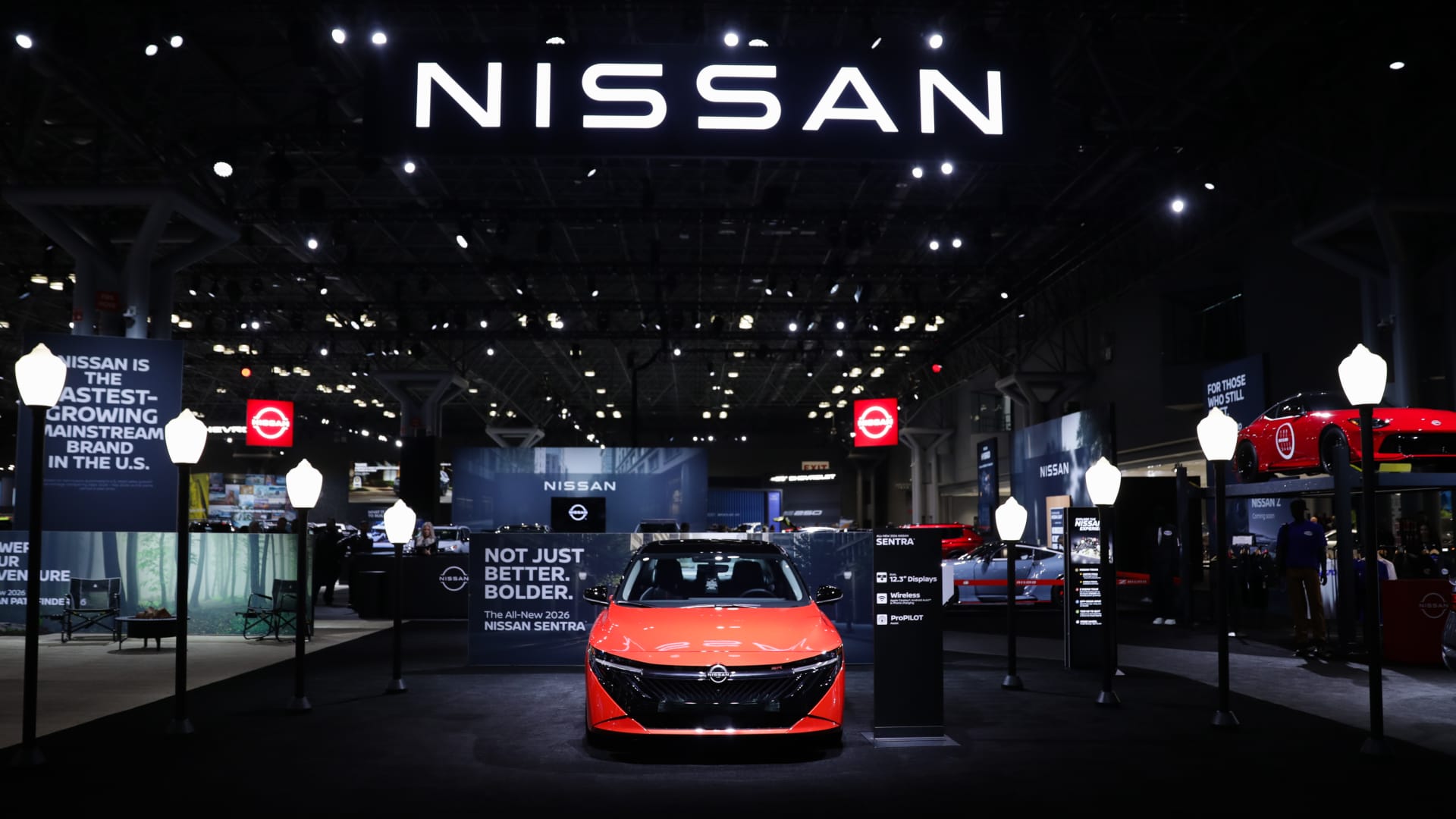
Nissan Motor (7201.T-JP) is aggressively repositioning its global strategy, shifting focus to leverage its Chinese operations as a counteroffensive against rapidly ascending local EV manufacturers. This move comes as the Japanese automaker grapples with a second sales outlook cut in recent months and a precipitous 96% drop in second-quarter operating profit, signaling deep market pressures.
💎 Strategic Investment & Portfolio Insights
- China-Driven Export Model. Nissan’s pivot to exporting China-developed vehicles signifies a critical strategic adjustment, aiming to harness local cost efficiencies and development speed to regain competitive edge globally, particularly against Chinese rivals.
- Sales Outlook Revisions Impact. The repeated downward revision of sales forecasts underscores intensifying headwinds in the crucial Chinese market and global EV transition, requiring investors to re-evaluate Nissan’s near-to-medium term revenue growth trajectory.
- Restructuring Progress vs. Market Realities. While Nissan claims progress on its internal restructuring, the sharp decline in Q2 operating profit highlights that market realities, including intense competition and shifting consumer preferences, are outstripping the pace of internal turnaround efforts.
**Nissan’s fight** to reclaim market share and profitability is now centered on an ambitious plan to expand exports of China-developed vehicles, aiming for 12 regional market clusters in the very near term, as outlined by CEO Ivan Espinosa. This strategic pivot reflects a direct response to the escalating competitive landscape within the world’s largest automotive market, where local Chinese manufacturers, particularly in the electric vehicle (EV) segment, have rapidly gained dominance through aggressive pricing and agile innovation. The Japanese automaker’s intention is to leverage China’s advanced technology ecosystem, lower production costs, and accelerated development cycles to produce five new export models from its current two, essentially fighting fire with fire. This strategy acknowledges a significant shift: global models developed in Europe or Japan are proving inadequate for the specific demands and cost structures of the Chinese market, a sentiment echoed by Volvo Cars’ CEO, Håkan Samuelsson, following their own challenging Q3 results in China.
Nissan’s restructuring efforts, initiated in April 2025 to reduce its global manufacturing footprint and workforce by 15%, have reportedly achieved 365 billion yen in savings, according to Espinosa. However, these internal efficiencies are overshadowed by external market pressures. The company’s global sales outlook for the fiscal year ending March 2027 was slashed again, from 3.15 million units to a range of 2.97 million to 3 million, primarily due to “weaker demand, a faster-than-anticipated shift to [new energy vehicles] and intensifying competition” in China, as stated in a company release. This marked the second such revision within months, following an initial cut from 3.3 million units. The grim financial picture was further painted by a 96% collapse in second-quarter operating profit to just 2.1 billion yen ($13 million), significantly below analyst expectations of 54.9 billion yen, as reported by FactSet. This severe profit contraction was attributed to the absence of one-off benefits from lower U.S. emissions-related expenses that had boosted profits the previous year, rather than a fundamental improvement in core operations. While net revenue grew 8.2% to 3.1 trillion yen, largely in line with consensus, the profitability struggles signal deep structural challenges that require more than just efficiency gains.
- The intensified competition in China is pushing traditional automakers like Nissan to localize their R&D and manufacturing processes, moving away from a ‘global car’ strategy.
- The rapid shift to New Energy Vehicles (NEVs) in China is a critical factor impacting sales, forcing automakers to accelerate their EV transition or risk being left behind.
- Despite internal restructuring progress, external market dynamics, particularly in key growth regions, are proving to be formidable challenges for established players.
The Portfolio Rebalancing Catalyst for Auto Investors
This strategic evolution by Nissan creates a notable cause-and-effect chain for diversified portfolios with exposure to the automotive sector. The company’s **policy change** to aggressively leverage China-developed models for global exports signals a **potential revaluation** of its long-term growth prospects, contingent on successful execution in a highly competitive market. Should Nissan effectively harness Chinese cost advantages and technology for its export drive, it could lead to an **asset rebalancing** away from legacy platforms towards more nimble, regionally adapted manufacturing and R&D. For investors, this implies a necessity for strategic portfolio rebalancing, potentially increasing exposure to companies demonstrating agile localization strategies and strong EV transitions, while reassessing those that cling to traditional global manufacturing models. This dynamic highlights the need for careful consideration of a company’s ability to adapt to fast-evolving global demand, especially in the context of emerging market innovation. You can find deep dive articles on such portfolio strategy in our investment analysis section.
As a CIO, I see Nissan’s move as a high-stakes gamble. Success hinges on their ability to integrate Chinese innovation without diluting their brand identity or quality standards elsewhere. This isn’t just about market share; it’s about defining their future competitive position in a bifurcating global auto market.
Understanding Nissan’s Recent Financial Trajectory
Nissan’s recent financial reports illustrate the stark realities of the current automotive landscape. While the company has embarked on a significant turnaround plan, external market forces are presenting substantial hurdles to its financial recovery. The following metrics highlight areas of concern:
- Q2 Operating Profit Drop: A 96% year-over-year decline to 2.1 billion yen ($13 million). This metric is crucial as it indicates the company’s core operational profitability before interest and taxes, signaling significant pressure on its fundamental business.
- Global Sales Outlook Cut (FY27): Revised down for a second time to 2.97-3 million vehicles from 3.15 million. The sales volume outlook directly impacts future revenue generation and market share, reflecting softening demand and competitive erosion.
- Stock Performance YTD: Shares are down 29% year-to-date. This underperformance suggests investor apprehension regarding the company’s ability to navigate current market challenges and achieve its strategic objectives.
Nissan Motor Competitive Benchmarking
**Nissan’s fight** for relevance against a backdrop of Chinese EV ascendance and established global rivals requires a close look at its competitive positioning. Unlike competitors like BYD or Geely, which benefit from domestic government support and a head start in local EV supply chains, Nissan is playing catch-up in its largest market. The strategy to export China-developed vehicles directly pits it against these agile local champions on their own terms, but on a global stage. Traditional Japanese rivals like Toyota have also faced headwinds but have often leaned on hybrid technologies as a bridge to full EV adoption, a strategy Nissan has also pursued but without the same market impact. European players such as Volvo Cars, as highlighted by their CEO, are also struggling with the ‘global car’ approach in China, indicating that Nissan’s challenge is systemic for foreign brands. Nissan’s advantage, if it can harness it, lies in its global distribution network and brand recognition outside of China, which Chinese brands are only beginning to build. However, its execution risk is high, needing to balance cost competitiveness with perceived quality and technology innovation to avoid becoming merely a low-cost alternative. This dynamic landscape is a key area of market analysis for strategic thinkers.
Nissan Motor Risk-Reward Matrix
Investing in Nissan Motor at this juncture presents a complex risk-reward profile. On the **risk** side, the primary concerns include: continued intense competition in China, potential backlash or brand dilution from exporting ‘China-developed’ vehicles to other markets, execution risk associated with its turnaround plan, and vulnerability to geopolitical trade tensions impacting global supply chains. The repeated sales forecast cuts and significant profit erosion underscore persistent challenges. Furthermore, the rapid technological advancements in EVs by Chinese players could quickly render Nissan’s localized offerings obsolete or less appealing. On the **reward** side, a successful implementation of the China-export strategy could unlock significant cost efficiencies and new market opportunities, potentially fueling a rebound in sales and profitability. Should Nissan effectively integrate its global operations with the agility and cost-effectiveness of its Chinese ventures, it could regain market share and re-establish itself as a formidable global player. The current discounted share price (down 29% YTD) might present an attractive entry point for value investors if the turnaround gains significant traction. However, this hinges heavily on the company’s ability to consistently deliver on its strategic objectives amidst an exceptionally dynamic and challenging global automotive industry. Global markets are sensitive to these strategic shifts, as seen in recent business news affecting multinational corporations.
Evaluating Nissan’s Future Trajectory Amidst Global Shifts
Nissan’s determined push to leverage its China operations for global exports marks a pivotal moment in its ongoing restructuring and **Nissan’s fight** for sustained profitability. While the strategy offers a credible pathway to combat aggressive Chinese rivals, the persistent financial pressures, notably the sharp Q2 profit drop and successive sales outlook cuts, underscore the immense challenges ahead. The coming quarters will be critical in assessing whether this bold pivot can translate into tangible market share gains and improved margins, moving beyond just cost savings.
- The success of Nissan’s China-led export strategy will be a key determinant of its competitive viability in a rapidly evolving global automotive landscape.
- Continued vigilance is warranted regarding execution risks, potential brand perception challenges, and the sustained intensity of global EV market competition.
- Investors should closely monitor quarterly sales figures, profit margins, and progress in EV adoption beyond internal restructuring metrics to gauge genuine alpha generation.
Can Nissan’s new China-centric export model effectively re-establish its global competitive footing, or will it remain locked in a perpetual struggle against an accelerating shift towards new energy vehicles?
### 📊 StockXpo Analyst’s View
Market Impact: Nissan’s aggressive strategic shift, while necessary, introduces a fresh layer of uncertainty for investors. The deep Q2 operating profit decline, coupled with consecutive sales outlook cuts, suggests that the market has not yet fully priced in the severity of challenges. This news is likely to sustain downward pressure on Nissan’s stock in the near term, as investors demand clear evidence of successful execution before committing capital. It could also prompt broader re-evaluations of other legacy automakers’ vulnerabilities in the face of Chinese market dynamics.
Sector To Watch: The automotive sector, particularly multinational legacy automakers with significant exposure to the Chinese market, will remain a focal point. Specifically, companies demonstrating strong, localized EV development capabilities and agile supply chains, capable of competing on both cost and technology, stand to gain. Conversely, those relying on traditional global product development cycles and struggling with EV transitions may face continued divestment pressure. The evolving competitive dynamics in China are fundamentally reshaping global automotive capital markets.
Financial Disclaimer:
StockXpo.com is a financial news aggregator and educational portal, not a registered investment advisor or broker-dealer. All information, news, and analysis provided herein are strictly for educational purposes and do not constitute investment, financial, legal, or tax advice. Investing in the stock market involves high risks, and past performance is not indicative of future results. StockXpo will not be liable for any financial losses or investment damages. Always consult a certified financial advisor before making market decisions.
MORE IN INSIDE INVESTMENT NEWS

SoftBank’s $7 Billion Loss: A Portfolio Warning Amidst Tech Selloff
Published: Tuesday, November 10, 2026 · 2:14 AM

Skydance Cost Savings: $6 Billion Alpha Opportunity for Media Portfolios
Published: Monday, November 9, 2026 · 6:40 PM

