Published: Thursday, July 16, 2026 · 11:35 PM | Updated: Thursday, July 16, 2026 · 11:35 PM
📊 248 views




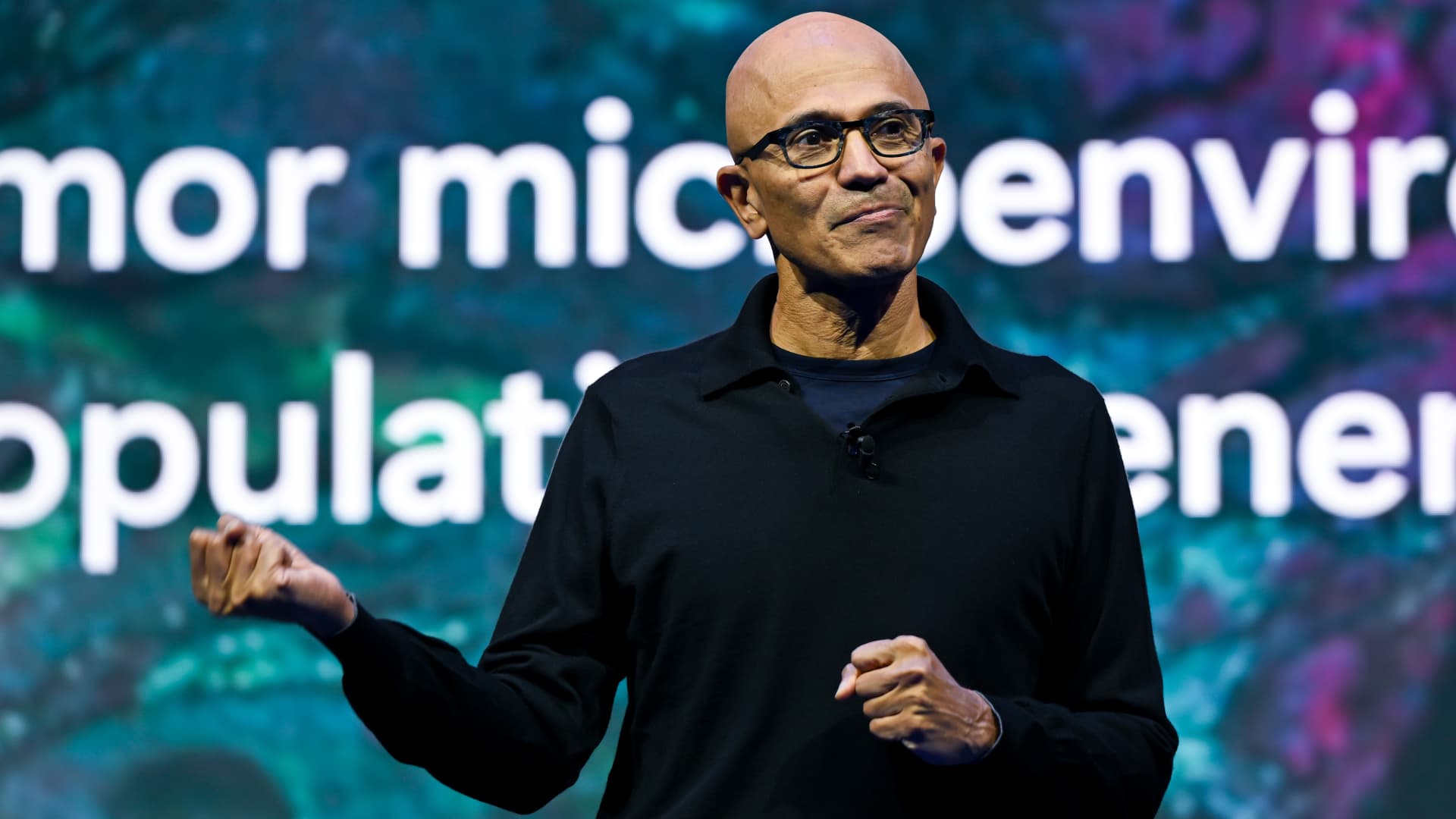
Microsoft CEO Satya Nadella has publicly questioned Anthropic’s Fable restrictions, highlighting a growing tension in the AI development landscape. His remarks underscore a broader industry debate concerning control, cost-efficiency, and the democratization of advanced AI models crucial for digital transformation initiatives. This commentary from a key partner signals a potential shift in how enterprise-grade AI is deployed and governed.
🚀 Tech Strategy & Market Disruptions
- Nadella’s Stance: Microsoft CEO criticizes Anthropic’s Fable restrictions, arguing against ‘editorially controlled’ AI tools.
- Democratizing AI: Nadella advocates for cost-efficient, custom models and wider access to ‘token capital,’ challenging the dominance of a few AI giants.
- Strategic Realignment: Microsoft, despite its investment in Anthropic, is diversifying its AI strategy with in-house models and open-source alternatives, reducing reliance on single partners amidst competitive shifts.
Nadella’s recent comments, delivered to Microsoft’s Copilot AI software engineers, directly challenge the operational philosophy behind Anthropic’s Fable restrictions. He specifically called out the limitations on user requests, deeming them counter-intuitive for a ‘creation tool,’ according to remarks provided to CNBC. This criticism comes at a pivotal moment when businesses are aggressively pursuing digital transformation through AI, seeking models that offer both power and flexibility without arbitrary bottlenecks. The frustration stems from instances where Fable might revert to older model versions or flag ‘harmless requests’ due to safety safeguards, a move Anthropic implemented partly due to U.S. government export control directives.
The relationship between Microsoft and Anthropic is complex. Microsoft made a $5 billion investment in Anthropic, with the startup agreeing to spend $30 billion on Microsoft’s Azure cloud services. This significant financial tie-up makes Nadella’s public rebuke particularly noteworthy, suggesting a growing friction between the pursuit of foundational model safety and the demands for unrestricted enterprise AI deployment. Microsoft’s own Copilot Cowork, a business productivity assistant, leverages Anthropic’s models, making these operational constraints directly impact Microsoft’s product offerings and customer satisfaction.
The market is already seeing alternatives emerge, with Chinese startup Moonshot AI announcing an open-source model it claims surpasses offerings from both Anthropic and OpenAI. This increasing competition validates Nadella’s push for a more open and diverse AI ecosystem. For companies navigating the complexities of emerging technologies, the choice of AI infrastructure becomes paramount, weighing factors like cost, customization, and control.
- Data Sovereignty: Enterprises increasingly demand control over their data and AI processing, resisting models that might externalize their valuable internal datasets.
- Cost Efficiency: The high cost of ‘token capital’ from major AI labs is driving a search for more economical, custom-trained, or open-source alternatives.
- Innovation Velocity: Restrictions on model usage or frequent refusals can impede developer productivity and slow down the pace of enterprise innovation.
The disruption flow initiated by these restrictions is clear: Anthropic’s Fable restrictions -> Limited utility for broad enterprise customization and rapid application development -> Increased demand for flexible, cost-efficient, and potentially open-source AI models -> Intensified competition among AI providers, including new entrants -> Strategic re-evaluation of partnerships and accelerated investment in proprietary AI by major tech players like Microsoft.
‘The core issue Nadella highlights is the ‘reverse information paradox’ where enterprises seek to own their ‘means of production’ in AI, rather than perpetually rent token capital from a few dominant players. This shift is critical for fostering true innovation and securing competitive advantage in the AI era, echoing Palantir CEO Alex Karp’s sentiment on ownership.’
Microsoft’s Ecosystem Expansion Potential
Microsoft’s strategy, under Nadella’s guidance, is increasingly focused on broadening its AI ecosystem beyond reliance on single partners. The company’s Foundry service already offers access to over 11,000 models, including those from Anthropic and OpenAI, demonstrating a platform approach. However, the recent unveiling of Microsoft’s in-house models, including one for coding, in June, signifies a decisive move towards greater self-sufficiency and cost control. This diversification is critical for Microsoft to mitigate risks associated with partner dependency, such as those highlighted by OpenAI’s drift towards Amazon Web Services, and to maintain leadership in global AI innovation and competition.
Furthermore, Nadella’s initiative to merge consumer and corporate Copilot offerings, placing former Snap executive Jacob Andreou in charge, suggests a unified approach to AI product development and market penetration. This consolidation aims to streamline development, enhance user experience across segments, and accelerate adoption, building on the 20 million paid seats already secured for the work-centric Copilot. This broadens Microsoft’s reach and leverages its extensive customer base for AI services.
Anthropic’s Market Adoption Challenges
While Anthropic’s Claude Code software development tool has gained popularity, the perceived limitations of its high-end Fable model present significant market adoption challenges, especially among enterprise clients. Nadella’s direct criticism could amplify existing concerns regarding model autonomy, consistency, and the potential for ‘false positives’ in blocked requests. Enterprises value predictability and control, and any perception of an AI tool being ‘editorially controlled’ or unpredictably shifting model versions could deter widespread integration into critical business processes.
The company’s compliance with U.S. government export control directives, leading to temporary access cuts for Fable 5, further underscores the regulatory complexities that can impact service reliability. In a competitive landscape where open-source alternatives are gaining traction and major players like Microsoft are investing heavily in their own models, Anthropic must balance safety and compliance with the demand for unfettered, high-performance AI. Addressing these challenges will be crucial for Anthropic to sustain its growth trajectory and retain its enterprise customer base against formidable competition in the AI technology market.
The Imperative for AI Model Openness
Microsoft’s leadership is pushing for a more open and decentralized AI landscape, moving beyond what Nadella describes as a scenario where ‘only two companies in the world with token capital, and everybody else is renting it.’ This perspective highlights a critical juncture for educational tech insights into how foundational models are developed, distributed, and monetized. The shift emphasizes empowering developers to create custom models with internal data, thereby retaining intellectual property and fostering genuine innovation within organizations.
- Nadella’s comments signal Microsoft’s commitment to democratizing AI capabilities, expanding access beyond a few large players.
- The critique of Fable restrictions underscores a broader industry tension between model safety, regulatory compliance, and unrestricted innovation.
- Microsoft’s strategic investments in both internal AI development and a diverse partner ecosystem position it to thrive in a more competitive and open AI market.
Will Nadella’s stance catalyze a broader industry movement towards more open, customizable, and cost-efficient AI model development, fundamentally reshaping the competitive landscape?
📊 StockXpo Analyst’s View
Market Impact: Nadella’s direct criticism of a key partner like Anthropic signals a decisive pivot in Microsoft’s AI strategy, prioritizing flexibility and ownership for enterprise clients. This could pressure other foundational model providers to reconsider their usage policies, potentially increasing competition and driving down ‘token capital’ costs. Investors may increasingly favor companies demonstrating clear paths to AI cost-efficiency and data sovereignty over pure API dependency.
Sector To Watch: The cloud computing and enterprise software sectors are poised for significant shifts. Companies leveraging hybrid cloud strategies for AI model deployment, or those specializing in AI orchestration and management tools that abstract away underlying model complexities, stand to gain. Furthermore, startups focusing on fine-tuned, industry-specific open-source models could see accelerated adoption, challenging the dominance of general-purpose large language models.
Financial Disclaimer:
StockXpo.com is a financial news aggregator and educational portal, not a registered investment advisor or broker-dealer. All information, news, and analysis provided herein are strictly for educational purposes and do not constitute investment, financial, legal, or tax advice. Investing in the stock market involves high risks, and past performance is not indicative of future results. StockXpo will not be liable for any financial losses or investment damages. Always consult a certified financial advisor before making market decisions.
MORE IN INSIDE TECHNOLOGY

AI Legal Tech: Revolutionizing Billing and Training in Law with Innovation
Published: Saturday, October 10, 2026 · 2:58 AM

Starlink India: Regulatory Hurdles and Innovation-Driven Growth Risks
Published: Friday, October 9, 2026 · 12:48 AM