Published: Saturday, June 13, 2026 · 2:08 PM | Updated: Saturday, June 13, 2026 · 2:08 PM
📊 214 views




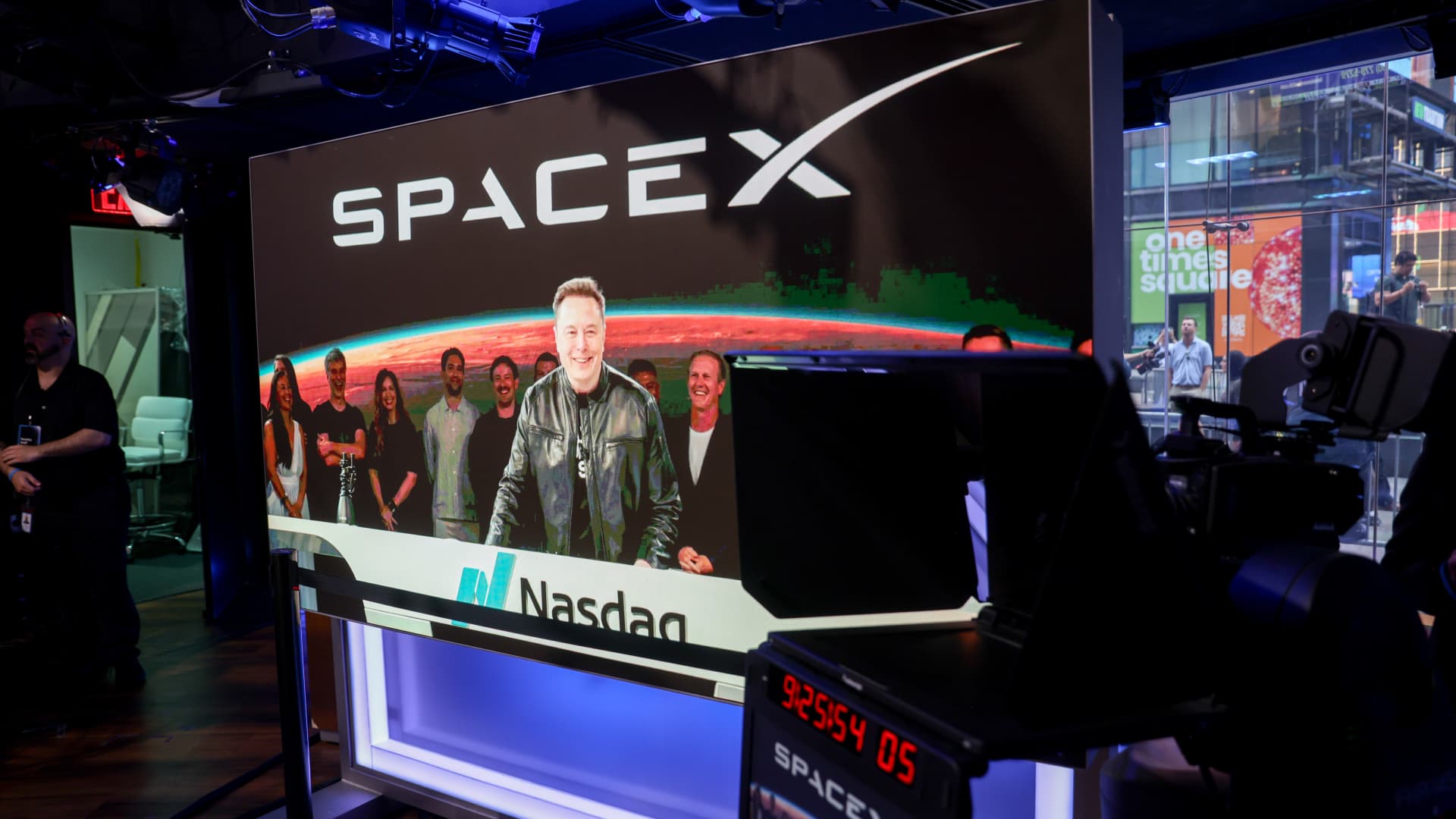
The highly anticipated SpaceX IPO has made history, launching at an astounding $2 trillion valuation and instantly becoming one of the most valuable U.S. companies. This monumental public debut, driven by Elon Musk’s audacious vision, signifies a pivotal moment not just for the aerospace industry but for the entire technology market landscape.
🚀 Tech Strategy & Market Disruptions
- Record-Setting IPO Valuation. SpaceX defied conventional wisdom with a $2 trillion valuation, raising $75 billion, triple the size of Alibaba’s previous record, fundamentally resetting IPO expectations for disruptive tech.
- Starship’s Critical Role. The company’s future growth hinges heavily on the Starship rocket achieving scale and economic viability, transitioning the launch division from a cash-burner to a profit driver.
- AI Strategy Evolution. SpaceX’s acquired xAI unit is pivoting to a data center capacity leasing model, showcasing agility in monetizing compute infrastructure, though currently operating at a loss.
Elon Musk, weeks before his 55th birthday, presided over the Nasdaq debut, a stark contrast to his early assessment that SpaceX had ‘less than 10% chance of succeeding.’ The company, founded in 2002, has grown to 22,000 employees and now holds the distinction of being one of only two U.S. companies worth over $1 trillion managed by Musk, elevating him to the world’s first trillionaire. This unprecedented IPO saw SpaceX raise $75 billion, an amount three times larger than Alibaba’s 2014 offering, setting a new benchmark for public market entries.
Despite a reported $4.9 billion loss last year and a revenue multiple of 112 times, the offering was structured without traditional price ranges or haggling, a testament to Musk’s commanding influence. Investment banker Lloyd Greif observed that the deal was dictated by ‘what one man wanted,’ underscoring the unique leverage held by founder-controlled entities in today’s capital markets. This event has reignited conversations around wealth disparity, with figures like Sen. Bernie Sanders and Governor Gavin Newsom voicing concerns over Musk’s trillionaire status amidst broader economic struggles. However, Wall Street’s enthusiasm remained undimmed, viewing the SpaceX IPO as a crucial signal for the reopening of the IPO window after a prolonged quiet period, particularly for highly anticipated AI model giants like OpenAI and Anthropic. This historic event highlights several critical aspects of current market dynamics:
- Founder Influence: Elon Musk’s unparalleled control allowed a ‘take it or leave it’ IPO pricing, defying traditional market forces.
- Market Appetite: Despite unprofitability, the $2 trillion valuation showcases immense investor confidence in long-term, disruptive tech.
- IPO Window Reopening: The success signals a potential surge in public offerings from other high-valuation private companies.
The magnitude of the SpaceX IPO dwarfs previous tech giants’ debuts. Facebook’s 2012 IPO, which raised $16 billion and closed its first day at a $100 billion valuation, appears modest in comparison. SpaceX’s 500 million shares traded on its first day neared Facebook’s 580 million, but with a market cap twenty times greater. A key similarity lies in both companies being founder-controlled, though Musk’s voting power at SpaceX exceeds 82%, far surpassing Mark Zuckerberg’s 56% at Facebook’s IPO. This level of control grants Musk unparalleled strategic agility.
The financial windfall extended beyond Musk. Alphabet’s early $900 million investment in 2015 now translates into a stake exceeding $100 billion. Valor Equity Partners, led by Antonio Gracias, saw its holdings surge past $80 billion. Moreover, the IPO reportedly created some 4,400 millionaires among current and former SpaceX employees, highlighting the broad-based economic impact within the organization.
The underwriters, including Goldman Sachs and Morgan Stanley, reportedly gained access to additional shares under the colorful condition that they wear green shoes, a detail shared by early investor Steve Jurvetson. Esteemed investors like Gracias and Sequoia partner Shaun Maguire, both long-term SpaceX proponents, voiced strong confidence in the company’s future, with Maguire likening Starship’s potential to the introduction of railroads. They foresee hundreds of billions in revenue by 2030, underscoring significant long-term growth expectations for emerging technologies.
The successful and massively oversubscribed SpaceX IPO acts as a significant market re-calibrator. This event injects confidence into the venture capital and public market ecosystem → which in turn is likely to accelerate the public listing plans for other highly valued private tech companies, particularly in AI → fostering a renewed wave of innovation-driven growth and potentially disrupting established industries by freeing up capital for further development in cutting-edge domains like space and artificial intelligence.
“The SpaceX IPO fundamentally redefines valuation paradigms for deep tech. It’s not merely about current revenue multiples but the perceived total addressable market and the visionary execution capacity of its leadership. This signals a shift where grand, long-term technological bets, despite initial unprofitability, can command astronomical public market capitalization, setting a precedent for future disruptors to explore new technology market trends.”
Key Financial Metrics & Market Impact
- IPO Valuation: $2 Trillion, instantly making SpaceX the sixth most-valuable U.S. company.
- Funds Raised: $75 Billion, the largest IPO on record, tripling Alibaba’s previous U.S. record.
- 2025 Financials: $4.9 Billion net loss, with a revenue multiple of 112 times last year’s revenue.
- Founder Control: Elon Musk retains over 82% of voting power post-IPO.
- Early Investor Gains: Alphabet’s stake now over $100 billion; Valor Equity Partners’ clients hold over $80 billion.
- Employee Windfall: Approximately 4,400 current and former SpaceX employees became millionaires.
SpaceX Market Adoption Challenges Ahead
While the SpaceX IPO has been a resounding success on Wall Street, the company faces significant challenges in translating its ambitious vision into consistent profitability across all segments. Critics point to Starlink, currently the only profitable division, arguing that its broadband service alone cannot justify a $2 trillion valuation. The space launch division, heavily reliant on the as-yet-unproven Starship for better economics, continues to burn cash. Furthermore, the recently acquired xAI unit, though pivoting to leasing data center capacity, remains a money pit in its early stages. The ambitious $28.5 trillion total addressable market projection for space, connectivity, and AI has been met with skepticism from financial analysts, with NYU finance professor Aswath Damodaran calling it a ‘hallucination.’ Sustained market adoption will hinge on Starship’s reliability, Starlink’s continued expansion in competitive markets, and the tangible monetization of its AI infrastructure, all while navigating potential regulatory hurdles and a challenging global economic climate, as highlighted in Bloomberg’s reporting.
SpaceX Ecosystem Expansion Potential Unlocked
Beyond the immediate financial success, the SpaceX IPO unlocks immense potential for ecosystem expansion, driven by its integrated approach to space, internet, and artificial intelligence. The long-term vision encompasses not just satellite internet and rocket launches but also future endeavors like space tourism, asteroid mining, and in-orbit manufacturing. This vertically integrated strategy allows SpaceX to create synergies between its different units, for instance, using Starlink for advanced satellite communication, Falcon and Starship for payload delivery, and xAI for processing vast amounts of spatial data and developing autonomous systems. COO Gwynne Shotwell acknowledged potential synergies with Tesla, hinting at a convergence of goals. This holistic approach, if executed effectively, could allow SpaceX to capture value across multiple emerging tech domains and establish foundational infrastructure for future extraterrestrial economies, solidifying its position as a multi-planetary pioneer, a development often discussed in Reuters’ analysis and other educational tech insights.
SpaceX’s Stratospheric Leap: What This IPO Means for Innovation
The SpaceX IPO represents far more than just a financial milestone; it’s a profound statement on the market’s appetite for audacious, long-term technological innovation. Despite its current unprofitability, investors have bet heavily on Musk’s vision and the company’s disruptive potential in space, connectivity, and AI. This successful public offering validates a new paradigm for evaluating deep tech ventures, where future growth potential and a transformative addressable market outweigh traditional revenue metrics.
- The IPO creates a strong precedent, likely spurring other high-growth, capital-intensive tech companies to consider public markets.
- It underscores the growing importance of founder-led companies with strong, centralized control in shaping their market destinies.
- The market’s willingness to reward long-term, speculative innovation could re-energize investment across critical technology sectors.
Can this record-breaking debut pave the way for a new era of space-driven economic growth and reshape how capital markets value fundamental technological leaps?
📊 StockXpo Analyst’s View
Market Impact: The SpaceX IPO is a seismic event that has effectively reopened the high-growth IPO window, providing a much-needed jolt of confidence to the broader market. It will likely drive liquidity into the tech sector and encourage institutional investors to re-evaluate their risk appetites for companies with transformative potential, even those with substantial upfront capital expenditure and long runways to profitability. This could lead to a re-rating of certain venture-backed firms awaiting public debuts, especially those in AI and advanced aerospace, which aligns with StockXpo’s analysis of emerging technologies.
Sector To Watch: The immediate beneficiaries are likely to be other private ‘deep tech’ companies with ambitious long-term roadmaps, particularly in AI infrastructure and advanced aerospace. Watch for increased activity and valuations in companies building foundational layers for future space economy applications and those developing large-scale AI models. We expect a ripple effect across adjacent industries like advanced materials, robotics, and satellite communications, as these sectors underpin the scalable infrastructure required for companies like SpaceX.
Financial Disclaimer:
StockXpo.com is a financial news aggregator and educational portal, not a registered investment advisor or broker-dealer. All information, news, and analysis provided herein are strictly for educational purposes and do not constitute investment, financial, legal, or tax advice. Investing in the stock market involves high risks, and past performance is not indicative of future results. StockXpo will not be liable for any financial losses or investment damages. Always consult a certified financial advisor before making market decisions.
MORE IN INSIDE TECHNOLOGY

AI Job Application Breakthrough: Skills Over Resumes Emerge
Published: Wednesday, September 30, 2026 · 3:04 AM

Smart Ring IPO: Oura Delays Public Offering Amidst Market Volatility
Published: Tuesday, September 29, 2026 · 6:52 AM