Published: Thursday, July 16, 2026 · 11:34 PM | Updated: Thursday, July 16, 2026 · 11:34 PM
📊 262 views




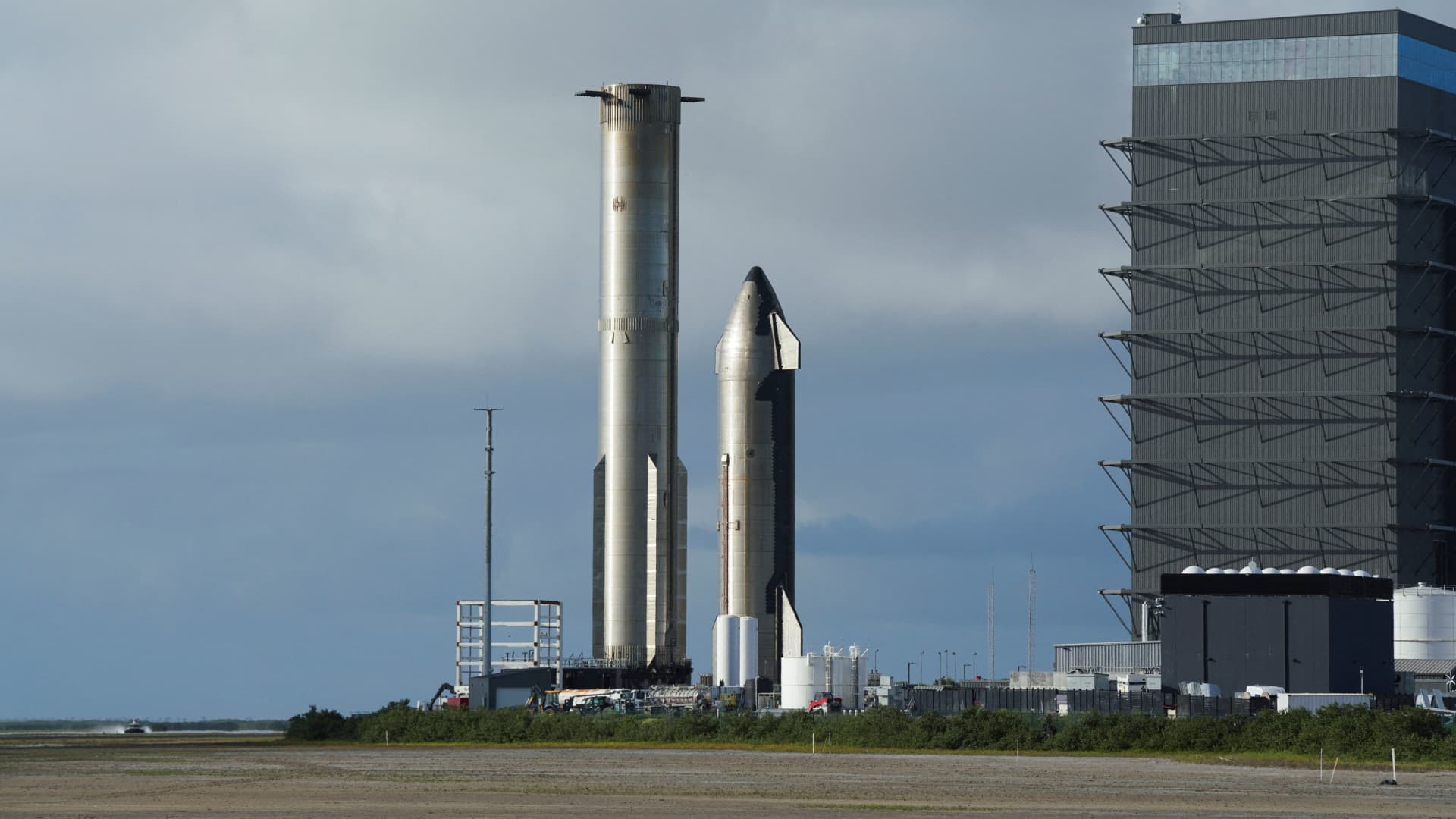
SpaceX’s highly anticipated Starship test flight from its South Texas Starbase facility was abruptly aborted on Thursday, sending shares of the recently public company further below its initial public offering price. The eleventh-hour scrub highlights the inherent complexities and risks associated with cutting-edge aerospace engineering, even for a seasoned innovator like SpaceX.
🚀 Tech Strategy & Market Disruptions
- Launch Hold Impact. SpaceX’s latest Starship V3 abort underscores the inherent risks in advanced space technology development and its direct influence on market sentiment.
- Market Volatility. SPCX shares dipped more than 3% in extended trading, sinking further below their $135 IPO price, reflecting investor sensitivity to operational setbacks in high-stakes ventures.
- Artemis & Starlink Stakes. The reliability and successful iteration of Starship are critical not only for NASA’s ambitious Artemis moon landing program but also for the scalable deployment of the Starlink satellite internet service.
The scrub occurred just minutes after a 90-minute launch window opened at 6:45 p.m. ET, with CEO Elon Musk quickly taking to X (formerly Twitter) to confirm that some engines failed to start, triggering an automatic abort. This technical glitch prevented the launch of Starship V3, an upgraded version of the nearly 400-foot-tall rocket, which was poised for its first test flight since SpaceX’s significant initial public offering last month, which raised a total of $85.7 billion, CNBC reported.
This incident follows a less-than-perfect V3 test launch in May, where several engines in the Super Heavy booster failed to reignite for a controlled landing, leading to its descent into the Gulf of Mexico. The Federal Aviation Administration (FAA) subsequently mandated an investigation into that anomaly. On Monday, the FAA cleared Starship test flight operations to resume, citing that the mishap was due to heat effects on propulsion system components and erroneous engine alarm settings, as reported by industry reporting on aerospace. SpaceX reportedly identified four corrective actions, including hardware and software updates, to mitigate future occurrences.
For this specific mission, Starship was slated to carry 20 next-generation Starlink satellites. These satellites were designed to deploy, extend their arrays, connect with the broader Starlink constellation, and then de-orbit approximately 20 minutes after deployment, according to SpaceX. The market’s reaction saw SpaceX shares fall more than 3% in extended trading, closing at $131.11, notably below its $135 IPO price, extending a five-day losing streak for the stock since its public market debut. This highlights how critical successful launches are for investor confidence, especially for a company with such high-profile and ambitious projects.
- Root Causes Identified: The FAA’s investigation into the previous mishap highlighted heat effects on propulsion systems and incorrect engine alarm settings as primary issues.
- Corrective Actions: SpaceX committed to vehicle hardware and software updates to prevent similar incidents in future Starship test flight attempts.
- Mission Objectives: The aborted flight aimed to deploy 20 advanced Starlink satellites, crucial for expanding the global satellite internet service and demonstrating capabilities for NASA’s Artemis program.
The recurrent challenges in launching Starship V3 represent a direct impact on SpaceX’s strategic roadmap. An engine ignition failure leading to a launch abort directly translates to delayed payload deployments, impacting the aggressive expansion plans for the Starlink constellation. This, in turn, can slow down revenue generation from the satellite internet service and potentially delay critical milestones for NASA’s Artemis lunar missions, a key government contract. For investors observing emerging technologies, these operational delays breed uncertainty, which directly manifests as downward pressure on stock valuation and can affect overall sentiment in the commercial space sector.
“The frontier of space technology is inherently unforgiving, demanding rapid iteration and impeccable execution. SpaceX’s transparent approach to these challenges, while impacting short-term market sentiment, is a testament to the complex, iterative engineering required to push beyond established boundaries. The lessons from each Starship test flight, successful or otherwise, are invaluable for accelerating digital transformation beyond Earth’s orbit and for advancing technologies that will benefit future terrestrial applications,” said a StockXpo Lead Solution Architect.
SpaceX Platform Architecture: Iteration vs. Stability
The architectural philosophy behind Starship and its Super Heavy booster is deeply rooted in iterative design, a principle more common in software development than traditional aerospace. This approach allows for rapid prototyping and testing, aiming to accelerate development cycles. However, as demonstrated by the recent abort and the prior partial failure, this velocity comes with inherent risks. The integration of complex, high-thrust engines like the Raptor, combined with sophisticated autonomous abort systems, creates a vast attack surface for potential technical glitches. Ensuring both system stability and rapid innovation requires a delicate balance, where software-defined launch sequences and real-time telemetry analytics play a pivotal role. The performance data from each Starship test flight is critical for refining algorithms and hardware resilience, a process that demands robust data pipelines and advanced simulation capabilities to truly move the needle on reliability for such advanced systems, as discussed on global technology news platforms.
Starship Ecosystem Expansion Potential
Beyond its immediate utility for Starlink deployments and NASA contracts, the Starship program represents a foundational pillar for a much broader space ecosystem. Its fully reusable nature and immense payload capacity are designed to dramatically lower the cost of access to space, fundamentally reshaping industries from satellite broadband to in-orbit manufacturing and deep-space exploration. The vision includes not only ferrying humans to Mars but also creating an economic flywheel where infrastructure in space becomes self-sustaining. The success of each Starship test flight is therefore not just about a single launch, but about validating the core economics and technological readiness that could unlock trillions in new market opportunities, driving interest in emerging technologies across sectors. This potential for widespread disruption is why the world watches every movement from Starbase, anticipating breakthroughs that could define the next era of innovation for industries tracking technology market trends.
SpaceX’s Starship Test Flight: Navigating the High Stakes
The latest Starship abort underscores the profound challenges and high stakes in next-generation space exploration, directly impacting investor sentiment and project timelines. While a setback, it’s also a crucial data point in a rigorous, iterative development process that aims for unprecedented capabilities.
- SpaceX’s ability to quickly diagnose and implement fixes from this abort will be key to regaining market confidence and accelerating future launches.
- The company’s valuation remains tethered to Starship’s operational success, especially concerning Starlink’s scalability and NASA’s critical Artemis missions.
- Persistent technical issues could extend development timelines, increasing R&D costs and deferring projected revenue streams from its ambitious space programs.
Will SpaceX’s iterative approach ultimately prove resilient enough to overcome these complex engineering hurdles and deliver on its transformative promises?
📊 StockXpo Analyst’s View
Market Impact: The Starship abort, while technically a setback, is a known variable in high-risk, high-reward space ventures. The market’s reaction, with shares dipping below IPO price, reflects immediate investor sensitivity to operational execution. However, long-term investors often price in such iterative development challenges for companies like SpaceX, focusing instead on the ultimate potential for market disruption. This event might serve as a temporary consolidation period, potentially offering entry points for those with a high conviction in the long-term vision of commercial space.
Sector To Watch: The commercial space sector, particularly launch services and satellite communications, remains highly dynamic. Companies involved in advanced propulsion systems, autonomous launch infrastructure, and space-based data analytics will continue to attract significant investment. Furthermore, the downstream applications of a fully operational Starship, from ultra-low latency internet to lunar logistics, will drive innovation and investment across the telecommunications, defense, and resource extraction industries. For more educational tech insights, StockXpo provides regular updates.
Financial Disclaimer:
StockXpo.com is a financial news aggregator and educational portal, not a registered investment advisor or broker-dealer. All information, news, and analysis provided herein are strictly for educational purposes and do not constitute investment, financial, legal, or tax advice. Investing in the stock market involves high risks, and past performance is not indicative of future results. StockXpo will not be liable for any financial losses or investment damages. Always consult a certified financial advisor before making market decisions.
MORE IN INSIDE TECHNOLOGY

AI Breakthroughs: TikTok CEO Predicts Major Scientific Leap Within Three Years
Published: Monday, October 12, 2026 · 2:40 AM
AI Pricing Innovation: Reshaping Retail & Consumer Spend
Published: Sunday, October 11, 2026 · 1:36 AM