Published: Wednesday, July 15, 2026 · 4:55 PM | Updated: Wednesday, July 15, 2026 · 4:55 PM
📊 228 views




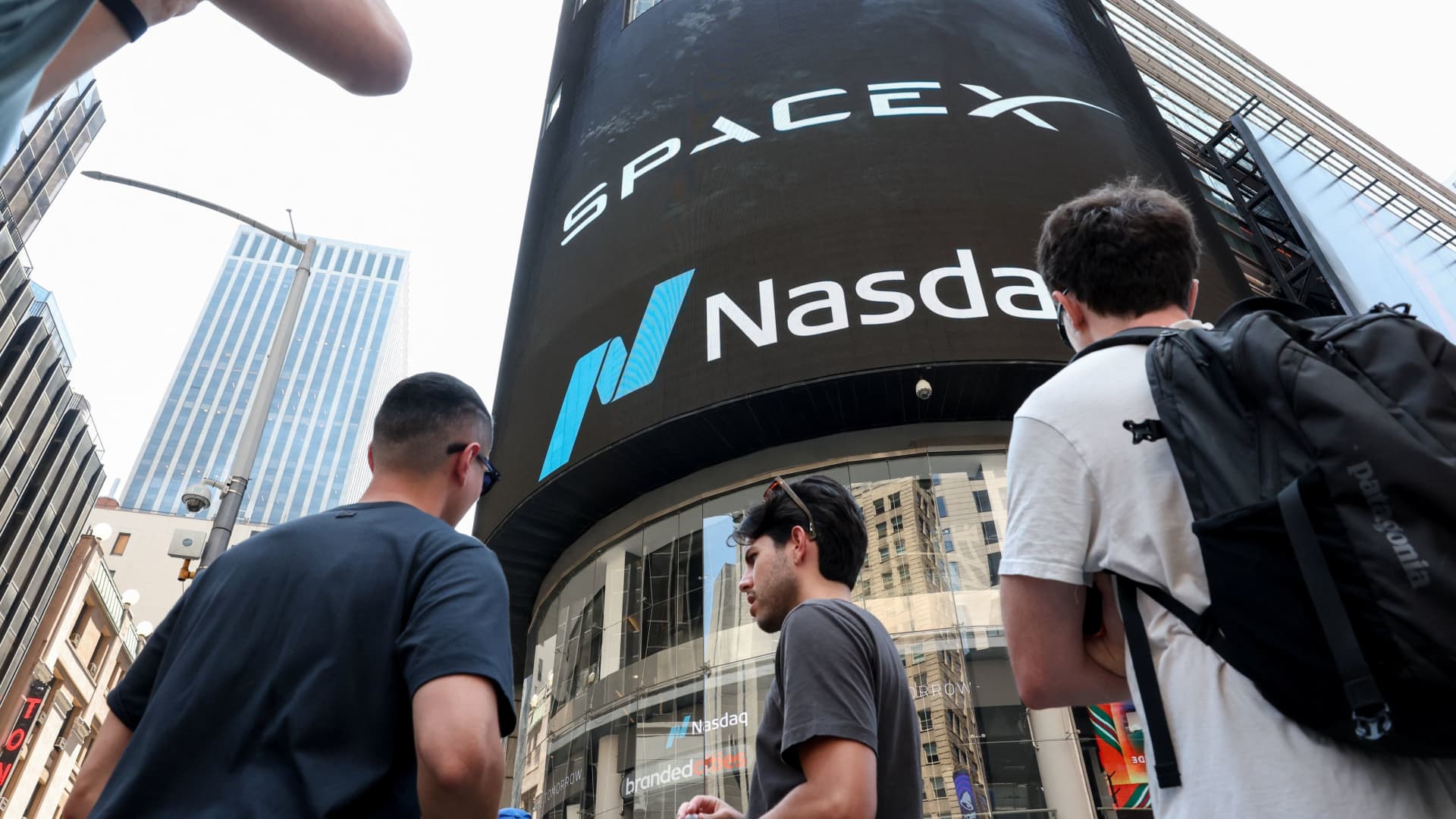
The high-flying trajectory of SpaceX, Elon Musk’s reusable rocket and satellite internet venture, has hit a notable downdraft as its shares dipped below their initial public offering price for the first time. This marks a critical moment for the market’s perception of recent blockbuster IPOs and the broader aerospace sector’s valuation. Investors are now closely scrutinizing the future performance of this prominent company, especially after its recent inclusion in the Nasdaq-100 index.
🚀 Tech Strategy & Market Disruptions
- Post-IPO Volatility Explained. SpaceX stock’s initial surge and subsequent dip highlight common post-IPO market corrections, particularly for high-valuation, growth-oriented technology firms.
- Nasdaq-100 Inclusion Impact. The rapid induction into the Nasdaq-100 index, facilitated by a rule change, initially brought passive investment but did not insulate the stock from a market reassessment.
- Future IPO Landscape. SpaceX’s performance offers a cautionary tale for upcoming high-profile IPOs like Anthropic and OpenAI, indicating potential investor apprehension towards aggressive valuations.
Shares of SpaceX (SPCX) experienced a significant decline this past Wednesday, falling approximately 2% and settling about 34% below their $135 IPO price. This downturn follows a period of notable volatility since the company’s historic initial public offering last month, which was valued at a record $86 billion and, according to CNBC, elevated founder Elon Musk to the status of the world’s first trillionaire. The initial market reception saw SpaceX stock surge, closing as high as $202 per share and skyrocketing roughly 20% on its first full trading day.
The recent slump is particularly noteworthy as it comes shortly after SpaceX’s inclusion in the concentrated Nasdaq-100 index. This induction, made possible by a recent rule change shortening the eligibility period for newly public companies to 15 trading days, was expected to stabilize the stock by bringing in passive investment from index-tracking funds. However, the stock quickly fell below its first trade price of $150 a day after joining the index, underscoring broader market pressures and investor reevaluation.
The broader market context for SpaceX’s IPO was a potentially record-breaking stretch for new listings, with highly anticipated offerings from AI powerhouses Anthropic and OpenAI also on the horizon. Both companies have confidentially filed to go public with the U.S. Securities and Exchange Commission, yet have not provided official timelines. The performance of a bellwether like SpaceX could influence investor appetite for these future tech IPOs, signaling a more discerning market.
- Initial IPO buzz propelled SpaceX shares well above their offering price, driven by the company’s innovation in reusable rocketry and satellite internet.
- The subsequent correction reflects a re-calibration of valuation expectations, common after significant market debuts.
- Market liquidity shifts and the broader sentiment toward high-growth, high-valuation tech companies are playing a key role.
The rapid ascent and subsequent correction of SpaceX stock illustrate a clear disruption flow in capital markets. A historic IPO, driven by investor enthusiasm for space tech and a charismatic founder, initially generated immense demand, pushing valuations to unprecedented levels. This demand, however, quickly met with profit-taking and a reassessment of long-term growth versus immediate market capitalization. The inclusion in major indices further amplified initial trading volume but then exposed the stock to broader market sentiment shifts, leading to a downward re-adjustment. This chain of events impacts future private market valuations and IPO strategies for other disruptive technology companies, particularly those in nascent yet promising sectors, by creating a more cautious investment environment.
‘The initial public offering (IPO) process is not merely a fundraising event; it’s a strategic market recalibration. For companies like SpaceX, the post-IPO performance often serves as a barometer for investor confidence in the long-term viability and immediate profitability of highly ambitious, capital-intensive ventures, irrespective of their groundbreaking technological advancements,’ states a lead solution architect.
What SpaceX Market Adoption Challenges Reveal
While SpaceX commands significant technological leadership in reusable rockets and satellite internet (Starlink), its journey on the public market reveals unique challenges in market adoption and perception. Unlike traditional tech companies with predictable SaaS revenues, SpaceX’s business models—launch services and broadband—are heavily capital-intensive, with long development cycles and substantial regulatory hurdles. The current stock performance suggests investors are wrestling with how to price in future revenue streams from Starlink’s global expansion against the high upfront costs and operational complexities. The lack of readily comparable public companies also makes valuation benchmarks difficult, contributing to price volatility as the market seeks equilibrium for such a unique asset. Evaluating emerging technologies requires a nuanced understanding of these long-term drivers.
SpaceX Ecosystem Expansion Potential
Despite the recent stock dip, the long-term strategic potential for SpaceX lies in its ambitious ecosystem expansion. Beyond core launch services and Starlink, the company’s vertical integration in manufacturing, advanced materials, and software development positions it for exponential growth. Future initiatives like Starship for Mars missions, lunar cargo delivery, and point-to-point travel represent vast, albeit distant, revenue opportunities. This aggressive diversification reduces reliance on any single revenue stream and creates a competitive moat. For investors tracking broader technology market trends, SpaceX’s ability to execute on these multi-faceted projects will be critical to sustaining long-term value creation and potentially redefining orbital economics. Insights on these market shifts are often available through comprehensive educational tech insights.
The Ripple Effect of SpaceX Stock on 2026 Market Dynamics
The recent performance of SpaceX stock signals a re-evaluation of high-growth technology valuations in the public markets, influencing investor sentiment for upcoming marquee IPOs. The initial euphoria surrounding its record-setting debut is now being tempered by a more critical assessment of long-term profitability and execution risk, characteristic of an evolving market.
- The rapid inclusion into major indices, while initially supportive, exposes companies to broader market dynamics.
- Investor focus is shifting from initial hype to sustainable business models and clear paths to profitability.
- Upcoming IPOs, particularly in the AI sector, may face increased scrutiny regarding their valuations and market readiness.
How will this re-calibration of investor expectations impact the wave of highly anticipated tech IPOs slated for late 2026 and beyond?
📊 StockXpo Analyst’s View
Market Impact: The dip in SpaceX stock below its IPO price is a clear indicator of market maturity, moving beyond initial exuberance. It will likely foster a more cautious approach from institutional investors towards highly valued private tech companies contemplating a public listing, demanding stronger fundamentals and clearer profitability timelines. This creates a challenging environment for market liquidity across high-growth sectors, as highlighted by a recent Reuters technology report.
Sector To Watch: The aerospace and satellite communications sectors will be under intense observation. While SpaceX’s technological prowess remains undisputed, its public market valuation struggle might temper enthusiasm for other private space ventures. Conversely, companies with established profitability in AI infrastructure, like chipmakers benefiting from demand for AI chips, or those with sustainable SaaS models, may see a flight to quality as investors seek more stable returns, as reported by Bloomberg’s analysis of tech trends.
Financial Disclaimer:
StockXpo.com is a financial news aggregator and educational portal, not a registered investment advisor or broker-dealer. All information, news, and analysis provided herein are strictly for educational purposes and do not constitute investment, financial, legal, or tax advice. Investing in the stock market involves high risks, and past performance is not indicative of future results. StockXpo will not be liable for any financial losses or investment damages. Always consult a certified financial advisor before making market decisions.
MORE IN INSIDE TECHNOLOGY

Starlink Launch: India’s Digital Transformation Faces Regulatory Risk
Published: Thursday, October 8, 2026 · 1:51 AM

AI’s Dual Edge: Innovation-Driven Growth Meets Global Economic Hazard
Published: Wednesday, October 7, 2026 · 3:12 AM