Published: Tuesday, July 14, 2026 · 2:07 PM | Updated: Tuesday, July 14, 2026 · 2:07 PM
📊 191 views




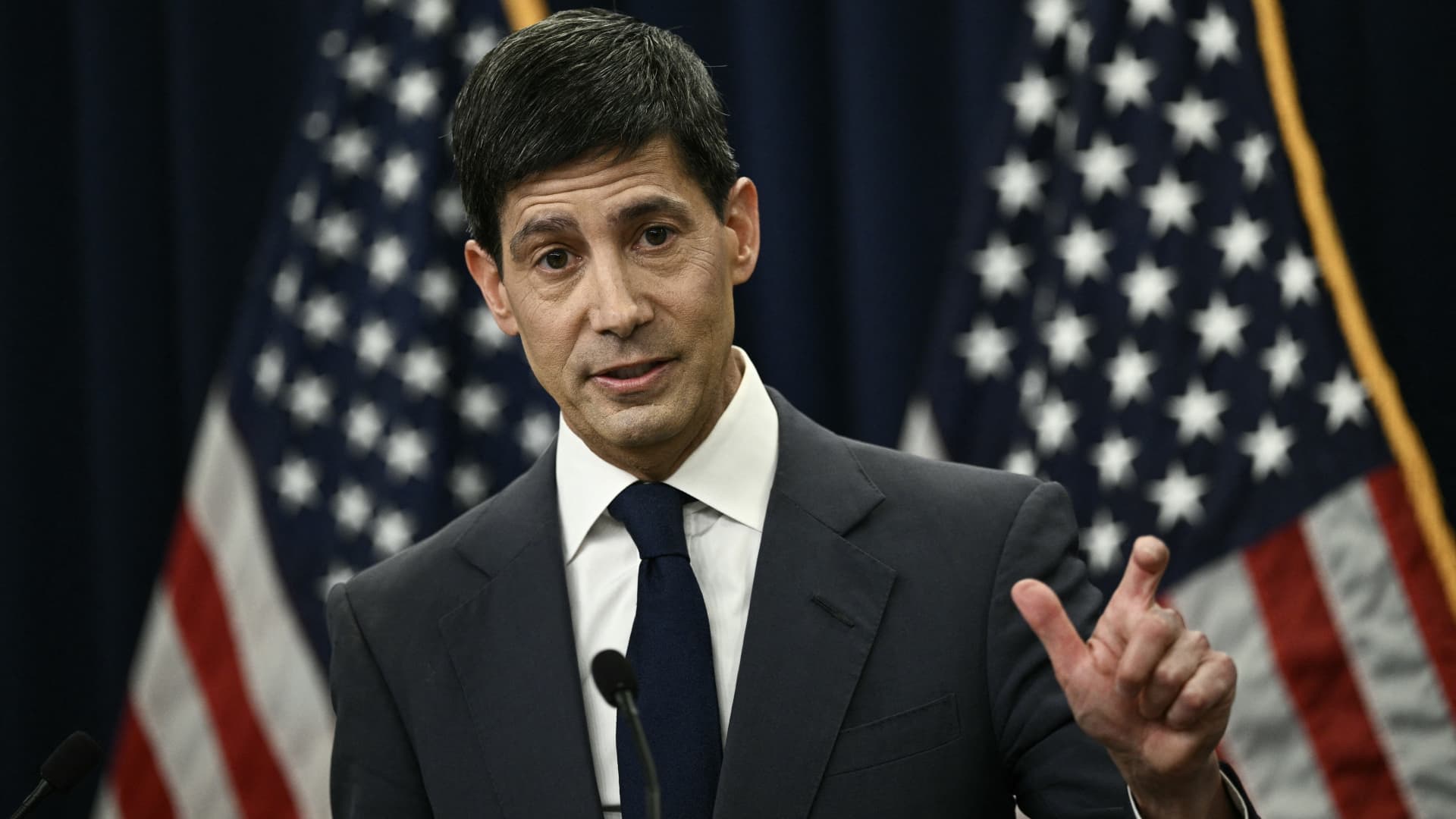
Federal Reserve Chairman Kevin Warsh has emphatically vowed to conquer the persistent inflation that has plagued the U.S. economy for five years, asserting it will soon be ‘a thing of the past.’ Speaking before congressional panels, Warsh underpinned his hawkish stance with confidence in the nation’s economic resilience, driven significantly by the burgeoning artificial intelligence investment boom.
The newly appointed Fed chief’s remarks signal a determined shift in monetary policy focus, prioritizing price stability while acknowledging the transformative potential of AI to reshape economic productivity and potentially alleviate long-term cost pressures.
💰 Financial Strategy & Market Insights
- Fed’s Renewed Anti-Inflation Mandate. Chairman Warsh commits to restoring price stability, prioritizing the Fed’s 2% target after five years of elevated inflation, signaling a resolute policy shift.
- AI Investment as a Disinflationary Force. Warsh highlights a surge in business investment, particularly in AI data centers, as a key driver for economic strength and a potential long-term disinflationary factor.
- Operational Review for Policy Effectiveness. Warsh has established five task forces to overhaul Fed operations, reviewing communications, technology, balance sheet, data, and inflation metrics to enhance policy execution.
Federal Reserve Chairman Kevin Warsh’s recent declarations mark a significant pivot in the central bank’s strategy to combat inflation, which has consistently exceeded its 2% mandate since 2021. In his first congressional appearances, Warsh reinforced a hawkish stance, characterizing persistently high prices as an ‘undue burden’ on households and businesses, with surging energy costs being a notable recent contributor. His commitment to ‘get monetary policy right’ signals a forceful intent to restore price stability, echoing his confirmation hearing rhetoric where he framed inflation as ‘a choice.’
Warsh reiterated his recent commitment to controlling prices, a stance observed across various financial policy discussions, while also touting the strength of the U.S. economy. A central tenet of Warsh’s optimistic outlook is the robust performance of the U.S. economy, particularly the escalating business investment in artificial intelligence. He described the ‘rapid pace’ of AI-related infrastructure and software development as ‘the most striking feature’ of the current economic landscape. This capital deployment, Warsh believes, will soon be indistinguishable from general investment and could usher in a productivity boom with disinflationary effects, although this premise faces skepticism from some economists and even fellow Fed policymakers.
Beyond immediate policy, Warsh has initiated a comprehensive ‘regime change’ at the Fed. This involves creating five dedicated task forces focused on crucial operational areas: communications, technology, the Fed’s balance sheet, economic data utilization, and inflation measurement methodologies. The comprehensive review, covering areas from communications to data, signifies a proactive stance to improve monetary policy effectiveness, offering valuable educational financial insights into the central bank’s evolving operational framework. This internal overhaul aims to enhance the Fed’s effectiveness in achieving its dual mandate, signaling a proactive approach to structural improvements under his leadership.
- Aggressive monetary policy is anticipated to bring down inflation to target levels, restoring consumer purchasing power.
- The significant investment in AI infrastructure is expected to drive long-term productivity gains and act as a disinflationary force.
- The Fed’s internal operational review aims to improve the central bank’s communication, data analysis, and overall policy execution.
This emphasis on both monetary tightening and the long-term benefits of technological advancement suggests a multi-faceted approach to economic stabilization. The Fed’s ability to navigate the immediate challenges of high prices while fostering productivity gains from sectors like AI will be critical for sustaining long-term growth. The shift also highlights a potential divergence in views within the Fed regarding the disinflationary impact of AI, setting the stage for future policy debates.
Navigating Economic Shifts: Risks and Rewards
- Upside: Successful curbing of inflation restores purchasing power and long-term economic stability. AI investment boom fuels productivity gains, potentially leading to sustained non-inflationary growth. Enhanced Fed operational efficiency could improve market confidence and policy predictability.
- Downside Risks: Aggressive monetary tightening could stifle economic growth, potentially leading to a recession. AI’s disinflationary impact may be overestimated, leading to prolonged inflation despite Fed efforts. Global geopolitical events or energy price shocks could undermine domestic price stability efforts.
‘Hinge point in history’ refers to a critical juncture where current decisions will have profound, long-lasting consequences for the economy, particularly concerning the trajectory of inflation and technological integration. For investors, this implies a period requiring astute risk management and a keen eye on shifts in monetary policy and innovation cycles.
Key Economic Signals to Monitor
- Inflation exceeding 2% mandate since 2021.
- U.S. economy expanding at a solid pace.
- Accelerating business investment, particularly in AI-related infrastructure.
Market Sentiment Tracker: What the Market is Signaling
Investor sentiment, though initially wary of prolonged hawkishness, has shown resilience, likely supported by the narrative of a robust economy driven by technological innovation. Equity markets, particularly those with exposure to AI and related infrastructure, have demonstrated notable strength, suggesting a belief in the long-term productivity benefits highlighted by Warsh. However, bond markets remain sensitive to interest rate expectations, with yields reflecting the Fed’s commitment to higher-for-longer policy if inflation persists. The market is effectively balancing the immediate risk of monetary tightening against the potential for future growth, creating a dynamic environment for market analysis.
Asset Valuation & Capital Shifts: Where Money is Moving
The ‘AI investment boom’ described by Warsh is driving significant capital shifts towards technology and infrastructure sectors. Valuations in companies leading AI development, data center construction, and advanced semiconductor manufacturing are experiencing upward pressure, reflecting anticipated future earnings potential from enhanced productivity. Conversely, traditional defensive sectors or those highly sensitive to interest rates may face valuation headwinds as capital reallocates towards growth-oriented AI plays. This trend highlights a broader reallocation of funds, influencing global financial markets and asset prices as investors chase innovation and seek inflation hedges through growth.
The Ripple Effect of Inflationary Control on 2026 Markets
Chairman Warsh’s confident declaration regarding the end of the current inflation surge, coupled with his emphasis on AI-driven economic growth, sets a clear course for monetary policy. His administration is poised for an aggressive stance on price stability, underpinned by internal reforms and a belief in technological advancement as a disinflationary force. The market’s interpretation of this dual approach — immediate tightening balanced with long-term innovation — will dictate capital flows and asset performance.
- Continued focus on interest rate policy and quantitative tightening to manage inflationary pressures.
- Increased investor scrutiny on companies positioned to benefit from or contribute to the AI investment boom.
- Potential for diverging performance between growth and value stocks based on inflation outlooks and technological adoption.
How will the interplay between stringent monetary policy and the disruptive power of AI ultimately shape global economic trajectories in the coming years?
📊 StockXpo Analyst’s View
Market Impact: Warsh’s strong anti-inflation rhetoric, coupled with the AI investment narrative, suggests continued market volatility. Expect a tug-of-war between inflation fears necessitating hawkish Fed action and optimism surrounding AI-led productivity gains. This could lead to a ‘flight to quality’ within tech, but broader market liquidity might be constrained by tighter monetary policy.
Sector To Watch: The technology sector, particularly sub-segments involved in AI infrastructure (semiconductors, data centers, cloud computing), will remain a focal point. Furthermore, companies demonstrating real-world applications of AI for productivity enhancements across various financial sector industries will likely attract significant capital.
Financial Disclaimer:
StockXpo.com is a financial news aggregator and educational portal, not a registered investment advisor or broker-dealer. All information, news, and analysis provided herein are strictly for educational purposes and do not constitute investment, financial, legal, or tax advice. Investing in the stock market involves high risks, and past performance is not indicative of future results. StockXpo will not be liable for any financial losses or investment damages. Always consult a certified financial advisor before making market decisions.
MORE IN INSIDE FINANCE

China’s Exports Surge: Unpacking Global Trade Growth and Asset Implications
Published: Wednesday, October 14, 2026 · 2:14 AM

Singapore Haven: Stability Yields Opportunity Amid Global Volatility
Published: Tuesday, October 13, 2026 · 12:19 AM