
Published: Tuesday, July 14, 2026 · 4:49 PM | Updated: Tuesday, July 14, 2026 · 4:49 PM
📊 214 views




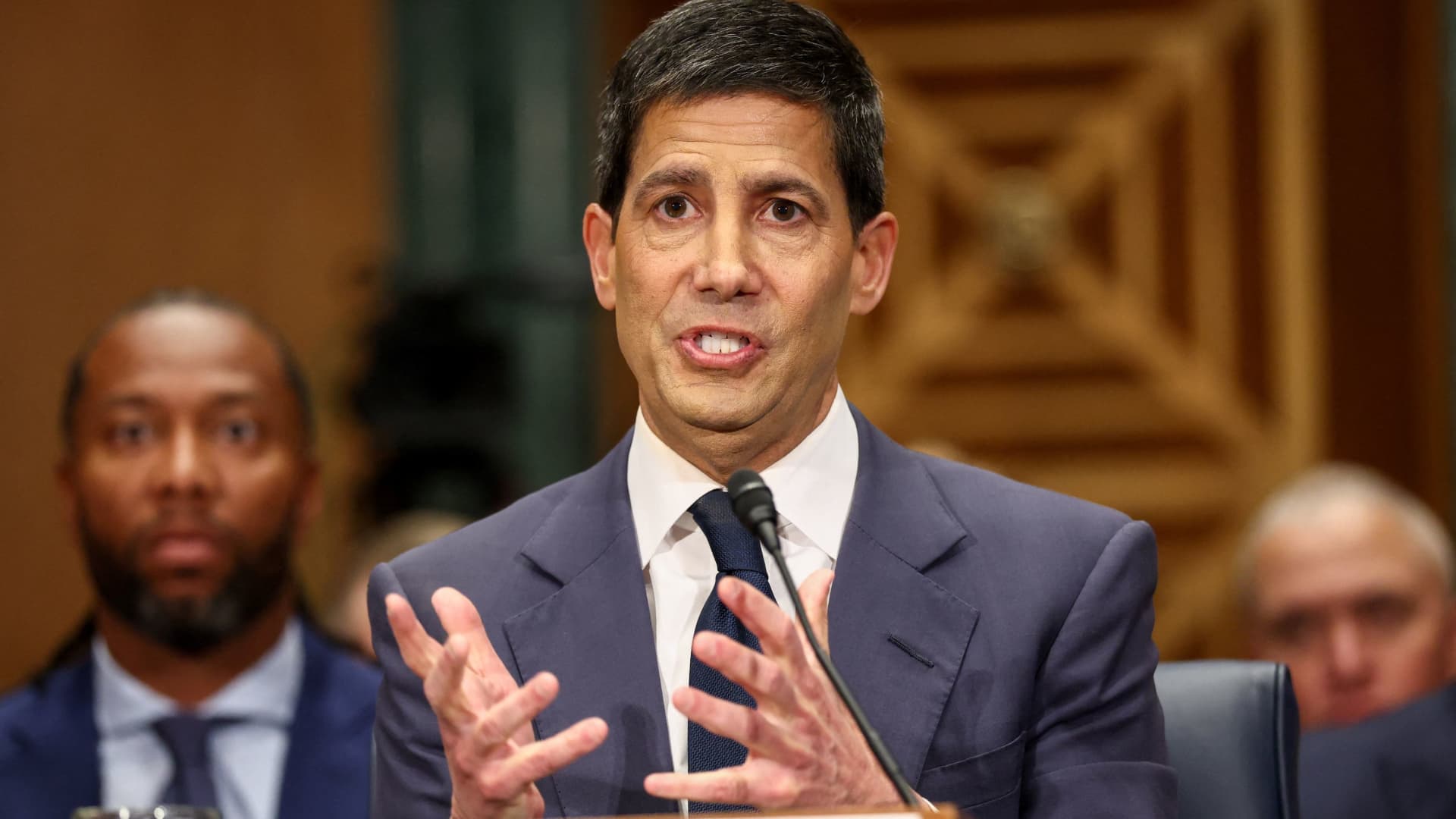
Federal Reserve Chairman Kevin Warsh recently testified before the House Financial Services Committee, articulating the central bank’s unwavering resolve to combat inflation. His remarks come at a critical juncture, following an unexpected dip in consumer prices, prompting market participants to re-evaluate the trajectory of monetary policy and its potential implications for asset valuations.
💰 Financial Strategy & Market Insights
- Inflationary Pressures Easing? The unexpected 0.4% fall in June consumer prices suggests a potential moderation, influencing Fed’s rate hike considerations.
- Fed’s Unwavering Stance. Chairman Warsh reiterated a ‘vigilant fight’ to restore price stability, targeting the Fed’s 2% inflation goal despite recent data.
- Market Volatility Ahead. Discrepancies between inflation data and the Fed’s hawkish rhetoric could lead to heightened market uncertainty, impacting bond yields and equity valuations.
During his semiannual monetary policy report to the House Financial Services Committee, Fed Chairman Kevin Warsh underscored the Federal Reserve’s commitment to achieving its 2% inflation target, even as new data presented a mixed picture. The Bureau of Labor Statistics reported a surprising 0.4% decline in consumer prices for June, a development that, on the surface, might suggest easing inflationary pressures. However, Warsh’s prepared remarks emphasized the Committee’s ‘no tolerance for persistently elevated inflation’ and a ‘resolute commitment to restoring price stability.’
This nuanced position highlights the central bank’s challenge in navigating an economy where some indicators point to disinflation while others, as suggested by the split among Fed officials on interest rate direction, signal underlying concerns. The unexpected drop in June’s Consumer Price Index (CPI) might temporarily alleviate some inflation worries, but the Fed’s primary focus remains on the medium-term trend and anchoring inflation expectations. The broader implications for investors hinge on how this data shapes future monetary policy adjustments, particularly interest rate decisions that directly influence borrowing costs and corporate profitability.
- The sharp fall in consumer prices could provide the Fed with more flexibility, potentially reducing the urgency for aggressive rate hikes.
- However, the persistent hawkish rhetoric from Chairman Warsh indicates that the Fed is unlikely to declare victory on inflation prematurely, maintaining a data-dependent stance.
- Market participants are now keenly analyzing whether the Fed’s reaction function will prioritize recent disinflationary signals or the long-term commitment to price stability, which may create short-term market dislocations and shifts in capital flow, often analyzed by experts in the financial sector, as detailed in recent global market analyses.
Navigating this evolving economic landscape presents distinct risks and potential rewards for investors:
- Upside:
- Sustained disinflation without an economic downturn could pave the way for a ‘soft landing,’ boosting equity markets and allowing for earlier rate cuts.
- Certain sectors, particularly those benefiting from falling input costs or a stable economic outlook, could see improved profitability and valuation.
- Bond markets might rally if the market prices in fewer rate hikes, pushing yields lower and increasing bond prices.
- Downside Risks:
- The Fed’s continued hawkishness despite disinflation could lead to an overtightening of monetary policy, increasing recession risks.
- Higher-for-longer interest rates could continue to pressure growth-oriented stocks and companies with heavy debt loads.
- Unexpected re-acceleration of inflation could force the Fed into more aggressive actions, creating significant market volatility and liquidity concerns.
Quantitative Tightening (QT): This refers to a contractionary monetary policy where a central bank reduces its balance sheet by letting maturing government bonds and other securities roll off without reinvesting the proceeds. This process effectively removes liquidity from the financial system, putting upward pressure on long-term interest rates and tightening overall financial conditions, complementing interest rate hikes in the fight against inflation.
Key economic indicators influencing the Fed’s stance include:
- June Consumer Price Index (CPI): Fell 0.4% month-over-month.
- Fed’s Inflation Target: 2% long-term goal.
- Fed Funds Rate: Current target range (implicitly mentioned as split opinions on direction).
Why Inflation’s Trajectory Defines Asset Valuation
The unexpected decline in June’s CPI data introduces a new layer of complexity to asset valuation models. While a single data point doesn’t establish a trend, it provides a glimpse into the potential for disinflationary forces to take hold. For equity investors, this could imply a lower discount rate for future earnings, potentially boosting present valuations if the market believes interest rates will peak sooner. However, the Federal Reserve’s stated intent to remain ‘vigilant’ means any repricing will be highly sensitive to subsequent data releases and forward guidance. Companies with robust balance sheets and consistent cash flows are better positioned to weather periods of uncertainty, while those reliant on cheap capital or high growth projections may face sustained pressure. Understanding these dynamics is crucial for discerning long-term investment opportunities, often illuminated through insightful financial blog analysis.
Market Sentiment Tracker: Post-Warsh Remarks
Market sentiment following Fed Chairman Kevin Warsh’s testimony is characterized by a cautious optimism mixed with underlying uncertainty. The immediate reaction to falling CPI data often triggers a ‘risk-on’ mood, but Warsh’s firm stance on inflation control tempers this enthusiasm. Investors are now weighing the possibility of a ‘goldilocks’ scenario—disinflation without recession—against the risk of the Fed overshooting with its tightening policies. Derivative markets, particularly those for interest rate futures, are likely to show increased volatility as participants recalibrate their expectations for the timing and magnitude of future rate adjustments. This constant re-evaluation of economic data and central bank rhetoric forms the bedrock of modern market analysis.
The Ripple Effect of Fed Chairman Kevin Warsh on 2026 Markets
Fed Chairman Kevin Warsh’s recent testimony and the latest CPI data underscore the intricate dance between central bank policy and economic realities, shaping market expectations for the remainder of 2026. While the immediate inflation figures offer some respite, the Fed’s unwavering commitment to price stability signals a potentially drawn-out battle against inflationary pressures.
- Investors should brace for continued volatility, as economic data clashes with persistent hawkish rhetoric.
- Strategic asset allocation will be paramount, favoring resilient sectors over highly leveraged growth companies.
- The prospect of a ‘higher for longer’ rate environment remains a significant factor, impacting fixed income and equity valuations.
How will the Federal Reserve balance its inflation mandate with emerging disinflationary trends to steer the economy in the coming months?
📊 StockXpo Analyst’s View
Market Impact: The market’s initial relief from the CPI dip is likely to be short-lived given Chairman Warsh’s resolute stance. We anticipate continued bifurcation, with defensive, dividend-paying stocks potentially outperforming speculative growth assets. Liquidity might remain somewhat constrained as the Fed’s balance sheet reduction continues, keeping a floor under bond yields and making capital more expensive for riskier ventures.
Sector To Watch: Given the focus on AI investment booms (as cited by Warsh in related remarks) and persistent inflation fighting, technology companies with strong cash flows and defensible market positions, particularly those in the enterprise software or infrastructure space, could show resilience. Conversely, highly cyclical sectors susceptible to interest rate sensitivity and consumer discretionary spending might face headwinds, while core consumer staples could offer stability.
Financial Disclaimer:
StockXpo.com is a financial news aggregator and educational portal, not a registered investment advisor or broker-dealer. All information, news, and analysis provided herein are strictly for educational purposes and do not constitute investment, financial, legal, or tax advice. Investing in the stock market involves high risks, and past performance is not indicative of future results. StockXpo will not be liable for any financial losses or investment damages. Always consult a certified financial advisor before making market decisions.
MORE IN INSIDE FINANCE

Crypto Derivatives Trading: Blockchain.com’s Bold Move into U.S. Markets
Published: Friday, October 9, 2026 · 8:23 AM

China’s Real Estate Market: A Potential Turnaround Amid Policy Shifts
Published: Thursday, October 8, 2026 · 6:10 AM


