Published: Friday, July 3, 2026 · 9:38 AM | Updated: Friday, July 3, 2026 · 9:38 AM
📊 264 views




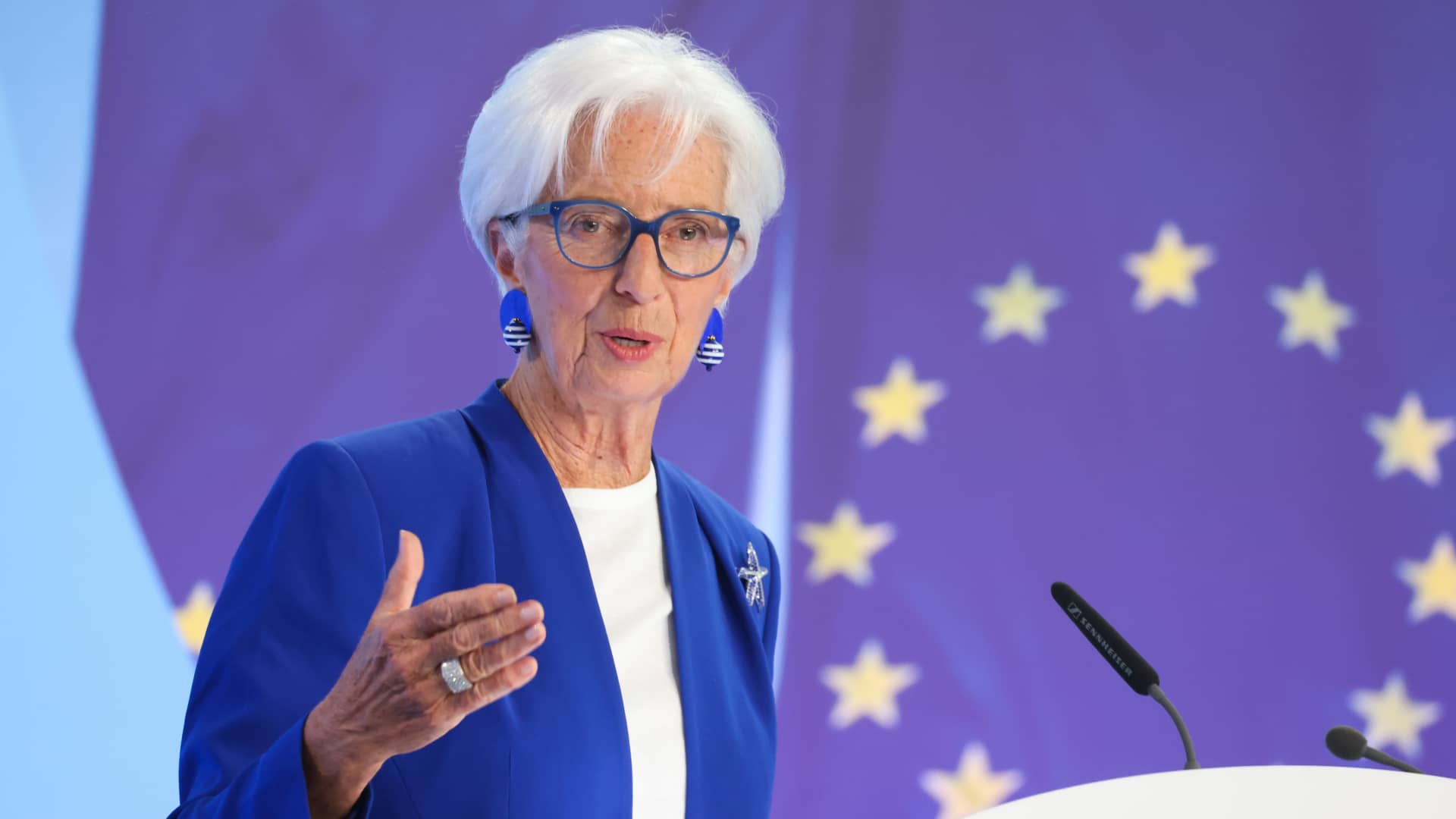
European Central Bank President Christine Lagarde has again opened the door to an early departure from her post, signaling a potential foray into French politics ahead of the country’s 2027 presidential elections. This development injects a new layer of uncertainty into Eurozone monetary policy and raises critical questions about macro-stability amid a complex global economic landscape.
Her potential move could significantly impact market sentiment and the euro’s trajectory, particularly as France grapples with challenging fiscal reforms and a politically fragmented parliament.
📊 Macro-Economic Strategic Insights
- ECB Leadership Uncertainty. The prospect of an early Lagarde ECB Exit before October 2027 could destabilize the ECB’s forward guidance and market confidence in its commitment to price stability.
- French Political Risk Escalation. Lagarde’s potential political involvement underscores growing concerns over France’s fiscal health and its alignment within the European Union, especially with the rise of far-right candidates like Jordan Bardella.
- Eurozone Fiscal Discipline in Focus. France’s struggle to meet EU-mandated deficit targets highlights broader challenges for Eurozone members in balancing national political priorities with supra-national economic stability requirements.
Christine Lagarde, whose term as ECB President is set to conclude in October 2027, recently told French newspaper Les Echos that an early departure is ‘possible.’ Her stated motivation is to ensure a ‘European voice’ is heard in the French presidential debate, particularly if narratives threaten to diminish France’s role within Europe. This comes as Jordan Bardella, leader of the far-right National Rally, polls as a frontrunner, advocating for a realignment of France’s position in the EU.
The euro experienced a sell-off earlier in February following similar reports from the Financial Times concerning Lagarde’s potential exit, illustrating the market’s sensitivity to leadership stability at the ECB. While she maintains a short-term commitment to her current role – asserting ‘the captain of the ECB ship must remain on board’ during turbulence – the explicit consideration of political involvement signals a period of heightened scrutiny for both European monetary policy and French sovereign risk.
- Lagarde’s public contemplation of a political pivot introduces a new variable into the ECB’s communication strategy, potentially complicating efforts to guide market expectations on inflation and interest rates.
The backdrop for these political musings is France’s precarious fiscal situation. The government is pushing for contentious budget cuts totaling at least 4 billion euros ($4.6 billion) to bring its public deficit down to the EU’s benchmark of 3% of GDP by 2029. Finance Minister Roland Lescure has emphasized the need to pass this year’s budget without it becoming a ‘hostage’ to the upcoming presidential campaign. The country’s political landscape has been marked by fragmentation, with five prime ministers since 2022, making economic reforms challenging.
Lagarde’s comments underscore the intersection of monetary policy and fiscal stability, particularly in a core Eurozone economy. Any perceived weakening of France’s commitment to EU fiscal rules or its broader European integration could have profound implications for bond yields, the euro, and overall stock markets across the continent.
The Ripple Effect: Navigating Market Dynamics
The potential for a Lagarde ECB Exit sets off a chain of economic consequences that demand close attention:
- **Uncertainty at the ECB** → Reduced Predictability in Monetary Policy → Higher Volatility in Euro Exchange Rates.
- **French Political Flux** → Delays or Weakening of Fiscal Reforms → Increased French Sovereign Risk Premiums.
- **Challenges to EU Integration** → Concerns over Eurozone Cohesion → Broadened Market Risk Aversion.
- **Commitment to Price Stability** → Anchored Inflation Expectations (for now) → But Long-Term Policy Continuity Doubts.
Expert Insight: Central bank independence is a cornerstone of effective monetary policy, allowing decisions to be based purely on economic data rather than political cycles. A high-profile central bank head contemplating a political role, even post-term, can inadvertently blur these lines, introducing ‘political noise’ into economic forecasts and potentially impacting investor confidence in the institution’s long-term autonomy.
French Fiscal Consolidation: Key Metrics
France’s fiscal health remains a critical determinant of Eurozone stability, with ongoing efforts to rein in public debt:
| Metric | Target/Value | Significance |
|---|---|---|
| Budget Cuts (Current) | €4 Billion ($4.6 Billion) | Immediate measures to address budget deficit, signaling government intent. |
| Public Deficit Target (Short-term) | 5% of GDP | Interim goal on the path to meeting EU convergence criteria. |
| EU Deficit Benchmark (2029) | 3% of GDP | Mandatory EU requirement for fiscal stability, crucial for Eurozone credibility. |
These metrics highlight the considerable fiscal consolidation task facing France, which is further complicated by political fragmentation and upcoming elections.
France’s Fiscal Challenges and EU Alignment
France’s persistent struggle with its public deficit is not merely a national issue; it poses a significant challenge to the broader stability of the Eurozone. The ongoing attempts to enact substantial budget cuts, as highlighted by Finance Minister Roland Lescure, are crucial for France to comply with the EU’s Stability and Growth Pact. Failure to meet the 3% GDP deficit benchmark by 2029 could lead to increased scrutiny from Brussels and potentially erode investor confidence in French sovereign debt. The political reality, however, is a fragmented parliament and the looming 2027 presidential election, making it exceptionally difficult to pass unpopular but necessary austerity measures. This internal political gridlock has external ramifications, affecting the credibility of the EU’s fiscal framework and potentially dampening growth prospects across the bloc.
ECB Leadership & Eurozone Stability Benchmarking
The European Central Bank, like any major central bank, relies heavily on the perceived stability and independence of its leadership to effectively manage monetary policy and maintain market confidence. The potential for a Lagarde ECB Exit, even if she commits to staying until her term’s end, introduces an element of unpredictability that can be benchmarked against other global financial institutions. For instance, the U.S. Federal Reserve or the Bank of England typically manage leadership transitions with clear timelines to minimize market disruption. Any ambiguity surrounding the ECB presidency, especially during a period of ‘turbulence’ as Lagarde herself noted, can lead to increased volatility in bond yields and the euro. It also raises questions about the long-term strategic direction of the ECB, particularly concerning its balance sheet reduction and future interest rate path, which are vital for overall Eurozone stability and systemic growth.
Navigating the Waters: Lagarde ECB Exit and Eurozone Stability
The evolving narrative around Christine Lagarde’s future at the European Central Bank, intertwined with French political ambitions, poses a complex challenge for Eurozone economic stability. While Lagarde asserts her immediate commitment to price stability, the underlying speculation adds a layer of uncertainty to a region already navigating high inflation and intricate fiscal policy demands. Investors and policymakers alike must monitor these developments closely, as they could dictate the trajectory of the euro and the broader European economic outlook.
- The immediate impact could be sustained volatility in the euro and European sovereign bond markets as investors price in leadership uncertainty.
- Longer-term, the focus will shift to France’s ability to implement fiscal reforms and maintain its commitment to EU integration amidst political pressures.
- The situation underscores the delicate balance between national political dynamics and the stability requirements of a monetary union.
How will the ECB manage this delicate interplay between leadership transitions and its mandate for price stability in the coming months?
### 📊 StockXpo Analyst’s View
Market Impact: The prospect of a Lagarde ECB Exit will likely maintain upward pressure on volatility in currency markets, particularly for the EUR/USD pair, and could lead to widening spreads on French government bonds. Investor sentiment may remain cautious, impacting overall equity market liquidity in the Eurozone, especially if political uncertainty in France deepens. A stable ECB leadership is critical for policy predictability in an environment of ongoing inflation control efforts.
Sector To Watch: The financial sector, particularly banks with significant exposure to French sovereign debt, will be highly sensitive to these developments. Additionally, infrastructure and large-scale project sectors could face headwinds if fiscal reforms lead to cuts in public spending, while export-oriented industries might see fluctuating fortunes based on euro movements.
Financial Disclaimer:
StockXpo.com is a financial news aggregator and educational portal, not a registered investment advisor or broker-dealer. All information, news, and analysis provided herein are strictly for educational purposes and do not constitute investment, financial, legal, or tax advice. Investing in the stock market involves high risks, and past performance is not indicative of future results. StockXpo will not be liable for any financial losses or investment damages. Always consult a certified financial advisor before making market decisions.
MORE IN INSIDE ECONOMY

Trump Economic Approval Plummets: A Warning for Macro Stability
Published: Thursday, October 22, 2026 · 9:12 AM

UK Inflation Jumps to 3.5%: Cementing Rate Hike Expectations
Published: Wednesday, October 21, 2026 · 2:51 AM