Published: Wednesday, July 22, 2026 · 5:21 PM | Updated: Wednesday, July 22, 2026 · 5:21 PM
📊 225 views




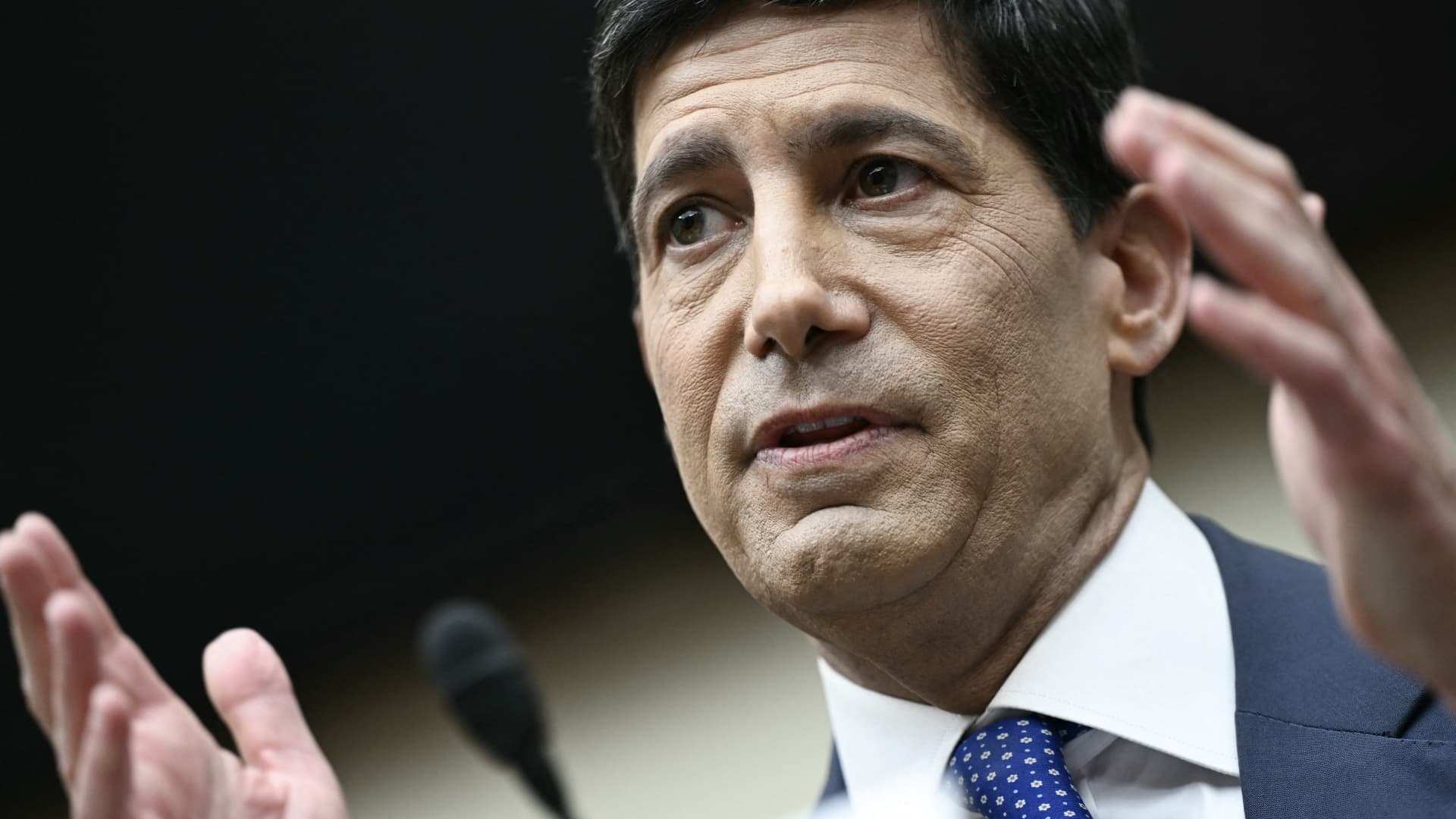
The nuanced language of central bank leaders often holds significant sway over market sentiment and economic expectations. When Kevin Warsh emerged as the new Fed chief, his adoption of specific, repetitive phrases sparked considerable attention, prompting close analysis from seasoned Fed watchers. Understanding these linguistic choices is crucial for deciphering the Federal Reserve’s evolving stance on monetary policy and its commitment to global economic stability.
Warsh’s distinctive rhetoric signals a potential shift in the institution’s operational philosophy, affecting everything from internal debate dynamics to its approach to inflation. This deeper look unpacks the macro-strategic implications of his chosen words, offering insights into the future direction of national and international fiscal considerations for stock markets.
📊 Macro-Economic Strategic Insights
- Warsh’s Distinct Communication. His reliance on specific, somewhat ambiguous phrases like ‘family fight’, ‘first principles’, and ‘inflation is a choice’ marks a departure from predecessors, demanding closer scrutiny from market participants.
- Challenging Fed Orthodoxy. The phrases signal Warsh’s intent to foster deeper debate within the FOMC and fundamentally re-evaluate monetary policy frameworks, moving away from established academic models.
- Heightened Inflation Accountability. By asserting ‘inflation is a choice’, Warsh places direct responsibility for sustained price stability firmly on the Fed, implying a stricter stance against overlooking demand-side pressures.
Decoding the Fed’s Esoteric Language: What Warsh Really Meant
Kevin Warsh’s tenure at the Federal Reserve, particularly as the new chief, brought with it a distinct communication style characterized by certain repeated phrases that left analysts and market participants seeking clarity. His emphasis on an internal ‘family fight’, a return to ‘first principles’, and the bold assertion that ‘inflation is a choice’ for the Fed, has been widely interpreted by close observers as signaling a fundamental shift in the central bank’s operational ethos.
The phrase ‘a good family fight’ suggests Warsh’s desire for a more open, robust debate within the Federal Open Market Committee (FOMC), challenging prevailing assumptions rather than merely accepting them. Strategists like Dan Greenhaus of Solus Alternative Asset Management highlight this as a pathway to improved policymaking. However, Loretta Mester, former Cleveland Fed president, noted that while an environment for hearing all views was already present, Warsh’s preference for internalizing these disagreements, as observed by Mark Spindel of Potomac River Capital, contrasts with recent trends of committee members expressing divergent opinions more publicly. Michael Feroli of JPMorgan found this phrase a folksy attempt, not a major departure from welcoming dissenting opinions.
When Warsh spoke of ‘first principles’, he signaled a radical re-evaluation of monetary policy’s foundational assumptions. Spindel interprets this as a willingness to question the entire process, including the reintroduction of monetary aggregates and skepticism towards established tools like the Phillips Curve. Claudia Sahm, chief economist at New Century Advisors, views ‘first principles’ as code for ‘question everything’, aiming for a ‘regime change’ at the Fed. This move suggests a more limited role for the Fed beyond core monetary policy, as Greenhaus elaborated, indicating skepticism towards its involvement in areas like regulatory or climate-related issues, as reported by Bloomberg Economics.
Perhaps the most potent phrase, ‘inflation is a choice, and the Fed must take responsibility for it,’ echoes Milton Friedman’s dictum that inflation is always and everywhere a monetary phenomenon. Mester emphasizes this means the Fed must align aggregate demand with aggregate supply to achieve price stability over the longer run. Sahm points out that while the Fed’s framework already acknowledges its long-run responsibility for inflation, Warsh’s omission of the timeframe could confuse the public regarding the Fed’s ability to navigate short-term supply shocks. Feroli notes the inherent tension in this assertion, as it implies the absence of a cruel choice between growth and inflation, which forms a pillar of modern monetary economics. Warsh’s message essentially means ‘the buck stops with us,’ less tolerant of external factors excusing persistent inflation, a stance with significant implications for economic policy.
The synthesis of these interpretations reveals a concerted effort by Warsh to instill greater accountability and intellectual rigor within the Fed. This approach, while potentially leading to more deliberate and robust policy decisions, also introduces an element of uncertainty regarding the institution’s future direction and its willingness to pivot from established norms.
The Ripple Effect: Macro-Stability and Policy Outcomes
- Warsh’s Rhetoric → Increased Internal Fed Debate → Potentially More Robust, But Slower, Policy Decisions.
- Questioning ‘First Principles’ → Re-evaluation of Monetary Policy Tools → Uncertainty for Market Expectations.
- Emphasis on Inflation Accountability → Higher Likelihood of Aggressive Rate Hikes During Inflationary Periods → Potential for Slower Economic Growth.
The Federal Reserve’s ‘dual mandate’ refers to its two primary goals set by Congress: maximizing employment and maintaining price stability. Navigating these often-conflicting objectives requires a delicate balance, especially when reassessing ‘first principles’ of monetary policy.
Key Economic Indicators Under Scrutiny
- Core CPI & PCE Inflation: These metrics are crucial for gauging underlying inflationary pressures, distinct from transient supply-side shocks, directly informing the Fed’s ‘choice’ regarding price stability.
- Unemployment Rate (U-3 & U-6): Essential for assessing the state of the labor market and progress towards the ‘maximum employment’ leg of the dual mandate, influencing debates around policy restrictiveness.
- M2 Money Supply Growth: Warsh’s re-introduction of ‘monetary aggregates’ implies a renewed focus on money supply data, which historically correlates with long-run inflation, impacting how the Fed views its core responsibilities.
Navigating Monetary Policy Commentary Amidst Global Headwinds
The push for internal debate and a return to ‘first principles’ under Kevin Warsh’s influence at the Fed comes at a time when global economies are grappling with complex, interconnected challenges. This approach suggests a central bank more willing to introspectively analyze its tools and mandates against a backdrop of global trade tensions, shifting geopolitical landscapes, and fluctuating commodity prices. Such a stance, while commendable for its intellectual rigor, could lead to policy decisions that diverge from international central banking consensus, creating potential ripple effects on currency markets and capital flows. The emphasis on re-evaluating the Fed’s role also aligns with broader discussions on central bank independence and its limits in an increasingly politicized economic environment. For deeper insights into central bank strategies, consider reviewing resources on investment analysis.
Unpacking Inflationary Risks in a Post-Pandemic Economy
Warsh’s declaration that ‘inflation is a choice’ takes on particular significance in an era marked by persistent supply chain disruptions, geopolitical conflicts impacting energy markets, and significant fiscal stimuli globally. While the long-run responsibility for inflation rests with central banks, recent years have highlighted the complex interplay of supply-side shocks and demand-side pressures. His perspective suggests a Fed less inclined to view inflation as purely exogenous, advocating for more proactive monetary tightening to curb demand even in the face of temporary supply constraints. This philosophical underpinning implies a lower tolerance for sustained inflation overshoots and a quicker trigger for policy adjustments, potentially impacting consumer spending and business investment. Global economic news from Reuters frequently tracks these complex dynamics.
Kevin Warsh’s Enduring Influence on Fed Transparency
Kevin Warsh’s distinctive communication style, while initially ambiguous, has undeniably shaped conversations about internal debate and core monetary policy principles. His emphasis on the Fed’s responsibility for inflation reinforces a hawkish commitment to price stability.
- Fostered a climate of critical internal review, challenging long-held assumptions within the FOMC.
- Reaffirmed the Fed’s primary accountability for sustained inflation, influencing future policy responses to price pressures.
- Set a precedent for central bank leaders to directly address foundational monetary theory in public discourse.
How will future Fed leaders balance the push for robust internal debate with the need for clear, unified public communication on critical economic policy?
### 📊 StockXpo Analyst’s View
Market Impact: Warsh’s emphasis on inflation accountability and challenging ‘first principles’ suggests a central bank leaning towards stricter monetary discipline. This could lead to a quicker response to inflationary pressures, potentially impacting bond yields and equity valuations as markets price in a more hawkish Fed. The push for internal debate, while healthy, might introduce short-term uncertainty if public disagreements become more pronounced.
Sector To Watch: Financial services, particularly banks and investment firms, will be keenly sensitive to shifts in interest rate policy and regulatory frameworks stemming from a ‘first principles’ review. Additionally, sectors heavily reliant on stable, predictable inflation expectations, such as long-duration assets and consumer discretionary, could experience increased volatility.
Financial Disclaimer:
StockXpo.com is a financial news aggregator and educational portal, not a registered investment advisor or broker-dealer. All information, news, and analysis provided herein are strictly for educational purposes and do not constitute investment, financial, legal, or tax advice. Investing in the stock market involves high risks, and past performance is not indicative of future results. StockXpo will not be liable for any financial losses or investment damages. Always consult a certified financial advisor before making market decisions.
MORE IN INSIDE ECONOMY

UK Inflation Jumps to 3.5%: Cementing Rate Hike Expectations
Published: Wednesday, October 21, 2026 · 2:51 AM

Housing Market Flashes Warning Signs Amid Fed Rate Hikes
Published: Tuesday, October 20, 2026 · 2:17 PM