Published: Thursday, July 2, 2026 · 1:15 PM | Updated: Thursday, July 2, 2026 · 1:15 PM
📊 261 views





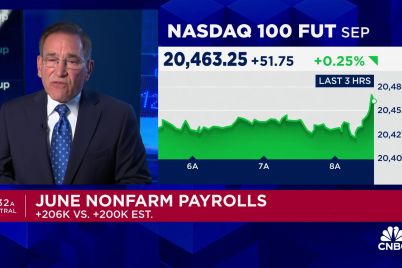
The latest U.S. jobs report reveals a notable deceleration in hiring, with June nonfarm payrolls falling significantly short of expectations. This unexpected cooling of the labor market could signal a broader shift in economic momentum, impacting global investment sentiment and the Federal Reserve’s policy trajectory, urging closer scrutiny of underlying economic health.
📊 Macro-Economic Strategic Insights
- Sharp Slowdown in Job Creation. June saw a mere 57,000 nonfarm payrolls added, substantially below the 115,000 forecast and significantly down from May’s revised 129,000.
- Unemployment Rate Decline Driven by Participation. The unemployment rate dropped to 4.2%, but this was largely due to a 0.3 percentage point dip in the labor force participation rate to 61.5%, its lowest since March 2021.
- Wage Growth Meets Expectations. Average hourly earnings rose 0.3% monthly and 3.5% annually, aligning with consensus forecasts, suggesting inflationary pressures from wages remain contained for now.
The U.S. jobs market experienced a significant deceleration in June, marking a distinct shift from earlier robust growth projections. Nonfarm payrolls increased by a mere 57,000 for the month, considerably lower than the downwardly revised 129,000 added in May and falling short of the Dow Jones consensus forecast of 115,000. This slowdown signals a potential softening of the overall economic picture, challenging previous narratives of an exceptionally tight labor market. The Bureau of Labor Statistics data also highlighted substantial downward revisions for prior months, with May’s initial strong figures cut by 43,000 and April’s by 31,000, indicating that labor market expansion has been significantly slower than initially reported across multiple periods.
Despite the muted job creation, the unemployment rate surprisingly dropped to 4.2%, slightly below May’s 4.3% and approaching the 4.1% observed a year ago. However, this dip was primarily a consequence of a declining labor force participation rate, which fell by 0.3 percentage points to 61.5%—its lowest level since March 2021. This suggests that fewer individuals are actively seeking employment, rather than a surge in job placements, leading to a narrower pool of available workers. Furthermore, household employment saw a significant decline of 507,000 people at work during the month, painting a more cautious view of employment health.
Professional and business services led sectoral gains, adding 36,000 jobs, followed by social assistance (25,000) and healthcare (22,000), though the latter at a slower-than-normal pace. Government employment also saw an uptick of 8,000 positions. Conversely, the leisure and hospitality sector reported a substantial loss of 61,000 jobs, attributed by the BLS to slower-than-usual seasonal hiring patterns. This decline occurred despite earlier economic forecasts, including estimates from Goldman Sachs, which had predicted a boost of up to 40,000 jobs due to the World Cup. Most other employment categories demonstrated little change, indicating a broad-based stagnation in hiring beyond a few specific sectors. Average hourly earnings, a key indicator of inflationary pressure, rose 0.3% for the month and 3.5% from a year ago, both in line with consensus, suggesting wage inflation remains steady rather than accelerating.
Understanding the Nuances in U.S. Jobs Data
- Participation Rate Impact: The fall in the labor force participation rate distorts the true picture of the unemployment rate, suggesting underlying weakness rather than strength in the job market’s ability to absorb workers.
- Downward Revisions: Consistent downward revisions of past job figures indicate that the labor market’s momentum has been overestimated, prompting a reassessment of economic growth trajectories.
- Sectoral Disparities: While some sectors like professional services continue to grow, significant losses in leisure and hospitality highlight uneven recovery and potential vulnerability in consumer-facing industries.
Economic Consequences: The Ripple Effect
Slower Job Growth → Reduced Consumer Confidence & Spending → Potential Easing of Demand-Side Inflationary Pressures.
Lower Labor Force Participation → Tighter Labor Supply for Available Roles → Sustained Wage Pressure in Skilled Occupations Despite Overall Hiring Slowdown.
Weaker-than-Expected Jobs Report → Increased Fed Dovishness (less aggressive stance) → Delayed or Fewer Interest Rate Hikes, influencing stock markets and broader financial conditions.
Substantial Downward Revisions → Reassessment of Past Economic Strength → Heightened Uncertainty for Future Investment and Business Planning.
A declining labor force participation rate, even with a falling unemployment rate, indicates a shrinking pool of active job seekers, rather than robust job absorption. This subtle distinction is crucial for understanding the true health of the labor market and its long-term implications for economic output and potential growth, often masking underlying structural challenges.
Key U.S. Labor Market Metrics (June)
- Nonfarm Payrolls Added: +57,000. This metric, significantly below forecasts, highlights a marked slowdown in overall job creation, impacting consumer sentiment and economic growth projections.
- Unemployment Rate: 4.2%. While seemingly positive, its decline is largely attributed to fewer people seeking work, rather than robust job placement, which raises concerns about long-term labor market health.
- Average Hourly Earnings (Year-over-Year): +3.5%. This figure, in line with expectations, suggests that wage inflation is stable, preventing further acceleration of broader inflationary trends for now.
U.S. Inflationary Risks Amid Labor Market Shifts
The Federal Reserve faces a delicate balancing act. While the weaker U.S. jobs report might ease fears of an overheating labor market contributing to wage-push inflation, the stable 3.5% annual wage growth, combined with persistent inflation running above the Fed’s 2% target, still presents a challenge. Chairman Kevin Warsh has repeatedly stressed the importance of bringing inflation down, even as markets price in a potential September rate hike. The current data offers a mixed signal: slower hiring might reduce demand-side pressure, but a shrinking labor pool due to lower participation could keep upward pressure on wages in specific sectors, complicating the path to price stability. The ongoing impacts from geopolitical events, like the Iran war, and tariffs continue to add external inflationary pressures that the Fed cannot directly control through domestic policy.
Global Benchmarking: U.S. Labor Market in Context
Compared to other major economies, the U.S. labor market’s recent performance signals a potential convergence with more moderated growth seen elsewhere. While many European nations and Asian economies have contended with slower growth and higher structural unemployment, the U.S. had shown remarkable resilience. However, June’s data suggests the U.S. might be entering a phase of more subdued employment expansion, mirroring trends of economic moderation observed in global economic data. This shift could impact global capital flows and trade dynamics, as a less robust U.S. consumer market translates to weaker demand for international goods and services. Monitoring these interconnected macroeconomic trends is crucial for understanding the broader implications for global growth and stability.
The U.S. Jobs Outlook: Navigating a Shifting Terrain
The June jobs report delivers a sobering picture of the U.S. labor market, suggesting a significant slowdown that challenges earlier optimistic assessments. The combination of weaker-than-expected payroll additions and a declining labor force participation rate indicates a cooling economy, which could influence the Federal Reserve’s monetary policy decisions.
- The sharp deceleration in job growth and substantial downward revisions paint a picture of an economy losing momentum faster than anticipated.
- The fall in the unemployment rate is primarily driven by a contraction in the active workforce, rather than strong job creation, masking underlying weakness.
- While wage growth remains stable, the overall moderation in hiring might lead the Fed to adopt a more cautious approach to interest rate adjustments.
How will this evolving U.S. jobs landscape reshape investment strategies and long-term economic stability in the coming quarters?
📊 StockXpo Analyst’s View
Market Impact: This softer U.S. jobs report is likely to temper expectations for aggressive Fed tightening, potentially leading to a short-term rally in bond markets and a mixed reaction in equities. Growth stocks might find some relief from lower rate hike probabilities, while sectors sensitive to consumer spending could see pressure given the cooling employment picture and its implications for purchasing power. Investors should adjust their outlook for educational insights into market volatility.
Sector To Watch: The leisure and hospitality sector, already showing significant job losses, will remain vulnerable to sustained consumer hesitancy and economic slowdown. Conversely, professional and business services, demonstrating resilience, may continue to attract investment, reflecting a shift towards more stable, higher-skilled employment segments.
Financial Disclaimer:
StockXpo.com is a financial news aggregator and educational portal, not a registered investment advisor or broker-dealer. All information, news, and analysis provided herein are strictly for educational purposes and do not constitute investment, financial, legal, or tax advice. Investing in the stock market involves high risks, and past performance is not indicative of future results. StockXpo will not be liable for any financial losses or investment damages. Always consult a certified financial advisor before making market decisions.
MORE IN INSIDE ECONOMY
Trump Economic Approval Plummets: A Warning for Macro Stability
Published: Thursday, October 22, 2026 · 9:12 AM

UK Inflation Jumps to 3.5%: Cementing Rate Hike Expectations
Published: Wednesday, October 21, 2026 · 2:51 AM