Published: Friday, June 5, 2026 · 11:10 AM | Updated: Friday, June 5, 2026 · 3:13 PM
📊 1,110 views




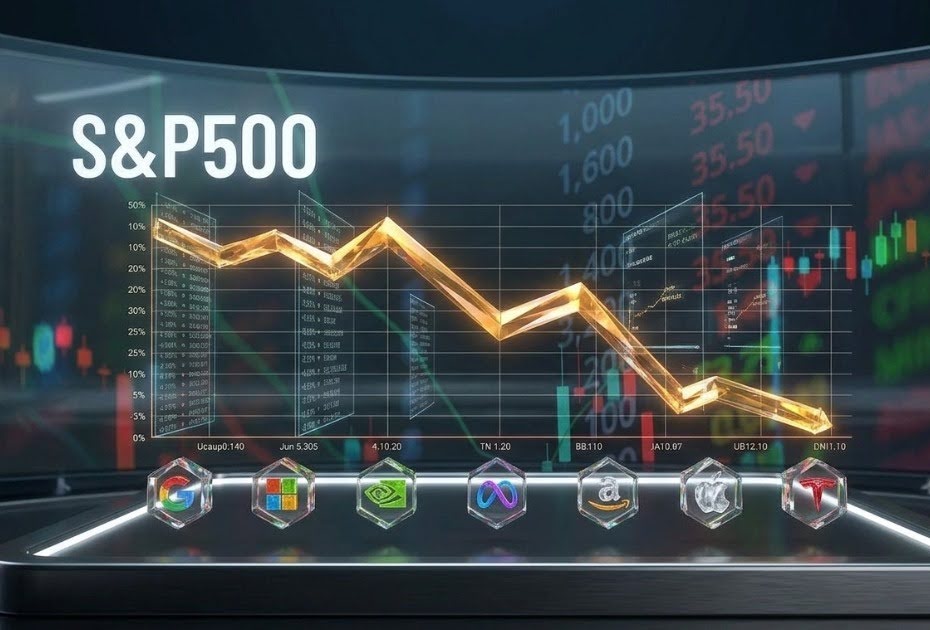
We’re halfway through 2026 — and the S&P 500 has already delivered a year full of surprises. After navigating Fed policy uncertainty, an AI-driven tech rally, and shifting consumer sentiment, investors now face the most critical question of the year: What happens next?
This mid-year outlook breaks down where top Wall Street analysts see the S&P 500 heading in H2 2026, which sectors offer the strongest opportunities, and what risks could derail the rally.
Where the S&P 500 Stands at Mid-Year 2026
The S&P 500 has proven resilient through the first half of 2026, supported by three main pillars:
- Continued AI infrastructure spending driving technology earnings beats
- A labor market that has stayed stronger than most economists expected
- Corporate earnings growth recovering after a sluggish 2025
Despite persistent inflation concerns and elevated interest rates, the index has demonstrated that earnings fundamentals — not just sentiment — are driving price action this cycle.
What Top Wall Street Analysts Are Predicting for H2 2026
Analyst forecasts for the S&P 500’s year-end target vary depending on assumptions around Fed policy, earnings growth, and global trade conditions. Here’s a broad picture of where major perspectives land:
Bullish Case
Analysts in the bullish camp point to several tailwinds:
- AI monetization is accelerating. Major technology companies are converting AI infrastructure investment into measurable revenue — a shift that typically expands earnings multiples.
- Fed rate cuts on the horizon. If inflation continues cooling toward the 2.5% range, the Federal Reserve has room to begin gradual easing in Q3 or Q4, which historically benefits equities.
- Strong corporate balance sheets. Unlike previous late-cycle periods, most S&P 500 companies entered 2026 with manageable debt and healthy cash reserves.
Under a bullish scenario, S&P 500 targets in the 5,800–6,200 range have been discussed by several market strategists heading into the second half.
Base Case
The consensus view leans toward moderate growth continuing, with the index making steady but unspectacular progress. Key assumptions:
- Fed stays on hold through at least one more meeting
- Earnings growth in the 8–10% range year-over-year
- No major geopolitical shock disrupts global supply chains
Bearish Case
Skeptics caution that current valuations leave little room for disappointment:
- Price-to-earnings ratios on the S&P 500 remain elevated relative to historical averages
- Consumer credit stress is building, with delinquency rates ticking higher
- Any upside inflation surprise could push the Fed into a hawkish pivot, pressuring growth stocks significantly
Sector-by-Sector Breakdown: Where Analysts See Opportunity
Technology — Strong Outlook
The AI supercycle shows no signs of slowing. Semiconductor companies, cloud infrastructure providers, and software platforms with embedded AI capabilities are expected to continue driving index-level outperformance.
Key sub-themes: AI infrastructure buildout, data center expansion, enterprise AI software adoption
Healthcare — Defensive Growth
Healthcare sits in a sweet spot: defensive enough to hold value if the market stumbles, with genuine growth catalysts from GLP-1 drug pipelines, medical devices, and healthcare AI applications.
Financials — Rate-Dependent
Bank stocks and financial services companies benefit from rate-sensitive net interest margins but face headwinds if credit quality deteriorates. Watch Fed language closely — this sector pivots fast on rate expectations.
Consumer Discretionary — Mixed Signals
Higher-income consumers continue spending on experiences, travel, and premium products. Lower-income consumers are showing stress. Companies with high-end positioning outperform mass-market peers in this environment.
Real Estate (REITs) — Headwinds Persist
Until the Fed definitively cuts rates, real estate investment trusts face pressure from elevated borrowing costs. Commercial real estate in particular continues to work through structural challenges from remote work trends.
Utilities — Underperforming in High-Rate Environment
Utilities are traditionally rate-sensitive and have underperformed during this prolonged high-rate cycle. However, AI data center power demand is creating a new narrative for select utilities with exposure to this theme.
5 Key Risks That Could Derail the S&P 500 in H2 2026
1. Inflation Reaccelerates
A surprise jump in CPI data — driven by energy prices, housing costs, or supply chain disruptions — could force the Fed to hold rates higher for longer than markets currently expect, triggering a meaningful correction.
2. Earnings Disappointments in Mega-Cap Tech
The S&P 500’s performance is heavily concentrated in its top 10 holdings. If any of the major AI beneficiaries miss earnings expectations or guide lower, the index-level impact would be significant.
3. Geopolitical Escalation
Global trade tensions, particularly around semiconductor supply chains involving Taiwan, remain a tail risk. Any escalation could disrupt the technology earnings story that’s been central to the bull case.
4. Consumer Credit Stress
Rising credit card delinquencies and auto loan defaults signal that lower and middle-income consumers are under strain. If this spreads to broader consumer spending, cyclical stocks could reprice quickly.
5. US Dollar Strength
A stronger dollar hurts the roughly 40% of S&P 500 revenues that come from international markets. If the dollar strengthens significantly from current levels, it becomes an earnings headwind for multinational companies.
What Historical Mid-Year Patterns Tell Us
Historically, when the S&P 500 enters the second half of a year with positive year-to-date returns and a stable Fed, it has continued higher in the majority of cases. However, the magnitude of those gains tends to moderate compared to a strong first half.
Presidential cycle patterns — 2026 being a mid-term election year in the US — also carry historical weight. Mid-term election years have historically produced some volatility in Q3 before recovering strongly into year-end, particularly when corporate earnings remain healthy.
This does not guarantee future performance, but it provides useful context for setting realistic expectations.
Practical Takeaways for Investors
- Don’t chase the rally blindly. Elevated valuations mean the margin of safety is thinner. Prioritize quality companies with earnings visibility over speculative positions.
- Stay diversified across sectors. The shift in market leadership from pure momentum to earnings quality means concentration risk is real.
- Watch the Fed calendar. FOMC meeting dates in July and September will be pivotal. Any signal of rate cuts will likely trigger a broad market rally.
- Keep some dry powder. If volatility picks up in Q3, having cash available to buy quality stocks at lower prices is a real advantage.
Frequently Asked Questions
Q1. What is the S&P 500 mid-year outlook for 2026?
Ans: Analyst forecasts range widely depending on assumptions around Fed policy and corporate earnings.
The base case points to continued moderate growth through H2 2026, with technology and healthcare as leading sectors. The key variables are inflation data and Federal Reserve rate decisions.
Q2. Which sectors are expected to outperform the S&P 500 in the second half of 2026?
Ans: Technology (particularly AI-related companies), healthcare, and select financial stocks are most frequently cited as outperformers heading into H2 2026.
Real estate and utilities face continued pressure in a prolonged high-rate environment.
Q3. Should I buy the S&P 500 index now or wait for a pullback?
Ans: For long-term investors (10+ year horizon), trying to time the perfect entry point has historically been less effective than consistent investing.
For shorter-term investors, current elevated valuations suggest a selective, quality-focused approach is prudent over broad index chasing.
Q4. How does the Federal Reserve impact S&P 500 performance?
Ans: The Fed’s interest rate decisions directly affect
borrowing costs for companies, consumer spending, and the relative attractiveness of stocks versus bonds.
Rate cuts generally boost equities by lowering the discount rate applied to future earnings, making stocks relatively more attractive.
Q5. What happened to the S&P 500 in previous mid-term election years?
Ans: Historically, mid-term election years in the US
have been associated with above-average market volatility in Q3, followed by strong recoveries into Q4
and the following year.
However, past patterns are not guarantees of future performance and should be considered alongside current economic fundamentals.
Disclaimer
The information in this article is intended solely for educational and informational purposes. It does not constitute investment advice, a recommendation to buy or sell any security, or a solicitation of any kind. StockXpo.com is not a registered investment advisor, broker-dealer, or financial planner. All market data, analyst forecasts, and projections referenced are based on publicly available information at the time of writing and are subject to change without notice. Investing in the stock market involves risk, including the potential loss of the entire amount invested. Past performance is not indicative of future results. Readers are strongly encouraged to consult with a licensed financial professional before making any investment decisions.
MORE IN INSIDE BLOG

Negative Breakout: 5 Stocks Slip Below 200-Day Moving Average
Published: Wednesday, September 23, 2026 · 6:19 AM

Stock Futures Surge: Markets Rally on Historic US-Iran Peace Deal
Published: Monday, June 15, 2026 · 12:00 AM