Published: Wednesday, June 3, 2026 · 5:48 AM | Updated: Wednesday, June 3, 2026 · 5:48 AM
📊 287 views




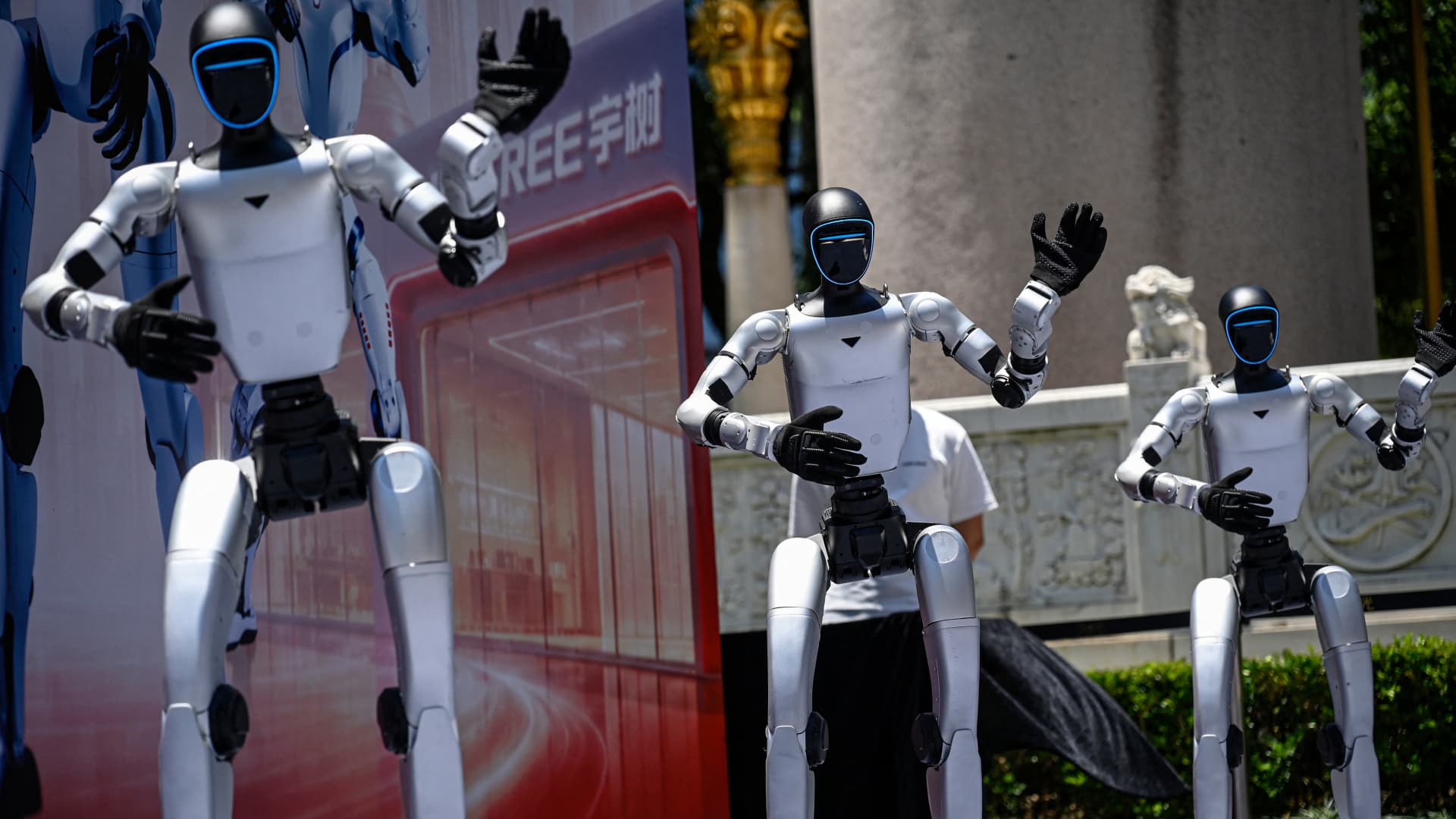
Investors are increasingly betting on humanoid robots as the next frontier for technological disruption, with market watchers predicting a colossal expansion over the coming decade. Softbank CEO Masayoshi Son sees physical AI and robotics as the origin of the next trillion-dollar enterprise, signaling a profound shift in industrial and domestic automation.
🚀 Tech Strategy & Market Disruptions
- Exponential Market Growth. The humanoid robotics market, currently estimated at $2-3 billion, is projected to surge to $200 billion by 2035, reflecting aggressive investment and rapid technological maturation.
- Addressing Labor Gaps. Humanoids are emerging as ‘automation 3.0’, designed to fill structural labor shortages driven by aging populations and evolving job preferences, particularly in ‘dirty, dull, and dangerous’ roles.
- Geopolitical Tech Race. China is positioned as a global leader in both production and deployment, installing 85% of humanoid robots last year at significantly lower costs, intensifying the global competition in physical AI development.
Recent developments, from humanoids assisting baggage handlers in Japanese airports to Tesla’s significant investment in its Optimus model, highlight the burgeoning practical applications of these machines. Barclays’ head of thematic FICC research, Zornitza Todorova, emphasized that ‘it’s the decade of the robot,’ forecasting a staggering 100-fold industry growth as AI’s physical capabilities evolve. This evolution is driven by the convergence of advanced AI models with sophisticated hardware, enabling robots to perform increasingly complex tasks in real-time.
Initially, humanoid robots are tackling well-defined tasks like lifting and picking on assembly lines, alleviating critical labor shortages. As the technology rapidly matures, Todorova anticipates a significant pivot towards services-oriented roles, particularly in Western economies where most economic growth is generated from such sectors. This transition signifies a major disruption, expanding the robots’ utility beyond manufacturing into domains requiring more nuanced human-like interaction and adaptability.
This shift represents a profound disruption flow: advancements in AI and robotics hardware lead to increasingly capable humanoid robots. This capability then enables them to address critical labor gaps, particularly in physically demanding or repetitive tasks. The widespread deployment of these robots, initially in manufacturing and logistics, then expanding into service sectors like healthcare and hospitality, will dramatically boost productivity and unlock new economic growth vectors.
‘The integration of embodied AI with robust robotic platforms is not merely an incremental improvement; it is a fundamental re-architecture of operational efficiency across industries. This convergence will redefine human-robot collaboration and unlock unprecedented levels of automation,’ avers a Senior CTO from StockXpo.
Market data underscores the monumental scale of this impending transformation:
- The global humanoid robotics market is forecast to swell from its current $2-3 billion to approximately $200 billion by 2035, according to Barclays’ ‘AI Gets Physical’ report.
- China currently installs roughly half of all industrial robots globally (nearly 300,000 units annually) and commands 85% of humanoid robot installations, producing them at around half the cost of Western competitors (typically $50,000).
- Jason Pidcock, who manages the Jupiter Asian Income fund, predicts that within a decade, humanoid robots will be ubiquitous, found in homes, factories, and even government departments, driving a massive productivity boost.
Humanoid Robotics Market Adoption Challenges
Despite the optimistic projections, the widespread adoption of humanoid robots faces several hurdles. Technical challenges include refining dexterity for complex tasks, enhancing real-time situational awareness, and ensuring robust safety protocols for human-robot interaction. Economically, the initial capital expenditure, even at lower Chinese production costs, remains a barrier for smaller enterprises. Furthermore, public perception and regulatory frameworks surrounding autonomous agents in public spaces and homes require careful navigation. Overcoming these challenges will necessitate significant advancements in both hardware and software, alongside proactive policy development to foster trust and ensure ethical deployment. The development of robust, open-source platforms and standardized APIs could accelerate integration, similar to how the internet transformed global communication, as noted in various emerging technologies discussions.
Physical AI Ecosystem Expansion Potential
The long-term potential for physical AI lies in its ability to foster an expansive ecosystem of complementary technologies and services. This includes advancements in sensor technology, edge computing for real-time decision-making, and specialized AI models for different operational contexts. The demand for skilled technicians to maintain, program, and interact with these robots will also create new job markets. Companies like Nvidia, which is investing in Chinese humanoid robotic startups, are positioning themselves at the core of this ecosystem by providing the underlying computational power and development platforms. This broader ecosystem will fuel continued innovation, allowing for custom applications and accelerating the development cycle, a trend often highlighted in technology market trends.
The Ripple Effect of Humanoid Robots on Future Markets
The trajectory of humanoid robots points towards a fundamental re-architecture of labor, productivity, and consumer interaction. The initial wave, targeting industrial roles, is already underway, but the truly transformative impact will be felt after 2030, when these machines permeate healthcare, education, and hospitality.
- Economic Restructuring: Expect significant shifts in labor markets, with demand for ‘dirty, dull, and dangerous’ roles decreasing while demand for human-robot collaboration and oversight increases.
- Consumer Integration: The advent of consumer-grade humanoids will redefine discretionary spending, potentially shifting focus from traditional goods to advanced tech products, as observed by asset managers like Jason Pidcock.
- Global Tech Leadership: The competition between Western markets and China will drive rapid innovation and cost optimization, influencing global supply chains and technological standards.
How will governments and industries balance the unprecedented production boost with the inherent societal risks of a robot-driven future?
📊 StockXpo Analyst’s View
Market Impact: The bullish sentiment around humanoid robots suggests a significant reallocation of capital towards hardware, software, and AI infrastructure companies. Investor confidence, while high, must be tempered by execution risks and the long development cycles inherent in complex robotics. Valuations could see sustained upside, particularly for companies enabling the core components of physical AI. Financial news outlets are closely tracking these investment flows.
Sector To Watch: Beyond direct robotics manufacturers, the semiconductor industry (Micron, AMD, Broadcom, Nvidia), advanced materials, and specialized AI software developers are poised for substantial gains. Furthermore, consumer discretionary will evolve, as consumers increasingly allocate spending towards smart home robotics, a key area for educational tech insights.
Financial Disclaimer:
StockXpo.com is a financial news aggregator and educational portal, not a registered investment advisor or broker-dealer. All information, news, and analysis provided herein are strictly for educational purposes and do not constitute investment, financial, legal, or tax advice. Investing in the stock market involves high risks, and past performance is not indicative of future results. StockXpo will not be liable for any financial losses or investment damages. Always consult a certified financial advisor before making market decisions.
MORE IN INSIDE TECHNOLOGY

Porsche Profit Rebounds: A Bold Strategic Shift in Global Markets
Published: Tuesday, October 27, 2026 · 6:31 AM

SoftBank AI Investment: Malaysia’s $50 Billion Innovation Surge
Published: Monday, October 26, 2026 · 2:37 AM