Published: Thursday, August 13, 2026 · 10:01 AM | Updated: Thursday, September 3, 2026 · 9:08 AM
📊 135 views




The highly anticipated Monterey Car Week auctions are poised to shatter records, with projections indicating sales could exceed a staggering $500 million, signaling a profound strategic recalibration within the ultra-luxury automotive market. This unprecedented surge is largely fueled by a new wave of younger collectors, fundamentally reshaping demand dynamics and investment patterns in high-value automobiles.
🗝️ Corporate Strategy Insights
- Generational Market Rotation. Millennials and Gen Z are pivoting demand from classic ‘Boomer cars’ to modern supercars, driving parabolic price gains in models like the Ferrari F40 and Bugatti Veyron.
- Increased Market Volatility. The influx of new, younger buyers introduces higher speculation, with many viewing collector cars as short-term trades rather than long-term stores of value, increasing price unpredictability.
- Ferrari’s Enduring Moat. Despite the generational shift in preferences, Ferrari maintains its market leadership, dominating top auction sales across both classic and modern supercar segments, showcasing its brand resilience and desirability.
According to Hagerty, a leading classic car insurance, auction, and events company, this year’s Monterey Car Week auctions are expected to achieve between $470 million and $500 million, potentially surpassing the previous record of $471 million set in 2022. This rebound follows a slight decline in 2023 and 2024, indicating robust investor confidence and a burgeoning appetite for high-end vehicles. McKeel Hagerty, CEO of Hagerty, noted the potential for this to be the ‘first half-billion-dollar auction week the collector world has ever seen,’ underscoring the significant momentum in the market.
However, this headline strength masks a significant internal market rotation. A new generation of collectors, primarily millennials and Gen Z, is displacing baby boomers as the primary drivers of demand. Unlike their predecessors who favored iconic 1950s and 1960s models, these newer buyers are aggressively bidding on modern supercars from their own youth. Vehicles such as the Ferrari F40, F50, and Enzo, along with the Bugatti Veyron, Ruf Yellowbirds, Koenigseggs, and Paganis, are experiencing parabolic price gains, with many doubling in value over the past two years.
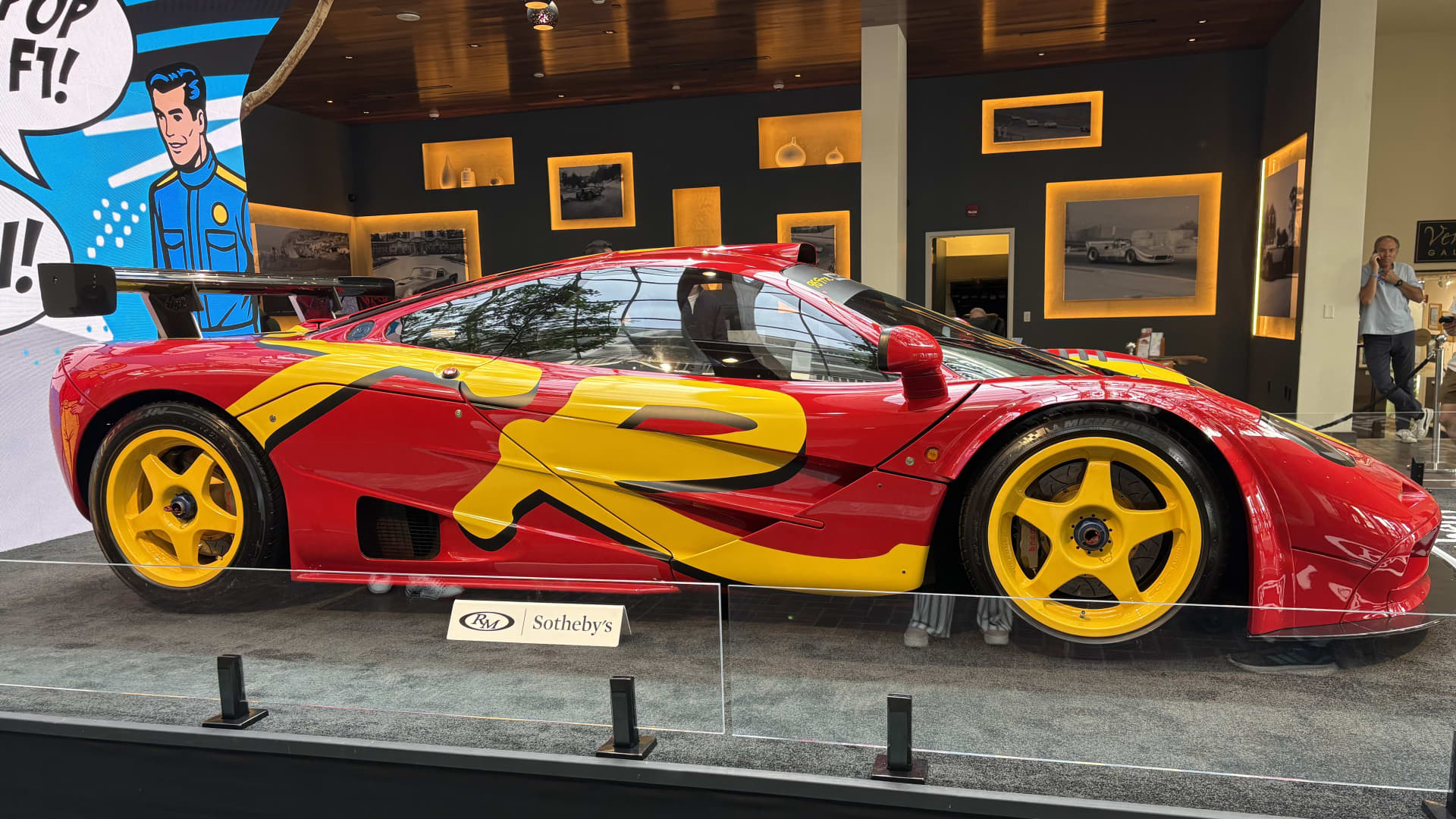
This shift is starkly illustrated by auction estimates. A 1996 McLaren F1 GTR is estimated to fetch $35 million at RM Sotheby’s, while a 2023 Ferrari Daytona SP3 could command over $10 million. In previous years, the top ten sellers were overwhelmingly from the 1950s or 1960s. The ‘Boomer cars,’ which historically anchored the market, are now seeing declines; the Hagerty Blue Chip Index, representing traditional collector cars, fell 2% over the last year. In contrast, the Hagerty Supercar Index surged by 30% during the same period, vividly demonstrating the generational pivot.
The influx of younger collectors also brings new risks, according to some classic car experts and dealers. Concerns exist that prices for modern supercars may be unsustainable, defying traditional collecting metrics such as proven race histories, rarity, and global appeal. Many millennial and Gen Z collectors are reported to view these cars as speculative trades, often avoiding driving them to preserve mileage and flipping them for quick profits. Simon Kidston, a prominent classic car dealer and advisor, commented on the market’s ‘frothy’ nature, creating ‘inexplicable price imbalances.’
- Recent auction highlights underscore this trend: A 2003 yellow Ferrari Enzo sold for $17.9 million at Mecum Auctions, nearly triple its previous record.
- Another 2003 black Enzo fetched $15.2 million, and a 2005 Porsche Carrera GT sold for $6.7 million, more than doubling its prior auction record.
- Other models like the Bugatti Veyron, Koenigsegg CC8S, Ford GT, and Mercedes Benz SLS AMG Black Series are also experiencing significant price spikes.
Despite these dramatic shifts, one constant remains: Ferrari’s central role. Nine of the top ten most expensive cars sold at auction this year have been Ferraris, according to Hagerty, with five of the top lots at this week’s Monterey Car Week auctions hailing from the iconic Italian automaker. McKeel Hagerty aptly stated, ‘All roads lead to Maranello,’ highlighting the brand’s enduring power across all collector segments, from surging 1980s-2000s models to high-value classics from the 1950s and 1960s.
The Strategic Ripple Effect on Luxury Auto Markets
The pronounced generational shift evident in the Monterey Car Week auctions creates a significant strategic ripple effect across the luxury automotive sector and broader investment landscapes. This trend, where younger wealth prioritizes modern hypercars, has several cascading impacts:
- Generational Shift in Demand → Market Segmentation & New Supply Chains → Higher Volatility & Investment Risk: As demand pivots, manufacturers are incentivized to produce more limited-run, high-performance modern vehicles. This intensifies competition in the niche hypercar market, while traditional classic car dealers face adapting their inventory and client acquisition strategies. The speculative nature of new buyers also introduces heightened price volatility, increasing risk for those viewing these assets as long-term stores of value.
- Changing Collector Demographics → Evolving Marketing & Sales Channels → Increased Digital Engagement: Younger collectors are typically more digitally native. This forces auction houses and dealers to invest heavily in online platforms, digital marketing, and virtual experiences to reach this new demographic, fundamentally altering traditional sales approaches.
- Shifting Investment Thesis → Redefining ‘Value’ in Collectibles → Potential for Price Corrections: If modern supercars are seen more as short-term trades than historical artifacts, their value could be more susceptible to economic downturns or shifts in speculative interest, challenging the long-held notion of collector cars as stable alternative investments.
The classic car market is undergoing a seismic shift, with younger wealth prioritizing contemporary hypercars over traditional classics. This creates both unprecedented opportunities for brands like Ferrari, which bridge both eras, and significant challenges for dealers and insurers heavily invested in ‘Boomer’ era vehicles.
Key Market Indicators in the Collector Car Sector
- Hagerty Blue Chip Index (traditional collector cars): -2% (past 12 months) – Indicates softening demand for established classics as generational preferences shift.
- Hagerty Supercar Index (modern supercars): +30% (past 12 months) – Highlights explosive growth and speculative interest in contemporary models, driven by new wealth.
- Monterey Car Week Auction Estimates: $470M – $500M – Signifies a potential record-breaking market expansion, predominantly fueled by the modern supercar segment.
Ferrari’s Enduring Market Leadership Amidst Shifting Tides
Ferrari’s strategic position in the collector car market is exceptional, allowing it to uniquely bridge the generational gap in automotive preferences. Its brand legacy, synonymous with performance, design excellence, and exclusivity, grants it a competitive advantage that few others possess. While the Monterey Car Week auctions clearly illustrate a strong pivot towards modern supercars, Ferrari successfully captures demand in both the surging contemporary segment (e.g., F40, Enzo, Daytona SP3) and the high-value classic segment (e.g., 250 GT SWB). This dual appeal reinforces its market leadership, enabling the company to capitalize on diverse collector preferences and maintain robust valuations across its entire portfolio. Ferrari’s consistent ability to craft highly desirable, limited-production vehicles ensures its sustained relevance as a top-tier luxury investment.
Operational Efficiency Challenges for Legacy Dealers
The rapid shift in collector preferences presents significant operational efficiency challenges for traditional classic car dealers and auction houses. Many of these entities have built their business models around sourcing, restoring, and marketing vintage ‘Boomer’ era cars. The sudden surge in demand for modern supercars necessitates a fundamental re-evaluation of their inventory acquisition, appraisal methodologies, and marketing strategies. Dealers must now develop expertise in a different asset class, understand a more speculative buyer base, and potentially overhaul their digital presence to engage tech-savvy millennials and Gen Z. This adaptation requires substantial investment in new talent, data analytics, and a more agile approach to inventory management, posing a critical test for firms to maintain their competitive edge and avoid becoming obsolete in a rapidly evolving market.
Monterey Car Week Auctions: Navigating a New Era of Collector Investing
The Monterey Car Week auctions unequivocally underscore a pivotal transformation in the collector car market, driven by generational wealth shifts and evolving tastes. This new dynamic presents both lucrative opportunities for brands and shrewd investors, alongside heightened risks for participants navigating an increasingly speculative environment.
- Modern supercars are now the primary drivers of market growth, attracting a speculative younger demographic with different investment horizons.
- Traditional ‘Boomer cars’ face declining demand, necessitating a strategic re-evaluation for sellers, auction houses, and collectors focused on vintage assets.
- Ferrari’s brand equity demonstrates remarkable resilience, adapting its appeal across diverse collector preferences and segments, from iconic classics to cutting-edge hypercars.
How will this rapid generational shift influence long-term valuation stability and the very definition of a ‘classic’ car in the coming decade?
📊 StockXpo Analyst’s View
Market Impact: This generational shift in high-value asset markets, exemplified by Monterey Car Week auctions, could signal broader trends in luxury goods and alternative investments. Investors should note the increasing volatility linked to speculative younger buyers, differentiating between genuine appreciation and short-term flipping when assessing investment potential.
Sector To Watch: Luxury automotive manufacturers, particularly those with strong heritage brands capable of producing highly desirable limited-edition supercars, stand to gain significant market share and brand equity. Conversely, sectors overly reliant on traditional collecting demographics may face headwinds, requiring strategic repositioning towards modern, digitally-engaged wealth and diversified asset portfolios.
Financial Disclaimer:
StockXpo.com is a financial news aggregator and educational portal, not a registered investment advisor or broker-dealer. All information, news, and analysis provided herein are strictly for educational purposes and do not constitute investment, financial, legal, or tax advice. Investing in the stock market involves high risks, and past performance is not indicative of future results. StockXpo will not be liable for any financial losses or investment damages. Always consult a certified financial advisor before making market decisions.
MORE IN INSIDE BUSINESS

Measles Resurgence: A Critical Warning for U.S. Public Health Strategy
Published: Tuesday, October 27, 2026 · 7:02 AM
Dollar General Overcharges Lawsuit: A Warning on Consumer Trust
Published: Monday, October 26, 2026 · 3:55 PM