Published: Wednesday, June 3, 2026 · 5:49 AM | Updated: Wednesday, June 3, 2026 · 5:49 AM
📊 254 views




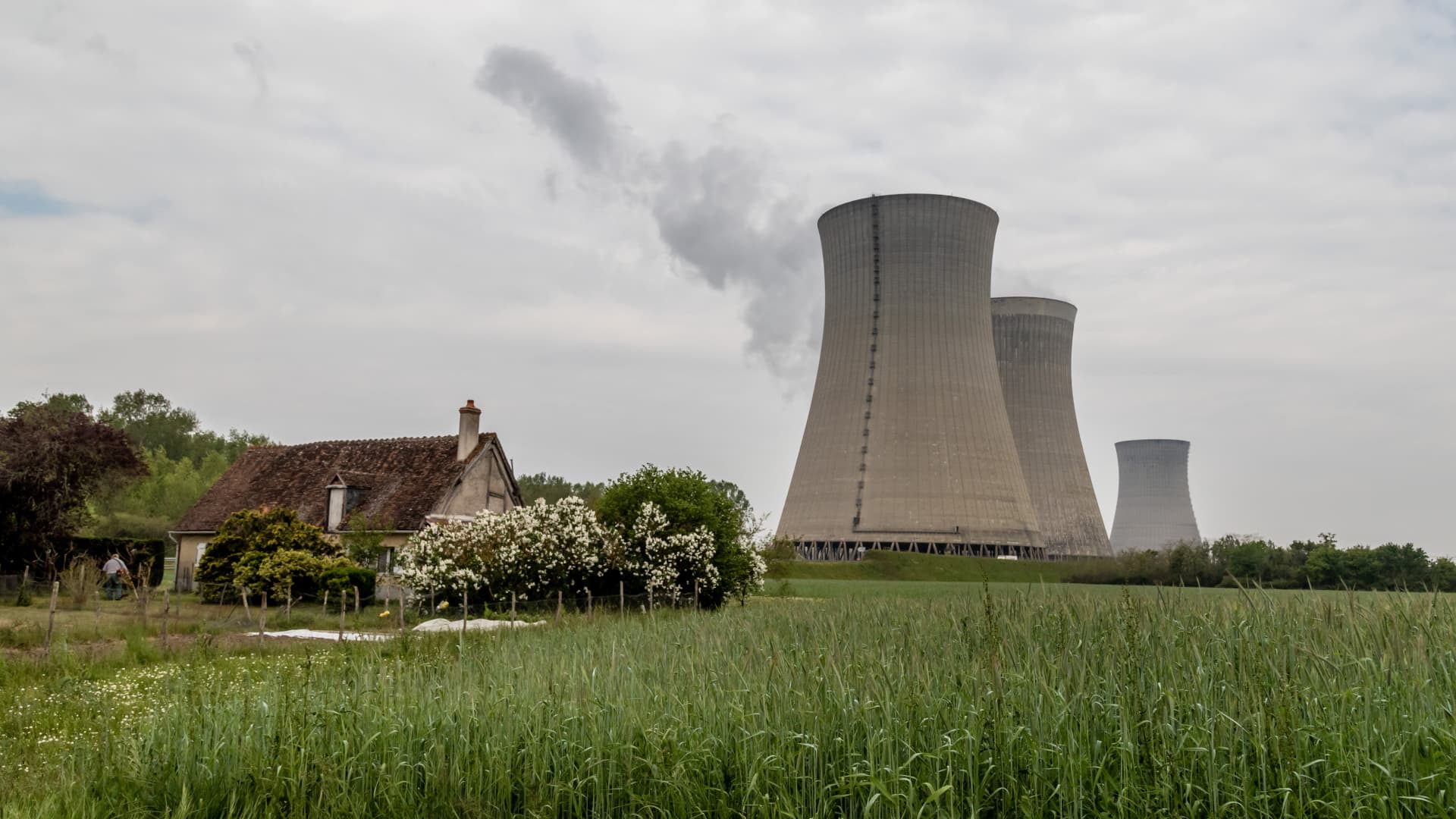
SoftBank’s ambitious €75 billion investment in French AI infrastructure signals Europe’s undeniable ascent as a critical hub for artificial intelligence development. This strategic move, however, casts a sharp spotlight on a looming challenge: the continent’s energy grid must rapidly scale to meet the unprecedented **AI energy demands** of next-generation data centers.
🚀 Tech Strategy & Market Disruptions
- SoftBank’s Strategic Bet. SoftBank plans to deploy 3.1 GW of AI data centers across northern France by 2031, capitalizing on the nation’s robust nuclear energy supply to power its immense infrastructure.
- Europe’s Energy Imperative. The continent grapples with industrial electricity prices significantly higher than major global economies, driving data center investments towards regions offering greater energy cost efficiency and stability.
- Nuclear Resurgence in Tech. Big Tech firms, including Amazon and Google in the U.S., are actively exploring Small Modular Reactors (SMRs) as a scalable, localized power solution for their demanding data center operations.
Japan’s SoftBank announced its substantial investment plans on a Saturday, aiming to establish 3.1 GW of AI data centers in the Hauts-de-France region by 2031, with new sites slated for Dunkirk, Bosquel, and Bouchain. This monumental undertaking is strategically anchored in France, a nation that derives over 60% of its power from nuclear energy, providing a crucial advantage for managing energy-intensive projects. Analysts confirm that France’s energy profile positions it uniquely to absorb the surge in **AI energy demands**, particularly as other European nations contend with some of the highest industrial electricity prices globally, a factor making data center investments acutely sensitive to power costs. These escalating costs compel companies to seek out parts of Europe offering more favorable energy economics, an observation previously highlighted by experts to CNBC.
Energy-intensive industries across Europe recorded average electricity prices last year that were roughly double those in the U.S. and 50% higher than in China and India, according to the International Energy Agency. This disparity underscores the urgent need for a more sustainable and economically viable energy strategy within the EU. The increasing prominence of nuclear power, specifically, is gaining traction as a vital component for managing the colossal demands of modern data centers. Despite its potential, nuclear power constituted only 11.8% of Europe’s total energy mix in 2025, with traditional fossil fuels like oil and gas still accounting for over a third, as per Eurostat data.
- Europe’s energy-intensive industries face electricity prices roughly double those in the U.S. and 50% higher than China and India.
- Nuclear power currently constitutes only 11.8% of Europe’s total energy mix as of 2025, with oil and gas still dominating.
The burgeoning investment in AI infrastructure directly translates into an exponential increase in data center power consumption, pushing existing grids to their limits. This pressure acts as a powerful catalyst for innovation in energy generation, driving greater exploration and adoption of advanced nuclear solutions like SMRs. The outcome is a profound disruption in energy markets, fostering new collaborations between tech giants and utility providers, and fundamentally reshaping how nations plan their long-term energy security.
‘The future of AI-driven innovation in Europe hinges not just on computational prowess, but fundamentally on the stability and scalability of its underlying energy grid. We are moving towards a decentralized energy model where data centers become active participants in power generation strategies,’ notes a Senior CTO at StockXpo.
Big Tech firms in the U.S. are already making moves into the nuclear sector. In 2024, Amazon collaborated with Dominion Energy to investigate SMR development, followed by Google’s 2025 agreement with Kairos Power and the TVA for a new nuclear plant. These Small Modular Reactors, characterized by their factory-built design and smaller capacity (typically 300 megawatts or less), promise faster, cheaper installation compared to traditional reactors that often take over a decade to construct. Crucially, SMRs do not require a grid connection, offering independent power solutions invaluable to data center operators. However, their mass deployment faces significant hurdles, as highlighted by Baker McKenzie’s energy team, particularly regarding the ‘first-of-a-kind’ risk, given that no SMRs are currently operational outside China and Russia.
| Metric | Description | Value/Context |
|---|---|---|
| SoftBank AI Data Center Capacity | Planned AI data center power needs in France by 2031 | 3.1 Gigawatts (GW) |
| France’s Nuclear Power Contribution | Percentage of France’s power needs met by nuclear | Over 60% |
| Europe’s Nuclear Energy Mix (2025) | Nuclear power’s share of Europe’s total energy mix | 11.8% |
| Small Modular Reactor (SMR) Capacity | Typical power generation capacity for SMRs | Up to 300 Megawatts (MW) |
The Future of Data Center Infrastructure & Scale
Data center operators are keenly assessing their power requirements for the coming decade, recognizing energy availability as the ultimate determinant of their operational capacity. This forward-looking perspective drives significant interest in advanced power solutions. The burgeoning demand from AI workloads is pushing the boundaries of traditional grid infrastructure, necessitating innovative approaches to design, deployment, and energy sourcing for data centers. The trend points towards increasingly localized, resilient power solutions, potentially integrating renewable sources and even microgrids, to ensure consistent and scalable operations. The race to build out infrastructure is not solely about physical space or computing power, but critically, about securing a reliable and cost-effective energy supply, a factor that will define competitive advantage in the next wave of digital transformation.
Navigating Europe’s Energy Transition & Adoption Hurdles
While the prospect of SMRs holds significant promise for meeting future energy needs, especially for data-intensive operations, their widespread adoption in Europe faces considerable hurdles. Beyond the ‘first-of-a-kind’ risk, regulatory complexities, public perception, and the sheer capital investment required for new nuclear ventures pose substantial challenges. Europe’s diverse energy landscape and national energy policies will further complicate a unified rollout. However, the pressing `AI energy demands` serve as a powerful incentive for policymakers and industry players to overcome these obstacles, potentially accelerating the transition towards a more diversified and robust energy infrastructure. The talent pool, particularly in centers like London, also plays a crucial role in attracting Big Tech investment, with companies like Nvidia-backed Runway, Anthropic, OpenAI, and Google expanding their footprints, recognizing the importance of skilled human capital alongside energy resources.
AI Energy Demands: A Catalyst for Europe’s Nuclear Future
SoftBank’s substantial commitment to French AI data centers underscores a pivotal moment for Europe, where the escalating energy needs of AI are forcing a re-evaluation of national power strategies. France’s nuclear advantage provides a temporary buffer, but the broader continent must rapidly adapt its energy mix to sustain future technological growth.
- Big Tech’s investments in Europe are a dual play on talent and energy stability, prioritizing regions with robust power grids.
- The high cost of industrial electricity across much of Europe necessitates an accelerated shift towards more affordable and sustainable energy sources, with nuclear power emerging as a key contender.
- The exploration of SMRs by major tech players highlights a potential paradigm shift in data center energy independence, bypassing traditional grid limitations.
Will Europe seize this opportunity to fundamentally overhaul its energy infrastructure, ensuring it remains at the forefront of global AI innovation?
📊 StockXpo Analyst’s View
Market Impact: The escalating `AI energy demands` are rapidly reshaping capital expenditure priorities for hyperscalers and co-location providers, driving significant investments into energy generation and infrastructure. This trend is likely to buoy stocks in nuclear energy, grid modernization, and specific clean energy technologies, while potentially creating headwinds for regions unable to guarantee stable, cost-effective power supply. Investors should monitor how regulatory frameworks adapt to facilitate new energy projects.
Sector To Watch: The energy infrastructure sector, particularly firms involved in nuclear power generation (including SMR development), advanced grid solutions, and specialized data center construction, will see amplified activity. Furthermore, utility companies capable of partnering with tech giants on bespoke power solutions are poised for significant growth, signaling a transformative era for the broader technology market trends.
Financial Disclaimer:
StockXpo.com is a financial news aggregator and educational portal, not a registered investment advisor or broker-dealer. All information, news, and analysis provided herein are strictly for educational purposes and do not constitute investment, financial, legal, or tax advice. Investing in the stock market involves high risks, and past performance is not indicative of future results. StockXpo will not be liable for any financial losses or investment damages. Always consult a certified financial advisor before making market decisions.
MORE IN INSIDE TECHNOLOGY

Porsche Profit Rebounds: A Bold Strategic Shift in Global Markets
Published: Tuesday, October 27, 2026 · 6:31 AM
SoftBank AI Investment: Malaysia’s $50 Billion Innovation Surge
Published: Monday, October 26, 2026 · 2:37 AM