Published: Thursday, May 21, 2026 · 9:39 PM | Updated: Thursday, May 21, 2026 · 9:39 PM
📊 294 views




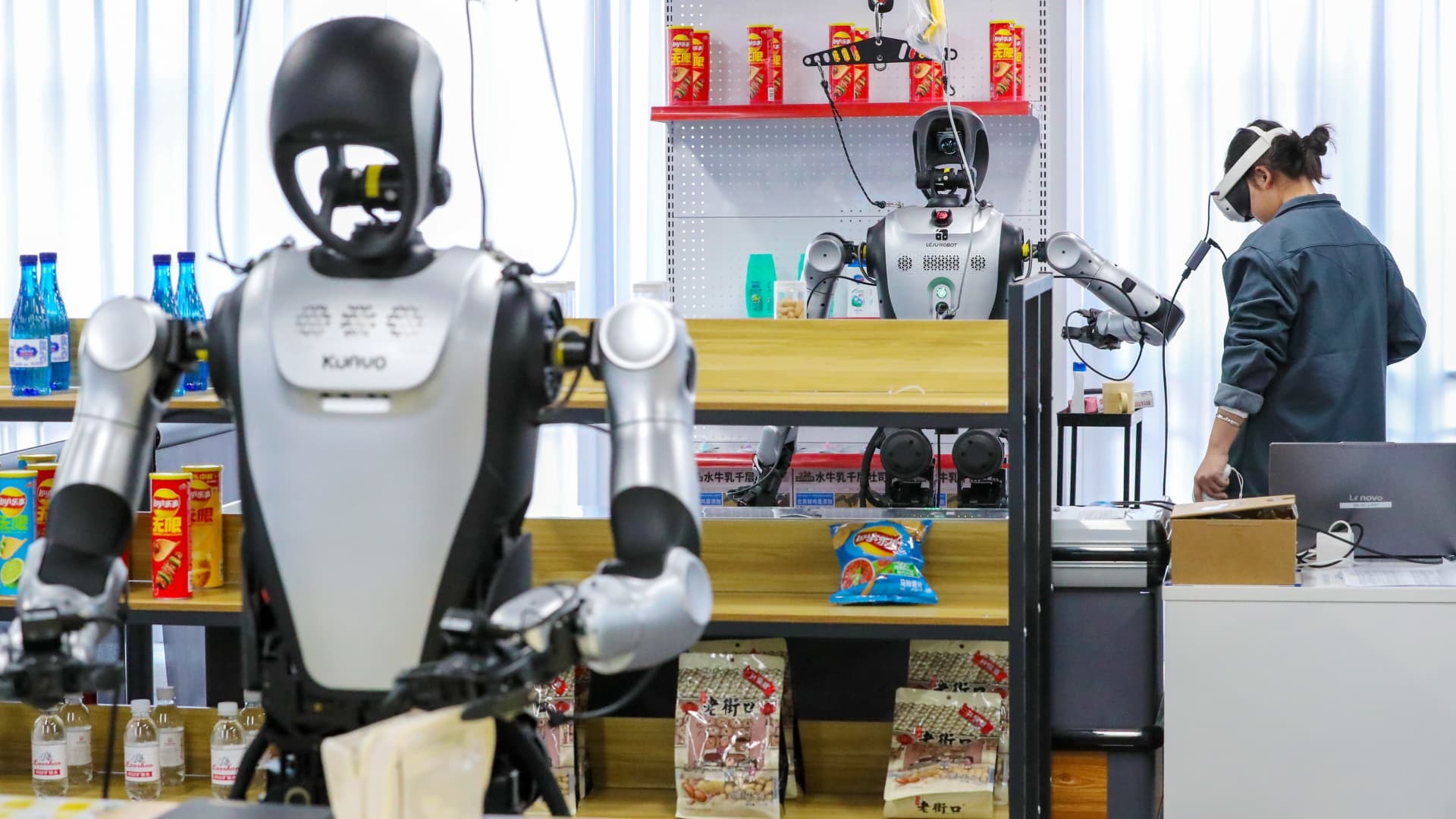
China is making a decisive pivot in its industrial strategy, moving beyond traditional manufacturing to actively prepare a new generation of robotic workers. This ambitious push involves dedicated training centers aimed at equipping humanoid robots with the skills necessary to integrate into various sectors of the economy, signaling a significant shift in the global automation landscape.
🚀 Tech Strategy & Market Disruptions
- Humanoid Robot Workforce Integration. China’s state-backed initiatives are creating specialized training centers to prepare robots for diverse employment roles.
- Industrial Policy Evolution. The nation is adopting a broad ‘industrial policy of everything,’ targeting advanced robotics as a key pillar for future global market dominance.
- AI-Driven Skill Acquisition. Through repetitive motion capture and AI learning, robots are being taught complex tasks ranging from sorting to intricate repairs, aiming to automate repetitive or dangerous work.
The narrative of automation is rapidly evolving, with China at the forefront of preparing machines for a structured role in the workforce. At facilities like the Beijing-based Humanoid Robot Data Training Center, instructors are meticulously teaching AI-enabled robots to ‘think on their own,’ a crucial step from mere programmed machinery to more autonomous operational units. This endeavor aligns with Beijing’s broader vision, which designates humanoid robots as a critical technology for the nation’s industrial advancement through 2030, aiming to secure its position in global supply chains.
The training methodology involves a blend of manual guidance and AI learning. Instructors, like former art teacher Fudi Luo, use cameras, controllers, and motion capture to guide robots through tasks such as item sorting on factory lines. By repeating actions, the robots generate data that the AI processes, enabling them to learn and perform the tasks independently. Skills being imparted include household chores, retail shelf organization, and even metal repair, all while the robots themselves do not experience fatigue, a stark contrast to their human instructors.
The Ingenuity Behind Robotic Skill Acquisition
Startups like Beijing Inspire-Robots Technology are further refining this process, focusing on developing advanced robotic hands equipped with sophisticated sensors and motion tracking. Winston Zou, a company secretary, highlights that a single robotic hand might undergo 10,000 training repetitions to master a new skill, enabling delicate operations such as picking up an egg or lifting a string. This level of dexterity is seen as a key differentiator in the global race for advanced robotics, with figures like Tesla’s Elon Musk acknowledging China’s manufacturing scale as a formidable competitive advantage.
Beyond dedicated training centers, China is also integrating robots into real-world environments for on-the-job training. AI-powered robots are being tested as restaurant chefs, bartenders, and even traffic controllers, undergoing practical application to hone their operational capabilities. The stated goal, as articulated by Kenneth Ren, is to take on tasks that are hazardous or undesirable for humans, rather than to replace them entirely. This strategic approach suggests a collaborative future where humans and robots share the workplace, each contributing their unique strengths.
- Key Training Areas: Housekeeping, item sorting, shelf organization, metal repair, and food service tasks are being prioritized for AI-driven skill development.
- Technological Tools: Motion capture, advanced sensors, cameras, and AI algorithms are central to the data generation and learning processes for robots.
- Competitive Landscape: International tech leaders are closely watching China’s rapid advancements, acknowledging the potential for large-scale manufacturing and deployment to disrupt global markets.
The drive towards an automated workforce represents a significant evolution in emerging technologies and industrial policy. China’s systematic approach to training humanoid robots not only addresses labor shortages but also aims to position the nation as a leader in the next wave of industrial automation. This ambitious program could redefine manufacturing, service industries, and the very nature of employment in the coming decade. The integration of robots into the workforce is not merely about efficiency; it’s about reshaping economic structures and global competitiveness, aligning with broader technology market trends.
“The intensive training protocols being deployed in China underscore a strategic imperative to achieve functional autonomy in robotics. This isn’t just about building machines; it’s about cultivating a new class of digital workers capable of complex problem-solving and adaptation in dynamic environments. The implications for supply chain resilience and labor market restructuring are profound.”
The Architecture Behind the Robot Workforce
The underlying architecture for this robotic workforce relies on robust AI frameworks, real-time data processing, and sophisticated sensor integration. Training data is crucial, with each repetitive motion generating valuable information for machine learning models. The challenge lies in scaling this training across diverse tasks and ensuring reliability in real-world, unpredictable scenarios. Companies are developing specialized hardware and software to support this intensive learning process, creating an evolving ecosystem of robotic capabilities. The ongoing advancements in this domain are a testament to the accelerating pace of innovation and the critical role of continuous development in securing a competitive edge in the global market.
The Future of Human-Robot Collaboration
China’s push for job training for robots is a multifaceted initiative with far-reaching implications. It signifies a proactive approach to managing technological disruption and a strategic investment in future economic growth. As these robots become more adept, their integration will likely extend beyond manufacturing floors to diverse service sectors, potentially altering consumption patterns and workforce dynamics. The journey from programmed machines to intelligent collaborators is well underway, reshaping industries and challenging conventional notions of labor. This proactive stance on automation is a key indicator of where global industrial development is heading.
China’s Robotic Workforce: A Strategic Imperative
The nation’s commitment to training humanoid robots for employment signifies a bold step towards future industrial leadership. This systematic approach to skill development and deployment is designed to address labor challenges and capture a dominant share of the global robotics market. The success of these training programs will dictate China’s competitive standing in advanced manufacturing and service automation for years to come.
- AI Integration: Focus on advanced AI for task execution and adaptation.
- Skill Scalability: Developing methods to rapidly impart new skills to robotic units.
- Market Dominance: Aiming to lead global markets in humanoid robot deployment.
📊 StockXpo Analyst’s View
Market Impact: This development intensifies the global race for AI and robotics dominance, potentially pressuring companies relying on traditional labor models and creating opportunities for hardware and software providers supporting robotic integration. Investor sentiment may shift towards companies with strong AI and automation capabilities.
Sector To Watch: Automation technology, AI development platforms, and specialized robotics manufacturers are poised for significant growth. Industries requiring repetitive or hazardous tasks, such as logistics, manufacturing, and elder care, are likely to see early adoption and transformation.
Financial Disclaimer:
StockXpo.com is a financial news aggregator and educational portal, not a registered investment advisor or broker-dealer. All information, news, and analysis provided herein are strictly for educational purposes and do not constitute investment, financial, legal, or tax advice. Investing in the stock market involves high risks, and past performance is not indicative of future results. StockXpo will not be liable for any financial losses or investment damages. Always consult a certified financial advisor before making market decisions.
MORE IN INSIDE TECHNOLOGY

AI’s Dual Edge: Innovation-Driven Growth Meets Global Economic Hazard
Published: Wednesday, October 7, 2026 · 3:12 AM

Anduril Navy Contract: A $2.9 Billion Breakthrough in Submarine Production
Published: Tuesday, October 6, 2026 · 9:36 AM