Published: Wednesday, June 3, 2026 · 8:36 AM | Updated: Wednesday, June 3, 2026 · 8:36 AM
📊 2 views




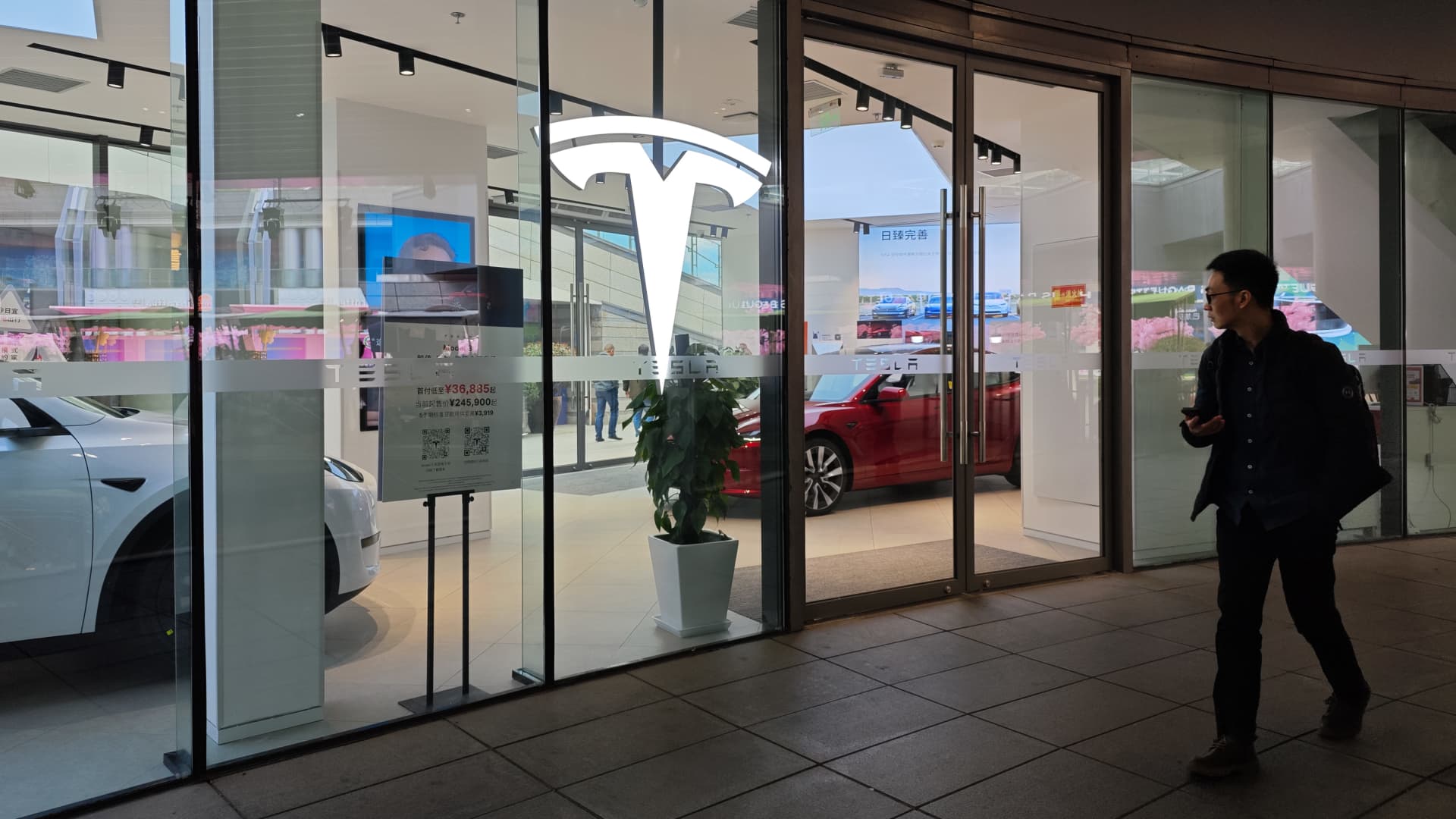
Shanghai, China — Tesla’s China-made EV sales saw a significant upswing in May, jumping by nearly 40% year-over-year, as the broader Chinese electric vehicle market experienced an initial recovery. This rebound signals a renewed competitive dynamic in the world’s largest EV market, where technological innovation and market penetration are key.
🚀 Tech Strategy & Market Disruptions
- Market Rebound Confirmation. Tesla’s strong performance, alongside broader sector growth, indicates a recovery in China’s EV market after a challenging period.
- Intensified Competition. While Tesla and several domestic players surged, some local manufacturers experienced declines, highlighting fierce competition and the importance of product differentiation and market strategy.
- Software-Defined Vehicle Focus. The push for Full Self-Driving (FSD) in China, despite regulatory hurdles, underscores the industry’s shift towards advanced software capabilities as a critical differentiator beyond hardware.
Tesla’s Shanghai Gigafactory delivered 85,982 new energy vehicles (NEVs) in May, a robust 39.4% increase compared to the same period last year. This strong showing contributed to a broader uplift in China’s EV market, which saw total passenger EV sales reach 1.36 million units, marking a 12% year-on-year growth and an 11% increase from April, according to preliminary data from the China Passenger Car Association (CPCA). This growth is crucial for understanding global technology market trends, signaling resilience and potential in the sector.
The market recovery wasn’t uniform across all players. While Tesla led with substantial growth, rival BYD reported a marginal 0.02% increase with 376,990 NEV deliveries, halting an eight-month streak of declining sales volumes. Other domestic players showcased impressive surges; Stellantis-backed Leapmotor and Geely’s Zeekr both recorded over 80% year-on-year increases. Nio also saw a significant 62.3% boost after launching its first flagship EV in over two years. Xiaomi, a tech giant new to the automotive space, reported over 30,000 EV deliveries in May, a 7.1% increase, bolstered by its performance-focused YU7 GT SUV. However, not all automakers enjoyed this resurgence; Li Auto experienced an 18.4% decline, and XPeng saw a 4.1% dip.
The competitive landscape in China’s EV market is rapidly evolving, moving beyond simple vehicle sales to an ‘AI arms race’ as reported by Reuters. Carmakers are integrating advanced software and AI features, such as voice AI and sophisticated navigation systems, to differentiate their offerings. This shift highlights the increasing importance of software-defined vehicles and connected car ecosystems in attracting consumers and driving emerging technologies.
The Ripple Effect of China’s EV Surge
The impressive surge in Tesla’s China-made EV sales, coupled with the broader market rebound, sets a clear disruption flow within the automotive sector. Increased EV adoption → Greater demand for advanced battery technology and charging infrastructure → Acceleration of smart vehicle software development, particularly for autonomous driving features. This push forces traditional automakers to rapidly digitize their offerings, while simultaneously attracting tech giants like Xiaomi into the automotive space, redefining what it means to be a car manufacturer. The focus shifts from purely mechanical engineering to sophisticated software platforms and data-driven services, fundamentally altering competitive strategies.
‘The real battleground for the future of mobility isn’t just in battery range or manufacturing efficiency, but increasingly in the sophistication of the software stack. From advanced driver-assistance systems to in-car AI, the ability to rapidly iterate and deploy intelligent, secure, and user-centric software will be the ultimate differentiator for leading EV players,’ said a StockXpo Lead Solution Architect.
Decoding the May EV Sales Performance
The May sales figures underscore the dynamic shifts within China’s competitive EV market:
| Automaker | May 2026 NEV Deliveries (Units) | Year-on-Year Growth (%) | Category |
|---|---|---|---|
| Tesla (Shanghai Gigafactory) | 85,982 | +39.4% | Battery Electric (BEV) |
| BYD | 376,990 | +0.02% | New Energy Passenger Vehicles (BEV + PHEV) |
| Leapmotor | >100,000 (Q4 2025 avg.)* | >+80% (May) | Battery Electric (BEV) |
| Zeekr | – | >+80% (May) | Battery Electric (BEV) |
| Nio | – | +62.3% (May) | Battery Electric (BEV) |
| Xiaomi | >30,000 | +7.1% (May) | Battery Electric (BEV) |
| Li Auto | – | -18.4% (May) | New Energy Passenger Vehicles (BEV + PHEV) |
| XPeng | – | -4.1% (May) | Battery Electric (BEV) |
*Leapmotor reported >100,000 units for four straight quarters, with May seeing over 80% growth, actual May delivery number for Leapmotor not specified in the article. Actual unit numbers for Zeekr, Nio, Li Auto, and XPeng not explicitly stated for May but YoY growth/decline provided. Data primarily from CPCA and company reports via CNBC.
Tesla’s China-made EV sales: Market Adoption Challenges
Despite the strong sales recovery, the market adoption of advanced features, particularly Tesla’s Full Self-Driving (FSD) (Supervised) system, faces considerable challenges in China. While Tesla announced its availability on X, suggesting a significant step forward, local media reports indicate a lawsuit alleging false claims about FSD availability without proper regulatory approval. This highlights a critical hurdle for high-level autonomous driving features: navigating complex and often stringent regulatory environments, a topic often explored in industry analysis and developments. Consumer trust, data privacy concerns, and the need for extensive real-world testing in diverse road conditions also contribute to a slower, more cautious adoption curve for such transformative technologies compared to hardware sales.
Tesla Ecosystem Expansion Potential
Beyond vehicle sales, Tesla’s long-term growth hinges significantly on its ecosystem expansion in China. This includes broadening its charging network, integrating energy storage solutions, and establishing deeper collaborations within the local tech landscape. The push for FSD, despite its current challenges, represents a pivotal part of this ecosystem strategy. A successful, widely adopted FSD system could unlock new revenue streams from subscription services and data monetization, transforming Tesla from a pure automaker into a comprehensive mobility service provider. Furthermore, strategic partnerships with Chinese tech giants for mapping, AI, and connectivity could accelerate this ecosystem’s growth, driving further innovation-driven growth and market integration, offering valuable educational tech insights for those following the industry on StockXpo’s blog.
Tesla’s China Revival and the Road Ahead
Tesla’s significant rebound in China’s EV market is a potent indicator of the sector’s underlying strength and consumer demand for electric vehicles. This surge, however, is set against a backdrop of intense competition and evolving technological battlegrounds, particularly around advanced software and autonomous driving capabilities.
- Market consolidation and differentiation will accelerate as companies like Tesla, BYD, and emerging tech players like Xiaomi vie for dominance.
- Regulatory clarity and consumer confidence in advanced features like FSD will be crucial for the widespread adoption of next-generation mobility solutions.
- The emphasis on software-defined vehicles means that traditional automotive engineering prowess must now be matched by robust AI, connectivity, and cybersecurity frameworks.
Will the current market momentum be sustained amidst ongoing price wars and geopolitical considerations?
📊 StockXpo Analyst’s View
Market Impact: Tesla’s strong May sales in China are likely to boost investor confidence in the broader EV sector, particularly for companies demonstrating robust sales growth and technological advancement. While the overall market rebound is positive, the uneven performance among competitors suggests a selective investment approach.
Sector To Watch: The automotive software and AI sectors are poised for significant gains. Companies specializing in advanced driver-assistance systems (ADAS), AI processors for vehicles, and secure connectivity solutions will become increasingly critical as the industry shifts towards software-defined vehicles and autonomous capabilities.
Financial Disclaimer:
StockXpo.com is a financial news aggregator and educational portal, not a registered investment advisor or broker-dealer. All information, news, and analysis provided herein are strictly for educational purposes and do not constitute investment, financial, legal, or tax advice. Investing in the stock market involves high risks, and past performance is not indicative of future results. StockXpo will not be liable for any financial losses or investment damages. Always consult a certified financial advisor before making market decisions.
MORE IN INSIDE TECHNOLOGY

AI Race: Perplexity CEO Unveils the Breakthrough Metric for Innovation-Driven Growth
Published: Wednesday, June 3, 2026 · 8:39 AM

Alphabet Stock Sale: $80 Billion Fuels AI Innovation, Reshaping Market Dynamics
Published: Wednesday, June 3, 2026 · 8:37 AM