Published: Thursday, May 21, 2026 · 11:14 AM | Updated: Thursday, May 21, 2026 · 11:14 AM
📊 372 views




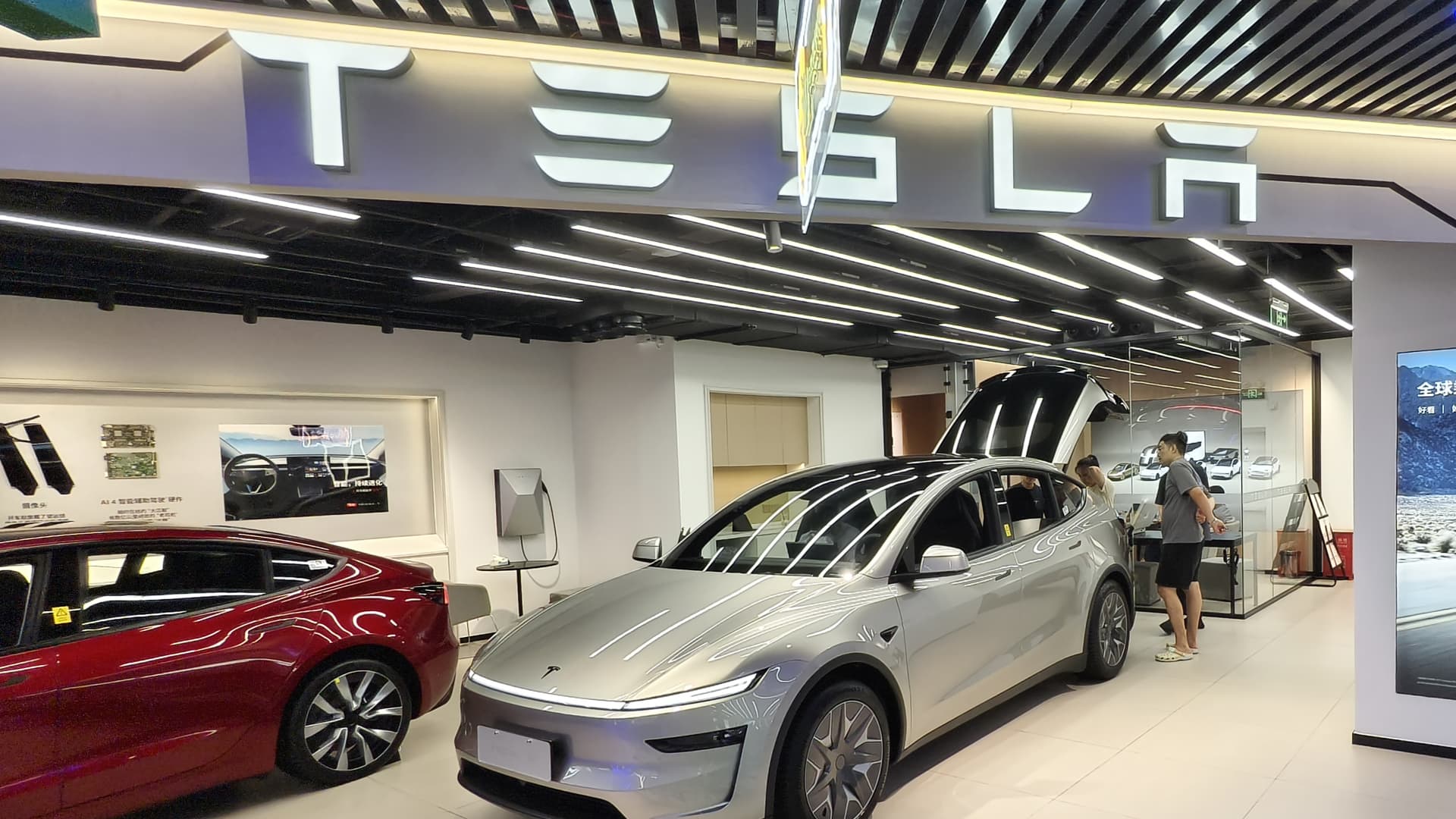
Tesla has officially launched its Full Self-Driving (FSD) capabilities in China, a pivotal move after years of regulatory delays and increasing competition from sophisticated domestic electric vehicle (EV) manufacturers. This long-awaited deployment introduces Tesla’s advanced driver-assistance system to the world’s largest automotive market, potentially reshaping the competitive landscape for autonomous driving technologies. This strategic move carries broader market implications, not just for Tesla but for the global automotive sector, as analyzed on our main technology insights portal.
🚀 Tech Strategy & Market Disruptions
- Market Entry & Competition Intensifies. Tesla’s FSD deployment in China challenges established local EV rivals like Xiaomi and Xpeng, who have significantly advanced their own proprietary autonomous systems during Tesla’s regulatory hold-up.
- Regulatory Breakthrough Signals Progress. The successful navigation of China’s complex regulatory environment for advanced autonomous features indicates a potential precedent for other foreign tech firms seeking to introduce sophisticated AI-driven services.
- Data & AI Training Advantage. Access to China’s unique and diverse road conditions will provide an invaluable data trove for Tesla’s FSD neural network, potentially accelerating its global AI development and system robustness.
After prolonged anticipation and numerous missed deadlines, Tesla’s Full Self-Driving system is finally accessible to consumers in China, marking a significant, albeit delayed, expansion for the company. The announcement, initially cryptic on social media platform X, confirmed China as one of ten markets now offering FSD (Supervised) capabilities. This move follows directly on the heels of CEO Elon Musk’s high-profile visit to Beijing and discussions with Chinese leadership, underscoring the strategic importance of this market. Previously, Chinese Tesla owners were limited to Autopilot and Enhanced Autopilot, with only a select few gaining access to limited FSD beta versions while the company awaited crucial regulatory nods. The system is priced at 64,000 Chinese yuan ($9,409) for a one-time purchase.
The timing of this launch is crucial. During the years of Tesla’s regulatory entanglement, Chinese automotive innovators did not stand still. Companies like Xiaomi, with its rapid ascent in the EV sector, and Xpeng, a pioneer in advanced driver-assistance systems (ADAS), have substantially advanced their proprietary self-driving technologies. Furthermore, dedicated robotaxi operators such as Pony.ai and Baidu’s Apollo Go have forged ahead, deploying autonomous fleets in various Chinese cities, demonstrating robust local innovation in this cutting-edge space.
- Tesla’s FSD introduction comes as local players like Xpeng and Xiaomi have developed robust domestic ADAS solutions.
- The regulatory approval process was protracted, with Musk missing several self-imposed deadlines for FSD’s launch.
- Access to China’s vast and varied road data will be critical for refining FSD’s AI models.
This development is not merely about feature parity; it’s about Tesla’s broader strategy in a market where it recently ranked fourth in EV sales, trailing giants like BYD, Geely, and Chery in April. The introduction of FSD is expected to rekindle interest and differentiate Tesla vehicles in a crowded market, leveraging its long-standing lead in AI and software-defined vehicles, a key area of focus for many emerging technologies. The ability to deploy and refine FSD within China’s dynamic urban and rural environments presents an unparalleled opportunity to gather real-world data, which is fundamental for accelerating AI development in autonomous driving. Such extensive data exposure is crucial for the continuous improvement of machine learning models, leading to safer and more capable systems globally, as discussed by experts in emerging technologies and covered by global news outlets, including those providing extensive coverage of tech advancements. Analysts are closely watching how this unfolds, echoing sentiments found in recent reports on advanced driver systems.
The entry of Full Self-Driving China into the market initiates a potent disruption flow. Enhanced consumer access to advanced autonomous capabilities will immediately intensify the competitive pressure on domestic EV manufacturers, compelling them to accelerate their own ADAS development cycles. This, in turn, fuels a demand for more sophisticated sensor arrays, high-performance computing platforms, and robust AI infrastructure, leading to rapid innovation across the entire automotive supply chain. The resultant acceleration in technological advancement and fierce competition will ultimately benefit consumers through more sophisticated and safer driving experiences, potentially shifting market share dynamics in favor of players with superior software and AI integration.
‘The activation of Full Self-Driving in a market as complex and data-rich as China is not just a product launch; it’s a massive, real-world data acquisition and neural network training project. The sheer volume and diversity of driving scenarios in Chinese cities will be an unparalleled accelerator for FSD’s underlying AI architecture, pushing the boundaries of what autonomous systems can achieve globally.’
While the news indicates a significant strategic move, it does not provide 3+ verifiable technical metrics that would warrant an HTML table. Key financial and timeline data points are as follows:
- FSD Purchase Price in China: 64,000 Chinese yuan (approximately $9,409 USD).
- Original FSD Launch (U.S.): October 2020.
- Musk’s Previous China Approval Timeline: Expected by end of 2024, then Q1 2025.
- Tesla’s April China EV Sales Ranking: Fourth, behind BYD, Geely, and Chery.
Tesla FSD Platform Architecture: Leveraging Global Data
Tesla’s Full Self-Driving platform relies on an end-to-end neural network architecture that processes raw camera data to predict driving behavior. Unlike many competitors that combine camera, radar, and lidar, Tesla primarily employs a ‘vision-only’ approach, leveraging vast amounts of real-world driving data collected globally to train its AI models. The introduction to China means this architecture will now ingest a new, diverse set of traffic patterns, road markings, and driving cultures, which is critical for bolstering the system’s robustness and generalization capabilities. This continuous data feedback loop allows for iterative improvements to its deep learning models, pushing the frontier of machine autonomy, a key topic discussed in StockXpo’s technology articles. Integrating this new data stream from China will be crucial for the next phase of FSD’s evolution, demanding high-performance computing infrastructure and sophisticated data pipelines to manage and process petabytes of information, ensuring secure and scalable operations.
Tesla Market Adoption Challenges in China
Despite the technological prowess of Full Self-Driving, its widespread adoption in China faces several unique challenges. Local consumers are already accustomed to sophisticated ADAS features from domestic brands, which are often integrated differently and sometimes at a lower price point. Regulatory scrutiny over data privacy and mapping accuracy remains a significant hurdle, requiring meticulous compliance and localized adaptations. Furthermore, the cultural acceptance of autonomous driving technologies may vary, and Tesla will need to build trust in a market where local competitors often emphasize features tailored to Chinese driving conditions and consumer preferences. The pricing strategy for FSD in China, a substantial one-time fee, will also be a critical factor in how quickly it penetrates the mass market, especially against rivals offering similar capabilities bundled with their vehicles or via more flexible subscription models. For further insights into digital transformation trends in mobility, readers can explore our blog.
Tesla’s Full Self-Driving: A New Chapter in China’s EV Race
Tesla’s long-awaited launch of Full Self-Driving in China signals a critical turning point for the company’s aspirations in the world’s most dynamic EV market. While the delay has allowed domestic rivals to gain ground, Tesla now has the opportunity to leverage its cutting-edge AI and software stack. This move will undoubtedly intensify competition, pushing all players to innovate faster and deliver more robust autonomous driving solutions.
- Re-establishes Tesla’s competitive edge in software innovation within China.
- Provides a massive data acquisition opportunity to accelerate FSD’s global development.
- Forces local rivals to further refine their own autonomous driving offerings, benefiting consumers.
Will Tesla’s FSD deployment in China be enough to reclaim its innovation lead and significantly boost its market share amidst fierce local competition?
### 📊 StockXpo Analyst’s View
Market Impact: Tesla’s FSD entry into China is a mixed bag for market sentiment. While it injects positive momentum for Tesla’s long-term growth story, it simultaneously raises the bar for local competitors, potentially intensifying price wars and R&D spending. Investor focus will shift to FSD adoption rates and how effectively Tesla monetizes this feature against robust domestic alternatives. This could lead to short-term volatility as the market assesses real-world uptake.
Sector To Watch: The autonomous driving software and sensor technology sectors will experience a surge in investment and innovation. Companies supplying high-resolution cameras, AI chips, and advanced mapping solutions, along with those developing sophisticated data processing and cybersecurity for vehicular systems, are poised for significant gains. Additionally, the broader EV manufacturing sector in China will be under pressure to match or exceed Tesla’s software capabilities.
Financial Disclaimer:
StockXpo.com is a financial news aggregator and educational portal, not a registered investment advisor or broker-dealer. All information, news, and analysis provided herein are strictly for educational purposes and do not constitute investment, financial, legal, or tax advice. Investing in the stock market involves high risks, and past performance is not indicative of future results. StockXpo will not be liable for any financial losses or investment damages. Always consult a certified financial advisor before making market decisions.
MORE IN INSIDE TECHNOLOGY
AI Pricing Innovation: Reshaping Retail & Consumer Spend
Published: Sunday, October 11, 2026 · 1:36 AM

AI Legal Tech: Revolutionizing Billing and Training in Law with Innovation
Published: Saturday, October 10, 2026 · 2:58 AM