Published: Saturday, June 13, 2026 · 12:06 PM | Updated: Saturday, June 13, 2026 · 12:06 PM
📊 223 views




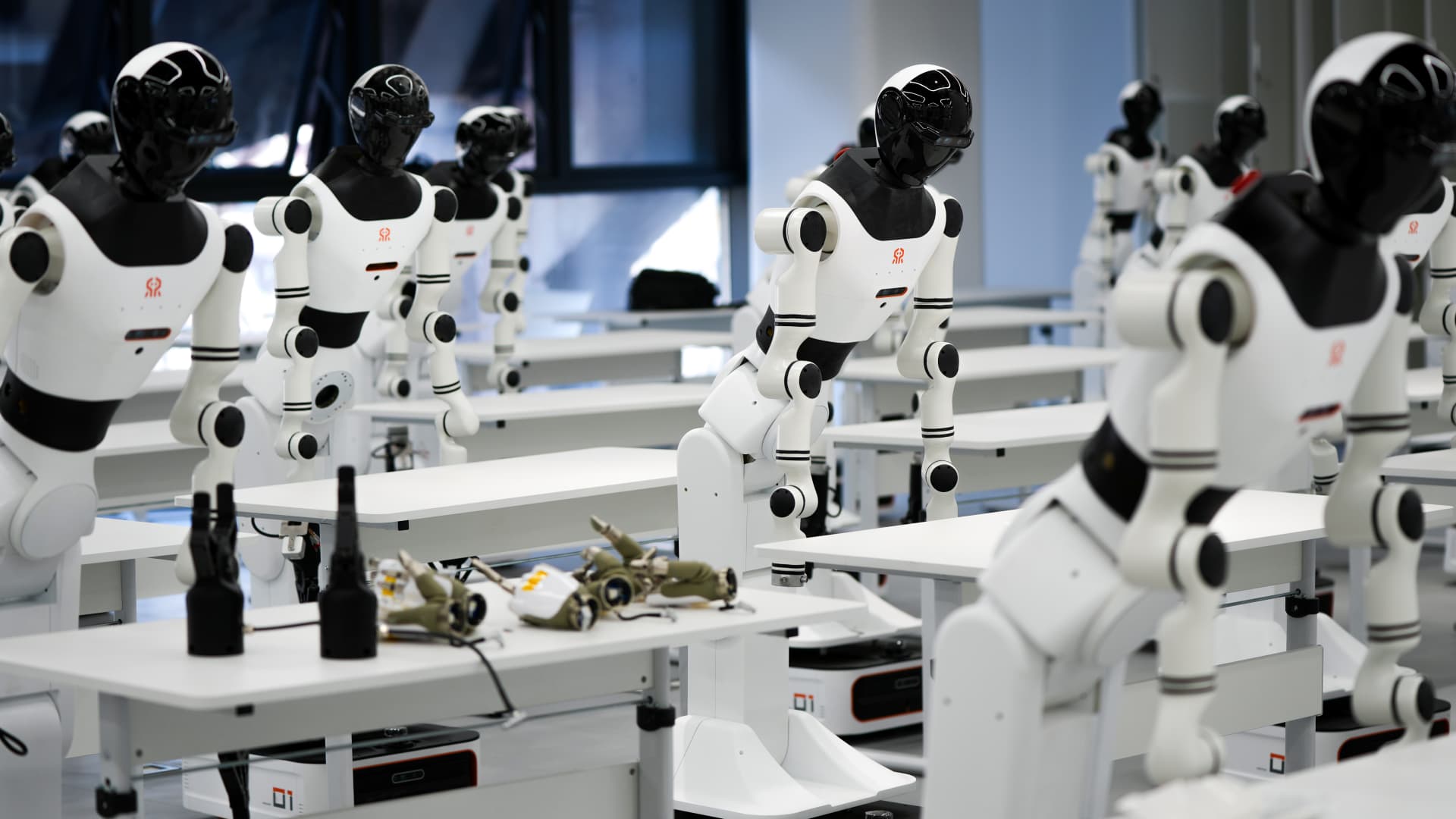
Rivian CEO RJ Scaringe is charting a distinct course in the burgeoning field of humanoid robotics, opting to house his new venture, Mind Robotics, as a separate entity rather than integrating it directly into the electric vehicle maker. This strategic divergence from competitors like Tesla signals a calculated move to capitalize on the multi-trillion-dollar industrial labor market while maintaining focus on Rivian’s core automotive business.
🗝️ Corporate Strategy Insights
- Independent Robotics Venture. RJ Scaringe founded Mind Robotics as a separate company, with Rivian holding a minority stake and acting as a launch customer. This avoids diluting Rivian’s focus while tapping into a vast new market.
- Strategic Differentiation from Tesla. Unlike Elon Musk’s integrated approach with Tesla Optimus, Scaringe’s model emphasizes autonomy for Mind Robotics, allowing specialized development and potentially broader market reach beyond just automotive applications.
- Addressing Labor Shortages. The initiative is positioned to address an ‘extreme lack of labor’ in manufacturing and other industrial sectors, highlighting a practical application for humanoid robots as collaborators alongside human workers, rather than full replacements.
The creation of Mind Robotics, a company Scaringe started last year and has already raised over $1 billion for, positions Rivian CEO RJ Scaringe as a key player in the next frontier of industrial automation. This venture, expected to reveal its first product within a year, leverages Rivian’s operational data for AI training, ensuring a practical, real-world application from day one. By maintaining Mind Robotics as a distinct entity, Scaringe ensures that Rivian, a large minority shareholder and launch customer, can benefit from the innovation without directly shouldering the extensive R&D costs and market risks associated with a new, highly speculative technology segment. This structure also enables Mind Robotics to pursue a broader market beyond just electric vehicle manufacturing, targeting a diverse range of industrial sectors grappling with acute labor shortages, a challenge keenly felt across various industries as reported by leading business insights publications. For those looking to understand similar complex strategic moves, educational insights are readily available.
The vision articulated by Scaringe involves thousands of humanoid robots, affectionately named ‘Phil,’ working collaboratively with human employees on factory floors. This contrasts sharply with the ‘dark factory’ concept, where automation aims for near-total human exclusion. Scaringe believes the initial robotic deployments will focus on simpler, repetitive tasks, freeing up human workers for more complex operations requiring higher reasoning and dexterity. This collaborative model suggests a nuanced understanding of industrial integration challenges, aiming for efficiency gains without immediate widespread job displacement fears, which could ease adoption.
- Mind Robotics currently seeks software and hardware engineers, and data architects, indicating an active development phase.
- The company’s focus on practical industrial applications positions it to address immediate operational needs for manufacturers.
- Rivian’s role as both investor and first customer provides a crucial testbed and early revenue stream for the robotics startup, de-risking its market entry.
The Strategic Ripple Effect on Industry Paradigms
Scaringe’s dual-company strategy could create a significant ripple effect across both the automotive and general industrial sectors. By incubating Mind Robotics separately, Rivian avoids the potential operational distractions or financial strain that a nascent, high-risk robotics division might impose on its core EV manufacturing business. This strategic separation allows Mind Robotics to develop specialized expertise and intellectual property, which could then be licensed or sold to a wider array of customers beyond Rivian. This model could lead to:
- Operational Efficiency Gains for Rivian: As Mind Robotics matures, its humanoid robots deployed in Rivian’s factories could significantly reduce labor costs and improve production efficiency for future EV models like the R2, directly enhancing Rivian’s bottom line and its ability to scale operations.
- New Revenue Streams: Mind Robotics, by targeting a multitrillion-dollar industrial labor market, could eventually become a substantial revenue generator, potentially even overshadowing Rivian’s automotive sales in the long run if it achieves widespread adoption across various industries. This offers a diversified growth pathway for shareholders interested in long-term market trends.
- Competitive Landscape Shift: Competitors like Tesla, which is integrating its Optimus robots directly, might face pressure if Mind Robotics’ independent model proves more agile or effective in developing and deploying general-purpose industrial robots. This could force other automakers or industrial players to re-evaluate their own automation strategies, potentially leading to new partnerships or similar spin-off ventures to capture robotics market share.
- Workforce Transformation: The introduction of collaborative humanoid robots could redefine industrial job roles, necessitating upskilling programs for human workers to manage and operate these new robotic colleagues, ultimately transforming the labor market landscape.
‘The decision by Rivian CEO RJ Scaringe to establish Mind Robotics as an independent entity with Rivian as an anchor customer represents a calculated strategic play to access a vast industrial automation market without diluting the primary mission of the EV manufacturer. This creates optionality and focus, potentially accelerating development for both companies.’
Unpacking Mind Robotics’ Strategic Indicators
While specific financial metrics for Mind Robotics are yet to be publicly detailed, several key indicators highlight its strategic importance:
- Over $1 Billion Raised: This substantial initial funding demonstrates strong investor confidence in Mind Robotics’ vision and technology. This capital infusion provides a robust runway for aggressive R&D and product development.
- Rivian as Launch Customer: Securing an established industrial player like Rivian as the first customer provides critical validation and a real-world environment for testing and refinement. This early adoption reduces market entry risk and provides valuable feedback for product iteration.
- Targeting Multitrillion-Dollar Market: Scaringe’s estimate of a ‘multitrillion-dollar total addressable market for industrial labor’ underscores the immense scale of the opportunity, making Mind Robotics a potentially high-growth venture with significant long-term upside.
Rivian Strategic Analysis: Balancing Core Business and Future Tech
Rivian’s current strategy under Rivian CEO RJ Scaringe is a delicate balance between scaling EV production and making forward-looking bets on future technologies like humanoid robotics. The decision to keep Mind Robotics separate allows Rivian to maintain a sharper focus on manufacturing and delivering its R1T, R1S, and upcoming R2 models, which is crucial for achieving profitability and sustainable growth in the highly competitive EV market. This approach demonstrates a pragmatic understanding of operational efficiency, preventing the core business from being bogged down by the nascent, capital-intensive robotics venture. Simultaneously, the equity stake and launch customer relationship ensure Rivian benefits from Mind Robotics’ innovations, potentially gaining a significant competitive edge in manufacturing automation down the line. This dual strategy mitigates risk while positioning Rivian for long-term technological leadership.
Rivian Competitive Advantages: Beyond Electric Vehicles
While Rivian is known for its adventure-focused electric vehicles, this move into humanoid robotics reveals an ambition to build competitive advantages extending beyond just automotive design and performance. By being an early adopter and strategic partner in industrial robotics, Rivian aims to secure superior manufacturing capabilities. This could translate into:
- Cost Efficiencies: Automation through humanoid robots could dramatically lower production costs, improving Rivian’s margins and enabling more aggressive pricing strategies in the future.
- Scalability: Robots can address labor constraints, allowing Rivian to scale production more rapidly to meet demand, particularly as it expands into new market segments.
- Quality Control: Repetitive, precise tasks performed by robots can lead to higher manufacturing consistency and improved vehicle quality, enhancing brand reputation.
This proactive investment in advanced manufacturing through robotics could differentiate Rivian from traditional automakers and even other EV players, solidifying its position as an innovator in industrial processes.
Rivian’s Robotics Vision: An Uncharted Future of Automation
The bold move by Rivian CEO RJ Scaringe into humanoid robotics through Mind Robotics sets the stage for a compelling new chapter in industrial automation, potentially reshaping manufacturing paradigms. This strategic independence allows for rapid innovation in robotics while Rivian focuses on its core EV market.
- Mind Robotics aims to fill critical labor gaps in manufacturing, not fully replace human workers.
- The venture is well-funded, attracting over $1 billion to accelerate its product development.
- Rivian stands to gain significant operational efficiencies and potentially new revenue streams from its investment.
How will this separation of strategic focus ultimately impact both Rivian’s EV ambitions and the broader industrial robotics landscape? Investors seeking a broader perspective on market trends often turn to global financial news sources.
### 📊 StockXpo Analyst’s View
Market Impact: This development is likely to be viewed positively by investors who value diversification and forward-thinking leadership. It signals a sophisticated capital allocation strategy by the Rivian CEO, potentially unlocking significant value from the burgeoning robotics sector without directly burdening Rivian’s P&L during initial development. We anticipate increased investor interest in companies with strong AI and robotics plays, particularly those with clear industrial applications, potentially boosting relevant tech stocks on stock markets.
Sector To Watch: The industrial automation and AI hardware sectors are prime beneficiaries. Companies supplying semiconductors, advanced sensors, and robotic components will see heightened demand. Furthermore, manufacturing companies exploring automation solutions for labor shortages will closely watch Mind Robotics’ progress, signaling a broader shift in corporate growth and operational strategy within manufacturing industries, as explored in articles focusing on company strategy.
Financial Disclaimer:
StockXpo.com is a financial news aggregator and educational portal, not a registered investment advisor or broker-dealer. All information, news, and analysis provided herein are strictly for educational purposes and do not constitute investment, financial, legal, or tax advice. Investing in the stock market involves high risks, and past performance is not indicative of future results. StockXpo will not be liable for any financial losses or investment damages. Always consult a certified financial advisor before making market decisions.
MORE IN INSIDE BUSINESS

Wegovy Pill Success: Novo’s Oral Treatment Drives Continued Weight Loss
Published: Wednesday, September 30, 2026 · 7:02 AM

Alaska Airlines Premium Cabin Overhaul: A $1 Billion Profit Strategy
Published: Tuesday, September 29, 2026 · 9:54 AM