
Published: Tuesday, May 19, 2026 · 8:57 PM | Updated: Tuesday, May 19, 2026 · 8:57 PM
📊 277 views




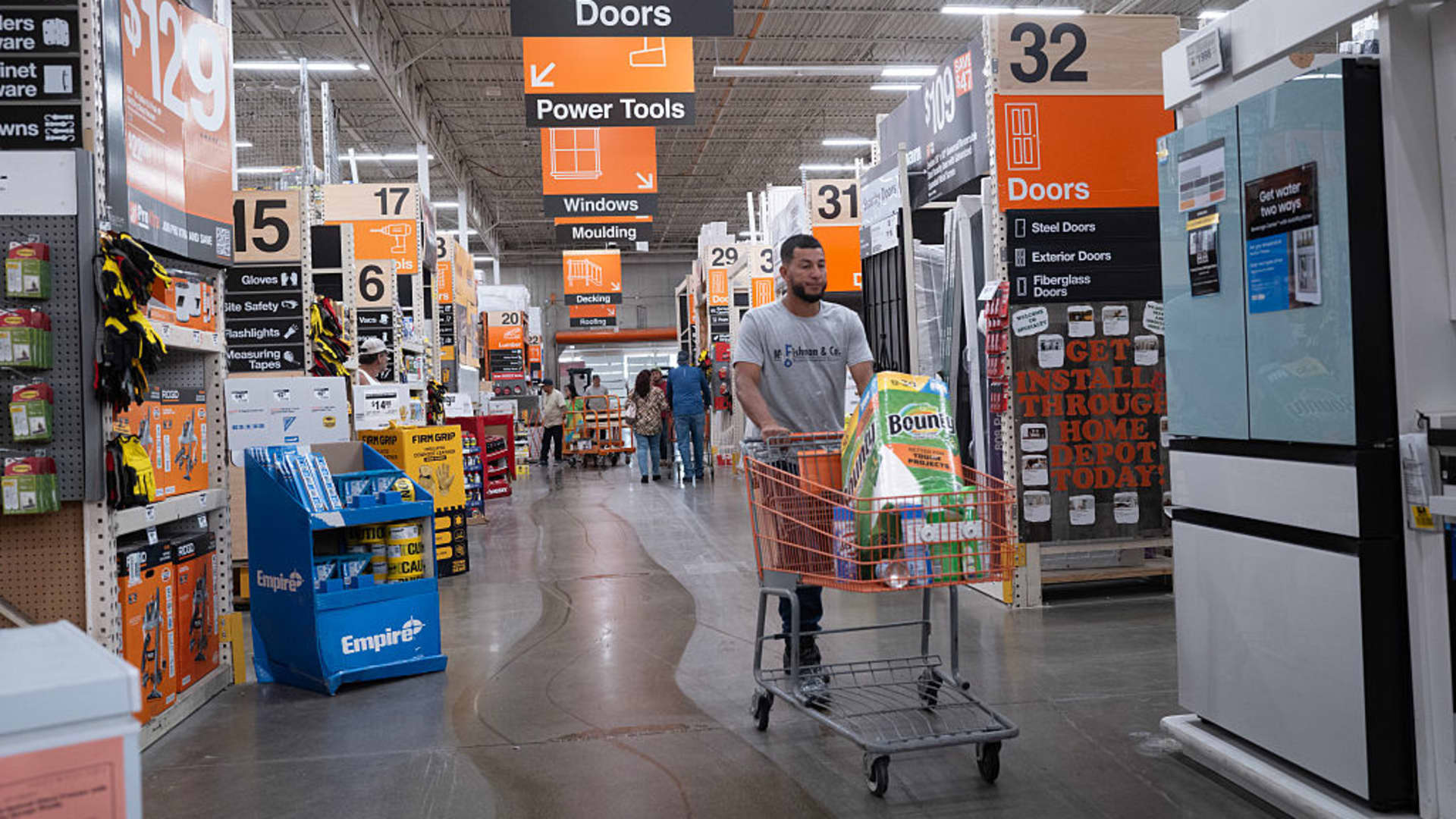
Despite a challenging housing market marked by elevated interest rates, Home Depot (HD) recently reported first-quarter results that, while modest, outpaced analyst expectations for revenue and EPS. This complex operating environment raises critical questions about the intrinsic value of Home Depot and its long-term portfolio placement.
💎 Strategic Investment & Portfolio Insights
- Market Headwinds Persist. Rising interest rates and high bond yields continue to weigh heavily on housing-related demand, impacting Home Depot’s core business tied to home projects and purchases.
- Pro Segment Resilience. The company’s strategic focus on its professional (Pro) segment, supported by acquisitions like SRS and Mingledorff’s, shows promising market share gains and positive comps, offering a buffer against DIY weakness.
- Long-Term Conviction. Despite short-term pain and reduced price targets, management’s efforts to control controllable aspects and gain market share, coupled with potential future rate cuts, suggest a ‘coiled spring’ opportunity for patient investors.
Home Depot’s first quarter, which ended May 3, saw revenue climb 4.8% year-over-year to $41.77 billion, surpassing LSEG’s estimate of $41.52 billion. Earnings per share (EPS) declined 3.7% to $3.43, yet still managed to exceed the analyst estimate of $3.41. While these figures indicate some resilience, the underlying same-store sales came up short of expectations, pointing to persistent challenges in the operating environment. The stock’s price target has been adjusted downward to $360 from $420, reflecting the market’s re-evaluation of housing-related plays in a high-rate climate.
The core issue for Home Depot, as highlighted by CEO Ted Decker, is the undeniable link between its business and the broader economic landscape, particularly interest rates. With the 10-year Treasury yield at its highest since January 2025 and the 30-year yield near a 19-year peak, demand for large home projects and purchases, often tied to HELOC and mortgage rates, naturally wanes. This macro pressure means that despite being a ‘best-in-class operator,’ Home Depot faces significant external headwinds. Management, however, is proactively beefing up its Pro segment, which already accounts for about 55% of sales, through strategic acquisitions like SRS (acquired in 2024 for ~$18 billion) and the recent addition of Mingledorff’s, a leading HVAC distributor. These moves aim to accelerate recovery and gain market share when conditions improve.
Jim Cramer’s sentiment, regretting the initial investment but advocating holding, encapsulates the current dilemma: selling now would compound the mistake. The company’s reaffirmation of its 2026 forecast, with sales growth of 2.5% to 4.5% and flat to 4% adjusted earnings growth, reflects a cautious but stable outlook. However, even these projections remain slightly below Street estimates. Rising fuel costs due to geopolitical tensions, specifically concerning the Strait of Hormuz, add another layer of pressure on transportation and input costs, although potential tariff refunds could provide an offset.
- Q1 Performance: Revenue beat ($41.77B vs $41.52B), EPS beat ($3.43 vs $3.41), but same-store sales missed estimates, growing 0.6% overall and 0.4% in the U.S.
- Pro vs. DIY: Pro segment delivered positive comps and outperformance, while larger discretionary DIY projects remained under pressure, a key trend noted by marketing chief William Bastek.
- Guidance Reaffirmed: Management reiterated its preliminary 2026 forecast, projecting sales growth of 2.5% to 4.5% and flat to 4% adjusted earnings growth, slightly below Street estimates.
The Broader Market Impact on Portfolio Allocation
The prevailing ‘higher for longer’ interest rate environment directly translates into decreased housing demand and more expensive financing for large-scale home projects, which in turn puts significant pressure on Home Depot’s revenue streams and overall valuation. This dynamic forces a strategic re-evaluation for diversified portfolios, prompting a cause-and-effect cascade: rising rates → reduced consumer discretionary spending on housing → potential rebalancing towards defensive or less interest-rate sensitive assets. While Home Depot’s long-term potential for capital preservation remains, maintaining core positions like this requires acknowledging a delayed recovery. This macro shift is regularly tracked by global market shifts and financial news outlets.
For long-term capital preservation, maintaining exposure to best-in-class operators like Home Depot, despite cyclical headwinds, is prudent. The current market valuation may not fully account for strategic initiatives, such as the expansion of the Pro segment, which are laying the groundwork for significant alpha generation once the macroeconomic environment normalizes. This requires patience and a deep understanding of intrinsic value beyond quarterly fluctuations.
Home Depot’s Key Q1 Metrics & Financial Significance
| Metric | Q1 2025 Actual | Analyst Estimate | Significance |
|---|---|---|---|
| Total Revenue | $41.77 Billion | $41.52 Billion | Outpaced consensus, showing top-line resilience. |
| Diluted EPS | $3.43 | $3.41 | Slight beat, demonstrating cost control amidst pressures. |
| Same-Store Sales (Overall) | +0.6% | Missed Est. | Indicator of underlying demand; mixed performance with Pro outperforming DIY. |
| Average Ticket Price Growth | +2.2% | N/A | Suggests pricing power or shift to higher-value items. |
| Customer Transactions Decline | -1.3% | N/A | Reflects reduced foot traffic or frequency, likely tied to housing slowdown. |
Home Depot Risk-Reward Matrix
The investment case for Home Depot currently presents a nuanced risk-reward profile. The primary risk stems from the prolonged ‘higher for longer’ interest rate environment, which directly impedes housing market activity, HELOC-funded renovations, and general consumer confidence in large discretionary home projects. Geopolitical risks, particularly impacting oil prices via crucial waterways like the Strait of Hormuz, also represent a significant external pressure on input and transportation costs. Execution risk, while lower for a best-in-class operator, remains in integrating large acquisitions like SRS and Mingledorff’s effectively.
On the reward side, the company’s strong focus on the Pro segment, which historically demonstrates more resilience and higher ticket values, offers a strategic growth avenue independent of the broader housing market’s woes. Should interest rates eventually decline—a scenario tied to potential geopolitical de-escalation or Federal Reserve policy shifts—Home Depot is positioned as a ‘coiled spring.’ Its robust distribution network, brand loyalty, and market leadership suggest a significant upside recovery. The current valuation, depressed by macro concerns, could offer a favorable entry point for patient, long-term investors seeking value in anticipation of a cycle turnaround.
Home Depot Competitive Benchmarking
In the home improvement sector, Home Depot consistently stands as a titan alongside its primary competitor, Lowe’s. While the article notes that Lowe’s management may be ‘doing a better job lately,’ the broader market response to both companies’ stock performance suggests that the challenging operating environment overshadows individual execution differences. A key differentiator for Home Depot is its heavier reliance on the professional contractor segment (55% of sales) compared to Lowe’s, which traditionally has a larger DIY focus. This strategic weighting towards Pros, bolstered by recent acquisitions, positions Home Depot to capture a larger share of resilient commercial projects, even as consumer discretionary spending falters. Bloomberg market analysis often highlights these structural differences in their coverage of retail giants. Conversely, Lowe’s strength in catering to DIY homeowners could offer a different kind of resilience if consumer sentiment shifts more favorably or if smaller, non-HELOC dependent projects gain traction. Both companies, however, face similar macro headwinds from rising bond yields and housing market stagnation, making competitive outperformance difficult to discern solely on stock charts.
Home Depot’s Path Through Economic Crosscurrents
Home Depot’s latest earnings report underscores the pervasive impact of elevated interest rates on the housing-related retail sector. While operational execution remains sound, particularly within its strategically expanded Pro segment, the macro environment dictates investor sentiment and valuation. The decision to hold the stock, despite acknowledging an initial misstep, reflects a conviction in its long-term market leadership and the potential for a significant rebound once economic conditions become more favorable.
- The strategic pivot towards strengthening the Pro customer base through acquisitions like SRS and Mingledorff’s is crucial for diversifying revenue streams and mitigating DIY softness.
- Current depressed valuation may offer a long-term entry point, especially if geopolitical stability leads to lower oil prices and subsequent Federal Reserve rate adjustments.
- Patience is paramount as Home Depot navigates through a ‘moderation period,’ focusing on market share gains and operational efficiencies until the housing cycle turns.
Will Home Depot’s patient strategy pay off, delivering alpha as macroeconomic conditions eventually ease?
📊 StockXpo Analyst’s View
Market Impact: The persistent pressure on housing-related stocks like Home Depot highlights how sensitive certain sectors are to monetary policy and bond market movements. This news will likely reinforce cautious sentiment around consumer discretionary spending, particularly for big-ticket home improvement items, potentially shifting investor focus towards more defensive plays or sectors with secular growth drivers. Understanding portfolio growth in this environment becomes crucial.
Sector To Watch: Given the resilience of Home Depot’s Pro segment and ongoing infrastructure investments, the B2B construction and specialty trade distribution sectors warrant close attention. These areas may offer more stable growth prospects, even as the broader housing market faces headwinds. Investors should also monitor energy prices and geopolitical developments, as they can directly influence inflation and, consequently, central bank policy decisions, impacting the broader market’s direction and liquidity, as discussed in StockXpo’s market insights.
Financial Disclaimer:
StockXpo.com is a financial news aggregator and educational portal, not a registered investment advisor or broker-dealer. All information, news, and analysis provided herein are strictly for educational purposes and do not constitute investment, financial, legal, or tax advice. Investing in the stock market involves high risks, and past performance is not indicative of future results. StockXpo will not be liable for any financial losses or investment damages. Always consult a certified financial advisor before making market decisions.
MORE IN INSIDE INVESTMENT NEWS

Procter & Gamble Earnings: Alpha Generation from Consumer Staples Resilience
Published: Thursday, October 22, 2026 · 7:39 AM
Carrefour Shares Plunge 14%: Navigating European Retail Volatility
Published: Wednesday, October 21, 2026 · 6:29 AM


