Published: Tuesday, October 27, 2026 · 7:34 AM | Updated: Tuesday, October 27, 2026 · 7:34 AM
📊 15 views




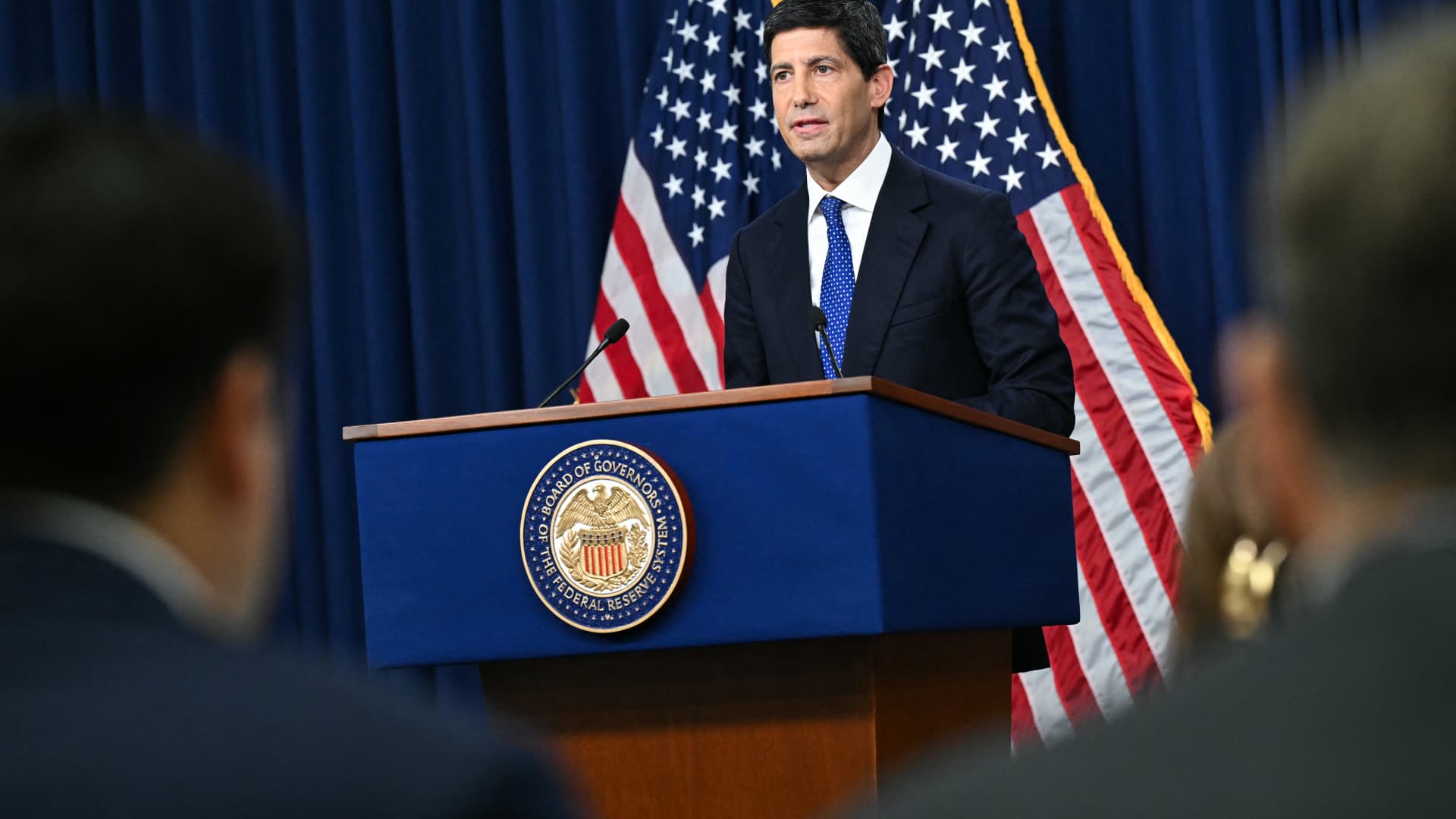
The specter of further Fed rate hikes looms large over global markets, with a new CNBC survey indicating a strong consensus among fund managers, strategists, and economists for aggressive monetary tightening by December. This shift underscores the Federal Reserve’s ongoing battle against persistent inflation, challenging the notion of a ‘soft landing’ for the U.S. economy and signaling potential volatility for investors navigating complex macro trends.
📊 Macro-Economic Strategic Insights
- December Rate Hike Consensus. A significant 76% of survey respondents anticipate a Federal Reserve rate hike in December, following an expected pause in the current October meeting, reflecting a strong market conviction towards further tightening.
- Inflation’s Broad Reach. Contrary to views of transient price pressures, 70% of experts believe the inflation problem extends beyond energy costs, necessitating a more proactive monetary response from the central bank.
- Economic Slowdown Expectations. A plurality of 40% of surveyed professionals agree the Fed must deliberately slow economic growth below its potential to effectively curb inflationary pressures, highlighting a potential trade-off for macro-stability.
Despite an expected pause in the current October meeting, the overwhelming sentiment among 30 leading fund managers, strategists, and economists points to impending Fed rate hikes, with 93% expecting no change this week but 76% forecasting a hike in December. This forward-looking view, revealed in CNBC’s latest Fed Survey, underscores the market’s conviction that the Federal Reserve has substantial work remaining to rein in inflationary forces. Richard Bernstein, global head of macro investing at Janus Henderson Investors, highlighted the perceived hesitancy, stating, ‘Their hesitancy to raise rates is unfathomable after an extended period of monetary and fiscal generosity, with nominal GDP running 6-8%, and when the leading indicators of inflation are uniformly warm to hot.’
Indeed, the inflation challenge is increasingly viewed as systemic. Seventy percent of survey respondents believe the issue is broader than just elevated energy prices, suggesting deep-seated cost pressures across the economy. While U.S. crude oil is projected to cool slightly from current levels, remaining above $88 a barrel, the broader inflationary impulse remains a critical concern. John Ryding, chief economic advisor for Brean Capital, LLC, emphasized this, noting that ‘The aggregate demand data (probably north of 7%…) and the inflation data point to the strong need to hike rates.’
However, not all market participants advocate for immediate aggressive tightening. Mark Zandi, chief economist at Moody’s Analytics, articulated concerns about a weakening economy, citing the intensifying Iran War, falling real wages, rising interest rates, and a shaky AI-fueled stock market. Zandi argued, ‘Inflation is high, but there’s little sign it is becoming entrenched. This isn’t the time for more Fed rate hikes.’ This divergence highlights the delicate balancing act faced by policymakers, who must weigh the risks of under-tightening against the potential for an overly aggressive stance to tip the economy into recession. Despite these risks, respondents largely anticipate economic growth to remain above potential for both 2026 (2.4%) and 2027 (2.2%).
Key takeaways from the survey also indicate:
- The risk of a U.S. recession within the next year has slightly decreased to 26% from 29% previously.
- The S&P 500 outlook for 2026 remains stable at around 7,600, though 2027 projections saw a slight downward revision to 8,033.
- Unemployment is expected to remain steady at 4.2% through 2026, rising to 4.4% in 2027, while the Consumer Price Index (CPI) is forecast to decline to 2.6% in 2027 from 3.7% in September 2026.
The anticipated trajectory of monetary policy sets in motion a clear chain of economic consequences. Higher interest rates typically translate to increased borrowing costs for consumers and businesses (Higher Rates → Lower Spending → Reduced Aggregate Demand). This slowdown in demand is a primary mechanism for curbing inflation. Concurrently, a hawkish Fed stance often leads to a strengthening U.S. dollar (Higher Rates → Stronger Dollar → Cheaper Imports), which can help mitigate imported inflation, albeit potentially harming export competitiveness. For the bond market, persistent inflation expectations combined with government debt issuance are driving forces (High Inflation + Debt Supply → Higher Bond Yields), impacting everything from mortgage rates to corporate financing costs.
Understanding Potential Growth: In macroeconomics, ‘potential growth’ refers to the maximum sustainable output an economy can produce when all resources (labor, capital, technology) are fully employed without triggering inflation. When an economy grows above its potential, as some experts suggest the U.S. economy currently is, it creates demand-side pressure that fuels inflation, necessitating a monetary policy response to cool activity. This is a critical consideration for the Federal Reserve’s dual mandate of maximum employment and price stability.
Key economic indicators from the CNBC survey outline the prevailing expectations for the U.S. economy, providing a crucial benchmark for economic policy assessments and future market movements.
| Metric | 2026 Forecast | 2027 Forecast | Significance |
|---|---|---|---|
| GDP Growth | 2.4% | 2.2% | Indicates economic expansion, remaining above potential. |
| Recession Risk (Next Year) | 26% | N/A | Perceived likelihood of an economic downturn, showing a slight decrease. |
| S&P 500 Target | 7,600 | 8,033 | Key benchmark for broader stock market performance and investor sentiment. |
| Unemployment Rate | 4.2% | 4.4% | Reflects labor market health; a slight uptick signals cooling. |
| CPI (Year-End) | 3.6% | 2.6% | Primary inflation gauge; forecasted decline towards Fed’s target. |
| 10-Year Treasury Yield | 5.0%+ | 4.8% | Crucial for long-term borrowing costs and risk-free rates. |
US Fiscal Policy Commentary: Debt and the AI Buildout
The current landscape of high bond yields is largely attributed to a confluence of factors, including high inflation, robust growth, and significant government debt issuance. A telling 50% of survey respondents pinpoint government debt as the primary supply-side culprit, while 13% attribute it to the burgeoning AI buildout, requiring substantial capital. A third of experts acknowledge both factors contribute equally to the rise in yields, reinforcing the observation by Subodh Kumar, president of Subodh Kumar & Associates, that ‘benchmark U.S. Treasury bond yields above 5% represent a new band, not an anomaly.’ This sustained fiscal pressure could necessitate difficult budgetary decisions for the incoming Congress and remains a key risk for long-term fiscal stability. Rob Morgan, senior vice president and market strategist at MOSAIC, advocates for policy shifts, suggesting, ‘Fed Chair Warsh, in all of his future conversations with President Trump, need to repeat this mantra: the quickest way to bring down inflation in the U.S. is to end tariffs and end the war in Iran.’ This highlights the interplay between geopolitical events, trade policy, and domestic inflationary pressures.
Global Inflationary Risks: Beyond Energy and Geopolitics
While the intensifying Iran War and oil price volatility remain prominent risks, the survey indicates broader concerns that extend beyond direct geopolitical impacts. Seventy percent of experts view inflation as a problem larger than just rising energy prices. This points to a diverse set of underlying drivers, potentially including persistent supply chain dislocations, wage pressures, and robust consumer demand fueled by past fiscal stimulus. Global inflation trends can be tracked on major financial news outlets. The potential bursting of the AI bubble also emerged as a top risk, signaling that speculative asset prices could have systemic implications if they unwind rapidly. These complex and interconnected global factors mean that the Federal Reserve’s battle against inflation is not solely domestic but heavily influenced by international trade dynamics, supply shocks, and technological investment trends, making the path to price stability inherently challenging.
Fed Rate Hikes and Market Stability: Navigating the Tighter Horizon
The strong consensus for further Fed rate hikes signals a pivotal shift in monetary policy, prioritizing inflation control even at the risk of slower economic growth. Investors should brace for a period of constrained liquidity and higher borrowing costs as the Federal Reserve solidifies its commitment to price stability. This proactive stance, while potentially dampening speculative activity, aims to establish a more sustainable economic foundation for the long term.
- Monetary Tightening Confirmed: Expect tighter financial conditions well into 2027 as the Fed continues its inflation fight.
- Inflation’s Enduring Nature: Broad inflationary pressures, not just energy, demand a sustained policy response.
- Fiscal Headwinds: High bond yields, driven by debt and growth expectations, will challenge fiscal policy moving forward.
Will the anticipated December rate hike be enough to anchor inflation expectations, or will deeper economic recalibration be necessary?
📊 StockXpo Analyst’s View
Market Impact: The market has largely priced in an October pause but the strong expectation for December Fed rate hikes suggests that bond yields may remain elevated, putting pressure on growth stocks and sectors reliant on cheap capital. While recession risks are perceived as contained for now, the potential for an ‘AI bubble’ bursting and election uncertainty could trigger heightened volatility, prompting investors to seek safe-haven assets or dividend-paying equities. Liquidity could tighten further, making capital allocation more discerning for investment analysis.
Sector To Watch: Given the focus on inflation and rising rates, the financial sector (especially banks benefiting from net interest margin expansion) and defensive sectors like consumer staples and healthcare may prove resilient. Energy stocks could also see continued support due to geopolitical tensions, while highly leveraged technology companies, particularly those exposed to potential AI bubble corrections, might face headwinds. Companies with strong free cash flow and manageable debt will be favored by investors looking for macro-stability.
Financial Disclaimer:
StockXpo.com is a financial news aggregator and educational portal, not a registered investment advisor or broker-dealer. All information, news, and analysis provided herein are strictly for educational purposes and do not constitute investment, financial, legal, or tax advice. Investing in the stock market involves high risks, and past performance is not indicative of future results. StockXpo will not be liable for any financial losses or investment damages. Always consult a certified financial advisor before making market decisions.
MORE IN INSIDE ECONOMY

2 Trillion Deficit: A Looming Challenge for U.S. Macro-Stability
Published: Monday, October 26, 2026 · 4:27 PM
Trump Economic Approval Plummets: A Warning for Macro Stability
Published: Thursday, October 22, 2026 · 9:12 AM