
Published: Friday, October 23, 2026 · 6:18 AM | Updated: Friday, October 23, 2026 · 6:18 AM
📊 16 views




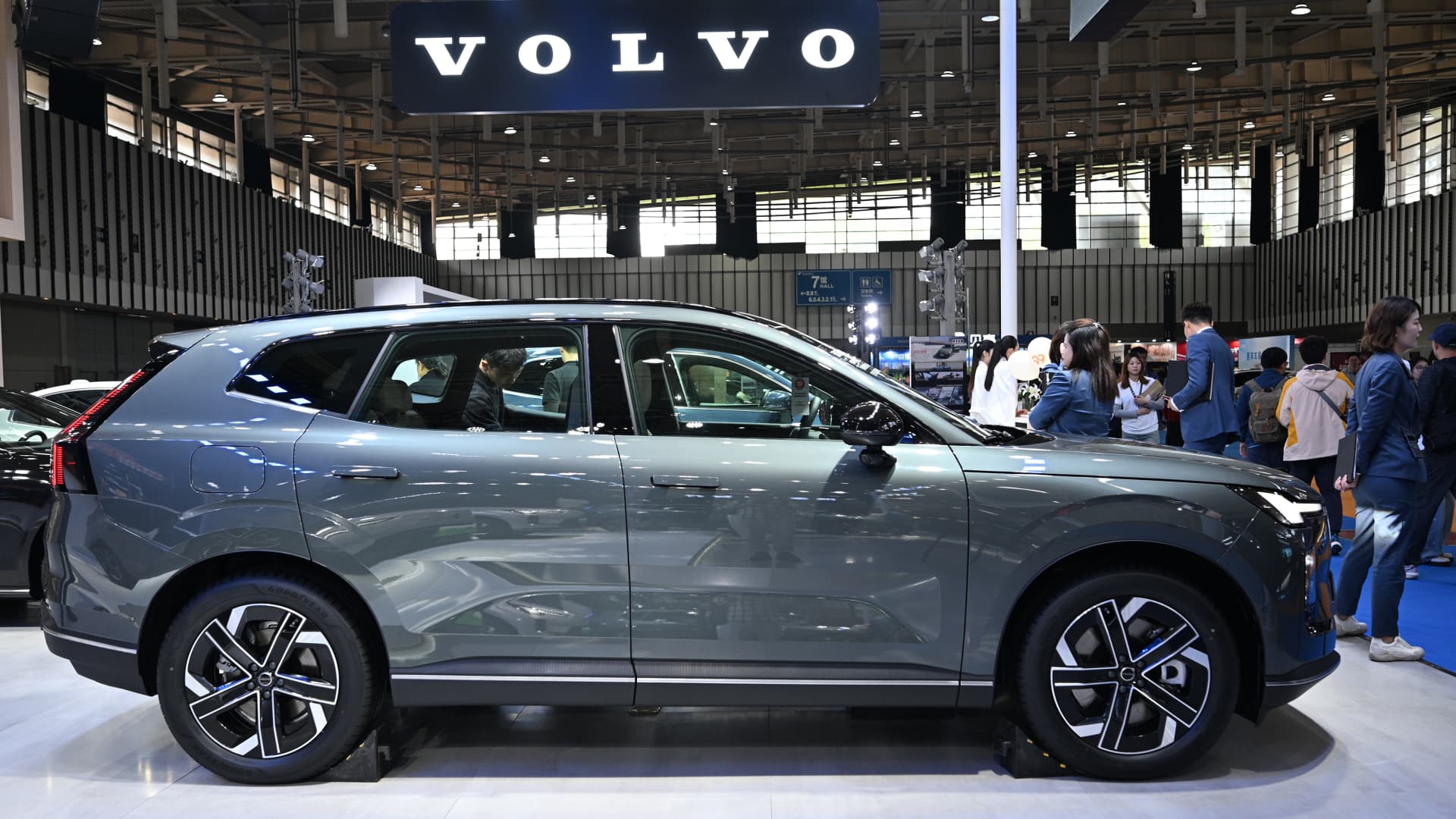
Volvo Cars (VLVOF) shares experienced a precipitous 27% decline following its third-quarter earnings report, revealing an operating loss of 5.6 billion Swedish kronor ($563.7 million) for the period. This dramatic revaluation stems primarily from a sharp and unanticipated decline in its critical Chinese market, alongside pressures in the U.S., necessitating a significant strategic recalibration for the Swedish automaker.
💎 Strategic Investment & Portfolio Insights
- China Market Contraction Accelerates. Volvo’s Q3 operating loss is directly linked to a nearly 50% year-on-year revenue fall in China, reflecting heightened domestic competition and a swift shift in consumer preferences, significantly impacting overall profitability and free cash flow.
- Mandatory Strategic Overhaul. CEO Håkan Samuelsson underscored the urgent need for a new, regionally-adapted strategy for China, emphasizing localized vehicle development, software integration, and platform sharing with parent Geely, signaling a fundamental shift away from globalized product lines for that market.
- Aggressive Cost Reduction Initiatives. The company announced plans to cut 2,500 jobs globally (2,000 in Sweden) and reduce costs by 5 billion SEK, indicating a proactive, albeit painful, response to challenging market conditions and a commitment to leaner, more regionally focused operations.
The operating loss marks a stark contrast to the 6.4 billion Swedish kronor operating profit reported in the previous period. Volvo Cars, majority-owned by China’s Geely Holding, attributed the deteriorating performance to “tougher” market conditions in both China and the U.S., which “negatively affected free cash flow.” CEO Håkan Samuelsson elaborated on CNBC’s ‘Squawk Box Europe’, stating, ‘It’s really a lot about the Chinese market, of course, where the change has come faster than we thought, and really now we can see that selling global cars developed in Europe and China will not work, and then this is affecting all the Western players in China.’
Chinese consumers are increasingly opting for “domestic alternatives,” which have grown “stronger and more competitive,” according to Samuelsson. This necessitates a fundamental shift for market analysis and strategy, moving towards a more regional structure with empowered local teams and “regionally adapted cars.” Beyond product localization, the CEO stressed the importance of cost competitiveness and sharing platforms with Geely, as well as developing key software, including infotainment and driver-assistance systems, directly in China. Without such localized capabilities, Samuelsson believes, ‘you cannot sell cars in China.’
- Hypercompetition in China: Premium brands face intense pressure from new Chinese rivals, leading to severe pricing challenges.
- U.S. Market Headwinds: Tariffs and fewer customer incentives for electric vehicles have also impacted profit margins, creating a dual challenge for the automaker.
- Global Restructuring: The announced 5 billion SEK cost-cutting initiative and 2,500 job eliminations reflect a structural adaptation to these new market realities, focusing on a leaner central administration and stronger regional empowerment.
The impact on portfolio positioning from such a dramatic revaluation of a major automotive player is significant. Shifting consumer preferences in China towards domestic EV brands, coupled with a challenging macroeconomic landscape and geopolitical trade tensions, triggers an immediate re-evaluation of Western automaker exposure. This could lead to a strategic underweighting of legacy European auto manufacturers within growth-focused portfolios, particularly those with substantial reliance on the Chinese market and less agile localized product development. Investors might shift capital towards companies demonstrating proven regional adaptation strategies or those with diversified geographical revenue streams.
The precipitous decline in Volvo Cars shares signals a broader recalibration of expectations for global automakers heavily reliant on mature, centralized product development. Astute investors will scrutinize balance sheets for agility in regional adaptation, recognizing that market share in critical geographies like China is now a localized battleground, demanding bespoke strategies rather than broad-stroke globalization.
While the immediate share price reaction is sharp, a deeper dive into the numbers reveals the operational shifts at play:
| Metric | Value | Significance |
|---|---|---|
| Q3 Operating Loss | 5.6 billion SEK | Highlights direct financial impact of China market downturn. |
| Previous Period Operating Profit | 6.4 billion SEK | Illustrates the sharp reversal in profitability. |
| Proposed Cost Cuts | 5 billion SEK | Indicates management’s commitment to efficiency and recalibration. |
| Global Job Cuts | 2,500 employees | Reflects organizational restructuring to align with new strategy. |
| China Revenue Decline | ~50% Year-on-Year | Specific measure of the market challenge driving overall losses. |
Volvo Cars Competitive Benchmarking: Navigating the EV Landscape
In China, the landscape for premium automotive brands has transformed rapidly. While global market trends show a surge in EV adoption, the local market is increasingly dominated by formidable domestic players like BYD, Nio, Xpeng, and even Geely’s own burgeoning brands. These companies benefit from strong local supply chains, agile product development cycles tuned to Chinese consumer preferences (especially in smart cockpit features and battery technology), and often aggressive pricing strategies. Tesla also maintains a significant presence, intensifying pricing pressure across the premium EV segment. Volvo Cars, traditionally known for safety and quality, must now aggressively innovate not just in powertrain, but in digital user experience and local brand appeal to recapture mindshare against these indigenous challengers. This necessitates a fundamental shift in its approach, as highlighted by its CEO, acknowledging that a ‘developed in Europe’ model no longer guarantees success in China.
Volvo Cars Risk-Reward Matrix: A Deeper Dive
The investment thesis for portfolio strategy concerning Volvo Cars now hinges on a complex risk-reward profile. The immediate risks are substantial: continued volatility and declining sales in China, execution risk associated with a rapid strategic overhaul, intense competition in the global EV transition, and the potential for escalating geopolitical trade tensions affecting U.S. sales. Furthermore, a significant restructuring and job cuts, though necessary, can impact employee morale and short-term operational stability. However, potential rewards exist. Volvo Cars benefits from the backing of its financially robust parent, Geely, which could facilitate technology sharing and investment in localized strategies. Its strong brand reputation for safety and quality remains a foundational asset. A successful and swift regional adaptation in China, coupled with effective cost management and product innovation tailored to local preferences, could allow the company to regain market traction and unlock new growth avenues. The key will be the pace and efficacy of this transformation, as investors seek signs of tangible progress.
Volvo Cars’ Strategic Reorientation: Charting a New Path
The recent downturn in educational market insights regarding Volvo Cars highlights a critical inflection point for the company and the broader automotive industry. The rapid evolution of the Chinese market, demanding highly localized products and software, has forced Volvo to confront the limitations of its traditional globalized model head-on. This strategic shift towards regional empowerment and bespoke solutions will be crucial for its long-term viability and competitive standing.
- Volvo’s ability to execute a swift and effective regional restructuring in China will be the primary determinant of its future growth trajectory.
- The reliance on sharing platforms and developing software with Geely signifies a pivotal move towards deep operational integration with its Chinese parent, impacting future product differentiation.
- Investors will be closely monitoring the progress of the 5 billion SEK cost-cutting program and the impact of job reductions on operational efficiency and competitive pricing, as reported by Reuters business news.
Can Volvo Cars successfully pivot its operational and product strategy to thrive in a hyper-competitive, regionally fragmented global automotive landscape, or will it remain an example of Western auto industry challenges?
### 📊 StockXpo Analyst’s View
Market Impact: The steep drop in Volvo Cars shares is a stark reminder to investors about the increasing localization demands in key growth markets, especially China. This event will likely dampen investor sentiment towards European automakers with significant, undiversified exposure to China, prompting a reassessment of valuation models that may not fully account for geopolitical and regional competitive pressures. Liquidity in legacy auto stocks could tighten as funds rotate towards more agile, regionally-focused players or those with robust, diversified global footprints.
Sector To Watch: The automotive sector, particularly premium and electric vehicle segments, remains under intense scrutiny. Companies demonstrating rapid technological adaptation, deep local market understanding (especially for software and digital features), and resilient supply chains are poised to outperform. Beyond traditional OEMs, look to automotive software providers, battery technology innovators, and even semiconductor manufacturers as critical enablers whose performance will dictate the success of the broader industry’s transformation.
Financial Disclaimer:
StockXpo.com is a financial news aggregator and educational portal, not a registered investment advisor or broker-dealer. All information, news, and analysis provided herein are strictly for educational purposes and do not constitute investment, financial, legal, or tax advice. Investing in the stock market involves high risks, and past performance is not indicative of future results. StockXpo will not be liable for any financial losses or investment damages. Always consult a certified financial advisor before making market decisions.
MORE IN INSIDE INVESTMENT NEWS

Procter & Gamble Earnings: Alpha Generation from Consumer Staples Resilience
Published: Thursday, October 22, 2026 · 7:39 AM
Carrefour Shares Plunge 14%: Navigating European Retail Volatility
Published: Wednesday, October 21, 2026 · 6:29 AM


