Published: Tuesday, September 15, 2026 · 8:31 AM | Updated: Tuesday, September 15, 2026 · 8:31 AM
📊 282 views




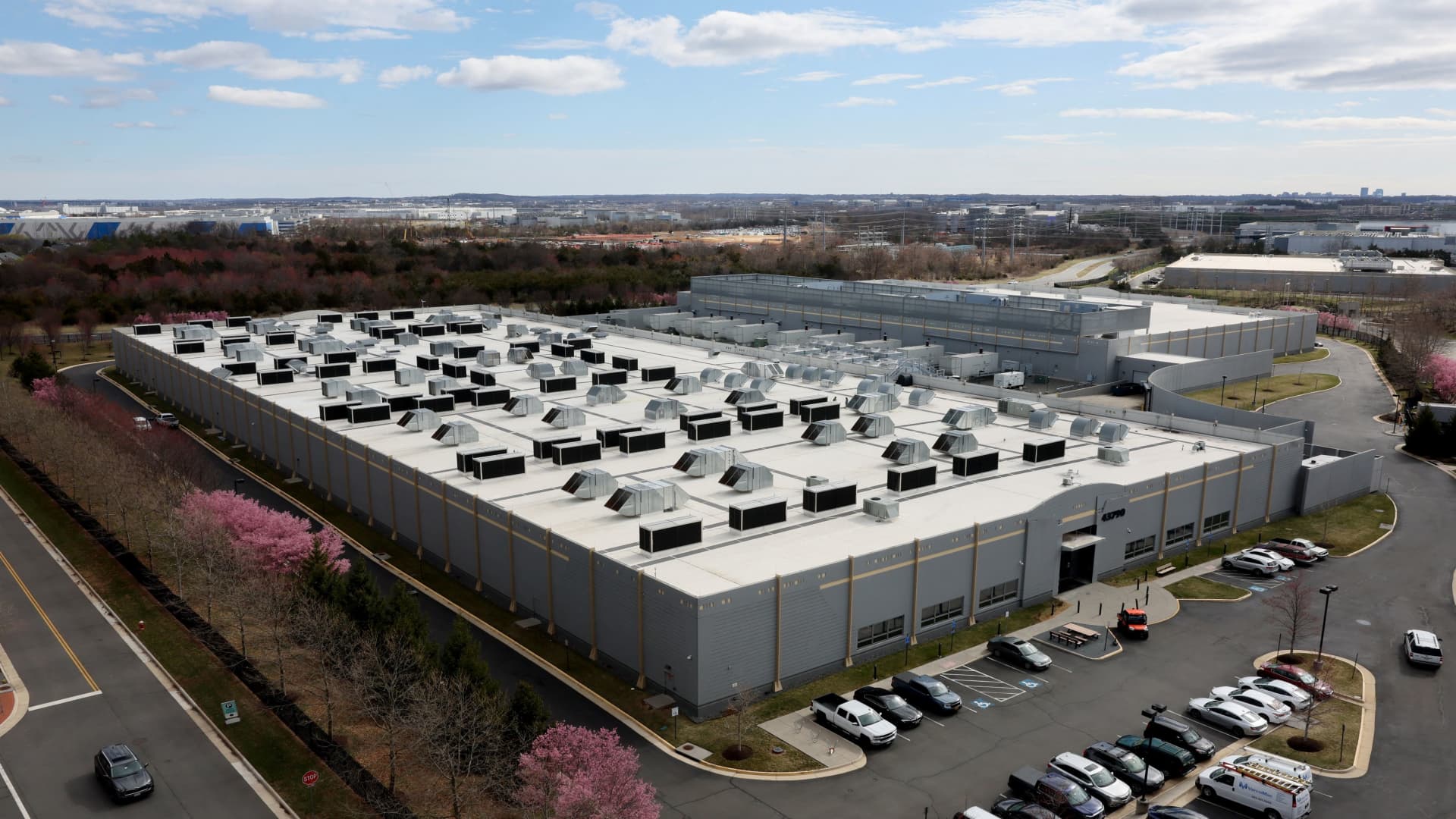
Recent calls for a pace reduction in artificial intelligence development have cast a shadow over related tech stocks, impacting major data center REITs like Digital Realty (DLR) and Equinix (EQIX). Despite market jitters regarding a potential AI slowdown, Digital Realty’s CEO, Andrew Power, asserts that underlying digital transformation and cloud computing trends continue to fuel robust demand for data center capacity. This perspective suggests a more nuanced market reality beyond the immediate headlines impacting some AI-pure plays.
🚀 Tech Strategy & Market Disruptions
- Diversified Demand Drivers. Digital Realty emphasizes that digital transformation and cloud growth remain significant, even if AI development moderates.
- Inference Over Training Focus. Industry analysts highlight the long runway for AI adoption, particularly in ‘inference,’ which is a substantial driver of future data center demand.
- Strategic Capital Management. Major data center operators are evolving funding models, leveraging private capital and joint ventures to manage significant capital expenditure requirements.
The notion of an AI slowdown has prompted immediate investor reaction, visible in the recent slump of data center REITs such as Digital Realty and Equinix. Historically, artificial intelligence has rapidly become the dominant demand driver for data center capacity, with McKinsey reporting projections that AI could account for approximately 70% of global data center demand by 2030. This projection underscores an estimated $7 trillion capital outlay to meet total data center demand by 2030, with real estate alone demanding $3 trillion in investment over the next five years, according to JLL.
However, Digital Realty CEO Andrew Power contextualizes this sentiment by noting that a deceleration in AI development, as proposed by major players like Anthropic and OpenAI, does not equate to a halt in the broader digital economy. He argues that significant digital transformation and cloud computing growth continue independently of the most advanced AI model training. Power suggested that hyperscalers have, in fact, been forced to prioritize between expanding their commercial cloud offerings and dedicating capacity to AI research labs, indicating a pre-existing tension in resource allocation.
This strategic trade-off highlights several critical market realities:
- Hyperscaler Capacity Allocation: Major cloud providers navigate a complex balance between serving existing commercial cloud clients and fueling AI innovation.
- Persistent Enterprise Demand: Digital transformation initiatives by businesses, independent of bleeding-edge AI models, continue to drive significant data center needs.
- Geographic Specificity: Demand is not uniform, with key global hubs experiencing chronic undersupply due to infrastructure requirements and data sovereignty laws.
Crucially, the impact of any AI slowdown is not uniform across all markets. Power highlighted that Digital Realty’s core markets—including Northern Virginia, Dallas, Chicago, Singapore, Tokyo, Frankfurt and Amsterdam—are experiencing persistent demand that outpaces supply. These regions benefit from ‘locational sensitivity’ for specific workloads and robust data sovereignty requirements, reinforcing their strategic importance. For a deeper understanding of broader technology market trends, investors often seek varied analyses.
Andrew Batson, global head of data center research and strategy at JLL, further supports this view by distinguishing between AI model training and AI inference. He points out that the real growth in data centers for the coming years will largely stem from inference—the widespread adoption of AI tools into daily workflows by businesses and consumers. With only one in four Americans currently using AI daily, the runway for adoption and subsequent data center demand remains substantial, regardless of new model release rates. This outlook is reinforced by significant institutional investment from firms like Blackstone, BlackRock and KKR, signaling strong conviction in the data center sector. For those looking into emerging technologies, this distinction is critical.
‘The market’s reaction to potential AI development pauses overlooks the foundational and relentless surge in digital transformation, cloud adoption, and the impending tsunami of AI inference. Data center infrastructure remains a non-negotiable bedrock for modern enterprise, regardless of the pace of ‘frontier model’ breakthroughs.’
Digital Realty, keenly aware of the capital-intensive nature of its business, has proactively evolved its funding model. This includes raising private capital and engaging in one-off joint ventures to bolster its balance sheet. The company’s development pipeline stands at $20 billion under construction, a significant increase from $10 billion at the end of 2023. This strategic positioning aims to provide maximum liquidity and low leverage, preparing the company for various market conditions, not just an ‘end-of-the-world storm.’
Digital Realty’s Security & Infrastructure Strength
Digital Realty operates a vast global platform with a focus on delivering secure and resilient infrastructure. Its data centers are designed to meet stringent compliance standards and support mission-critical workloads for enterprise, cloud, and content providers. The emphasis on high-density power, cooling, and network connectivity is paramount, especially as AI and advanced analytics workloads demand increasing computational resources. Security protocols, including physical access controls, layered cybersecurity measures, and robust disaster recovery plans, are integral to their offering, appealing to clients concerned about data sovereignty and operational continuity. This robust foundation positions Digital Realty as a critical player in supporting the digital backbone of the global economy.
Digital Realty’s Ecosystem Expansion Potential
Digital Realty’s strategy revolves around expanding its ecosystem to enhance connectivity and service offerings. By cultivating dense interconnections between its global data centers, the company facilitates seamless data exchange for its diverse customer base. This approach attracts cloud providers, network services, and enterprises, creating a vibrant marketplace for digital services. The potential for further growth lies in strategic partnerships, deeper integration with hyperscale cloud environments, and expanding into emerging digital hubs worldwide. Such ecosystem growth not only strengthens its market position but also drives demand for its co-location and interconnection services, even in periods of perceived industry moderation.
AI Slowdown’s Nuanced Impact on Digital Realty’s Trajectory
While AI slowdown headlines have created short-term stock volatility, Digital Realty’s long-term growth trajectory appears robust, anchored by diversified digital demand and strategic capital management. The distinction between AI training and inference, alongside unyielding cloud expansion, provides a critical buffer.
- The immediate market reaction to potential AI development deceleration may be overblown, failing to account for underlying digital transformation trends.
- Digital Realty’s strong capital position and expanding development pipeline ($20 billion under construction) demonstrate confidence in sustained demand, independent of AI’s frontier pace.
- The emphasis on AI inference for daily workflows signals a broad, long-term adoption phase that will continue to drive data center capacity needs.
Will the market’s perception of an AI slowdown truly alter the fundamental infrastructure requirements for global digital growth?
📊 StockXpo Analyst’s View
Market Impact: The initial knee-jerk reaction in data center REIT stocks following AI slowdown warnings suggests a myopic focus on a single demand driver. Institutional investors, however, appear to maintain strong conviction, viewing these assets as foundational to digital economy growth, offering stability against broader market volatility. Liquidity might experience short-term shifts as retail investors react, but long-term capital inflow into data infrastructure remains solid.
Sector To Watch: While hyperscale cloud providers remain key, the enterprise sector’s ongoing digital transformation and the increasing need for edge computing will be significant drivers. Industries heavily reliant on data processing and storage, regardless of cutting-edge AI model training, stand to gain from continued data center expansion. Explore more educational tech insights for informed decisions. Furthermore, for in-depth analysis of global tech trends, Reuters technology reports offer crucial perspectives.
Financial Disclaimer:
StockXpo.com is a financial news aggregator and educational portal, not a registered investment advisor or broker-dealer. All information, news, and analysis provided herein are strictly for educational purposes and do not constitute investment, financial, legal, or tax advice. Investing in the stock market involves high risks, and past performance is not indicative of future results. StockXpo will not be liable for any financial losses or investment damages. Always consult a certified financial advisor before making market decisions.
MORE IN INSIDE TECHNOLOGY

AI Buildout Hits Credit Headwinds: Neoclouds Under Pressure
Published: Saturday, October 24, 2026 · 12:23 AM

SK Hynix Shares Rebound: A Strategic Shift in Semiconductor Funding
Published: Friday, October 23, 2026 · 1:46 AM