Published: Monday, October 5, 2026 · 7:16 AM | Updated: Monday, October 5, 2026 · 7:16 AM
📊 710 views




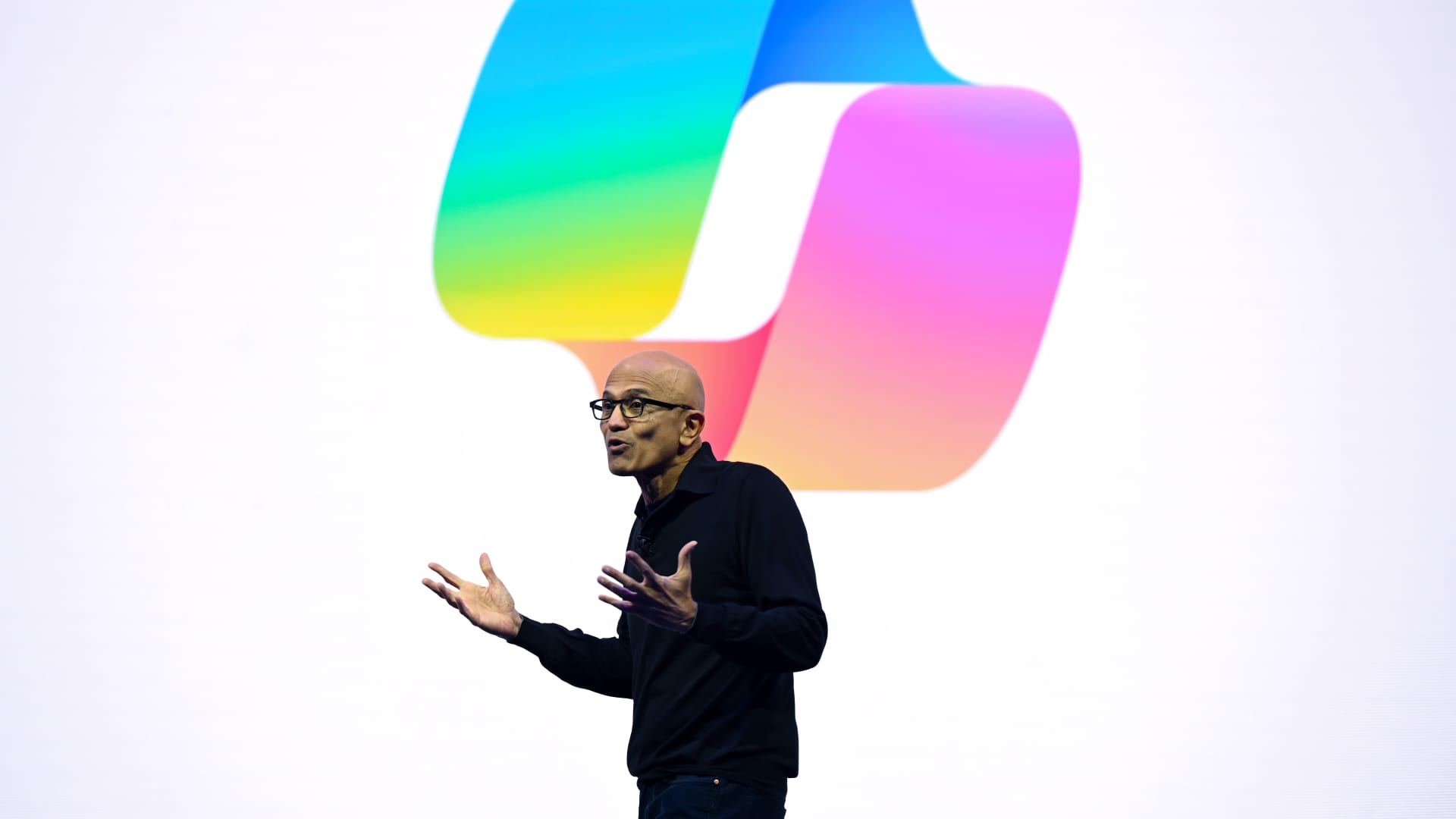
Satya Nadella, credited with Microsoft’s dramatic transformation into a cloud computing giant, now faces his most significant challenge yet: charting the company’s course in the rapidly evolving AI Era. With a market capitalization nearing $4 trillion, Microsoft is striving to solidify its position as a dominant force amid intense competition from specialized AI firms and established tech rivals.
The company’s strategy hinges on widespread enterprise adoption of AI tools and a fundamental shift in its business model towards consumption-based pricing, signaling a pivotal moment for both Microsoft and the broader technology market trends.
🚀 Tech Strategy & Market Disruptions
- Consumption-Based AI Pricing. Microsoft is pivoting from traditional subscriptions to usage-based billing for AI services, measuring compute usage in ‘tokens’ to reflect actual value delivered.
- Copilot Ecosystem Expansion. The centerpiece of Nadella’s AI strategy involves making Copilot pervasive across enterprise functions, from coding assistance (GitHub Copilot) to a ‘super app’ for non-technical workers.
- Strategic AI Alliances & Internal Development. Despite an early, substantial investment in OpenAI, Microsoft is bolstering its internal AI model development under Mustafa Suleyman, creating a ‘frontier ecosystem’ that integrates various leading models.
Under Nadella’s stewardship since 2014, Microsoft successfully transitioned from a legacy software vendor to a cloud powerhouse, embracing subscription-based software-as-a-service (SaaS) and opening its ecosystem to rival products. This track record, marked by strategic acquisitions like LinkedIn and GitHub, underpins investor confidence in his ability to navigate the current shift. However, the AI Era presents unique challenges, pushing Microsoft to innovate its economic model once more.
Nadella emphasizes the ‘diffusion inside the enterprise,’ advocating for AI tools to be widely deployed across organizations. This vision extends beyond mere code assistance to ‘agentic coding’ and the concept of a ‘software factory,’ where AI autonomously generates and refines code, significantly accelerating development cycles for clients. The newly unveiled Copilot ‘super app’ further exemplifies this ambition, designed to perform complex tasks and generate simple applications for knowledge workers.
Microsoft’s early investment in OpenAI yielded GitHub Copilot, an influential coding tool. However, market share erosion to AI-native startups like Cursor and Anthropic’s Claude Code exposed Microsoft’s need for greater agility and a more responsive pricing model. GitHub Copilot’s subsequent shift to consumption-based pricing, which led to a 60% acceleration in sales growth from the previous quarter, serves as a crucial learning experience for the broader company.
- Microsoft’s Market Cap: Nearly $4 trillion, yet trailing megacap peers in 2026 stock performance.
- Copilot Adoption: 30 million Copilot seats compared to over 450 million commercial Office 365 users.
- GitHub Copilot Growth: Racked up 50 million users, up from 26 million, with 60% sales growth acceleration after new pricing.
- AI Leadership Gap: Competitors like Nvidia (chips), OpenAI/Anthropic (models), Meta (personal agents), and Google (Gemini) currently hold more definitive leadership positions in specific AI segments.
The strategic move towards consumption-based billing, or UBB, is a direct response to market dynamics and intense competition. Microsoft’s marketing chief for AI at work, Jared Spataro, noted that the economics of fixed-price per user per month became unsustainable against rivals offering more flexible, usage-dependent models. This shift, exemplified by Copilot Cowork, aims to align Microsoft’s revenue more directly with the value customers derive from AI tools, potentially leading to higher ‘token bills’ as seen with competitors like Claude Code, as noted by Cowen analyst Derrick Wood.
The transition from a fixed subscription model to consumption-based pricing for AI services creates a profound Disruption Flow within enterprise software. Previously, companies paid a flat fee, regardless of actual AI utilization. With UBB, the direct link between usage (tokens, compute) and cost introduces a new layer of financial optimization and risk management for IT departments. This direct correlation drives companies to intensely evaluate the ROI of every AI interaction, pushing developers towards more efficient models and incentivizing Microsoft to deliver clear, measurable value. The consequence is a re-evaluation of IT budgeting, procurement, and potentially, a faster adoption curve for AI if the value proposition is clear and cost-effective for high-volume users, while posing a barrier for the budget-conscious who fear ‘draining the bank’ without clear benefit, as observed by David Berry from Directions on Microsoft.
‘In my view, our priority has to be building a frontier ecosystem, not just a frontier model, so value flows broadly across every company, every industry, and every country,’ Satya Nadella shared on his SN Scratchpad website in June, underscoring Microsoft’s strategic pivot towards an integrated, open AI platform approach.
Microsoft Platform Architecture: Fostering a Frontier Ecosystem
Microsoft’s vision for the AI Era is rooted in developing a comprehensive ‘frontier ecosystem’ rather than solely chasing world-beating standalone models. This involves a strategic blend of internal R&D under Mustafa Suleyman, close collaboration with external partners like OpenAI and Anthropic, and leveraging its Azure cloud infrastructure. The architecture supports integrating various AI models – including Microsoft’s proprietary ones for coding and image generation, and third-party solutions – all accessible through a unified Copilot experience. This approach aims to provide customers with choice and flexibility, mitigating reliance on a single model provider while enhancing the performance and cost-efficiency of applications like Teams by integrating Suleyman’s transcription models, as detailed by Executive Vice President Charles Lamanna. The goal is to make AI functionality pervasive across Microsoft’s extensive product portfolio, from developer tools like GitHub to productivity suites, allowing for rapid iteration and feedback loops between model developers and application teams. For more on emerging technologies, visit StockXpo’s technology insights.
Microsoft Market Adoption Challenges: Beyond Early Enthusiasm
Despite Microsoft’s aggressive push into AI, market adoption of its flagship Copilot technology has faced hurdles. While initial enthusiasm for AI is high, enterprises express concerns about product maturity, effective integration, and the financial implications of consumption-based pricing. Tiffany Wade, co-portfolio manager at Columbia Threadneedle, noted that more product maturity is needed before optimal pricing and widespread utility are fully understood. The fear of unpredictable ‘token bills’ remains a significant barrier for budget-conscious IT executives. Furthermore, Microsoft contends with AI-native startups that have rapidly gained traction by offering specialized, highly efficient tools, eroding market share in areas like AI coding. The company is working to demonstrate tangible, quantifiable value from Copilot’s use, aligning its billing models with demonstrable customer consumption, a strategy articulated by Hayete Gallot, Executive Vice President for security products: ‘If they don’t consume, it means we’re not giving value.’ This necessitates a clear communication of ROI and robust governance tools for customers adopting UBB models.
Microsoft’s AI Trajectory: Navigating the Consumption-Based Future
Satya Nadella is once again attempting to redefine Microsoft’s trajectory, shifting its fundamental business model to capture the nascent value of the AI Era. This reinvention focuses on empowering every enterprise function with AI, underpinned by a flexible, consumption-based economic model.
- The shift to usage-based billing (UBB) represents a significant gamble, potentially unlocking massive new revenue streams if customers perceive sufficient value in increased AI consumption.
- Microsoft’s ‘frontier ecosystem’ strategy, integrating multiple AI models via Copilot, aims to offer comprehensive solutions, mitigating the risk of relying on a single, dominant model.
- Sustained investor confidence hinges on Microsoft demonstrating clear, widespread enterprise ROI for its AI tools, particularly Copilot, to justify the premium pricing and consumption model.
Can Microsoft successfully translate its architectural prowess and established enterprise relationships into definitive AI market leadership?
📊 StockXpo Analyst’s View
Market Impact: Microsoft’s aggressive pivot to consumption-based AI pricing, while presenting initial adoption hurdles, could fundamentally alter enterprise software economics. If successful, this model could drive significant top-line growth tied directly to AI utility, potentially re-rating MSFT shares as a pure-play AI beneficiary rather than just a cloud provider. However, investor sentiment remains watchful for clear signs of broad enterprise ROI from Copilot, especially given competition and the opaque nature of initial ‘token’ costs. Read more expert analysis on Bloomberg Technology.
Sector To Watch: The cloud computing sector, particularly Azure, is central to Microsoft’s AI strategy, as it provides the underlying infrastructure for AI model development and deployment. Furthermore, industries ripe for ‘software factory’ adoption, such as financial services and advanced manufacturing, stand to gain significantly from increased AI-driven development efficiency. The shift to UBB will also put pressure on traditional SaaS providers to adapt their pricing models, potentially triggering a wider industry transformation. For educational tech insights, explore the StockXpo blog.
Financial Disclaimer:
StockXpo.com is a financial news aggregator and educational portal, not a registered investment advisor or broker-dealer. All information, news, and analysis provided herein are strictly for educational purposes and do not constitute investment, financial, legal, or tax advice. Investing in the stock market involves high risks, and past performance is not indicative of future results. StockXpo will not be liable for any financial losses or investment damages. Always consult a certified financial advisor before making market decisions.
MORE IN INSIDE TECHNOLOGY

SoftBank AI Investment: Malaysia’s $50 Billion Innovation Surge
Published: Monday, October 26, 2026 · 2:37 AM

SpaceX AI Chips: $40 Billion Deal Fuels Innovation-Driven Growth
Published: Sunday, October 25, 2026 · 9:35 PM