
Published: Wednesday, September 9, 2026 · 1:26 AM | Updated: Wednesday, September 9, 2026 · 1:26 AM
📊 238 views




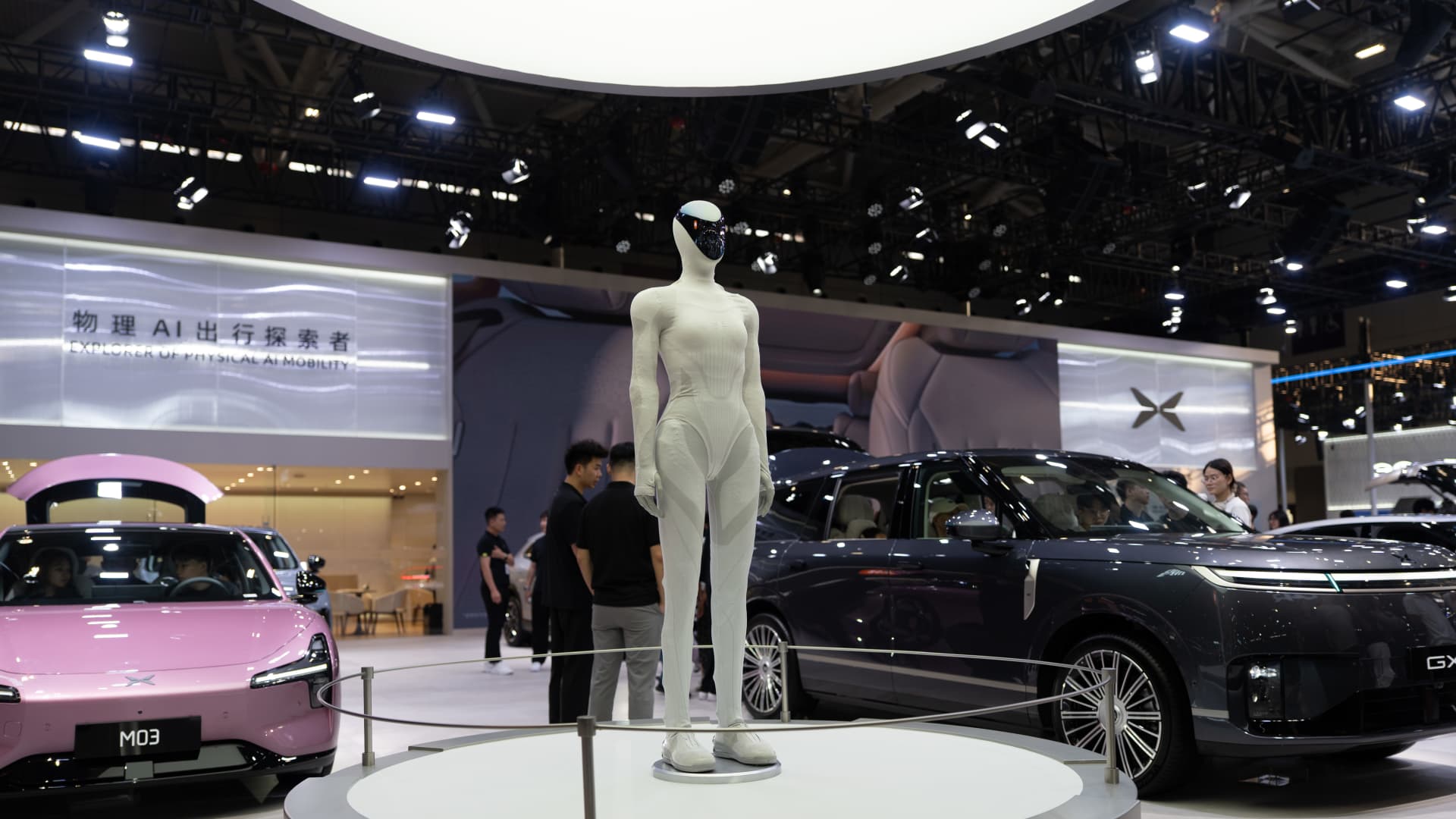
Facing a significant slowdown in their core electric vehicle (EV) markets, China’s leading automakers are aggressively pivoting towards the burgeoning sector of humanoid robots. This strategic shift is designed to recalibrate capital valuation narratives and establish new growth frontiers, even as the commercial viability of these advanced machines remains under scrutiny.
💰 Financial Strategy & Market Insights
- Strategic Diversification. Chinese EV manufacturers like Xpeng and Nio are investing heavily in humanoid robots to offset slowing EV sales and reshape their tech company image.
- Valuation Recalibration. This pivot aims to create new growth drivers and address declining profitability in the traditional vehicle manufacturing sector, which saw only a 1.5% average profit margin in H1 2026.
- Early Investor Skepticism. Despite significant investments, such as Xpeng’s $900 million raise for its robotics unit (valued at $6.3 billion), investor confidence remains low, reflecting uncertainty about commercialization timelines.
The landscape of China’s automotive industry is undergoing a profound transformation. A decade after a rapid expansion into electric vehicles, major players are now channeling substantial capital into the development of humanoid robots, signaling a broader re-evaluation of long-term investment trends. This shift comes as the domestic EV market faces its most challenging period since 2021, marked by intense competition and significant sales downturns, as reported by Reuters. Companies like Xpeng, whose shares have plummeted over 45% this year, and BYD, down more than 13%, are actively seeking new avenues for growth and a more favorable capital valuation narrative.
According to Counterpoint Research, Chinese automakers now constitute over half of the nearly 20 global car companies venturing into the humanoid robotics sector. This expansion encompasses in-house development, direct investment, and incubation of robotics startups. For instance, Nio’s venture arm has strategically invested in companies like LimX Dynamics and Acorn Robot, as highlighted by Forbes. This aggressive diversification is a direct response to weakening profitability within China’s vehicle manufacturing sector, which reported a slim 1.5% average profit margin in the first half of 2026, according to the China Association of Automobile Manufacturers (CAAM).
Fitch Ratings’ Jing Yang notes this is a ‘natural strategic move’ for EV companies to pursue alternative growth drivers, leverage shared advanced technologies for economies of scale, and potentially improve profitability over the medium term. However, market enthusiasm appears muted. Xpeng’s shares saw further declines even after the company announced a monumental $900 million fundraising round for its robotics business, reportedly the largest single round in China’s ’embodied’ AI industry. This unit is now valued at an estimated $6.3 billion by Citi, almost on par with Xpeng’s core EV business value of $6.5 billion. The disconnect between internal valuations and external market reactions underscores the cautious investor sentiment regarding this nascent sector.
While mirroring Tesla’s Optimus efforts in the U.S., Chinese automakers like Xpeng and Xiaomi present distinct advantages. Jefferies Hong Kong senior research analyst Xiaoyi Lei points out that these companies can reuse up to 85% of existing supply chain components, including motors, chips, and smart driving software, for their humanoid projects. This synergy allows for immediate deployment of robots within their own factories and retail stores, providing a unique feedback loop for data collection—a critical factor for the commercialization of humanoid technology.
Xpeng, for example, aims for mass production of its robots by the end of this year, with initial deployment in its own venues before a broader market launch in China and overseas next year. This in-house application strategy makes collecting vital operational data both easier and more cost-effective. Xiaomi, which entered the EV market only in 2024, is already testing humanoid robots in its factories, demonstrating a proactive approach to integration. This contrasts with waiting for consumer adoption, offering a faster path to refining robot capabilities and ensuring reliability and serviceability at scale—a competence Chinese automakers possess from their vehicle production expertise.
- Supply Chain Synergy: Chinese EV makers can repurpose a significant portion of their existing supply chain for robotics, reducing development costs and accelerating deployment.
- In-house Deployment Advantage: Automakers can immediately utilize robots in their own factories and stores, facilitating rapid data collection crucial for commercialization.
- Mass Production Expertise: The inherent capability of automakers to produce complex machines at scale positions them uniquely to manufacture reliable, serviceable robots efficiently.
Navigating the Humanoid Frontier: Risk vs. Reward
- Upside Potential:
- New Revenue Streams: Successful commercialization could unlock entirely new, high-margin business segments, diversifying from the competitive EV market.
- Technological Leadership: Early and effective deployment of humanoid robotics could establish these companies as global leaders in advanced AI and automation.
- Operational Efficiencies: In-house deployment can enhance manufacturing and logistics efficiencies, leading to cost savings and improved productivity.
- Downside Risks:
- Unproven Commercial Viability: The broader market demand for humanoid robots outside of industrial applications remains highly speculative, with commercialization potentially years away.
- High R&D Costs: Significant capital investment is required for continued research and development, potentially straining balance sheets without immediate returns.
- Execution Challenges: Adapting smart driving AI algorithms for the more complex and varied humanoid scenarios presents substantial technical hurdles and execution risks.
“Embodied AI, connecting artificial intelligence with physical hardware like humanoid robots, represents a convergence of advanced robotics and machine learning. For investors, understanding this integration is key, as it can fundamentally alter a company’s operational leverage and future market positioning, moving beyond software-centric valuations to encompass tangible, intelligent automation assets.”
Key Financial and Market Metrics
- Xpeng Share Performance (YTD): Down >45%
- BYD Share Performance (YTD): Down >13%
- China Vehicle Manufacturing Profit Margin (H1 2026): 1.5% (Source: CAAM via Counterpoint)
- Xpeng Robotics Unit Valuation: $6.3 billion (Citi estimate)
- Xpeng EV Business Valuation: $6.5 billion (Citi estimate)
- Xpeng Robotics Funding Round: $900 million (Largest in China’s ’embodied’ AI industry)
- Chinese Automakers in Robotics: Account for over 50% of global car companies in the sector (Counterpoint)
Xpeng Liquidity Analysis: Funding the Future
“Xpeng’s recent $900 million funding round for its robotics unit underscores a significant capital allocation strategy aimed at securing liquidity for its ambitious humanoid robot ventures. While an impressive sum, the market’s initial negative reaction, observed in declining share prices post-announcement, signals investor concern regarding the immediate return on investment and the dilution effect. This dynamic reveals a nuanced liquidity picture: substantial capital is being directed towards long-term, high-risk R&D, potentially impacting short-to-medium term cash flow visibility in its core EV business. For investors tracking broader market analysis, understanding Xpeng’s financial agility in supporting both its EV and robotics arms is crucial for assessing its overall financial health.”
China EV Sector Market Sentiment Tracker: A Cautious Outlook
“Market sentiment surrounding China’s EV sector remains decidedly cautious, driven by fierce competition, pricing pressures, and a notable deceleration in sales growth. The pivot towards humanoid robots by major players like BYD and Nio, while strategically sound for diversification, has yet to galvanize investor enthusiasm, indicating a ‘wait-and-see’ approach. The poor performance of early robotics IPOs, such as Unitree’s post-listing decline despite a strong debut, further exemplifies this skepticism. This suggests that while innovation is recognized, the long road to commercial viability and profitability for these new ventures casts a shadow over the immediate outlook for the sector, making market liquidity more constrained for pure-play EV entities within the broader financial sector.”
The Humanoid Robots Imperative: China’s EV Makers’ Pivotal Shift
“The aggressive foray into humanoid robots by China’s EV manufacturers represents more than just diversification; it’s a critical strategic maneuver to reshape corporate narratives and secure future growth amidst a contracting core market. This high-stakes bet reflects both desperation and prescience, attempting to leverage existing manufacturing prowess into an unproven, yet potentially transformative, technological frontier.”
- The shift could redefine asset valuations, moving away from pure EV metrics towards broader technology company assessments.
- While significant capital is being deployed, immediate commercial returns remain speculative, posing considerable execution and market acceptance risks.
- The ability to leverage existing supply chains and factory deployment offers Chinese firms a unique competitive edge compared to nascent robotics startups.
Will this bold pivot allow China’s EV giants to successfully navigate the rough waters of market saturation and emerge as leaders in the robotics revolution?
📊 StockXpo Analyst’s View
Market Impact: This aggressive shift by Chinese EV makers into humanoid robots introduces significant volatility and re-rating potential across the tech and manufacturing sectors. While it signals a strategic repositioning for long-term growth, the immediate market reaction has been cautious, reflecting concerns over capital deployment efficiency and the extended timeline for commercialization. This could divert investor capital from established EV plays into more speculative, high-tech ventures, impacting overall market liquidity in both segments.
Sector To Watch: Investors should closely monitor the industrial automation and advanced robotics sectors, particularly companies specializing in AI algorithms adaptable to physical tasks. While the EV sector faces ongoing consolidation, the emergent humanoid robotics space could see substantial venture capital and strategic M&A activity, presenting opportunities for early-stage investors willing to absorb higher risk for potentially exponential returns.
Financial Disclaimer:
StockXpo.com is a financial news aggregator and educational portal, not a registered investment advisor or broker-dealer. All information, news, and analysis provided herein are strictly for educational purposes and do not constitute investment, financial, legal, or tax advice. Investing in the stock market involves high risks, and past performance is not indicative of future results. StockXpo will not be liable for any financial losses or investment damages. Always consult a certified financial advisor before making market decisions.
MORE IN INSIDE FINANCE

AI Stock Boom Fuels $67 Billion Equities Growth for Wall Street Giants
Published: Wednesday, October 21, 2026 · 11:03 AM

New Risks Emerge: Global Finance Chiefs Highlight Debt, AI, and Geopolitical Volatility
Published: Tuesday, October 20, 2026 · 2:12 AM


