Published: Saturday, September 5, 2026 · 9:51 AM | Updated: Saturday, September 5, 2026 · 9:51 AM
📊 63 views




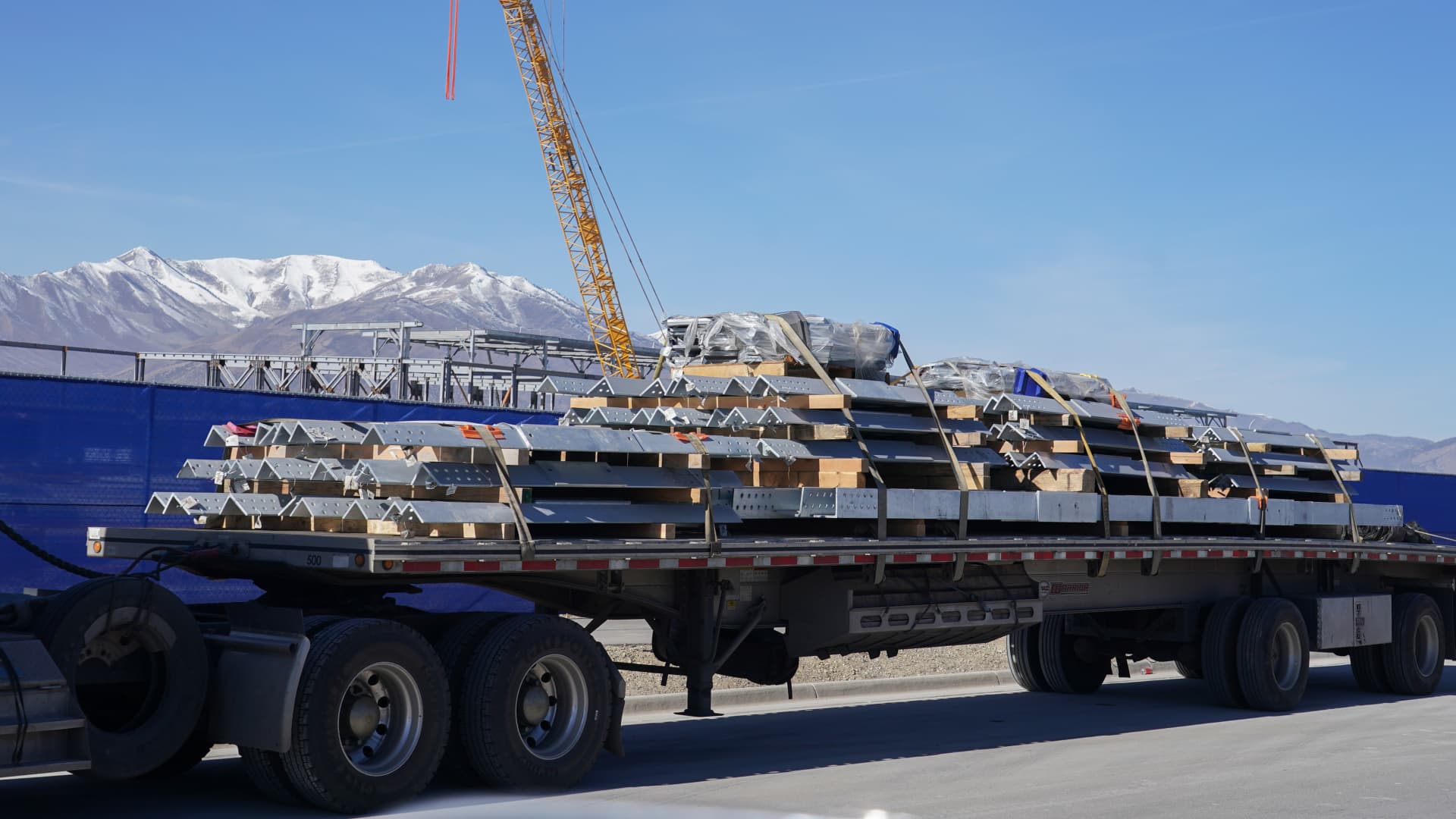
The rapid proliferation of AI data centers across the United States is creating an unexpected and significant economic uplift for the trucking industry. While public discourse often focuses on the broader implications of AI, the foundational infrastructure buildout is translating directly into booming freight demand, revitalizing a sector grappling with fluctuating fuel costs and trade pressures. This surge in construction projects, particularly in rural areas, is not only generating new revenue streams for carriers but fundamentally altering established logistics routes and talent requirements.
🚀 Tech Strategy & Market Disruptions
- Logistics Redefined by AI Demand. The explosive growth of AI data centers is fundamentally reshaping freight demand, shifting routes to non-traditional hubs and boosting specialized transport for heavy components.
- Talent Scarcity in Specialized Haulage. Increased demand for moving oversized data center components exacerbates an already shrinking pool of CDL drivers, diesel technicians, and logistics professionals, driving up hiring timelines and maintenance needs.
- Post-Construction Market Uncertainty. While the construction phase provides a significant boost, communities and carriers must factor in a substantial drop-off in truck traffic once AI facilities are operational, necessitating cautious long-term infrastructure planning.
The nationwide push to establish new AI data centers, often sprawling facilities requiring massive power and cooling infrastructure, has emerged as a critical tailwind for the trucking sector. Components ranging from HVAC systems, tubing, wiring, and critical semiconductors, through to colossal transformers and generators, primarily move by truck. This surge offers a strategic reprieve for freight businesses historically affected by trade tariffs and elevated diesel prices. Patrick Brennan, senior vice president at Cox Fleet, highlighted that while overall freight demand remains uneven, the surge in data center activity presents new opportunities for fleets. This perspective is often mirrored in global tech reporting from leading news outlets, confirming the stability this sector provides.
The impact is particularly pronounced in specialized segments of the trucking industry. Flatbed and heavy haul operations are experiencing multi-year highs in spot rates, with capacity tightening significantly in construction-heavy markets. Brennan emphasized that this niche has been on ‘an absolute tear since last year,’ directly attributable to the buildout requirements of these vast computing hubs. The logistical landscape is also evolving, with site location decisions for AI data centers driven by factors like power availability and land cost, often diverting freight into areas not traditionally considered major logistics hubs. This dynamic ‘reshapes routes as much as it adds volume,’ creating new supply chain patterns.
Jennifer Lockett, freight factoring operations manager at altLINE, affirmed that smaller trucking companies are also capturing a share of this new business. The demand for moving massive transformers, generators, concrete, and other construction materials creates opportunities for these carriers to secure new customers and expand into new lanes. However, Lockett also highlighted associated growing pains, noting that increased volume often necessitates additional trucks, drivers, and equipment. This expansion can strain cash flow, particularly when carriers incur upfront costs for fuel, labor, and maintenance before receiving payment. ‘Still, the bigger story is how much new freight activity these projects can generate for trucking businesses,’ she observed.
The ripples of data center construction extend beyond immediate haulage. Janelle Griffith, global logistics practice leader at Marsh, pointed out that the new trucking business permeates the entire freight ecosystem. As projects accelerate in rural areas—where 67% of planned data center developments are situated, and 39% are in counties previously without such facilities—demand increases for supporting materials, fuel, and drivers across surrounding regions. Griffith emphasized that data centers serve as a central node, not the endpoint, of a much larger AI-driven supply chain renaissance affecting diverse sectors, from storage facilities to warehouses. Even components moved by rail typically require final-mile trucking from terminals to construction sites, bolstering demand for less-than-truckload (LTL) services, a segment that has been soft, as evidenced by the 2024 bankruptcy of Yellow Trucking. This suggests a broader uplift across key technology market trends.
The escalating demand for high-performance computing to power generative AI and advanced analytics is a primary driver. This demand directly translates into a requirement for vast new physical infrastructure: AI data centers. The construction of these hyperscale facilities necessitates an unprecedented volume of specialized components and raw materials. This directly causes a surge in demand for heavy haul and flatbed trucking services, leading to capacity tightening and higher spot rates in specific logistics markets. The disruption then extends to geographic shifts in freight routes as data centers often locate in rural areas, creating new hubs for transportation. Ultimately, this dynamic drives significant economic activity and job creation within the logistics sector, albeit with a time-bound peak during the construction phase.
‘The logistical backbone supporting AI’s physical footprint is not merely an auxiliary service; it’s a critical enabler. Without robust, specialized transportation, the deployment timelines and cost efficiencies of these massive computing infrastructures would be fundamentally compromised. This interaction highlights how tangible industries underpin even the most ethereal technological advancements.’
- 67% of planned data center developments are projected for rural areas.
- 39% of planned facilities are located in counties currently without any existing data centers.
- Diesel fuel prices reached an all-time high of $5.85 a gallon, impacting carrier operating costs.
Navigating Market Adoption Challenges in Logistics
While the AI data center boom presents a clear opportunity for the trucking industry, several market adoption challenges persist. One significant hurdle is the long-term sustainability of demand. Experts like Kyre Lahtinen, associate teaching professor of finance at Wake Forest University, caution that the intense trucking activity during construction phases experiences an ‘extraordinary drop off’ once a data center is operational. Unlike warehouses that require consistent logistics support for goods delivery, data centers demand comparatively little post-build freight traffic. This creates a potential boom-and-bust cycle for local economies and carriers that over-invest in infrastructure or capacity based solely on the construction phase. Additionally, the specialized nature of heavy haul and flatbed freight requires skilled drivers and specific equipment, further intensifying an existing talent shortage in the transportation sector.
Ecosystem Expansion Potential in AI Logistics
Beyond the immediate construction phase, the broader AI ecosystem still offers considerable expansion potential for logistics. Kyle Roberts, vice chairman of industrial & logistics/capital markets at Newmark Mountain West, highlights that a ‘massive ecosystem’ surrounds these facilities, with all components having continuous trucking demands, even if at a reduced scale post-construction. This includes ongoing maintenance, upgrades, and the movement of server racks and cooling units. The decentralization of data centers into rural areas also creates opportunities for regional trucking hubs, warehousing, and maintenance support businesses to emerge in previously underserved markets. Companies that can pivot to offer ongoing, specialized support services for the operational phase of AI infrastructure, potentially leveraging emerging technologies for predictive maintenance or optimized routing, will likely secure longer-term growth. This includes the demand for fuel, construction materials, and new drivers, which ripples through the surrounding region, as outlined by Janelle Griffith. Analyzing these shifts can provide crucial technology market trends for investors. For deeper business technology insights, platforms like Forbes Technology often cover these intersectional trends.
The Ripple Effect of AI Data Centers on Trucking Futures
The burgeoning construction of AI data centers is undeniably injecting significant vitality into the trucking industry, particularly for specialized haulage. While providing a much-needed economic boost and reshaping logistical frameworks, a measured approach is crucial for long-term planning.
- Short-Term Growth Focus: The primary impact is a robust increase in construction-related freight, offering immediate revenue for carriers.
- Infrastructure Adaptability: Communities and logistics providers must carefully assess infrastructure investments to avoid overcapacity post-construction.
- Talent Development Imperative: Addressing the shortage of skilled drivers and technicians remains critical for sustained growth in specialized freight.
How will the trucking industry adapt its long-term strategies to navigate this temporary boom while preparing for the operational phase of AI infrastructure?
📊 StockXpo Analyst’s View
Market Impact: The immediate uplift for the trucking sector, especially heavy haul and flatbed, is a clear positive, signaling robust economic activity within the industrial and construction segments. This localized boom can drive valuations for logistics providers with specialized capabilities. However, investors should differentiate between cyclical construction-driven demand and sustainable operational freight, as the latter sees a sharp decline. Capital expenditure decisions by trucking firms during this period will be key to long-term profitability.
Sector To Watch: Beyond traditional trucking, the focus should extend to companies providing specialized heavy equipment, modular data center components, and advanced logistics software designed for complex project freight. Infrastructure development firms in regions with high data center concentration, particularly those capable of rapid deployment and talent acquisition, could see significant opportunities. Keep an eye on firms like QTS Realty Trust Inc., mentioned in the article, or others in the data center development space, as their expansion directly dictates this logistical demand, offering valuable educational tech insights.
Financial Disclaimer:
StockXpo.com is a financial news aggregator and educational portal, not a registered investment advisor or broker-dealer. All information, news, and analysis provided herein are strictly for educational purposes and do not constitute investment, financial, legal, or tax advice. Investing in the stock market involves high risks, and past performance is not indicative of future results. StockXpo will not be liable for any financial losses or investment damages. Always consult a certified financial advisor before making market decisions.
MORE IN INSIDE TECHNOLOGY

AI Innovation Fuels Southeast Asia’s Digital Growth
Published: Thursday, October 22, 2026 · 12:36 AM
NextDC Shares Plunge: Power Delays Threaten Australia’s Data Center Growth
Published: Wednesday, October 21, 2026 · 1:50 AM