Published: Monday, August 31, 2026 · 1:38 AM | Updated: Monday, August 31, 2026 · 1:38 AM
📊 148 views




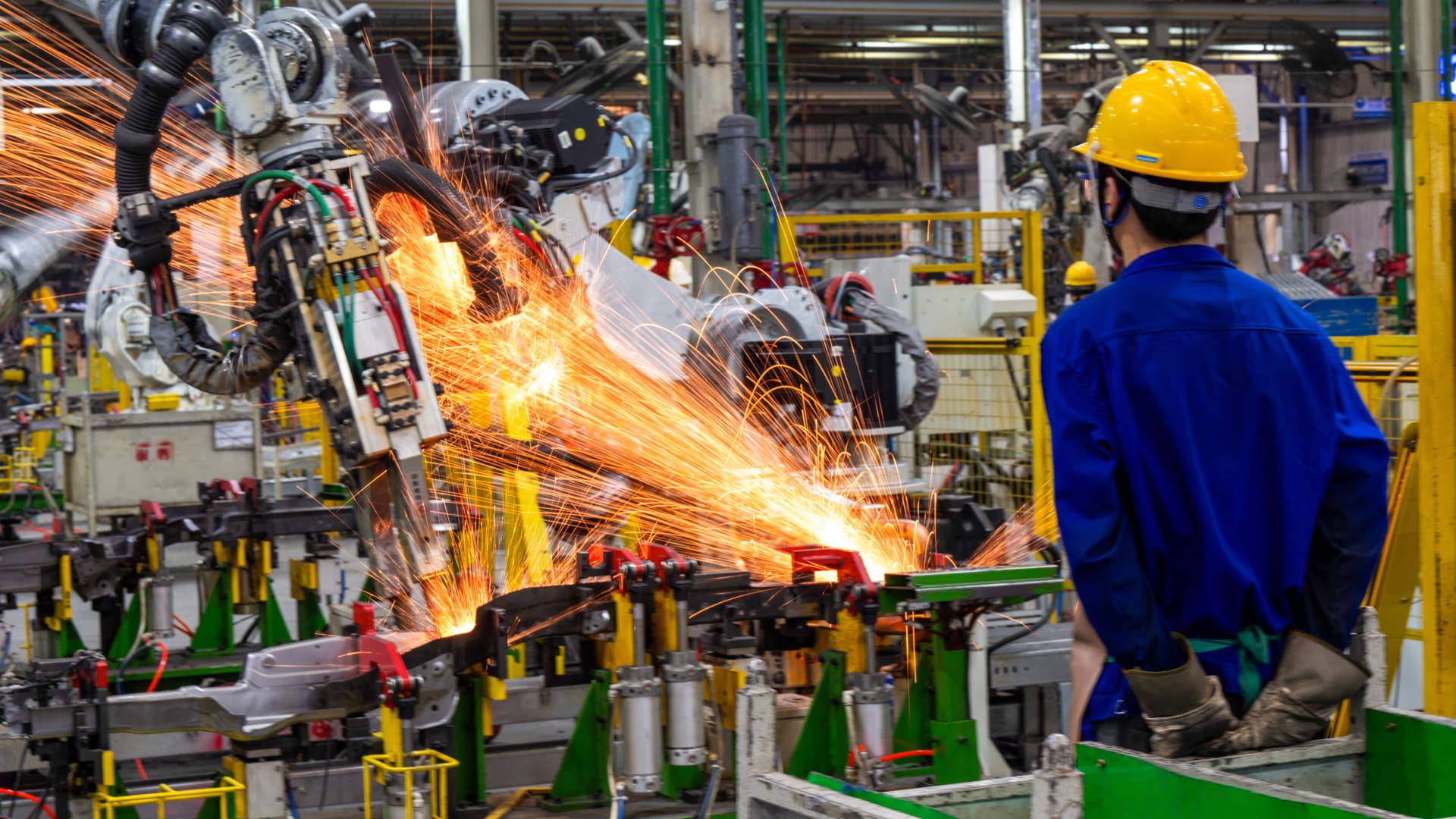
Beijing’s ongoing efforts to stabilize its economy face persistent headwinds as China’s factory activity recorded a second consecutive month of contraction in August, albeit at a slightly slower pace than July. This data point underscores the challenging balancing act policymakers must navigate to counter flagging domestic demand and a prolonged property sector slump, which continue to impact systemic growth.
📊 Macro-Economic Strategic Insights
- Manufacturing Resilience Amid Headwinds. China’s official PMI for August stood at 49.8, slightly outperforming Reuters’ economist forecasts of 49.6, indicating a marginal improvement from July’s 49.2 despite continued contraction.
- Domestic Demand Remains a Drag. Weak consumer spending and a protracted property market downturn are identified as primary drivers behind the economic slowdown, with second-quarter GDP growth at a subdued 4.3%.
- Targeted Stimulus Expected. Economists anticipate increased fiscal spending, particularly by local governments, and accelerated project approvals in the coming months to counteract the collapse in urban investment and bolster domestic activity.
What This Data Really Signals for Beijing
The latest official Purchasing Managers’ Index (PMI) reading of 49.8 for August, though still in contractionary territory, presents a marginally more optimistic picture than the 49.2 reported in July and exceeded analyst expectations of 49.6. This modest improvement in China’s factory activity suggests that while the economy remains under pressure, the pace of deceleration might be easing. Underlying this trend are persistent challenges, notably slowing growth (4.3% in Q2, the weakest since late 2022), soft domestic demand, and an ongoing property sector slump, which together have created significant strain on the world’s second-largest economy.
The economic malaise intensified in the second half of the year, characterized by stalled consumer spending, a faster pace of urban investment contraction, and rising unemployment. Both retail sales and industrial output showed slowing trends in July, while growth in industrial profits cooled to its weakest point this year. This broad-based weakness underscores the necessity for proactive policy intervention from Beijing.
One notable bright spot has been China’s export sector, which has largely sustained growth throughout the year, driven by a global surge in AI infrastructure spending that increased demand for Chinese-made tech goods. Outbound shipments recorded double-digit growth for most of the year, providing a critical buffer against domestic economic softness. August data continued this trend, with new export orders rebounding to 50.1, indicating a recovery in overseas demand even amidst global geopolitical uncertainties.
While overall manufacturing shows signs of stabilization, certain sub-sectors highlight diverging performance. High-tech equipment manufacturing, including electronic machinery and computer communication devices, notably outperformed, with production and new orders readings topping 53. In contrast, consumer goods production lagged at 49, reflecting continued consumer caution. This bifurcated recovery suggests that China’s industrial strategy to pivot towards higher-value manufacturing is bearing fruit, though broader consumer confidence remains a key hurdle for comprehensive recovery. The National Bureau of Statistics (NBS) reported improvements in both production (50.4) and new orders (50.6) sub-indexes, indicating early signs of a demand-side rebound. However, raw material inventories and employment sub-indexes remained below the 50-mark threshold, signaling continued cautiousness among firms regarding future input needs and hiring. Analysts at Pinpoint Asset Management note that recent factory-gate price increases, driven by higher global crude and metal prices, have benefited some upstream manufacturers, though overall demand remains soft (Zhiwei Zhang, Pinpoint Asset Management).
- Key Takeaways from August PMI:
- Official PMI showed marginal improvement (49.8 vs. 49.2), beating forecasts.
- Exports remain a primary growth pillar, particularly in high-tech sectors.
- Domestic demand and property sector remain critical weaknesses requiring targeted policy.
THE RIPPLE EFFECT: Economic Transmission Mechanisms at Play
Understanding the current economic shifts in China requires observing how various factors interlink and cascade through the system:
Weak Domestic Demand → Reduced Industrial Output → Slower Job Creation → Stagnant Consumer Spending
Property Sector Downturn → Reduced Investment in Real Estate → Lower Local Government Revenue → Constraints on Fiscal Spending
Global AI Infrastructure Boom → Increased Demand for Chinese Tech Exports → Support for High-Tech Manufacturing → Partial Offset to Domestic Weakness
Anticipated Fiscal Spending → Accelerated Project Approvals → Boost to Infrastructure Investment → Potential for Broad-Based Economic Rebound
Higher Global Commodity Prices → Increased Input Costs for Manufacturers → Renewed Inflationary Pressures (Factory Gate) → Potential Margin Squeeze for Downstream Firms
EXPERT IMPACT: Deconstructing Contractionary PMI
The Purchasing Managers’ Index (PMI) serves as a critical leading indicator for economic health, providing an early snapshot of manufacturing sector conditions. A reading below 50 signals contraction relative to the previous month, indicating that the sector is shrinking. Conversely, a reading above 50 suggests expansion. While a single month’s contraction isn’t necessarily alarming, consecutive months below 50, as seen in China, underscore sustained deceleration and necessitate close monitoring of policy responses. This provides invaluable insight into the likely trajectory of broader economic activity, influencing market sentiment and strategic investment decisions globally.
STRICT DATA TABLES: Key Economic Indicators for China (August 2026)
The following metrics highlight the immediate context surrounding China’s manufacturing performance:
| Indicator | August 2026 Value | Previous Value (July) | Significance |
|---|---|---|---|
| Official Manufacturing PMI | 49.8 | 49.2 | Indicates a moderated contraction in manufacturing, slightly better than expected. |
| Manufacturing Production Sub-Index | 50.4 | N/A | Signals expansion in factory output, suggesting supply-side recovery. |
| New Orders Sub-Index | 50.6 | N/A | Reflects improving overall demand for manufactured goods. |
| New Export Orders Sub-Index | 50.1 | 49.6 | Marks a rebound in overseas demand for Chinese products. |
| Non-Manufacturing PMI | 49.0 | 49.0 | Services and construction sectors remain in contractionary territory, highlighting broader economic weakness. |
China’s Fiscal Policy Commentary
Beijing’s response to the current economic slowdown is increasingly leaning towards accelerated fiscal support. Policymakers are particularly concerned about the significant contraction in urban investment, which traditionally serves as a key engine for growth. Economist Tianchen Xu from the Economist Intelligence Unit notes that this concern is likely to translate into faster project approvals and fund disbursements, especially from local governments. This focus on fiscal expansion is expected to become more prominent in the fourth quarter, offering crucial support to domestic demand. The government’s push for infrastructure spending and targeted investments aims to offset the reticence of private sector investment and consumer spending, which have been suppressed by persistent uncertainties and the lingering effects of the property downturn. Such measures are vital for stabilizing expectations and preventing a more pronounced economic contraction. Further insights into China’s broader economic policy landscape can be found on StockXpo’s dedicated page for economic policy and macro trends.
Global Benchmarking: China’s Export Resilience
Despite domestic economic challenges, China’s export performance has been a relative outlier, demonstrating surprising resilience in a sluggish global trade environment. The double-digit growth in outbound shipments for much of the year, particularly fueled by demand for tech components related to AI infrastructure, showcases China’s strategic positioning in high-growth technological supply chains. This contrasts with broader global trade slowdowns impacting other major economies. The rebound in new export orders to 50.1 in August, even amidst geopolitical turbulence like the prolonged Middle East turmoil, highlights a robust, albeit specific, external demand channel. This resilience is a critical factor cushioning the overall economic drag from internal weaknesses and offers a unique perspective for global investment analysis and comparison with other major export-driven economies, as discussed on Bloomberg Economics. For a deeper dive into market insights and educational content, StockXpo’s blog section offers extensive analysis.
The Path Ahead for China’s Factory Activity
The latest data on China’s factory activity suggests a delicate balance, with nascent signs of stabilization appearing alongside deeply entrenched structural challenges. While official PMI figures indicate a less severe contraction than anticipated and a rebound in export orders, the persistent weakness in domestic consumption and the property market demands continued vigilance. Beijing’s commitment to accelerated fiscal spending is a critical lifeline, aiming to bridge the gap until private demand can sustainably recover. The bifurcated performance between high-tech manufacturing and consumer goods underscores the ongoing economic transition and the varying impact of global demand. Further data corroborating these trends can be found in Reuters’ economic coverage.
- Beijing’s fiscal interventions are expected to be more impactful in Q4.
- High-tech and export sectors are providing crucial economic support.
- Reviving consumer confidence and stabilizing the property market remain paramount for a broad-based recovery.
Will these targeted policy efforts be sufficient to re-ignite robust, systemic growth across all sectors?
📊 StockXpo Analyst’s View
Market Impact: The moderated contraction in China’s manufacturing sector, coupled with improved export orders, could provide a temporary uplift in global market sentiment, particularly for sectors reliant on Chinese industrial output and technology supply chains. However, persistent domestic demand issues and property sector concerns will temper any significant bullish outlook, keeping investor focus on Beijing’s concrete policy implementation and its effectiveness.
Sector To Watch: The high-tech manufacturing sector, including electronics and communication devices, is poised for continued growth given the sustained global demand for AI infrastructure components. Investors should monitor this segment closely, as its resilience contrasts sharply with the struggles in traditional consumer goods and construction, indicating potential outperformance.
Financial Disclaimer:
StockXpo.com is a financial news aggregator and educational portal, not a registered investment advisor or broker-dealer. All information, news, and analysis provided herein are strictly for educational purposes and do not constitute investment, financial, legal, or tax advice. Investing in the stock market involves high risks, and past performance is not indicative of future results. StockXpo will not be liable for any financial losses or investment damages. Always consult a certified financial advisor before making market decisions.
MORE IN INSIDE ECONOMY

Judy Shelton’s Treasury Role: A Controversial Shift in Economic Guidance
Published: Friday, October 9, 2026 · 7:52 AM
Tariffs Fueled U.S. Inflation: NY Fed’s Clear Economic Signal
Published: Thursday, October 8, 2026 · 8:12 AM