Published: Monday, August 31, 2026 · 2:12 AM | Updated: Monday, August 31, 2026 · 2:12 AM
📊 123 views




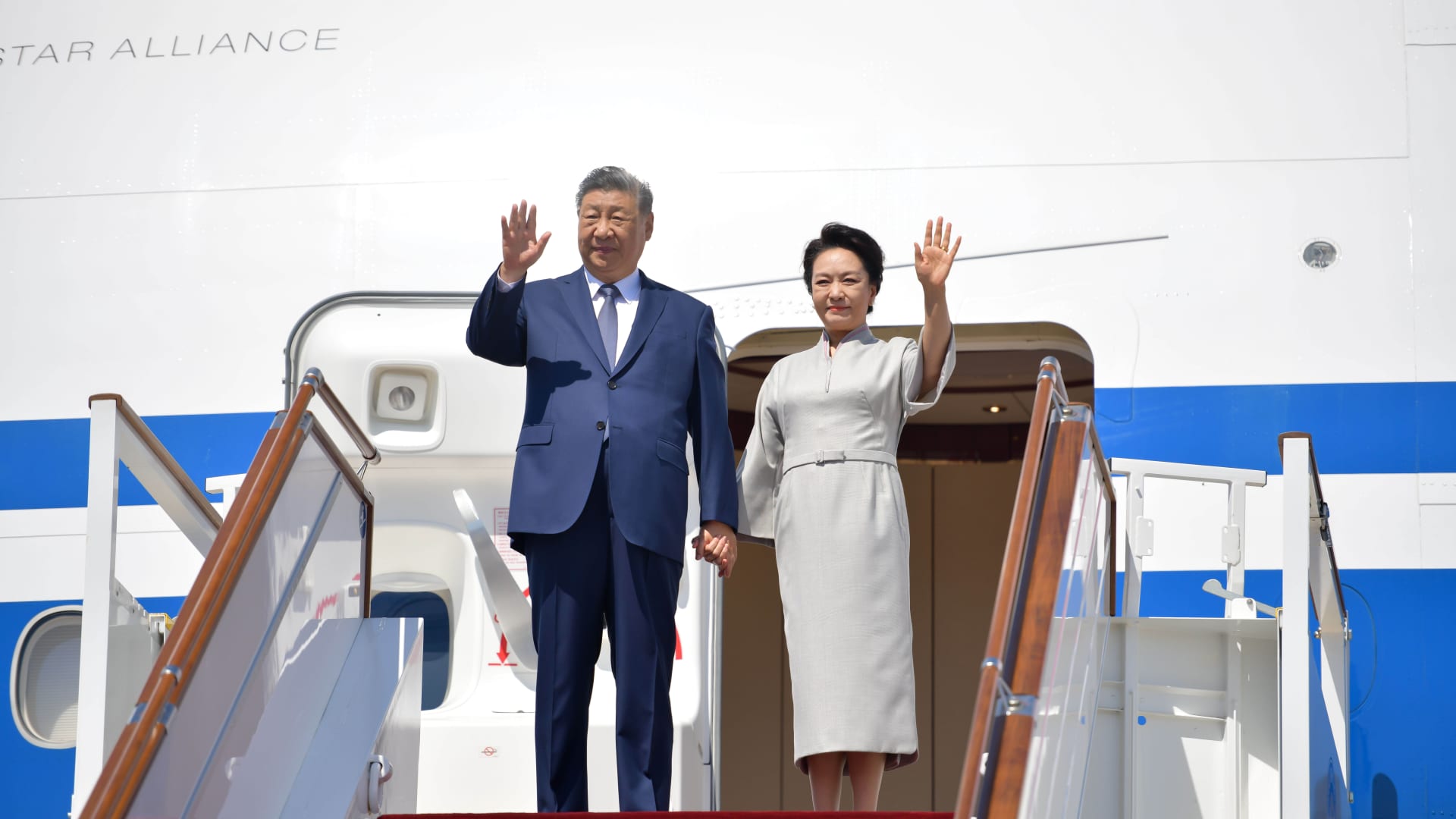
Chinese President Xi Jinping is embarking on a significant series of state visits, signaling a robust re-engagement on the global diplomatic stage ahead of a crucial summit with U.S. President Donald Trump. This intensified diplomatic activity is more than symbolic; it represents a strategic maneuver to recalibrate China’s international role amidst mounting geopolitical and economic complexities, directly influencing global capital flows and investment sentiment.
💰 Financial Strategy & Market Insights
- China’s Evolving Global Role. Xi’s increased foreign travel, particularly to non-Western nations like Egypt and India, underscores Beijing’s ambition to provide ‘global public goods’ and reshape international governance structures, potentially impacting global economic alliances.
- Geopolitical Risk Reassessment. Upcoming summits (SCO, BRICS, U.S.-China) create a complex web of alliances and rivalries, compelling investors to reassess geopolitical risks tied to supply chain security, energy flows, and technology transfers.
- Asset Valuation Implications. The interplay of U.S.-China trade tensions, India’s balancing act, and AI security concerns directly influences valuations in technology, energy, and manufacturing sectors, demanding agile risk management strategies.
Chinese President Xi Jinping’s recent diplomatic foray, including state visits to Kyrgyzstan, Egypt, and likely India, preceding an anticipated meeting with U.S. President Donald Trump, marks a notable departure from his previously curtailed foreign travel. This Xi’s Diplomatic Push signals China’s strategic intent to deepen alliances and influence global narratives beyond its traditional sphere, particularly through multilateral platforms like the Shanghai Cooperation Organization (SCO) and BRICS. Gabriel Wildau of Teneo highlights this busy schedule as a ‘significant gauge of his priorities,’ indicating Beijing’s readiness to assume greater global responsibilities in areas ranging from supply chain stability to cybersecurity.
The visits to non-Western nations, including his first state visit to Egypt in a decade and a potential return to India since 2019, are not merely ceremonial. In Egypt, China has cultivated a substantial economic presence in the Suez Canal region, anchored by a bilateral economic and trade cooperation zone. The BRICS summit in New Delhi presents a platform for China to engage with major emerging economies, despite lingering border disputes and business visa issues with India. This complex ‘elephant-dragon tango’ involves balancing commercial linkages with strategic competition, as India simultaneously eases investment rules for Chinese firms while imposing trade restrictions in sectors aimed at domestic self-sufficiency. For sophisticated market analysis, one might refer to detailed reports found on Reuters’ business and finance sections on global trade dynamics.
Washington is closely monitoring these developments, particularly the SCO and BRICS summits, as the U.S. seeks to improve ties with India and China while intensifying pressure on Russia. The prospect of up to 100% tariffs under the Graham bill, targeting countries purchasing Russian oil, looms large over India, which sources over 50% of its crude from Russia. Richard M. Rossow of CSIS notes that ‘visible warmth’ between Modi and Putin could influence President Trump’s tariff calculations. India, in turn, is leveraging its participation in these non-Western forums to signal its multi-polar alignment to Washington, suggesting ‘there will be a price if you continue to remain uncertain,’ according to Pramit Pal Chaudhuri of Eurasia Group. Investors keen on understanding these macro-shifts affecting various economies often consult comprehensive market analyses provided by platforms such as StockXpo.
- China’s proactive diplomacy is designed to counter perceived U.S. hegemony and secure its economic interests.
- India’s strategic ambiguity aims to maximize leverage from both Western and non-Western powers, impacting trade and investment flows.
- The upcoming U.S.-China summit in September carries high stakes, particularly concerning technology and AI.
The U.S.-China relationship, already strained by tariffs, faces new complexities centered on technology, especially artificial intelligence. The anticipated Trump-Xi summit on September 24th in Washington, D.C., will likely feature discussions on AI guardrails and bilateral cooperation, as senior officials from both sides met recently. Hai Zhao of the Chinese Academy of Social Sciences suggests setting up a mechanism to guide AI development, emphasizing the potential global economic damage if powerful language models fall into ‘the wrong hands.’ However, Teneo’s Wildau is less optimistic, citing a ‘widespread conviction that AI development is a zero-sum game.’ The outcome of these discussions will profoundly influence the global technology landscape, shaping investment trends in critical sectors from semiconductors to advanced computing. For deeper financial insights into these trends, exploring StockXpo’s blog offers valuable perspectives.
Risk vs Reward: Navigating Global Geopolitical Currents
- Upside:
- De-escalation of Trade Tensions: Successful U.S.-China and U.S.-India trade negotiations could boost global trade, reduce supply chain uncertainties, and improve corporate earnings, particularly for multinational corporations.
- Enhanced Emerging Market Stability: Stronger diplomatic ties among SCO/BRICS nations could foster regional economic cooperation, potentially attracting more foreign direct investment into these markets and stabilizing currencies.
- AI Governance Framework: A U.S.-China agreement on AI guardrails could reduce regulatory uncertainty, encourage innovation, and unlock significant investment in AI technologies, benefiting tech giants and specialized AI firms.
- Downside Risks:
- Escalation of Trade Wars: Failure to reach agreements, particularly on tariffs for Russian oil buyers or broader U.S.-China trade disputes, could trigger renewed market volatility, depress global economic growth, and lead to capital flight from affected regions.
- Geopolitical Fragmentation: Increased polarization between Western and non-Western blocs could disrupt existing alliances, complicate international business operations, and create new security risks, impacting asset valuations across various sectors.
- Technology Decoupling: A hardened stance on AI and technology transfers could lead to a deeper decoupling of tech ecosystems, creating redundant R&D efforts, increasing costs, and potentially stifling innovation, particularly in semiconductor and software industries.
The concept of a ‘zero-sum game’ in advanced technology, such as AI development, implies that one nation’s gain in technological prowess comes at the direct expense of another’s. From a financial strategy perspective, this outlook fuels nationalistic investment policies, increases R&D duplication, and could fragment global supply chains, ultimately leading to higher costs and reduced overall market efficiency. It underscores a strategic pivot towards technological self-sufficiency over collaborative growth.
Key Geopolitical Indicators Influencing Markets
- India’s crude oil imports from Russia comprised over 50% of its supplies in June and July 2026, and around 43% as of the last week of August 2026 (Kpler data).
- U.S. tariffs on India were scaled back from 50% to 18% in February 2026.
- China has built its presence in the Suez Canal region over the past decade, establishing a bilateral economic and trade cooperation zone.
Emerging Market Liquidity Analysis
The increased diplomatic activity, especially Xi’s engagements with Egypt and India within the SCO and BRICS frameworks, profoundly impacts emerging market liquidity. As China seeks to provide ‘global public goods’ and deepen economic ties, capital flows into these regions could see a strategic reallocation. Direct investments in infrastructure and trade zones, like those in the Suez Canal, indicate targeted liquidity injections. However, the overarching geopolitical uncertainties, such as U.S. tariff threats over Russian oil purchases, introduce volatility. India’s strategic hedging, for instance, could lead to short-term fluctuations in foreign portfolio investment as global investors weigh the risks of potential Western sanctions against the benefits of closer ties with non-Western powers. This dynamic environment necessitates continuous monitoring of capital account flows and foreign exchange reserves in key emerging economies. Further details on global capital flows can be found on Bloomberg Markets for comprehensive analysis.
Geopolitical Risk: Market Sentiment Tracker
Market sentiment is a direct barometer of geopolitical risk, and Xi’s current diplomatic push significantly elevates the need for robust sentiment tracking. Investors are parsing every signal from the upcoming SCO, BRICS, and U.S.-China summits to gauge the trajectory of international relations and its implications for asset valuations. The ‘visible warmth’ between Modi and Putin, for example, could trigger negative sentiment from Washington-aligned investors, potentially leading to divestment or a higher risk premium for Indian assets. Conversely, any progress in U.S.-China AI guardrails or tariff de-escalation could inject positive sentiment into global technology and trade-dependent sectors. This constant recalibration of geopolitical factors means that market sentiment remains highly sensitive, characterized by rapid shifts that can influence commodity prices, currency movements, and equity valuations across the globe, impacting financial sector stability and investment strategies.
Xi’s Diplomatic Push: Navigating the New Global Investment Calculus
Chinese President Xi Jinping’s ambitious diplomatic calendar underscores a calculated repositioning of China within the global order, compelling investors to re-evaluate geopolitical risk premiums and capital allocation strategies. This proactive engagement, particularly with non-Western blocs, is setting the stage for significant shifts in global trade, technology governance, and regional alliances.
- Expect increased volatility in sectors sensitive to U.S.-China relations, such as semiconductors, advanced manufacturing, and renewable energy.
- Emerging markets, especially those strategically aligned with China’s Belt and Road initiatives or BRICS expansion, may see shifts in foreign investment flows.
- The balancing act of countries like India, navigating great power competition, introduces both opportunities for diversified trade and risks from potential secondary sanctions.
How will these evolving geopolitical alignments permanently reshape the landscape of global asset valuation and risk management?
📊 StockXpo Analyst’s View
Market Impact: Xi’s diplomatic offensive is likely to inject a degree of strategic uncertainty, potentially leading to increased market volatility as investors weigh the prospects of de-escalation against the risks of deeper geopolitical fragmentation. Capital will likely seek safe havens or sectors resilient to trade tensions, while emerging markets engaged in this diplomatic dance could experience pronounced shifts in investment sentiment, impacting liquidity.
Sector To Watch: The technology sector, particularly AI and semiconductors, will remain at the forefront. Any progress or impasse in U.S.-China tech discussions will directly influence valuations and supply chain stability. Additionally, defense, energy (given the Russian oil context), and advanced manufacturing linked to global supply chain diversification will be crucial to monitor.
Financial Disclaimer:
StockXpo.com is a financial news aggregator and educational portal, not a registered investment advisor or broker-dealer. All information, news, and analysis provided herein are strictly for educational purposes and do not constitute investment, financial, legal, or tax advice. Investing in the stock market involves high risks, and past performance is not indicative of future results. StockXpo will not be liable for any financial losses or investment damages. Always consult a certified financial advisor before making market decisions.
MORE IN INSIDE FINANCE

Fixed Income: JPMorgan Calls it a Once-in-a-Generation Opportunity Amid Market Shifts
Published: Saturday, October 10, 2026 · 12:03 PM

Crypto Derivatives Trading: Blockchain.com’s Bold Move into U.S. Markets
Published: Friday, October 9, 2026 · 8:23 AM