Published: Monday, August 31, 2026 · 12:37 AM | Updated: Monday, August 31, 2026 · 12:37 AM
📊 132 views




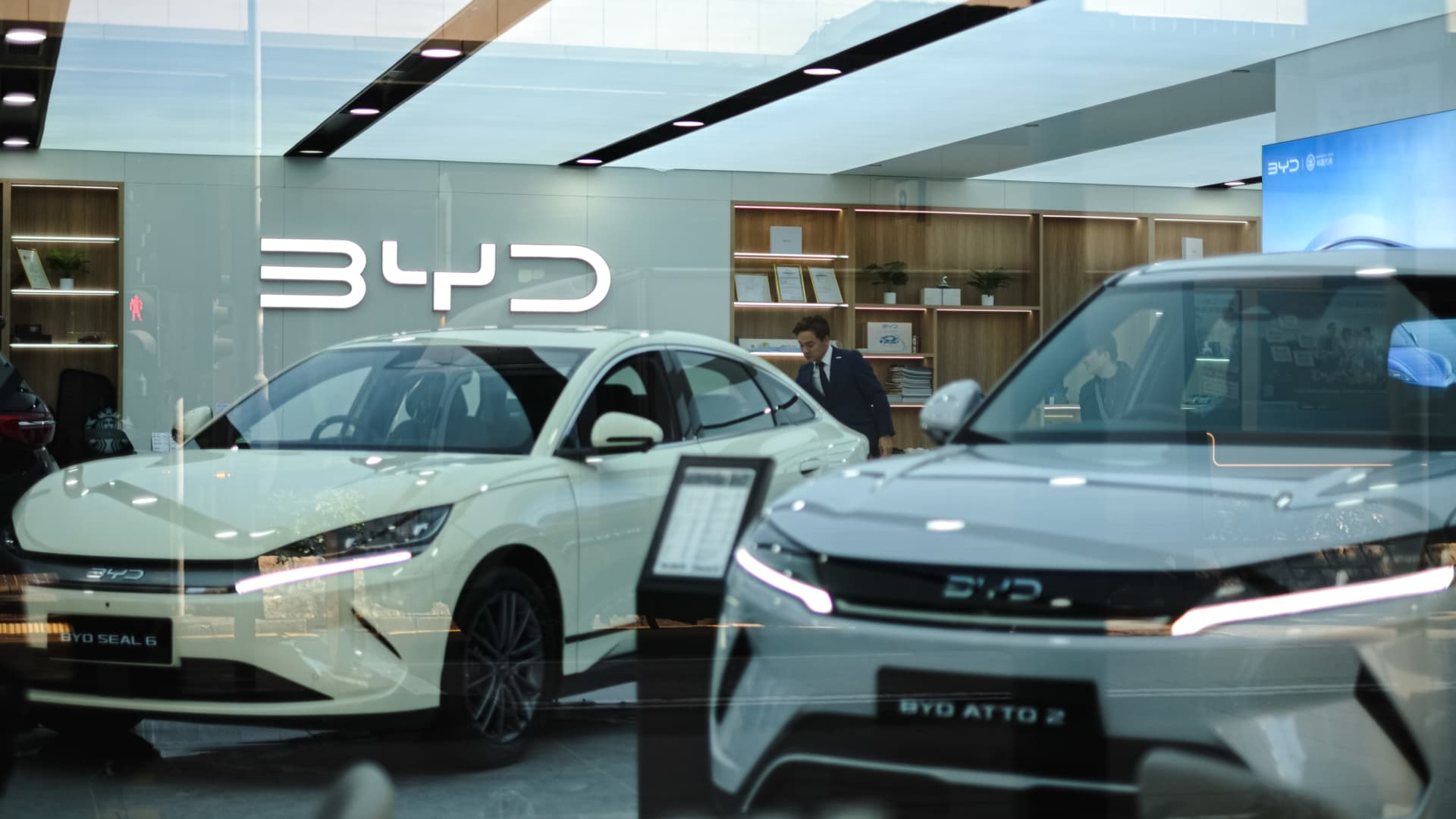
BYD shares experienced a notable decline in Hong Kong following the release of its first-half earnings, signaling the mounting pressures from China’s hyper-competitive electric vehicle market. While second-quarter net profit saw a healthy 30% year-on-year increase, the overarching six-month performance revealed a contraction in both revenue and overall profitability.
This mixed financial picture underscores the intricate challenges faced by even dominant players like BYD in a sector characterized by aggressive pricing, evolving consumer demands, and escalating supply chain costs.
🚀 Tech Strategy & Market Disruptions
- Intensifying EV Competition. BYD’s profit margins are significantly squeezed by fierce domestic rivalry and rising costs for commodities, raw materials, and critical chips.
- Revenue Decline vs. Profit Growth. Despite a robust 30% year-on-year rise in Q2 net profit, BYD reported a 7.1% fall in first-half revenue and a 20.5% drop in net profit attributable to shareholders.
- Export-Driven Growth. Exports surged an impressive 67.8% year-on-year, highlighting BYD’s increasing reliance on international markets to offset domestic demand challenges.
The interim results from BYD painted a complex operational landscape. For the first half of the year, BYD reported revenue of 344.8 billion yuan, a 7.1% decrease from the previous year, with net profit attributable to shareholders falling 20.5% to 12.3 billion yuan. This contrasts with a stronger second quarter, where net profit reached 8.2 billion yuan, up 30% from a year earlier, despite a 3% year-on-year revenue dip to 194.6 billion yuan, as noted by Citi.
BYD itself acknowledged that China’s automotive sector faced ‘sluggish domestic demand’ coupled with ‘robust export growth.’ The company specifically cited ‘fierce competition and rising costs for commodities, raw materials and chips’ as primary factors squeezing automakers’ profit margins. This environment forces a reevaluation of established business models and a heightened focus on innovation in manufacturing and supply chain management.
Amidst these challenges, BYD’s strategic move into higher-end segments appears to be gaining traction. Combined sales of its premium brands like FANGCHENGBAO, Denza, and Yangwang grew 61% year-on-year in China, representing 12.8% of the group’s total passenger vehicle sales. This diversification strategy is crucial for maintaining pricing power and brand loyalty in an increasingly commoditized market. For comprehensive insights into evolving automotive technology market trends, StockXpo provides continuous analysis.
- Q2 Net Profit: 8.2 billion yuan ($1.2 billion), up 30% YoY.
- Q2 Revenue: 194.6 billion yuan, down 3% YoY.
- H1 Revenue: 344.8 billion yuan, down 7.1% YoY.
- H1 Net Profit: 12.3 billion yuan, down 20.5% YoY.
- H1 Exports: 792,000 vehicles, up 67.8% YoY.
- H1 Premium Brand Sales Growth: 61% YoY (FANGCHENGBAO, Denza, Yangwang).
The competitive disruption within the Chinese EV market initiates a clear cause-and-effect chain: intensified competition directly leads to margin compression for manufacturers. This pressure then compels companies like BYD to accelerate innovation in cost reduction, battery technology, and autonomous driving features, driving a rapid evolution across the entire EV supply chain and pushing new emerging technologies to the forefront.
“Navigating the current automotive landscape demands more than just product innovation; it requires a robust, agile technology stack capable of dynamic pricing, predictive supply chain management, and AI-driven customer personalization. Companies that can optimize their digital core will weather these competitive storms more effectively.” – Senior CTO, StockXpo.
The raw numbers highlight the dual nature of BYD’s current position, balancing strong growth in specific areas with overall market challenges:
| Metric | Value (CNY) | YoY Change |
|---|---|---|
| Q2 Net Profit | 8.2 billion | +30% |
| Q2 Revenue | 194.6 billion | -3% |
| H1 Revenue | 344.8 billion | -7.1% |
| H1 Net Profit | 12.3 billion | -20.5% |
| H1 Exports (vehicles) | 792,000 | +67.8% |
Navigating BYD’s Market Adoption Challenges in a Crowded Landscape
BYD’s market adoption challenges in China are multifaceted, extending beyond just pricing pressure. The proliferation of new EV manufacturers, coupled with shifting consumer preferences towards specialized features and more sophisticated in-car technology, demands continuous innovation in product design and user experience. Overcoming these hurdles requires BYD to not only maintain its cost leadership but also to aggressively differentiate through software-defined vehicles, advanced driver-assistance systems (ADAS), and robust digital ecosystems. Understanding these market dynamics is key to success, as explored in global technology news.
BYD’s Ecosystem Expansion Potential Beyond Domestic Borders
While domestic competition intensifies, BYD’s significant export growth highlights its substantial ecosystem expansion potential in international markets. This global outreach strategy is not just about selling vehicles; it involves establishing manufacturing hubs, localizing supply chains, and integrating with regional charging infrastructure and smart city initiatives. Building out this global ecosystem requires substantial capital investment and strategic partnerships, potentially transforming BYD from a primarily Chinese EV giant into a truly global mobility solutions provider. Further analysis and educational content can be found in our educational tech insights.
The Road Ahead for BYD Shares Amidst Global EV Dynamics
BYD’s recent earnings underscore the dynamic tension between its domestic market struggles and impressive international expansion. The company’s ability to maintain profitability in its second quarter, despite revenue dips, demonstrates underlying operational resilience, yet the first-half figures highlight the significant competitive headwinds. This period is a crucible for BYD, pushing it towards greater efficiency and strategic diversification.
- BYD must accelerate technological leadership in battery costs and energy density to defend market share.
- The company’s focus on premium sub-brands is a critical strategy for improving margin profiles and brand perception.
- Global market penetration, particularly in Europe and Southeast Asia, will be essential to sustain long-term revenue growth.
Can BYD effectively leverage its export momentum to offset domestic pressures and solidify its position as a global EV powerhouse in the coming years?
📊 StockXpo Analyst’s View
Market Impact: The pressure on BYD shares, despite strong Q2 profit, reflects broader investor concerns about sustained margin erosion in the competitive EV sector. This news is likely to temper bullish sentiment across Chinese EV manufacturers, prompting a deeper dive into financial resilience and strategic differentiation. While BYD’s export performance is a positive signal, domestic headwinds could weigh on valuations, affecting liquidity and investor confidence in high-growth EV plays across market developments.
Sector To Watch: Investors should closely monitor the entire EV supply chain, especially battery technology innovators and advanced materials companies. The fierce competition is forcing automakers to seek cost efficiencies and performance gains, benefiting suppliers capable of delivering scalable, next-generation components. Additionally, companies focused on autonomous driving software and charging infrastructure could see increased investment as manufacturers seek to differentiate their offerings.
Financial Disclaimer:
StockXpo.com is a financial news aggregator and educational portal, not a registered investment advisor or broker-dealer. All information, news, and analysis provided herein are strictly for educational purposes and do not constitute investment, financial, legal, or tax advice. Investing in the stock market involves high risks, and past performance is not indicative of future results. StockXpo will not be liable for any financial losses or investment damages. Always consult a certified financial advisor before making market decisions.
MORE IN INSIDE TECHNOLOGY

AI Pricing Innovation: Reshaping Retail & Consumer Spend
Published: Sunday, October 11, 2026 · 1:36 AM

AI Legal Tech: Revolutionizing Billing and Training in Law with Innovation
Published: Saturday, October 10, 2026 · 2:58 AM