
Published: Saturday, August 29, 2026 · 7:07 AM | Updated: Saturday, August 29, 2026 · 7:07 AM
📊 132 views




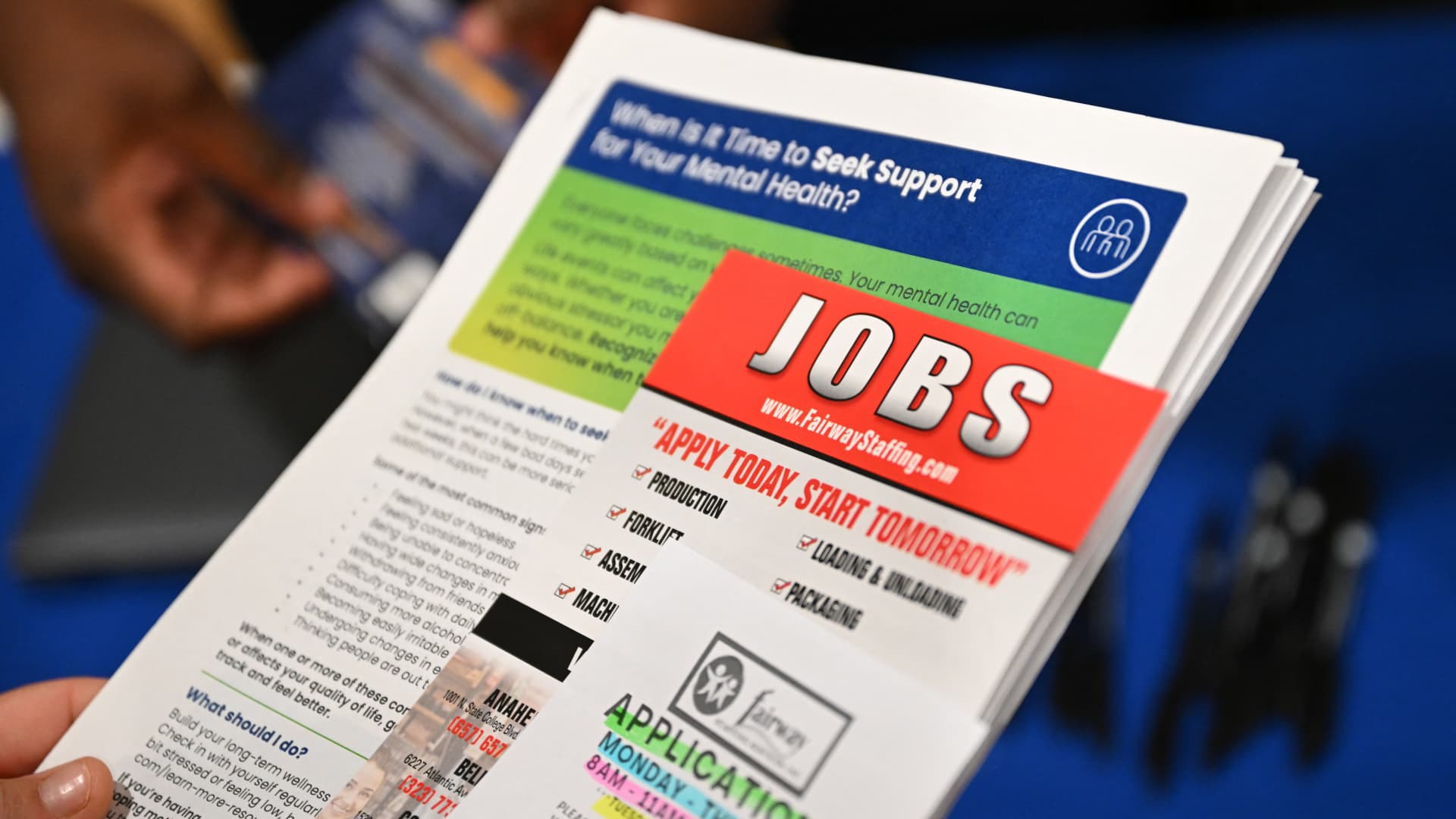
The U.S. labor market showed a significant deceleration in July, with private company hiring dramatically slowing to just 44,000 new jobs, undershooting analyst expectations. This unexpected softness signals a potential turning point in labor market dynamics, prompting close scrutiny from global policymakers and investors keenly assessing macro-stability and the Federal Reserve’s next moves on interest rates.
📊 Macro-Economic Strategic Insights
- Hiring Deceleration: Private sector job growth fell sharply to 44,000 in July, significantly below the downwardly revised 95,000 in June and the 75,000 Dow Jones forecast.
- Sectoral Disparity: The services sector was the sole driver of growth, adding 47,000 jobs, primarily in education and health services, while goods-producing sectors experienced a net decline of 3,000 workers.
- Wage Growth Divergence: Annual pay gains for job stayers held steady at 4.4%, but job switchers saw a robust 7% increase, the largest since August 2025, suggesting persistent supply constraints in specific labor market segments.
The latest report from payrolls processing firm ADP indicates a noticeable cooling in private company hiring, marking the smallest monthly gain since January. This slowdown contrasts with earlier trends this year and presents a nuanced picture for Federal Reserve officials who have prioritized inflation containment while monitoring labor market strength. The significant miss against consensus forecasts highlights an unexpected deceleration that could influence monetary policy decisions.
The distribution of job gains further reveals underlying shifts. The education and health services sector continued its dominant role, contributing 36,000 new positions. Financial activities added 10,000, and professional and business services saw an increase of 9,000. Conversely, sectors like trade, transportation, and utilities (-8,000) and natural resources and mining (-6,000) experienced declines, illustrating a growing divergence in demand across industries.
Small businesses, defined as firms employing fewer than 50 people, were notably robust, leading with 23,000 new jobs. This balanced distribution across company sizes, despite the overall slowdown, suggests that smaller enterprises remain a critical engine for employment, even as larger firms may be exercising more caution.
ADP’s chief economist, Nela Richardson, emphasized the sensitivity of job-changers to economic conditions, noting their rapid pay growth as an indicator of supply constraints. This dynamic is crucial for understanding inflationary pressures, as sustained wage growth, particularly among those switching jobs, can fuel higher consumer spending and production costs. The Federal Reserve has maintained its benchmark interest rate, but markets are anticipating a potential hike if inflation data does not show significant improvement, making the upcoming Bureau of Labor Statistics report highly anticipated.
The Ripple Effect of a Cooling Job Market
Understanding the broader economic consequences of this private company hiring slowdown is critical:
- Slowed Hiring → Reduced Consumer Spending Confidence → Moderated Broader Inflationary Pressure
- Sectoral Imbalance (e.g., healthcare growth) → Targeted Wage Pressures → Persistent Core Inflation in specific service areas
- High Job Switcher Wage Growth → Increased Labor Market Friction & Retention Costs → Potential for Wage-Price Spirals in high-demand skill areas
Labor Market Dynamics: This term refers to the continuous processes of job creation, destruction, and reallocation within an economy, along with the factors influencing wage determination, worker mobility, and unemployment levels. Shifts in these dynamics, like the recent ADP report suggests, provide crucial insights into an economy’s health and inflationary potential.
Key U.S. Labor Market Metrics
This table summarizes the critical employment data points from the latest ADP report and analyst expectations, providing context for the current economic landscape.
| Metric | Value (July) | Significance |
|---|---|---|
| Private Jobs Added | 44,000 | Below consensus (75K) and revised June (95K), indicating significant slowdown. |
| Job Stayer Pay Growth (YoY) | 4.4% | Steady, but still above the Fed’s long-term inflation target. |
| Job Switcher Pay Growth (YoY) | 7.0% | Highest since August 2025, pointing to specific labor supply shortages. |
| BLS Nonfarm Payrolls Forecast | 83,000 | Economists expect a higher official count than ADP’s private sector estimate. |
U.S. Inflationary Risks Amidst Labor Market Shifts
The softening in overall private company hiring could be viewed by the Federal Reserve as a positive step towards cooling demand and bringing down inflation. However, the persistent strength in wage growth for job switchers, particularly the 7% increase, introduces a complex challenge. This indicates that while the headline job numbers are declining, specific segments of the labor market remain tight, potentially sustaining upward pressure on wages and, consequently, on service-sector inflation. This divergence suggests that the path to the Fed’s 2% inflation target remains uneven and fraught with supply-side constraints, necessitating a vigilant approach to economic policy. Policymakers must discern whether the overall slowdown outweighs the targeted wage pressures, or if further tightening will be required to manage these persistent pockets of inflationary risk, as discussed by experts in global economic trends.
Global Labor Market Benchmarking: A Comparative Look
Compared to major global economies, the U.S. labor market’s current trajectory, as indicated by the ADP report, presents a mixed signal. While some European nations are grappling with higher unemployment rates and slower growth, the U.S. has maintained relatively strong employment, even with this recent deceleration. The U.S. continues to experience a unique challenge with wage inflation driven by specific sector demand and labor mobility, a trend less pronounced in economies with more rigid labor structures. Understanding these differences is key for investors following global economic trends, as diverging labor market dynamics can lead to distinct monetary policy paths and investment opportunities. The Federal Reserve’s response to these domestic figures will be closely watched internationally as a benchmark for managing post-pandemic labor market complexities.
Navigating the Evolving Landscape of Private Company Hiring
The July ADP report on private company hiring presents a clear signal of moderation in the U.S. labor market, moving closer to what some might consider a more sustainable pace. While the headline number indicates a significant slowdown, the underlying data reveals a nuanced picture of sectoral strength and persistent wage pressures in specific areas.
- The sharp deceleration suggests that the Federal Reserve’s monetary tightening policies may finally be taking hold in the broader employment picture.
- The robust wage growth for job switchers remains a key concern for inflation, indicating targeted supply-demand imbalances rather than widespread wage suppression.
- Upcoming official BLS data will be critical in confirming these trends and shaping near-term monetary policy expectations for stock markets.
Will this moderation be enough to cool inflation without tipping the economy into a deeper slowdown?
### 📊 StockXpo Analyst’s View
Market Impact: The lower-than-expected private company hiring data could initially be perceived positively by equity markets if it signals reduced inflationary pressures, potentially easing the Fed’s hawkish stance. However, prolonged weakness could dampen consumer confidence and corporate earnings outlooks, leading to increased volatility. Bond yields may see downward pressure if rate hike expectations diminish, while a strong dollar could react to global economic comparisons.
Sector To Watch: The education and health services sector continues its robust job creation, suggesting resilience and ongoing demand. Investors should monitor this defensive sector for stable performance. Conversely, the declines in trade, transportation, and mining suggest sensitivity to broader economic deceleration and commodity price shifts, making these areas more susceptible to headwinds. Technology and professional services, with their notable job growth, highlight areas of continued investment in human capital.
Financial Disclaimer:
StockXpo.com is a financial news aggregator and educational portal, not a registered investment advisor or broker-dealer. All information, news, and analysis provided herein are strictly for educational purposes and do not constitute investment, financial, legal, or tax advice. Investing in the stock market involves high risks, and past performance is not indicative of future results. StockXpo will be liable for any financial losses or investment damages. Always consult a certified financial advisor before making market decisions.
MORE IN INSIDE ECONOMY

Judy Shelton’s Treasury Role: A Controversial Shift in Economic Guidance
Published: Friday, October 9, 2026 · 7:52 AM
Tariffs Fueled U.S. Inflation: NY Fed’s Clear Economic Signal
Published: Thursday, October 8, 2026 · 8:12 AM


