
Published: Wednesday, August 19, 2026 · 7:31 AM | Updated: Wednesday, August 19, 2026 · 7:31 AM
📊 77 views




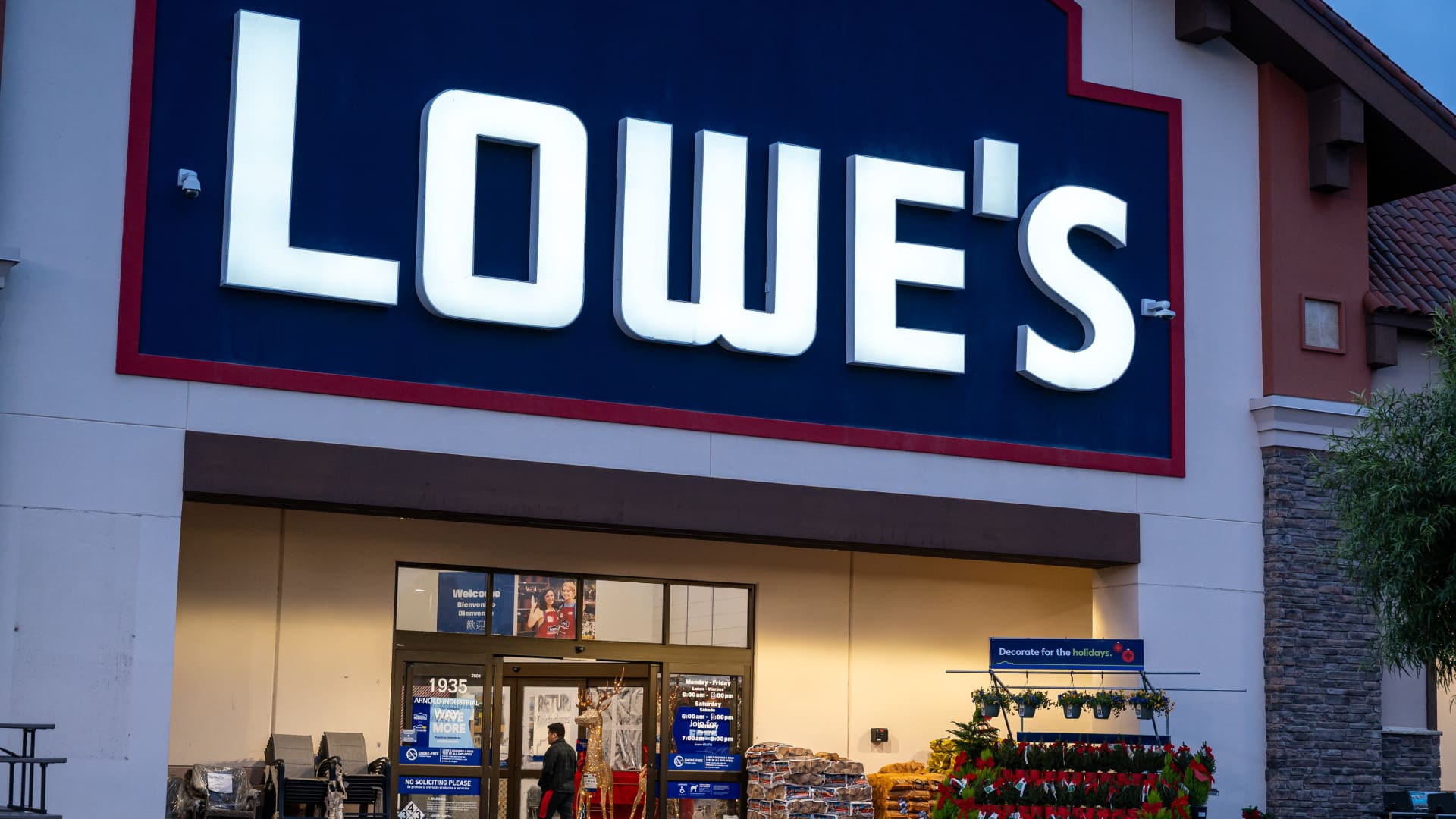
The home improvement sector faces increasing headwinds as Lowe’s Companies, Inc. (LOW) updated its full-year guidance, resulting in a muted Lowe’s outlook and citing ‘pressure’ in consumer spending. This adjustment signals broader macroeconomic challenges impacting discretionary household expenditures and poses strategic questions for the retail giant amidst a ‘frozen housing market’ observed by industry peers.
🗝️ Corporate Strategy Insights
- Guidance Realignment. Lowe’s has prudently revised its full-year sales and EPS guidance to the lower end, reflecting a pragmatic response to tightening consumer budgets and a stagnant housing market, particularly affecting DIY demand.
- Pro and Services Resilience. Despite overall pressures, the company’s “pro” and home services segments demonstrated robust performance, indicating a strategic shift towards higher-value, professional-driven projects as DIY consumer activity wanes.
- Digital Channel Growth. A 15.7% increase in online sales highlights the effectiveness of Lowe’s digital transformation initiatives, providing a crucial omnichannel competitive edge even as foot traffic slows.
Lowe’s reported mixed second fiscal quarter results, with revenue of $25.96 billion falling slightly short of analysts’ expectations of $26.16 billion, as surveyed by LSEG. While adjusted earnings per share reached $4.40, exceeding a $4.22 expectation, this figure included an 11-cent boost from tariff refunds, suggesting underlying operational challenges without this one-time benefit. The crucial metric of comparable sales, which rose by a modest 0.2%, was primarily bolstered by strong performance in the company’s pro and home services divisions. This indicates a bifurcation in the market: professional contractors and larger project customers remain active, while the traditional do-it-yourself (DIY) segment faces significant macroeconomic pressure.
The muted outlook from Lowe’s, which now anticipates total sales of $92 billion, down from a previous range of $92 billion to $94 billion, and comparable sales to be flat instead of up to 2%, underscores the persistent challenges in the broader home improvement sector. CEO Marvin Ellison acknowledged the “dynamic” near-term environment but emphasized the company’s focus on its “Total Home strategy” to drive growth and profitability. This strategy aims to capture a larger share of both professional and consumer spending, adapting to evolving market conditions. The company’s online sales growth of 15.7% demonstrates the effectiveness of its digital investment, providing a vital channel for customer engagement and transactions despite overall market headwinds.
Key takeaways from the earnings report illuminate the prevailing market conditions:
- Consumer Caution: DIY customers are pulling back on discretionary projects due to inflation and higher interest rates, impacting traffic and average ticket size.
- Professional Segment Strength: The resilience of the pro segment highlights sustained demand for larger, non-discretionary home repairs and renovations.
- Housing Market Stagnation: A “frozen housing market,” as described by competitor Home Depot, limits new home sales and thus initial home improvement purchases typically associated with moving.
Lowe’s adjusted guidance will inevitably send ripples across the entire home improvement retail landscape and related industries. The direct impact is a projected slowdown in revenue growth across the sector, translating into tighter inventory management for suppliers of building materials, tools, and appliances. For competitors like Home Depot, which has also expressed concerns about the housing market and big projects, Lowe’s conservative stance reinforces a shared challenging operating environment. This intensified competition for a shrinking pool of discretionary consumer spending could lead to more aggressive pricing strategies or increased marketing efforts to capture market share. The strategic emphasis on the “pro” segment by both Lowe’s and Home Depot suggests a shift in focus, where robust service offerings and contractor relationships become paramount for sustained revenue, potentially at the expense of pure retail sales growth. This evolution will put pressure on smaller, independent hardware stores and specialty retailers who may lack the scale or diversified service offerings to compete effectively.
The strategic recalibration by Lowe’s to the lower end of its guidance highlights a critical inflection point where the resilience of its professional and services segments must now offset the pronounced weakness in its traditional DIY consumer base.
Lowe’s financial performance indicators for Q2 fiscal year and full-year outlook:
| Metric | Q2 Actual | Q2 Expected | Full-Year Outlook (Revised) | Full-Year Outlook (Prior) |
|---|---|---|---|---|
| Adjusted EPS | $4.40 | $4.22 | $12.25 | $12.25 – $12.75 |
| Revenue | $25.96 billion | $26.16 billion | $92 billion | $92 billion – $94 billion |
| Comparable Sales Growth | 0.2% | N/A | Flat | Flat to up 2% |
These metrics underscore the company’s challenges in meeting previous growth targets, primarily due to softer consumer spending. The revised full-year outlook for total sales and comparable sales reflects a conservative yet realistic assessment of the current market environment.
Lowe’s Outlook and Strategic Adaptation Amidst Headwinds
Lowe’s “Total Home strategy” is designed to capture a greater share of customer wallets by integrating product offerings with professional services and seamless online experiences. This strategic direction is proving crucial in the current climate, where transactional retail sales are slowing. By strengthening its appeal to the “Pro” customer segment—contractors, builders, and tradespeople—Lowe’s is targeting a more resilient customer base less impacted by immediate discretionary spending cuts. These customers often have non-negotiable project deadlines and larger material needs, providing more stable revenue streams. The increased investment in online sales infrastructure, reflected in the 15.7% e-commerce growth, also positions Lowe’s to capture market share from a convenience-driven consumer base, a critical component for long-term corporate growth analysis.
Lowe’s Competitive Advantages Amidst Sector Pressure
Despite the broader market pressures, Lowe’s retains several key competitive advantages. Its extensive store footprint and supply chain network enable efficient product distribution and customer access across North America. The brand’s reputation, built over decades, fosters customer loyalty, especially among professional contractors who rely on consistent product availability and quality. Furthermore, the company’s continued investment in technology and fulfillment, including its omnichannel capabilities, provides a moat against smaller, less technologically advanced competitors. This strategic commitment to digital transformation, alongside a focus on specific customer segments, allows Lowe’s to navigate the “pressure” in home improvement spending more effectively than less agile market players, maintaining a strong position in the overall global stock markets.
Lowe’s Path Forward: Navigating the Shifting Retail Landscape
Lowe’s updated outlook confirms a tightening environment for discretionary home improvement spending, prompting a strategic pivot towards operational efficiency and resilience. While the immediate future presents challenges, the company’s focus on its Pro segment and digital growth channels positions it for sustained profitability in a more subdued market.
- The retail giant is expected to double down on its “Total Home strategy,” enhancing services for professional customers.
- Expect continued investment in supply chain optimization and e-commerce platforms to drive efficiencies and customer convenience.
- The market will closely watch future housing market trends and interest rate movements for signs of a broader consumer spending rebound.
Will Lowe’s strategic emphasis on the Pro customer and digital channels be enough to fully offset a prolonged slowdown in DIY spending?
📊 StockXpo Analyst’s View
Market Impact: Lowe’s cautious update, echoing sentiments from Home Depot, suggests that investor expectations for the entire home improvement retail sector should be recalibrated downwards. While large-cap retailers may weather the storm due to scale, smaller suppliers and construction material companies could face significant headwinds, impacting overall stock markets. This might lead to a flight to quality within consumer discretionary stocks, favoring companies with diversified revenue streams or strong balance sheets.
Sector To Watch: The critical sector to monitor will be residential construction and remodeling services. While DIY is struggling, professional services show resilience. Companies specializing in skilled trades, large-scale renovation project management, and specialized building materials catering to professional contractors are likely to gain relative market share, making these segments compelling areas for astute investment insights.
Financial Disclaimer:
StockXpo.com is a financial news aggregator and educational portal, not a registered investment advisor or broker-dealer. All information, news, and analysis provided herein are strictly for educational purposes and do not constitute investment, financial, legal, or tax advice. Investing in the stock market involves high risks, and past performance is not indicative of future results. StockXpo will not be liable for any financial losses or investment damages. Always consult a certified financial advisor before making market decisions.
MORE IN INSIDE BUSINESS

Saudi Arabia Flight Decision: Delta Weighs Safety Amid Regional Tensions
Published: Friday, October 9, 2026 · 7:21 AM

Skydance Vertical Win: Ellison’s Bold Strategy for Media Dominance
Published: Thursday, October 8, 2026 · 12:44 PM


