Published: Tuesday, July 28, 2026 · 11:12 AM | Updated: Tuesday, July 28, 2026 · 11:12 AM
📊 173 views




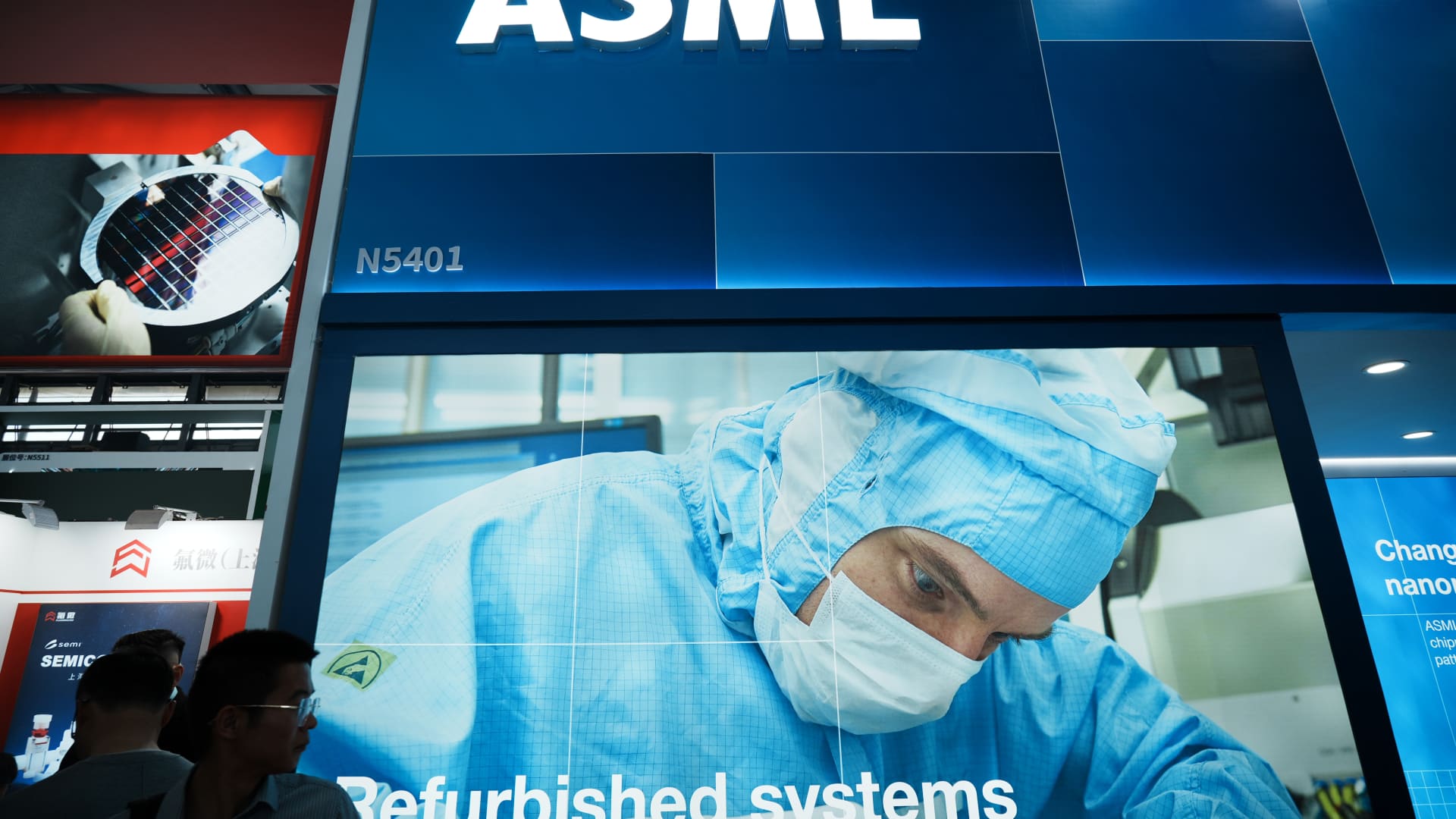
China’s reported mass production of immersion deep ultraviolet (DUV) lithography machines has injected fresh uncertainty into the global semiconductor landscape, challenging the long-held dominance of Dutch giant ASML. This development, while causing an immediate sell-off across chip stocks, comes with significant caveats that temper its near-term impact on established players.
The move underscores Beijing’s unwavering commitment to achieving self-sufficiency in critical technological infrastructure, raising questions about future supply chain resilience and the evolving dynamics of international technology control.
🚀 Tech Strategy & Market Disruptions
- Indigenous DUV Production. An unnamed Chinese firm has reportedly commenced mass production of immersion DUV tools, slated for delivery to major domestic chipmakers like SMIC and Changxin Memory Technologies this year.
- Skepticism on Scale and Yield. Analysts express doubt regarding the Chinese machines’ manufacturing yield and performance parity with ASML’s offerings, highlighting the significant gap in production volume targets and long-term reliability.
- ASML’s Enduring Market Moat. Experts suggest ASML’s position, particularly in advanced Extreme Ultraviolet (EUV) and high-performance DUV, remains largely secure, partly due to existing export controls limiting its advanced sales to China.
Reports detailing China’s mass production of immersion DUV lithography machines—a critical tool for etching circuit patterns onto silicon wafers—triggered a notable dip in semiconductor stocks, including a 1.8% fall for ASML. This knee-jerk market reaction reflected investor concerns over China’s accelerating push for technological independence and the potential for Western firms to be shut out of a crucial market. However, a deeper analysis reveals that the immediate impact of this China’s chip breakthrough on the global landscape, particularly on ASML’s core business, might be overstated.
According to The Information, an unspecified Chinese company has begun manufacturing these DUV tools, with deliveries expected to major domestic players such as Semiconductor Manufacturing International Corp. (SMIC) and Changxin Memory Technologies (CXMT) within the year. These machines are vital for producing less-advanced chips, contrasting sharply with ASML’s proprietary Extreme Ultraviolet (EUV) lithography tools, which are indispensable for crafting the most cutting-edge processors used by tech giants like global technology news leaders Apple and Nvidia.
Analysts caution against equating this development with a fundamental shift in the global hierarchy of chip manufacturing. Stephane Houri, head of equity research at ODDO BHF, noted to CNBC, ‘I would take this with a pinch of salt as what [China does] could be limited to the very low end.’ The key challenge for China’s indigenous DUV machines lies in achieving competitive yield and reliability:
- Yield Parity: The number of usable chips produced per wafer is paramount for profitability. It remains unclear if Chinese-made machines can match the efficiency of ASML’s proven technology.
- Scalability: While the Chinese firm aims for 5 units this year and 20 in 2027, ASML targets approximately 130 DUV immersion machines in 2026, with plans to increase capacity by 30% in 2027. This vast difference highlights a significant hurdle for China.
- Ecosystem Maturity: ASML’s long-standing dominance is not just about the machine itself, but a mature ecosystem of support, maintenance, and continuous iteration built over decades.
Nick Patience, AI lead at the Futurum Group, emphasized to CNBC that ‘Reliability takes years of iteration in the field, which ASML has [and] China still has yet to achieve.’ Critically, existing export controls already restrict ASML from selling its most advanced DUV tools to Chinese companies, meaning any revenue displaced by local production is arguably revenue ASML had already forfeited.
The emergence of China’s indigenous DUV lithography capability initiates a distinct disruption flow. The ability to produce domestic chipmaking tools, even if initially at the lower end, directly reduces China’s reliance on foreign imports for foundational semiconductor components. This drives increased self-sufficiency within specific segments of its chip industry. Over time, this localized production, if successful in scaling and improving yield, could reshape internal supply chains, potentially diverting domestic orders from international suppliers to Chinese manufacturers like SMIC and CXMT, thereby creating a more insulated, though potentially less advanced, domestic ecosystem.
‘The true measure of a lithography machine’s impact isn’t just its existence, but its ability to deliver consistent, high-yield production at scale within a sophisticated manufacturing environment. This demands an intricate interplay of optics, precision engineering, and a robust support infrastructure that takes decades to perfect, defining the core of semiconductor manufacturing excellence.’
| Metric | Chinese DUV Production (Reported) | ASML DUV Immersion Capacity (Planned) |
|---|---|---|
| Units by End of 2026 | Likely < 5 | ~130 |
| Units by End of 2027 | ~20 | ~170 (130 + 30%) |
| China’s Share of ASML Sales (Q2) | N/A (Displacement target) | 14% of €6.6 billion (~€924 million) |
China’s Market Adoption Challenges
Beyond the technical specifications and production volumes, a significant hurdle for China’s homegrown DUV machines will be securing widespread adoption among its own foundries. For chip manufacturers like SMIC and CXMT, the decision to integrate new equipment is driven by economic imperatives: cost-effectiveness, reliability, and ultimately, the yield of functional chips. If the domestic DUV tools lag significantly in these areas compared to existing, often depreciated, ASML machines, their appeal diminishes rapidly. The absence of a global support network and the relatively nascent experience in optimizing these machines for various fab environments present substantial operational and financial risks for early adopters. This suggests a cautious, phased integration rather much rather than a wholesale market shift, as detailed in several technology market trends analyses.
Ecosystem Expansion Potential
While the immediate focus is on DUV machines, the long-term vision for China’s semiconductor industry includes broader ecosystem expansion, eventually targeting more advanced capabilities. However, the path from DUV to Extreme Ultraviolet (EUV) is not a linear extrapolation. ASML spent roughly two decades and $10 billion in R&D, with co-investments from global giants, to commercialize EUV. The technological leap involves fundamentally different light sources, complex optics, and an entirely new scientific understanding that is largely proprietary. While some DUV breakthroughs might offer incremental learning, the formidable challenges of EUV suggest that a comprehensive, globally competitive EUV ecosystem remains a distant prospect, requiring massive, sustained investment and overcoming profound scientific and engineering barriers. This requires continuous monitoring of emerging technologies and geopolitical developments.
Decoding the DUV Impact on ASML’s Future
Despite the initial market jitters, China’s progress in DUV lithography appears to have a contained impact on ASML’s immediate market position and revenue trajectory. The Dutch giant’s current sales to China are already constrained by export controls, and its order books for advanced DUV and EUV machines remain robust. The strategic implications, however, are long-term, signaling an intensified global competition for technological self-reliance.
- The current Chinese DUV output is unlikely to meet domestic demand for even less-advanced chips.
- Yield and long-term reliability remain critical, unproven factors for the indigenous machines.
- ASML’s EUV dominance, vital for cutting-edge chips, appears unassailable for the foreseeable future, as highlighted by semiconductor industry developments.
How will this drive China’s domestic semiconductor strategy, and what ripple effects will it have on global tech alliances in the coming decade?
📊 StockXpo Analyst’s View
Market Impact: The market’s initial overreaction to China’s DUV news highlights underlying anxieties about geopolitical tech rivalries, but a closer look reveals limited immediate downside for market leaders like ASML. While China’s self-sufficiency drive is real, the scale, performance, and ecosystem maturity required to truly challenge established players remain a multi-decade endeavor. Investors should differentiate between symbolic breakthroughs and commercially viable, scaled production.
Sector To Watch: The critical sector to monitor will be domestic Chinese semiconductor manufacturing (foundries like SMIC, CXMT) and their ability to integrate and optimize these new indigenous tools. Success could foster a bifurcated global supply chain, but sustained innovation in advanced materials and components, not just lithography tools, is key. Keep an eye on global efforts to secure supply chains, as highlighted in educational tech insights, irrespective of China’s progress.
Financial Disclaimer:
StockXpo.com is a financial news aggregator and educational portal, not a registered investment advisor or broker-dealer. All information, news, and analysis provided herein are strictly for educational purposes and do not constitute investment, financial, legal, or tax advice. Investing in the stock market involves high risks, and past performance is not indicative of future results. StockXpo will not be liable for any financial losses or investment damages. Always consult a certified financial advisor before making market decisions.
MORE IN INSIDE TECHNOLOGY

Anduril Navy Contract: A $2.9 Billion Breakthrough in Submarine Production
Published: Tuesday, October 6, 2026 · 9:36 AM

AI Era Innovation: Nadella’s Bold Microsoft Re-Invention
Published: Monday, October 5, 2026 · 7:16 AM