Published: Monday, October 5, 2026 · 2:21 PM | Updated: Monday, October 5, 2026 · 2:21 PM
📊 413 views




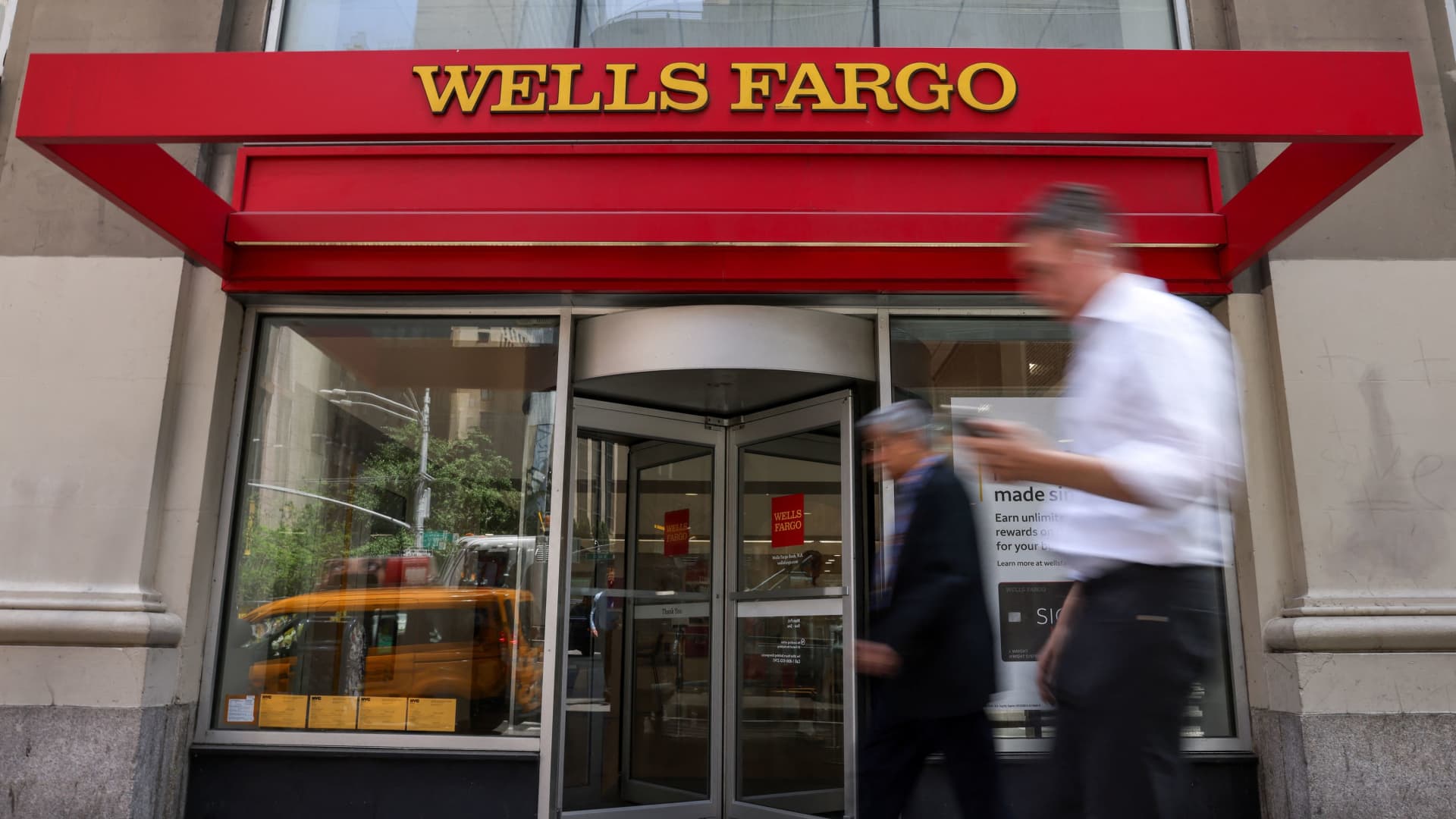
Morgan Stanley has issued a bold upgrade for Wells Fargo, elevating the banking giant to a ‘buy-equivalent’ rating and naming it a top pick ahead of its upcoming earnings report. This decisive call, made just over a week before the bank opens its books, signals a potential turning point for a stock that has lagged its peers, banking on a clearer trajectory toward improved profitability by 2027, as detailed in recent market analysis. The Wells Fargo upgrade is based on fundamental shifts post-asset cap removal and strategic fee income growth.
💎 Strategic Investment & Portfolio Insights
- Post-Cap Growth Momentum. The removal of the Fed’s $1.95 trillion asset cap last June has enabled Wells Fargo to expand its balance sheet by 15% year-over-year to $2.23 trillion, setting the stage for future earnings.
- NIM Stabilization & Expansion. After initial pressure from expensive borrowing, analysts expect Net Interest Margin (NIM) to stabilize around 2.42% by Q1 2027 and expand to 2.49% by Q4 2027, driven by a shift to lower-cost customer deposits.
- Fee Income Upside. Strategic investments in investment banking, including hiring 150 senior bankers, are projected to generate an additional $4 billion in annual fees by narrowing the gap with peers, significantly boosting non-interest revenue.
Morgan Stanley’s conviction in Wells Fargo (WFC) stems from a multi-faceted assessment, primarily revolving around the lifting of the Federal Reserve’s punitive asset cap in June 2023. This constraint had stifled the bank’s balance sheet growth for over seven years. Since its removal, Wells Fargo has rapidly expanded, increasing its assets by 15% year-over-year to $2.23 trillion, though this initial growth phase involved more expensive wholesale funding that temporarily squeezed Net Interest Margin (NIM), a key profitability metric.
The bank’s CFO, Mike Santomassimo, noted in September that Q3 NIM was already tracking ahead of expectations, a positive indicator. Morgan Stanley analysts now anticipate NIM to stabilize around 2.42% through the first quarter of 2027, before expanding to 2.49% by the fourth quarter, as the bank increasingly funds its operations with cheaper customer deposits. This normalization of balance sheet growth is expected to ease funding pressures and fortify returns. The firm’s $102 price target suggests a robust 27% upside from recent trading levels, surpassing its record close in early January, driven by a belief that improving profitability isn’t yet reflected in the stock’s current valuation of less than 11 times forward earnings, according to FactSet.
Beyond traditional lending, a significant driver of this Wells Fargo upgrade is the bank’s accelerating investment banking buildout. CEO Charlie Scharf’s strategic focus on this area has led to the hiring of approximately 150 senior bankers over the past four years, resulting in a doubling of investment banking fees from 2022 levels and market share gains in M&A and equity capital markets. While still lagging peers relative to the size of its commercial loan book, analysts estimate that narrowing this gap could eventually unlock an additional $4 billion in annual fees. This relationship-driven business takes time to scale, yet the commitment to expanding its advisory capabilities is a critical long-term growth lever. This comprehensive approach to enhancing earnings power underpins the positive outlook for its intrinsic value.
- Reduced reliance on expensive wholesale funding channels is easing funding pressure and stabilizing margins.
- Stabilization and eventual expansion of Net Interest Margin are crucial for enhancing core banking profitability.
- Significant potential for increased fee income from investment banking diversifies revenue streams.
- Improved Return on Tangible Common Equity (ROTCE) targets reflect higher efficiency in generating shareholder profits.
What This Means for Strategic Portfolio Positioning
The Wells Fargo upgrade acts as a clear signal for investors to re-evaluate exposure to the banking sector, particularly within diversified portfolios seeking alpha generation. A significant upgrade from a major institution like Morgan Stanley can trigger a re-rating of the asset, potentially leading to increased institutional buying and a shift in market sentiment. This dynamic creates a cause-and-effect chain: Analyst Upgrade → Asset Revaluation → Potential for Sector-Specific Capital Rotation → Portfolio Rebalancing for Growth. For long-term capital preservation and growth, a well-timed entry into a fundamentally improving, undervalued asset like Wells Fargo, especially when it is playing catch-up, can enhance overall portfolio returns and provide a balanced exposure to financial services.
“The pre-earnings upgrade on Wells Fargo is a bold, high-conviction call that highlights a rare confluence of a regulatory overhang removal and internal strategic execution. For CIOs, this signals an opportune moment to assess whether the market has truly priced in the long-term earnings power, making it a compelling candidate for portfolios seeking value with a clear growth trajectory in the financial sector.”
Key Metrics Driving Wells Fargo’s Outlook
Wells Fargo’s revised outlook is supported by several key financial metrics and analyst projections, painting a picture of improving profitability and valuation.
| Metric | Current/Projected Value | Significance for Investors |
|---|---|---|
| Morgan Stanley Price Target | $102 | Implies significant upside (27%) from current levels, indicating undervaluation. |
| Projected NIM (Q4 2027) | 2.49% | Stabilization and expansion of Net Interest Margin signals healthier profitability. |
| Projected ROTCE (2028) | 18% | Return on Tangible Common Equity, a key bank profitability metric, shows strong future earnings generation from shareholder capital. |
| Forward Earnings Multiple | Less than 11x | Suggests an attractive valuation compared to its historical multiple of 13x at the start of the year. |
Wells Fargo Risk-Reward Matrix: Navigating Future Performance
While the outlook for Wells Fargo appears increasingly positive, a balanced assessment of its risk-reward profile is crucial. The upside potential is significant, driven by the anticipated NIM expansion and substantial growth in fee-based income, particularly from investment banking. The lifting of the asset cap has unleashed considerable operational leverage. However, execution risk in scaling investment banking operations and potential shifts in interest rate policy remain pertinent. Competition within the M&A advisory space, dominated by firms like Goldman Sachs, is fierce, and gaining top-tier market share will take sustained effort. Regulatory scrutiny, though easing, always looms large for major financial institutions. Despite these risks, the current valuation, trading at less than 11 times forward earnings, offers a compelling entry point relative to its potential.
Wells Fargo Competitive Benchmarking: Catching Up to Peers
Wells Fargo’s performance year-to-date, down approximately 12%, starkly contrasts with peers like BNY Mellon, which surged 24%, and Citi, up nearly 11%. Even Goldman Sachs saw roughly 2% gains, while the broader Invesco KBW Bank ETF rose about 4%. This underperformance has created a valuation gap that Morgan Stanley’s upgrade aims to address. The bank’s ambition to significantly expand its investment banking fee income, targeting an additional $4 billion annually by narrowing the gap with rivals, positions it for a catch-up trade. While Goldman Sachs remains a dominant force in global M&A advisory, Wells Fargo’s aggressive hiring strategy and balance sheet strength are critical assets in its quest to carve out a larger share. This strategic pivot highlights the bank’s commitment to diversified revenue streams, crucial for resilience in volatile market cycles. Broader market dynamics and competitor strategies are regularly covered on Bloomberg Markets and in in-depth reports provided by Reuters Business.
Wells Fargo’s Path to Profit Resurgence: What Lies Ahead
Morgan Stanley’s proactive upgrade of Wells Fargo suggests a fundamental shift in the bank’s earnings trajectory, moving past the constraints of the asset cap and capitalizing on strategic growth initiatives. The confluence of stabilizing net interest margins, expanding investment banking fees, and attractive valuation multiples positions WFC for a significant re-rating.
- The lifting of the asset cap has unlocked substantial balance sheet growth and operational flexibility.
- Strategic investments in fee-generating businesses are set to diversify revenue and boost profitability.
- A favorable risk-reward profile, with a 27% potential upside, makes it an attractive proposition for long-term investors.
Will Wells Fargo successfully execute its investment banking growth, and how quickly will its ROTCE targets translate into tangible shareholder value?
📊 StockXpo Analyst’s View
Market Impact: This bold Wells Fargo upgrade could catalyze a broader re-evaluation of major U.S. financial institutions, especially those with perceived regulatory overhangs or underperforming segments. Investor sentiment might shift towards banks demonstrating clear pathways to margin expansion and diversified revenue growth, potentially injecting fresh liquidity into the sector and encouraging a ‘catch-up’ trade for laggards.
Sector To Watch: The financial sector, particularly large-cap diversified banks, stands to gain. Beyond Wells Fargo, banks actively expanding their investment banking divisions or successfully pivoting towards fee-based income streams are likely to capture increased investor attention. Regional banks with strong deposit bases that can leverage rising rates effectively should also be closely monitored. Investors can often find deeper insights into these trends on the StockXpo blog.
Financial Disclaimer:
StockXpo.com is a financial news aggregator and educational portal, not a registered investment advisor or broker-dealer. All information, news, and analysis provided herein are strictly for educational purposes and do not constitute investment, financial, legal, or tax advice. Investing in the stock market involves high risks, and past performance is not indicative of future results. StockXpo will not be liable for any financial losses or investment damages. Always consult a certified financial advisor before making market decisions.
MORE IN INSIDE INVESTMENT NEWS
HSBC Share Buyback: Bullish Capital Move Amid Strong Q3 Performance
Published: Tuesday, October 27, 2026 · 12:59 AM

AI Funding Fears Rattle Wall Street: Adjusting for Alpha and Preservation
Published: Saturday, October 24, 2026 · 12:28 PM